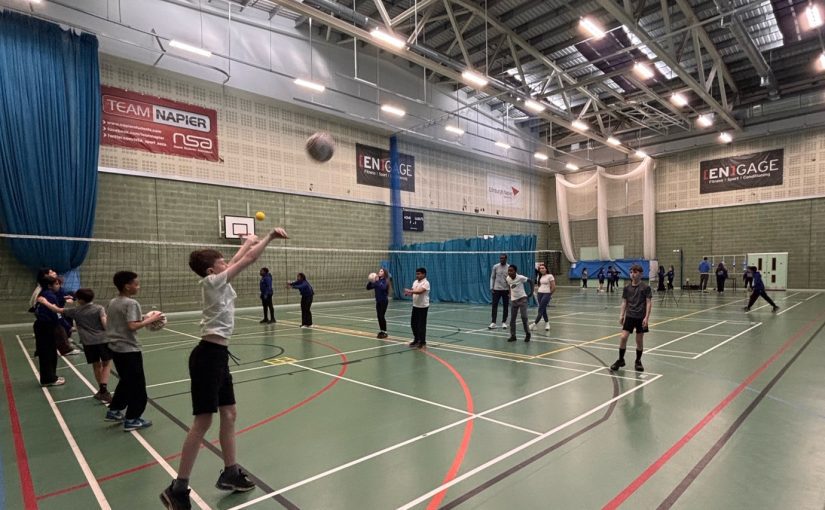
Bringing sport to life for young people is at the heart of effective coaching, and a recent initiative delivered in partnership with Active Schools Edinburgh did exactly that. Organised by Dr Cedric English and Dr Gordon Dunlop, P6 and P7 pupils from three local primary schools—Gylemuir Primary School, Murrayburn Primary School and Broomhouse Primary School—were invited to take part in a series of engaging, two-hour coaching sessions designed to inspire participation, build confidence, and introduce new sporting experiences.
The sessions were delivered by third-year Sports Coaching students from Edinburgh Napier University (ENU) as part of their Practical Coaching and Development module. This provided a valuable opportunity for students to apply their learning in a real-world setting, developing their coaching skills while making a meaningful impact in local schools.
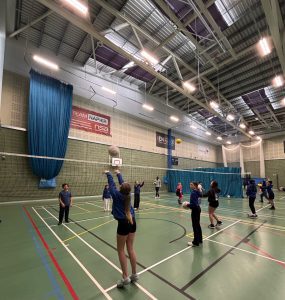
Each session was carefully structured to expose pupils to four different activities: volleyball, pickleball, boccia, and a sports science testing station. For many of the children, these were entirely new experiences. Volleyball and pickleball offered fast-paced, skill-based games that encouraged teamwork and coordination, while boccia introduced a more inclusive activity, emphasising precision, strategy, and teamwork.
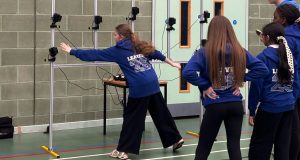
One of the highlights of the programme was the sports science station, where pupils had the chance to test their physical abilities in a fun and interactive way. Measuring their fastest 10m sprint, highest jump, and quickest reaction times, this element sparked curiosity and excitement, allowing children to engage with the science behind sport. It also encouraged a sense of personal challenge, as pupils (and often teachers!) aimed to improve their own performances.
The value of this varied and inclusive approach was reflected in feedback from participating schools:
“The staff and students were welcoming and inclusive of all learners. The rotations gave children enough time to develop their skills while keeping their interest throughout. The sports science section was a particular highlight, with pupils fascinated by the equipment and enjoying the competitive element. I would be delighted to attend similar sessions with future classes.” Lynsey Joyce, Gylemuir Primary School
From a coaching perspective, the initiative was equally impactful. ENU students were responsible for planning, delivering, and adapting sessions to meet the needs of diverse groups of young participants. This required clear communication, creativity, and the ability to think on their feet—encouraging them to become more reflective and agile practitioners, key attributes for any developing coach. Working across different schools also exposed students to varied environments and learner needs, further enhancing their experience.
Importantly, the sessions fostered a positive and supportive atmosphere where enjoyment was prioritised. Smiles, laughter, and enthusiastic participation were clear indicators of success, and for many pupils, this initiative may represent their first step towards ongoing involvement in sport and physical activity, reinforcing the longer-term value of creating positive early experiences of sport.
This positive experience was also reflected by Amy Maclennaghan from the Active Schools Forrester Hub, who said:
“It was an amazing experience for our pupils from start to finish. They were impressed with the outstanding facilities and enjoyed having so much space compared to the standard gym hall size they are used to. The variety of activities on offer was excellent, and the students’ sessions were engaging and fun.”
Madison Downie, from Murrayburn Primary School was thrilled to share that:
“Murrayburn P7’s thoroughly enjoyed the coaching session at Napier University. The children took part in sports many hadn’t even heard of. It was a fantastic way to introduce the new sports and all coaches were very enthusiastic and friendly, meaning all of our pupils took part and put lots of effort in. The children particularly enjoyed the sports science station at the coaching session, giving them insight into an area of science they hadn’t studied in primary school. I would say the children put more effort into their typical PE lessons, maybe due to the new sports introduced, space to play the sports properly or enthusiasm from the coaches involved. Thank you very much for the opportunity!”
Overall, the programme highlights the value of partnerships between universities and local schools. It not only enriches the learning experience of coaching students but also provides young people with access to high-quality, engaging physical activity opportunities. Initiatives like this demonstrate how coaching can extend beyond performance, contributing to community engagement, education, and lifelong participation in sport.
Written by: Dr Gordon Dunlop and Dr Cedric English