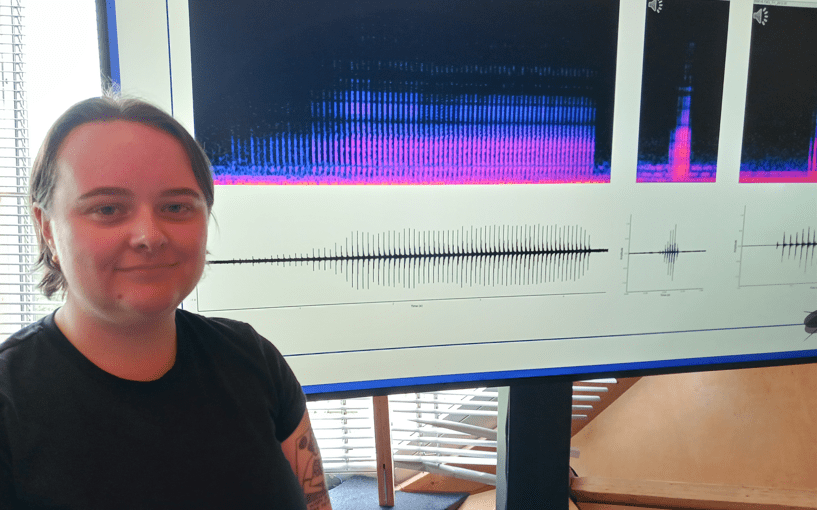
Jess delivers Early Career Researcher Keynote for Freshwater Biological Association

This year’s Annual Scientific Meeting for the Freshwater Biological Association (FBA) – held on 11 June at Edinburgh Napier University – explored the theme of “Emerging approaches for freshwater science”.

Across many parts of the world, freshwater habitats – which host 10 times the biodiversity per area than the land or sea – remain at critical risk from climate change. Freshwater vertebrate populations are declining (at a rate almost double that of those on land and in the sea) and rising levels of water pollution are combining with this widespread degradation in freshwater ecosystems.

But advances in robotics, biotechnology, AI, and remote sensing are all expanding the amount and the quality of data available to academics and policy makers exponentially.

The challenge now – and the opportunity – is immense; and the FBA works internationally to reverse the decline in freshwater biodiversity.

This year’s meeting explored a range of new approaches to freshwater science, including bio/hydro acoustics, eDNA, citizen science, drones and the emerging role of machine learning for pattern recognition.

The event shone a spotlight on these cutting-edge methodologies, which are driving action-focused, independent science to help understand and conserve freshwater habitats globally.

The event included keynotes from Jennifer Dodd, Associate Professor from Edinburgh Napier University’s Centre for Conservation & Restoration Science (CCRS); Bernd Hänfling, UHI Inverness; Brian Hayden Atomic Ecology; and the prestigious early career researcher keynote: delivered this year by Jess Lister, a PhD student in Edinburgh Napier ’s School of Applied Sciences.
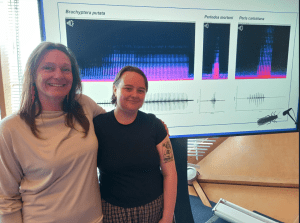
PhD Jess Lister with Dr Jennifer Dodd
ENU PhD student Jess Lister with Dr Jennifer Dodd at the Freshwater Biological Association Annual Meeting

Jess (pictured with Dr Dodd) presented her ground-breaking research, which examines the impact of human noise on freshwater soundscapes and animal communication, through a talk entitled: ‘The Plecoptera’s Paradiddle – Advancing acoustic approaches to uncover stonefly behaviour’.

For more information on the issues raised and how our academics in the Centre for Conservation and Restoration Science can help, contact us through the University’s Innovation Hub
Understanding and Promoting Ethnic Minority Communities’ Public Engagement in Scotland’s Net Zero Transition

Understanding and Promoting Ethnic Minority Communities’ Public Engagement in Scotland’s Net Zero Transition is a project designed to develop an initial understanding of the current levels and forms of ethnic minorities’ engagement in climate and environmental initiatives in Scotland.

A recent workshop invited participants from community organisations, local/central public organisations, and universities across Scotland working with ethnic minorities, especially on climate and environmental issues,  to:

1) identify the ecosystem of ethnic minorities’ engagement in climate and environmental action, including policy factors, key stakeholders, rural-and-urban dynamics, challenges, and opportunities; and

2) initiate a collaborative network to support ongoing collaboration in this area, particularly actions and policy development towards inclusive and just Net Zero Transition.

The workshop

To learn more about the workshop watch our video

Outcome

At the end of the workshop, participants strongly agreed that there remains a significant gap in translating community experiences and practices into effective and equitable policymaking within Scotland’s just transition to net zero. There was a shared enthusiasm to support the development of a close-knit network to address this gap, bringing practitioners, researchers, and policymakers together to support future action and impact.

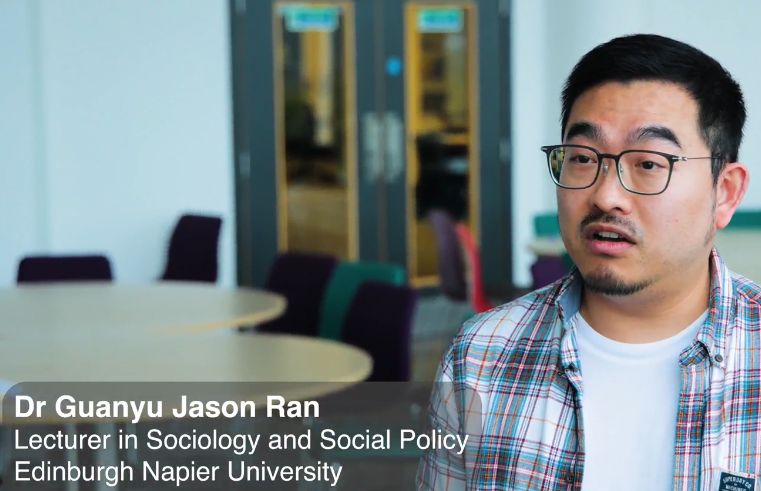
Towards Inclusive Climate Action (TICA) is a new research project, led by Dr Guanyu Jason Ran, Lecturer in Sociology and Social Policy at Edinburgh Napier. It is jointly funded by SAS Knowledge Exchange and Innovation Fund (25/26) and British Academy Early Career Researcher Network Seed Fund (25/26).

Participants

The workshop participations were from the following organisations: Networking Key Services (NKS), Edinburgh & Lothians Regional Equality Council (ELREC), SCOREscotland, Edinburgh Communities Climate Action Network (ECCAN), Council of Ethnic Minority Voluntary Sector Organisations (CEMVO), Mobilising Community Action Scotland (MCAS), Ethnic Minority Environmental Network (EMEN), 2050 Climate Group, Women’s Environmental Network, Active Inquiry, Global South Voices Project, Environmental Rights Centre for Scotland, Zero Waste Scotland, The Welcoming Association, Royal Botanic Garden Edinburgh, University of Glasgow, University of Edinburgh, Edinburgh Napier University.