Meet graduate Katherine Lymer, PGDE Physics

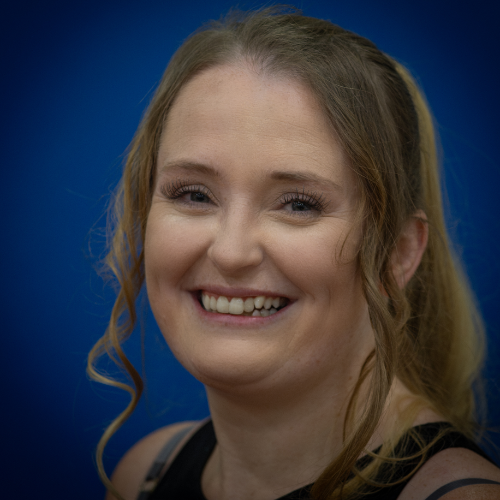
Katherine Lymer graduated in 2022 and has completed her fourth year of teaching, with a promoted position of Principal Teacher of Communities and Partnerships.

How did the programme help you in placements?

Preparation for the placements was thorough, terrifying at times (on reflection, our insightful and structured role-playing now brings a smile to my face), and covered all the important aspects of our placements: lesson planning, preparation and reflection, learning to manage with common (mis) behaviours (hence the role-playing!) as well as hands-on practice of some of the practical elements of our subject. Professional expectations and responsibilities were clearly and appropriately set, (e.g. our progressive timetables, teaching focus (junior vs senior phase) and planning deadlines – our lecturer was open to any and all questions as we prepared for placement (even those relating to wardrobe!).

While on placement, it was reassuring to know that our lecturer was on the other end of their email or phone and while, initially, their visits were a source of anxiety, as the placements progressed, they were an exciting opportunity to share improvements in practice.

How did the programme help prepare you for your first year “on the job”?

Well, of course the first year was tough – but then we had been repeatedly warned that it would be!  Our lecturers shared their experiences of their first (NQT) year and our physics lecturer had arranged a call with a recent graduate so we could ask them about their training vs their first job.

In the second half of our programme, we needed to juggle completing our placement while also conducting a research project, a “Professional Enquiry”, (the results of which were presented on our return to university) and complete the documents for provisional registration as a teacher. To say it was intensive would be an understatement!  However, the stages of the Professional Enquiry were broken down (“scaffolded”, in teacher speak), allowing us to meet clear and staggered deadlines. In addition, we had dedicated sessions to help us navigate registration. This approach was very helpful during our first year on the job when we were required to complete another research project, a “Practitioner Enquiry”, alongside the mandatory training, alongside teaching an approaching full timetable, alongside completing all the documentation for obtaining full registration as a teacher.

How did studying at Edinburgh Napier University help progress you to where you are now?

I’m now in my fourth year of teaching, with a promoted position of Principal Teacher of Communities and Partnership, and it’s true to say that without my degree from ENU, I absolutely wouldn’t be where I am now! As a mature student, I was encouraged to use my previous life experiences to help inform my “teacher voice” – and my approach to teaching and professional development.  Without this, I wouldn’t have had the confidence to seek promotion so early in my career.

What was your experience like as a student?

In short, really positive. I applied to ENU because of their modern approach to teaching teachers, as well as their reputation in excelling in academic support and student satisfaction – examples of which I experienced before even setting a foot on campus:  My initial queries were promptly answered by the course lead and subject lecturer, and I was supported to complete a speedy and efficient application process.

I loved having lectures as part of a much larger cohort (and relished the opportunities to bond over coffee in the cafe – honestly, I still miss those cappuccinos), while the focussed, subject-specific seminars were “gold”.  The lab where we developed our practical science skills was fantastically resourced, and there was a huge library of physics-equipment that we could access.

Written by: Katherine Lymer, PGDE Physics

Edinburgh Napier University offers a PGDE in specialisms such as Maths, Physics, English, Biology & Chemistry, both full-time and part-time.

Meet graduate Erin Lowe, PGDE English

Edinburgh Napier University offers a PGDE in specialisms such as Maths, Physics, English, Biology & Chemistry, both full-time and part-time.
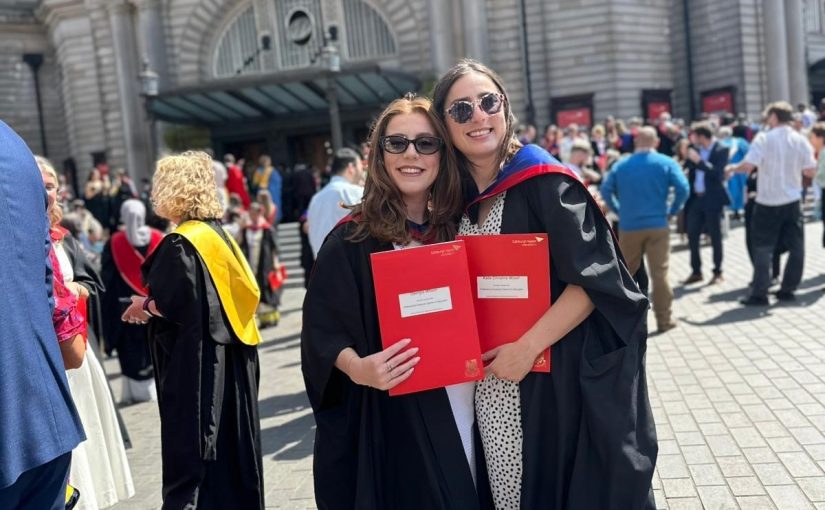
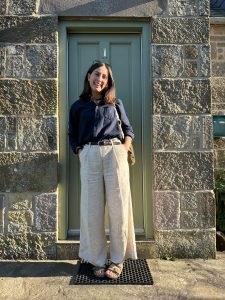
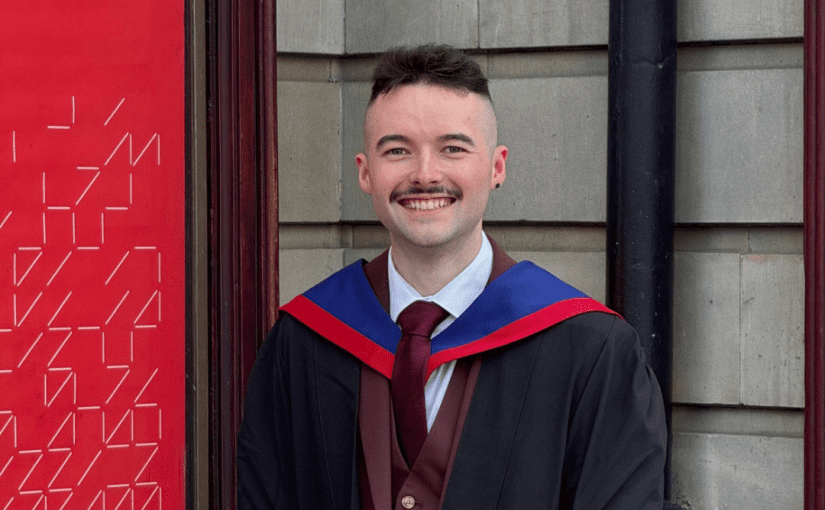
The practical focus of the course, paired with the specialist knowledge from tutors, helped stand graduate Erin Lowe in good stead in her first teaching role. Having completed her PGDE in English, she has now been teaching at Tynecastle High School in Edinburgh for two years – and has even returned to mentor other ENU students.

“I absolutely loved my time at Napier and felt so supported by the entire team throughout the process. Everyone is so passionate about teaching, learning, and improving the lives of young people and this bleeds through into their engaging and inspiring lectures. It is a welcoming department, and the importance of inclusivity and equity was highlighted on our very first day. I was so inspired to see our tutors challenge assumptions and prejudices throughout the course; helping us all to become practitioners who are committed to social justice.

All of the content and concepts we learnt felt fresh, current, and relevant. Since becoming a teacher, I have gone to many CPD events where we are taught concepts and ideas that were embedded into my practice as a result of my training at Napier. Napier truly feels like a leader in teacher training and seems to be doing something quite unique. There is a real focus on effective teaching and learning with helpful strategies and ideas that become second nature by the time you go out on placement. I understand how learning happens and what I can do as a practitioner to ensure my pupils are learning as much as they can while in my classroom. I use what I was taught every single day and feel very confident in my pedagogy as a result. Of course, I am always reflecting and learning but Napier embedded this in me too!

Our time with the English cohort was inspiring, reflective and fun. I learnt so many new techniques and texts to teach and it felt truly collaborative. I met one of my now best friends on the course and now we work together and continue this collaborative approach as we continue to share ideas and reflections every day.

Of course, nothing beats being in a classroom in front of young people but being in a lecture hall with some incredible friends, now colleagues, learning from wonderful professionals was a fantastic way to start my teaching career. I wouldn’t be where I am now without Napier and I am so thankful to the incredible team that helped me take my first steps into teaching!”

Read more about Erin’s graduate success in the Edinburgh Evening News.

He’s picking up good vibrations

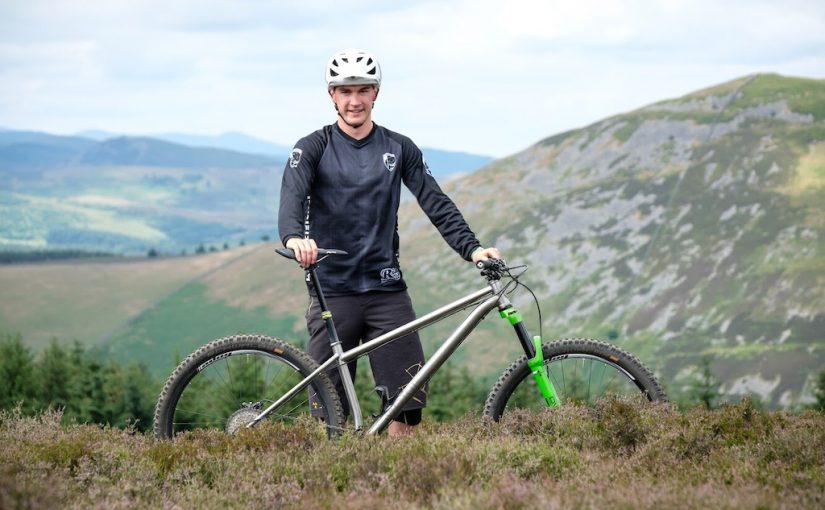
A mountain bike handlebar, released for sale this September, is the first to offer a viscoelastic frame designed to absorb more of the impacts that are an inevitable result when enthusiasts and professional riders alike hurtle down trails.

The innovation has been driven by research conducted by Lewis Kirkwood as part of his PhD at Edinburgh Napier University: commercial endorsement for its long term health implications. “Vibration stimulates muscle and it makes the muscle tense, which is why you get arm pump because your muscle doesn’t relax and it cuts off the blood flow,” explains Lewis.

Initial data gathered by Lewis (alongside Dr Lesley Ingram, Dr Eva Malone, Dr Mark Taylor, and Prof Geraint Florida-James) suggested that mountain bikers can actually experience vibration levels that would exceed levels regarded as safe under ISO standards. These are applied in 164 countries, with the goal of ensuring products and services are safe, reliable and of good quality. For example, ISO 5349 – 1:2001 monitors human exposure to hand-transmitted vibration in construction, and caps vibrations at 5.0 ms^-2. But Lewis found mean values of 5.84ms^-2 on the riders he studied over a day of elite enduro racing.

It was important to investigate further, with exposure to vibration in the workplace linked to musculoskeletal, neuromuscular, vascular and other types of pathologies such as hand-arm vibration syndrome.

“We believe there will be ways of optimising the design of components such as handlebars, grips or even gloves, tyres and spokes, and if we could look at ways to minimize vibration while still keeping or improving the performance then that has to be a good thing,” said Lewis, who is a keen mountain biker himself and also a team mechanic with Norco Factory Team.

Since 2016 he has evolved his PhD research at the Innovation Centre run by Edinburgh Napier University and the Mountain Bike Centre of Scotland, at Glentress in the Scottish Borders. Now, kreuz+quer – the company behind bike brand ARC8 and bicycle.engineering – have launched the Rockstock carbon handlebar using input from the research by Lewis. It is the first commercially available handlebar to integrate a viscoelastic damping layer, which means it is designed with the intention of reducing vibration exposure for riders.

For Lewis, the commercial response to his research has been inspirational. “At Napier, we have a big physiology department where, for example, we can take blood from people, so we can link up vibration doses and changes in the blood to see if there is a relationship with things like osteo-arthritis. We can also test many different products at the Innovation Centre. So if a component manufacturer with different layups of seatposts or frame materials wanted to know which was better in the field then we can reliably measure it.

“That’s what I want to do more of.”

Make a positive difference to peoples’ lives through Clinical Exercise Science

Due to the prevalence of long-term health conditions in our modern society, and our developing understanding of the health benefits of exercise and physical activity, there is an important need to develop highly skilled postgraduates in Clinical Exercise Science.

To enhance your career prospects, Edinburgh Napier has developed a unique course that will provide you with specialised, evidence-based, clinical exercise science knowledge, as well as plenty of hands on experience and the applied skills required to work with both healthy and clinical populations.

On this course you can expect to learn about many long-term conditions such as diabetes, cardiovascular diseases, neurological conditions and different types of cancer and the role that physical activity and exercise can play in both the prevention and treatment of such conditions.

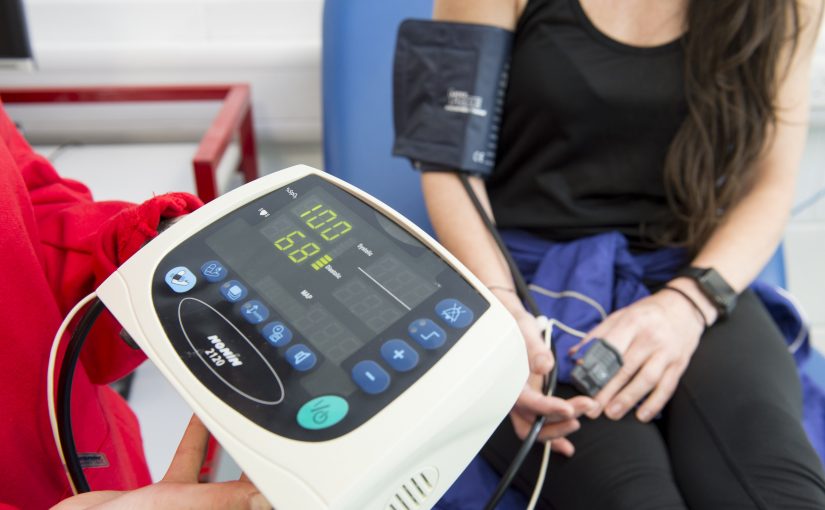
We want our students to have as much hands on experience as possible. With that in mind the Clinical Exercise Science MSc includes a large practical component where you will learn to run exercise tests, screen patients, prescribe exercise programmes and learn motivational interviewing techniques. We think it is important that our graduates not only know the physiology of exercise and physical activity, but also have an excellent understanding of what motivates people and how you can help people to incorporate physical activity and exercise into their lives. Clearly we are very concerned with research, but more importantly we are concerned with the impact that research has in the real world and what this does for the health of both general and clinical populations. The most important thing that a clinical exercise scientist does is make a positive difference to peoples’ lives. This course will give you the knowledge and skills required to go out and do this confidently.

This course is designed to allow our students to gain the professional skills and knowledge that are required to work in the area of Clinical Exercise Science.

Whether your background is sport/exercise science, psychology, physical activity and health or perhaps you work as a healthcare professional we want to hear from you. Our students come from a very wide variety of backgrounds. In addition to your academic qualifications you will also be given the opportunity to sit the REPS and CIMSPA Validated Level 4 Cancer and Exercise examinations. We want to offer you learning experiences which will enable you to be in the best possible position to exploit the increasing career opportunities as an exercise professional, whether as a physical activity coordinator, a health and well-being physiologist; a clinical exercise physiologist or an exercise referral coordinator.

Get more details: https://www.napier.ac.uk/courses/msc-clinical-exercise-science-postgraduate-fulltime