Meet graduate Katherine Lymer, PGDE Physics

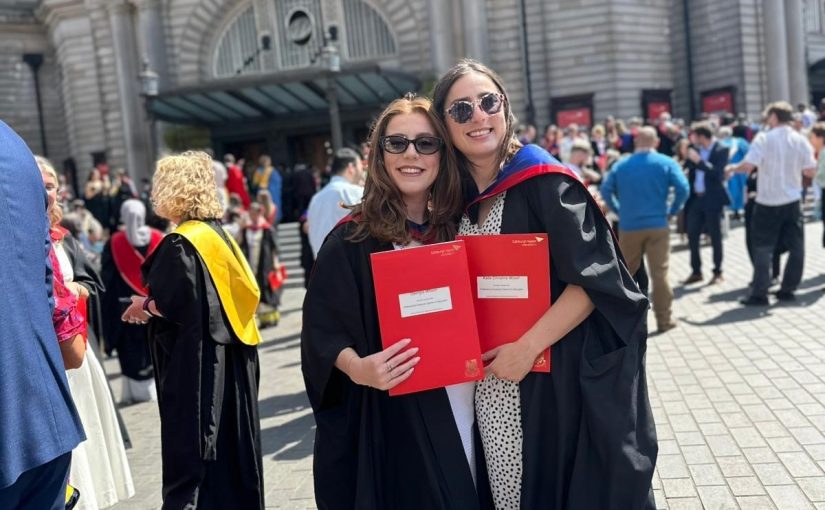
Katherine Lymer graduated in 2022 and has completed her fourth year of teaching, with a promoted position of Principal Teacher of Communities and Partnerships.

How did the programme help you in placements?

Preparation for the placements was thorough, terrifying at times (on reflection, our insightful and structured role-playing now brings a smile to my face), and covered all the important aspects of our placements: lesson planning, preparation and reflection, learning to manage with common (mis) behaviours (hence the role-playing!) as well as hands-on practice of some of the practical elements of our subject. Professional expectations and responsibilities were clearly and appropriately set, (e.g. our progressive timetables, teaching focus (junior vs senior phase) and planning deadlines – our lecturer was open to any and all questions as we prepared for placement (even those relating to wardrobe!).

While on placement, it was reassuring to know that our lecturer was on the other end of their email or phone and while, initially, their visits were a source of anxiety, as the placements progressed, they were an exciting opportunity to share improvements in practice.

How did the programme help prepare you for your first year “on the job”?

Well, of course the first year was tough – but then we had been repeatedly warned that it would be!  Our lecturers shared their experiences of their first (NQT) year and our physics lecturer had arranged a call with a recent graduate so we could ask them about their training vs their first job.

In the second half of our programme, we needed to juggle completing our placement while also conducting a research project, a “Professional Enquiry”, (the results of which were presented on our return to university) and complete the documents for provisional registration as a teacher. To say it was intensive would be an understatement!  However, the stages of the Professional Enquiry were broken down (“scaffolded”, in teacher speak), allowing us to meet clear and staggered deadlines. In addition, we had dedicated sessions to help us navigate registration. This approach was very helpful during our first year on the job when we were required to complete another research project, a “Practitioner Enquiry”, alongside the mandatory training, alongside teaching an approaching full timetable, alongside completing all the documentation for obtaining full registration as a teacher.

How did studying at Edinburgh Napier University help progress you to where you are now?

I’m now in my fourth year of teaching, with a promoted position of Principal Teacher of Communities and Partnership, and it’s true to say that without my degree from ENU, I absolutely wouldn’t be where I am now! As a mature student, I was encouraged to use my previous life experiences to help inform my “teacher voice” – and my approach to teaching and professional development.  Without this, I wouldn’t have had the confidence to seek promotion so early in my career.

What was your experience like as a student?

In short, really positive. I applied to ENU because of their modern approach to teaching teachers, as well as their reputation in excelling in academic support and student satisfaction – examples of which I experienced before even setting a foot on campus:  My initial queries were promptly answered by the course lead and subject lecturer, and I was supported to complete a speedy and efficient application process.

I loved having lectures as part of a much larger cohort (and relished the opportunities to bond over coffee in the cafe – honestly, I still miss those cappuccinos), while the focussed, subject-specific seminars were “gold”.  The lab where we developed our practical science skills was fantastically resourced, and there was a huge library of physics-equipment that we could access.

Written by: Katherine Lymer, PGDE Physics

Edinburgh Napier University offers a PGDE in specialisms such as Maths, Physics, English, Biology & Chemistry, both full-time and part-time.

Meet graduate Erin Lowe, PGDE English

Edinburgh Napier University offers a PGDE in specialisms such as Maths, Physics, English, Biology & Chemistry, both full-time and part-time.


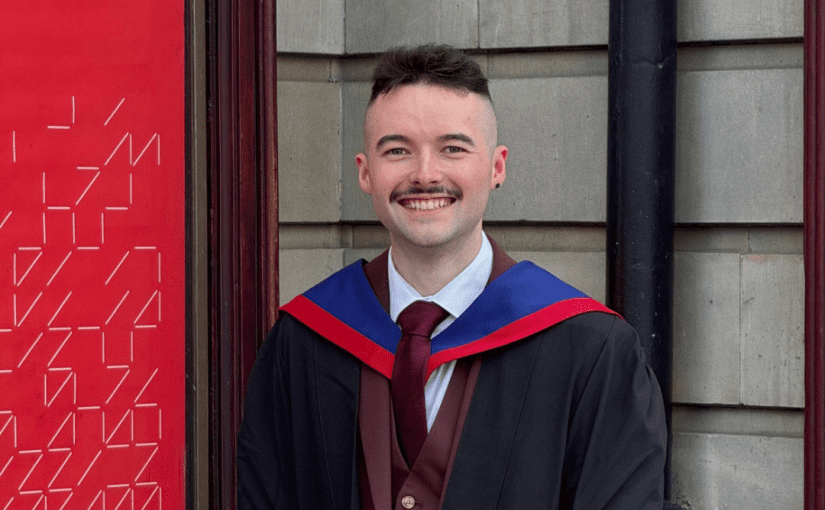
The practical focus of the course, paired with the specialist knowledge from tutors, helped stand graduate Erin Lowe in good stead in her first teaching role. Having completed her PGDE in English, she has now been teaching at Tynecastle High School in Edinburgh for two years – and has even returned to mentor other ENU students.

“I absolutely loved my time at Napier and felt so supported by the entire team throughout the process. Everyone is so passionate about teaching, learning, and improving the lives of young people and this bleeds through into their engaging and inspiring lectures. It is a welcoming department, and the importance of inclusivity and equity was highlighted on our very first day. I was so inspired to see our tutors challenge assumptions and prejudices throughout the course; helping us all to become practitioners who are committed to social justice.

All of the content and concepts we learnt felt fresh, current, and relevant. Since becoming a teacher, I have gone to many CPD events where we are taught concepts and ideas that were embedded into my practice as a result of my training at Napier. Napier truly feels like a leader in teacher training and seems to be doing something quite unique. There is a real focus on effective teaching and learning with helpful strategies and ideas that become second nature by the time you go out on placement. I understand how learning happens and what I can do as a practitioner to ensure my pupils are learning as much as they can while in my classroom. I use what I was taught every single day and feel very confident in my pedagogy as a result. Of course, I am always reflecting and learning but Napier embedded this in me too!

Our time with the English cohort was inspiring, reflective and fun. I learnt so many new techniques and texts to teach and it felt truly collaborative. I met one of my now best friends on the course and now we work together and continue this collaborative approach as we continue to share ideas and reflections every day.

Of course, nothing beats being in a classroom in front of young people but being in a lecture hall with some incredible friends, now colleagues, learning from wonderful professionals was a fantastic way to start my teaching career. I wouldn’t be where I am now without Napier and I am so thankful to the incredible team that helped me take my first steps into teaching!”

Read more about Erin’s graduate success in the Edinburgh Evening News.

Edinburgh Napier launch new PGDE English

Teacher Education at Napier University is undergoing an exciting development. After three hugely successful years of teacher education for Science and Mathematics teachers, it is expanding to include an English PGDE from August of this year.

This dynamic one-year course will empower new teachers with the knowledge to teach English in Scottish schools. If you have a passion for the subject of English and an enjoyment of working with young people, then this course would be the first step into the wonderful career that is teaching.

At the core of teacher training at Napier is equipping teachers with both practical classroom skills and engagement with a wide range of research. A range of thought-provoking modules on education will balance the subject-specific seminars on English teaching, leaving trainee teachers ready for the various demands of the modern-day classroom.

Module leader, Jamie Thom, is excited to share his passion with English and teaching and learning with new teachers. He has written and published three books on teaching, run a range of educational podcasts, and qualified as an educational coach.  He has taught in various schools across the UK, and the fact he only left the classroom in April of this year means he well-informed about the reality of how to be successful as an English teacher.

This drive to make sure new teachers are both enthused and equipped with practical knowledge about teaching English, and working with young people will be at the heart of the new programme.

Education in Scotland is at an exciting cross-roads, with an increasing demand for dynamic and creative teachers. New English teachers are always in demand in secondary schools and it is a career that can open up a range of exciting opportunities.  The potential to inspire and engage young people in the subject of English, and to build life-changing relationships in the process, is too good an opportunity to miss.

Find out more>>> PGDE Professional Graduate Diploma in Education (English) Postgraduate Full-time (napier.ac.uk)

Creating a culture in growth

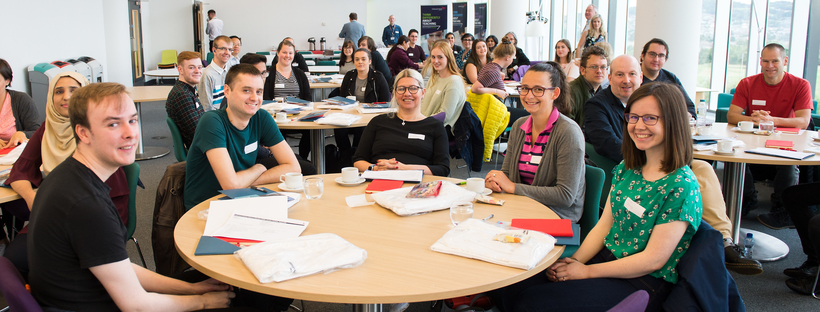
Maths teachers graduating from Edinburgh Napier University (ENU) this summer had a unique selling point when they came to enter the workforce; following a successful pilot programme undertaken by the first cohort to graduate from Scotland’s newest PgDE provider, pictured above on day 1 – back in 2019.

The nine graduates, all now in their probationary year in secondary schools across Scotland, had experience in developing a growth mindset in their students. That’s vital; because for generations a cohort of Scots have been almost proud to announce ‘I’m no good with numbers.’ That negative mindset was all too often embedded in children at an early age, and reinforced from parent to child. Experience taught us that once established, this attitude was a major obstacle to any improvement in numeracy throughout a student’s school career.

The concept of a growth mindset seeks to dismantle this mental barrier. Based on research by Stanford University’s Dr Carol Dweck, it creates a methodology to help young people develop a love of learning, to thrive on challenges, and to build resilience.

The approach is being promoted to professional teachers by Winning Scotland, an independent charity chaired by Sir Bill Gammell, which works to create a culture where all young people in Scotland have the opportunity to develop themselves and learn important life skills. Once established in an individual, a growth mindset means they will believe their level of success in any subject is determined by factors such as effort, application and skills development. This can make a huge difference to their ultimate academic progress.

Adults in a child’s life, including teachers, have a key role to play in ensuring they nurture a growth mindset environment, and ‘Mindset in the curriculum’ is a key focus of activity for Winning Scotland. Since 2011, it has aimed to build engagement and confidence in targeted areas, including maths. The approach has now been adopted by 273 practitioners in Scotland, and is being adopted by most local authorities.

In 2020, it expanded its focus to include literacy, science and secondary school maths, with the newly qualified graduate maths teachers from Edinburgh Napier primed to act as champions of the growth culture as they enter their new schools.

“Understanding growth mindset from the start means that we can incorporate it into our practice straight away,” says ENU graduate Peter Early. “It’ll just be part of who I am, so I can inspire pupils to have a more positive mindset about maths.”

Fellow graduate Hilary Brown agrees: “Pupils are able to engage and it makes you more approachable – less of a ‘Maths teacher’. My school are really pleased I got the opportunity to participate [in the pilot PgDE module] so I think it’ll help our future recruitment chances too.”

Having achieved a success with the pilot for student teachers, both Winning Scotland and Edinburgh Napier are keen to progress. “This session we are continuing our work,” says Assistant Professor Andrew Gallacher, Head of Teaching Education. “The new cohort in September 2020 are trialling a bespoke version of the mindset course, again aimed specifically at maths teachers. I think we can help change the culture and improve the quality of teaching and working in secondary maths education.”