
We need to plant more diverse forests that are resilient to the threats of climate change, pest and diseases and extreme weather events. There are many factors to consider when deciding which species might be suitable for planting, only one of them being timber properties. But even scoring species for timber properties is a science in its own right – how do we measure and score “timber quality”? When ranking species for developing a species shortlist for planting in Scotland, Dan Ridley-Ellis developed the neat graph below. The figure shows the species that were prioritised for the Scottish shortlist (report published September 2025). The vertical axis shows how much we currently know in relation to wood properties and products (K score, e.g. how much do we know about mechanical properties, durability etc. and how much research interest is there elsewhere?), and the horizontal axis shows how compatible the species is with current wood processing, manufacturing and markets in the UK (E score, e.g. market familiarity, processing knowledge, existing products elsewhere). It is desirable to move species towards the upper right-hand corner by gaining knowledge and adapting our wood-value chain (not completely separate things). We have highlighted some example priority actions.
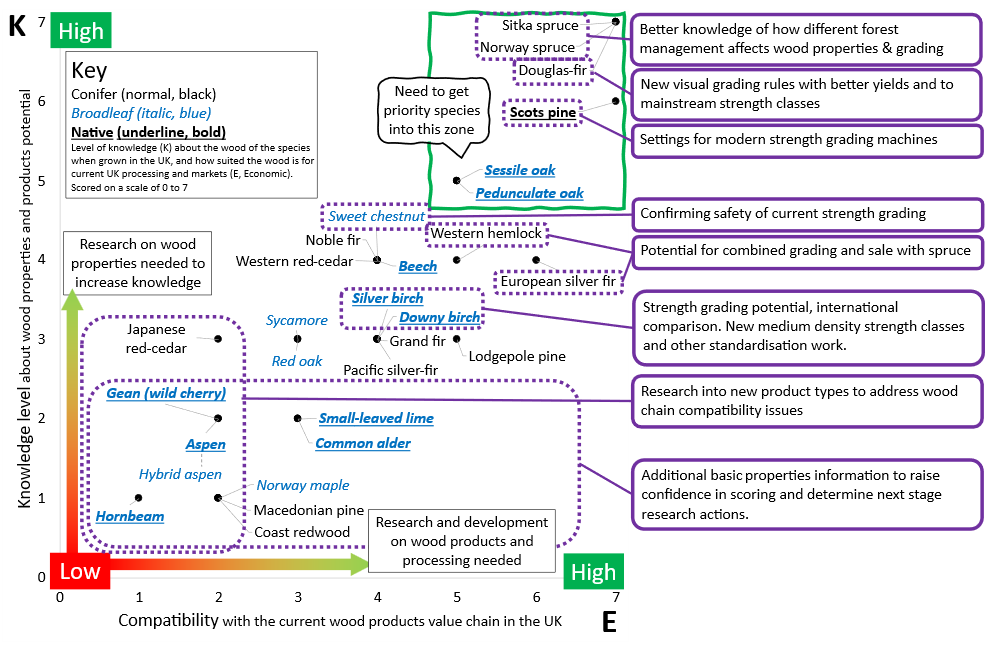
Together with colleagues at Forest Research, we are finding out more about timber properties of species with potential for wider planting and use. The work is funded by Defra and running at least until 2030 (because there is a lot of work to do!). Here, we are only talking about wood properties, but colleagues are working on answering questions around breeding, establishment, silviculture and tree health.
Species we know very little about
Timber properties are very variable. They also depend on growth conditions of the tree. This means that a lot of testing is needed in order to characterise the properties of a species, and the timber has to be sampled to be representative of the growth area, i.e. for many properties we cannot transfer knowledge from one region to another.
A lot of research in home-grown timbers was done in the heyday of Britain’s Forest Products Research Laboratory (FPRL). Testing was done on mechanical and physical properties, drying behaviour and schedules, working qualities, durability and treatability. A lot of the knowledge collected over decades at the FPRL is collected in famous publications that still have relevance today, e.g. Lavers’ The Strength Properties of Timber, or the BRE Timber Drying Manual. While much of this knowledge is still useful, many species on the list have not received any attention in almost a century, and timber properties might have changed since this work was done due to changes in forest management and climate. In the case of mechanical properties, test standards have also changed – “small clear” specimens were tested at the FRPL, when nowadays we have to test “full size” (aka “in grade”) specimens for structural characterisation. The testing was also often done only on a handful of specimens from a few trees, so we can say that we know hardly anything about the mechanical properties of these species yet, and any testing we do gives us a better idea about their potential use in construction products. Many of the important wood properties depend on growth conditions, so looking at data from other countries is not always very reliable – although it is still useful.
A property that is not so dependent on growth conditions is natural durability. For many species, natural durability has been determined on timbers from Europe and is listed in BS EN 350 as a durability class. The standard also list treatability scores for impregnation with preservatives. These classes probably also apply to timbers grown in the UK – although it is known that natural durability can be lowered by growth conditions.
Examples of species in this category:
Hornbeam
Hornbeam (Carpinus betulus) sits at the very low end of our knowledge scale. Mechanical properties from 12 trees and ca. eight tests are listed in Lavers and it is included in the BRE drying manual, but since this testing was done (before 1939) no new data has been collected on UK hornbeam. We haven’t received much interest on the species and have not yet managed to get our hands on any timber for future testing. Hornbeam is now getting some research attention in other European countries, and this will help generating some insights into species properties.
Hornbeam topped the ranking of “low knowledge” broadleaf species when we asked ICF participants which of them deserved more research. They mentioned it would be good to learn more about modern uses, “rather than historic cartwheel hubs”. One comment described it as “tree of the future”!
Macedonian pine
Macedonian pine (Pinus peuce) has apparently been tested at the FPRL, but we only know this because a 1985 paper by Lines mentions the work on four logs from Kielder forest and gives us some data on mechanical properties. It is, however, not clear how many specimens were tested or how variable mechanical properties were in the sample. Very likely the work we are currently planning will be the largest data collection on the UK-grown Macedonian pine to date: some 30 logs from a provenance trial are being processed into full size and small clear specimens for testing bending strength and other properties.
The BRE drying manual doesn’t list Macedonian pine either. We will have to dry our timber with a drying schedule for a different pine species, which is likely to give satisfactory results, but might need some tweaking in the future. The 1985 paper mentions that shrinkage of the species is somewhat lower than other softwoods, without giving any data, so this might be another line of inquiry in our work.
Macedonian pine ended up the first choice of ICF conference participants. Maybe it had a bit of an unfair advantage as the only softwood, thus fitting our existing market expectations a bit better than the other species… Nonetheless, Macedonian pine is certainly interesting, and it was mentioned that it might be an alternative to Scots pine if it is not affected by Dothistroma needle blight.
(hybrid) Aspen
Aspen (Populus tremula) is one of Britain’s native poplar species, but we know very little about its properties. Three poplar species are listed in Lavers, but aspen is not one of them. The BRE Drying Manual only lists Canadian aspen (P. tremuloides). From testing in Europe we know that there is an extremely large variability in properties of different poplar species and cultivars, so we are basically starting our data collection on aspen from scratch. And we might not only want to consider aspen, but also at a hybrid of P. tremula and P. tremuloides that is the result of breeding for faster growth.
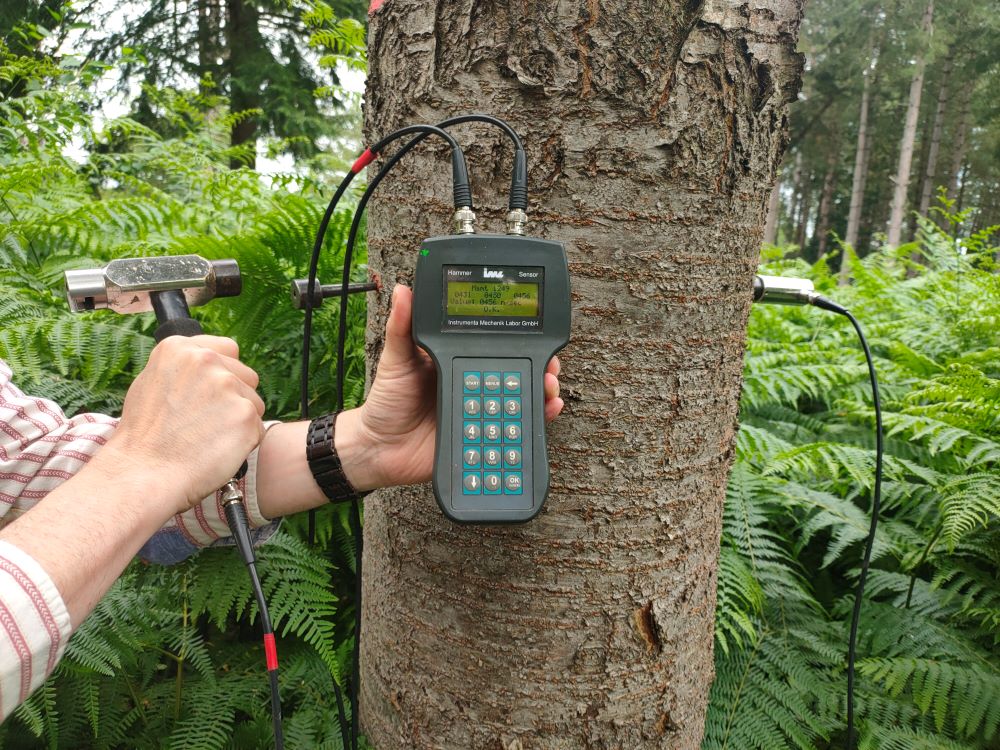
For mechanical properties testing, we have sourced logs from five aspen trees and which we have done non-destructive measurements. These are being sawn into small clear and full size specimens for bending tests. This will give us an initial idea about timber properties and the radial variation of properties within a tree.
Aspen was highly rated by ICF conference participants, and more than one comment mentioned its potential use as a nurse crop.
Wild cherry
Gean, or wild cherry, (Prunus avium) has been sampled and tested at the FPRL before 1939. For mechanical properties, timber from eight trees was sampled and tested in green and dry condition to determine bending strength and stiffness, compression strength, impact bending strength, hardness, shear strength, cleavage and specific gravity. Very few results were obtained per test, e.g. three (!) bending tests in air-dry condition were performed. Cherry is included in the BRE guide with a drying schedule and shrinkage figures. Cherry from Europe is listed in EN 350, but no data on treatability is available. This might be because cherry is commonly used for decorative purposes and furniture in indoor climates. As one comment from an ICF conference participant put it: Cherry is pretty and the wood is too!
Like for aspen, we have sourced some cherry logs and have performed non-destructive tests on the trees before felling. Destructive testing will be done on full size and small clear battens in the near future.
Alder
European alder (Alnus glutinosa) was likely sampled for testing at the FPRL before 1939, and tests similar to the ones on cherry performed. This included sampling of eight trees and a small number of tests per property, e.g. eight dry bending tests.
Alder was one of the shortlisted species in the Building from England’s Woodlands (BfEW) project, so we wanted to do more tests on homegrown alder. However, it was not easy to order it from British sawmills, and we only managed to obtain eight boards that we cut into specimens for bending, compression, hardness and shear tests. So far, only small clear tests have been completed.
Alder is listed in the BRE drying manual with a drying schedule and approximate values for shrinkage and dimensional stability, and alder from Europe is listed in EN 350 with durability and treatability classes.
Alder is not widely used in other countries, as far as we know (aside from pallets) but it is being researched as a replacement for birch in veneers for decorative and structural purposes in the Baltic countries. According to the comments at the ICF conference, it was processed into flooring in Wales in the 90s and 2000s.
Species we know a bit more about
In the centre of the diagram we find species that we have a bit more data on. From the 1950s onwards, testing at the FPRL moved towards full size testing, and from this era we have some data on “novel” softwood species that were collected on thinnings from the relatively young experimental plantations around the country. The interest in homegrown hardwoods, on the other hand, really declined at that time, and only for a few species do we have any full size data from much more recent testing. Notably, the Strategic Integrated Research on Timber (SIRT) project has restarted the knowledge acquisition on some species that might become more important for timber production in the UK. For species in this part of the diagram, we usually have data on a few dozen to a few hundred full size tests on UK material, so we have some idea on the mechanical properties. To get species into the top right “good knowledge” corner and to establish strength grading assignments, at least 450 tests are needed, however.
From the knowledge we have so far, it might become apparent that there could be other routes to market for these species, instead of or alongside the use as structural timber. Often processing and manufacturing challenges need to be overcome for less familiar species to optimise the available technology or develop new processes. We can learn from ongoing research in Europe, but it is preferrable to cooperate with researchers abroad, to include UK material and represent the interests of the UK industry.
Red oak
Of the species in the “medium knowledge” category, red oak (Quercu rubra) is the least established one. We have small clear data from FPRL testing which was done on material from eight trees in 1964. Although we don’t have much data, we think red oak is promising for timber production as it shows very good growth and form. Within the BfEW project we have sourced logs from five trees and sawn more than 150 battens for full size testing, which will commence shortly. This will give us some insight into timber properties, but more timber from different sites will need to be sampled to get a better picture.
Red oak is native to North America, and there visual grading options are available. Research on improved grading assignments and engineered wood products has been ongoing since the mid-2000s, although the species seems to be used more for flooring, joinery and furniture, including steam-bent parts.
Research on red oak for structural uses and engineered wood is also starting in Germany and Belgium.
Birch
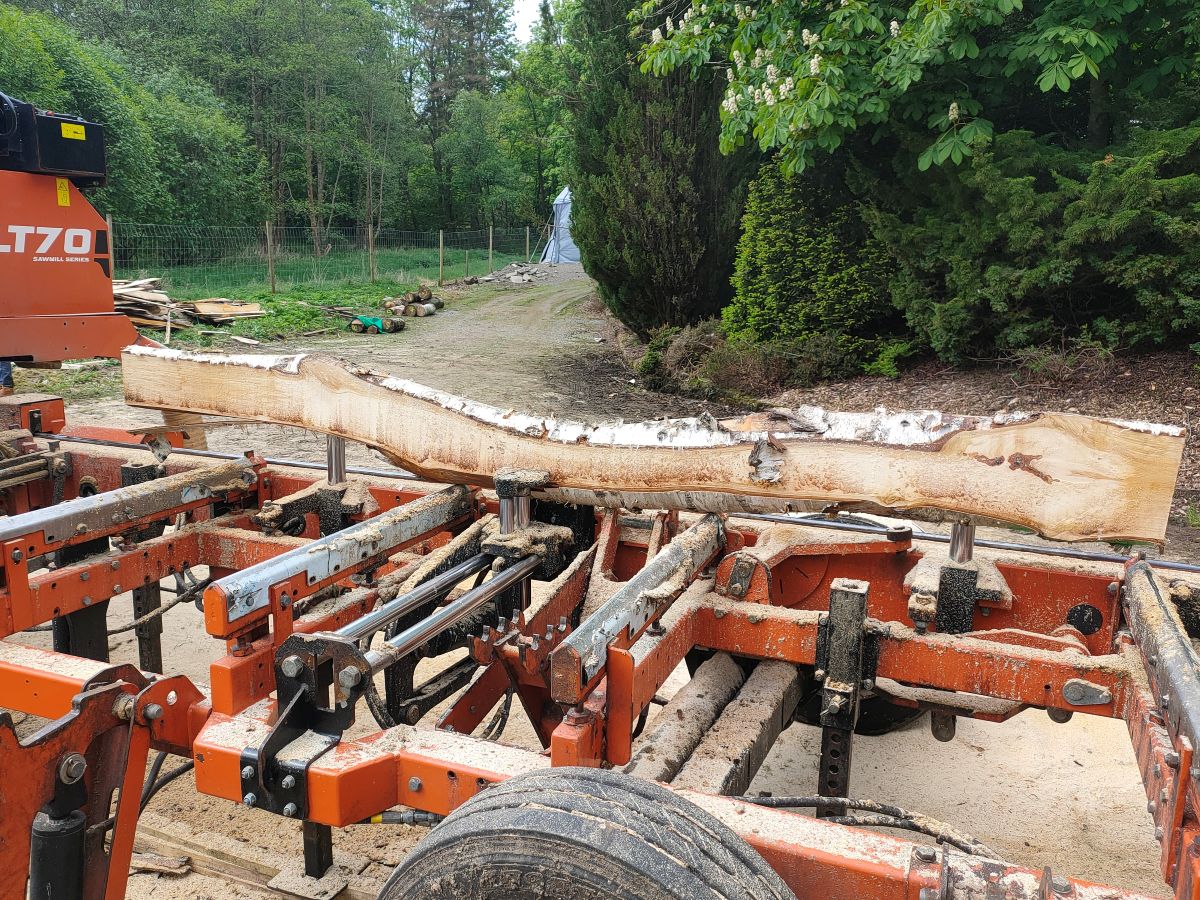
Silver birch (Betula pendula) and downy birch (B. pubescens) sit in the same spot in the diagram. While foresters might have different opinions on the two species, from a timber perspective they are so similar that they are treated and traded as one species. Interest on UK birch only started relatively recently, and the first testing (apart from small clear testing in the early FPRL days) was part of the SIRT project and included 14 battens from five logs. Since birch in the UK is rarely managed for timber production, trees tend to have poor shape for sawing, which led to such a small number of tests within the project. In the BfEW project, we sourced some more timber and so far have tested an additional 39 full size specimens. Another batch of specimens from five English trees is awaiting testing. In addition, small clear specimens are being tested and properties like compression strength, hardness and shear modulus have been measured. The test results do not only help us to identify potential uses for birch, but also help to inform European standards on strength grading and strength classes for medium-dense hardwoods.
At the ICF conference, birch cam up as the top species for more research in the “medium knowledge” category. In Europe, too, interest in birch is growing. Research on the properties of birch in Ireland is ongoing as part of the WoodProps project, and the timber there might be similar enough to UK timber so the data are useful also for us. It might even be possible to pool our data with data from all over Europe, i.e. Sweden, Norway and Germany, to get general grading assignments for European birch. These would probably not offer the best yields, but would at least give us an option to use the timber structurally.
Current research on birch in Europe is strongly focused on the production of glulam with ongoing optimisations in gluing and finger-jointing technologies. High-quality birch is also commonly used for peeled veneers and for the manufacture of plywood and LVL. While none of these technologies are currently widely used in the UK, these could be explored in future as promising outlets for the species. Before any real testing effort can be made, however, we should start planting and managing birch for timber production to get a more representative sample.
Sycamore
Sycamore (Acer pseudoplatanus) is very similar to birch in its knowledge score: 104 battens and more than 200 small clears were tested as part of the SIRT project, and we did some more work on the species as part of the BfEW project.
Compared to birch, sycamore is not receiving much research attention. Strength grading options have been developed only in Germany, and sycamore and other maple species are more commonly used in furniture and high-value items like musical instruments.
Sycamore came up last in the ranking at the conference, probably because concerns around nativeness and potential invasiveness of the species amongst ICF foresters.
Grand fir
Grand fir (Abies grandis) was tested at the FPRL as part of the characterisation of thinning from “novel” conifers between 1955 and 1958. Three timber consignments from around the country were tested, with small clear bending tests in green and dry condition (listed in Lavers) and a total of 37 full size tests. The reports also include observations on drying schedules and drying defects, but apparently the results were not sufficient for the species to be included in the main part of the BRE drying manual, as it is only listed as a “suggested schedule” for species with limited drying knowledge. Research on the species is also happening in Europe, e.g. Germany and Denmark. From word of mouth we know that drying might be one of the challenges with the species, as it seems to be prone to distortion, especially when trees enter a phase of rapid growth after thinnings take place.
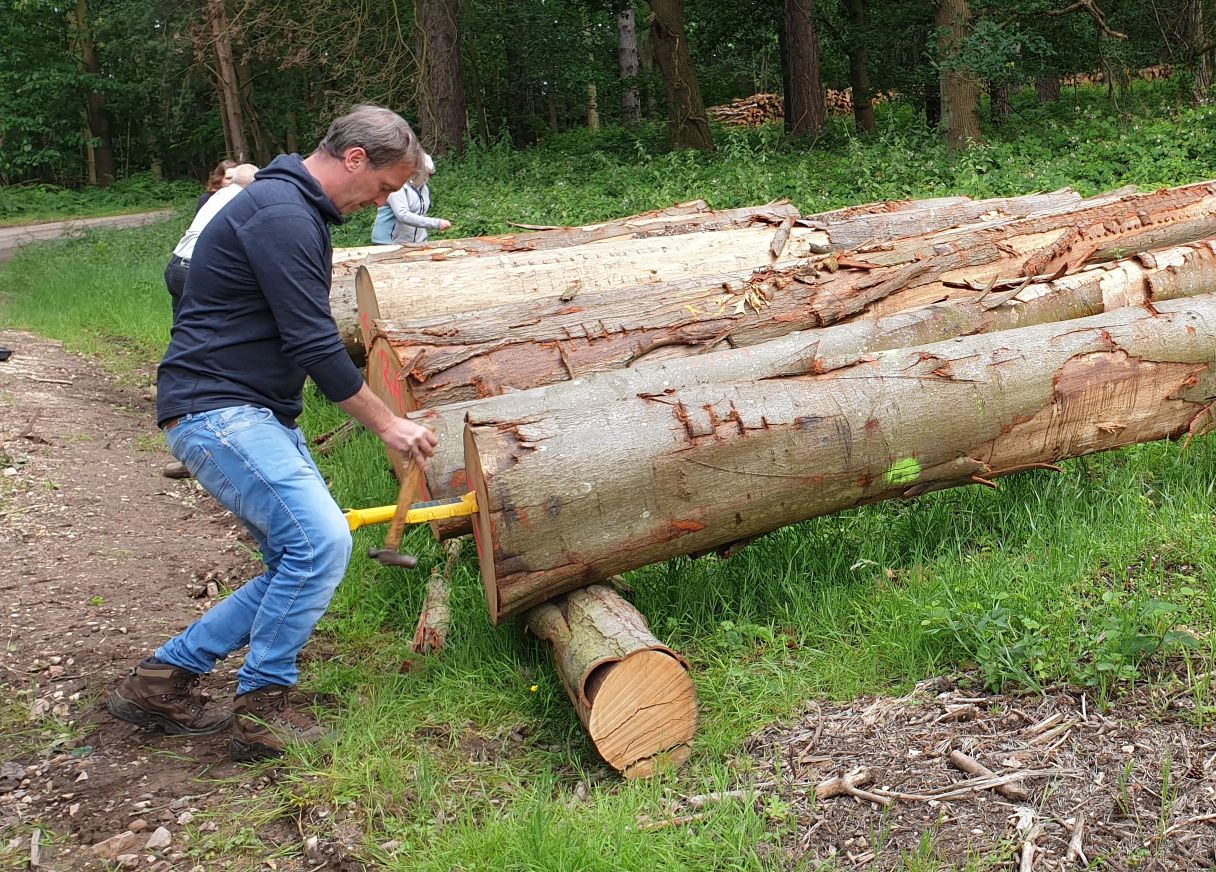
More data on mechanical properties has recently been collected as part of the SIRT project. Eighteen trees from two sites were sampled and testing was done on 105 full size battens as well as small clear specimens to get an idea about radial variation in timber properties. The data can also be linked to growth conditions and non-destructive measurements on trees and timber.
We know that grand fir is part of the “Spruce-Pine-Fir” mix that is commonly used for timber construction in North America, so similar uses might be possible for UK material, but we don’t have enough information on it yet.
Western hemlock
Western hemlock (Tsuga heterophylla), too, has received some attention by the FPRL in the search for fast-growing timber species. Like for grand fir, three consignments and some 40 full-size battens, as well as small clears, were tested in 1955 and 1956. The species was then picked up again as part of a PhD study by David Gil-Moreno where 138 full size battens were tested and indicative grading yields were established. The properties of Western hemlock seem to be quite similar to British spruce, so the species is promising for being mixed with currently used timbers, which would mean that not quite as much testing is needed to bring it to market. We have recently received additional timber from three trees that will be used for furthering the establishment of strength grading assignments for the species.
Sweet chestnut
Sweet chestnut (Castanea sativa) is the only species in the centre of the diagram that can currently be strength graded, although in a way we know less about the species than about the ones listed so far… The visual grading assignment for sweet chestnut is based on some testing, but also long-standing use of the species (and the philosophy of “it has always worked!”). The testing was apparently done at the Building Research Establishment (BRE) in the early 2000s, but we could not find the actual data, nor any information on how much timber was tested. Instead we trust that the work back then was done according to the standards at the time, and we continue to use the grading assignment (without any problems that I am aware of, so it seems to be safe, at least). It is unlikely that the grading assignment works as well as it could, though, and it would be ideal to confirm that it is safe according to modern standards too.
Sweet chestnut is widely used in the South of Europe, and a variety of visual and machine strength grading options exist for the species. From this work we know that it might be preferable to assign sweet chestnut to (softwood) C-classes, instead of the traditional hardwood D-classes because of its relatively low density.
Within the BfEW project, we have managed to sample only very little sweet chestnut. The species is relatively scarce except in the South of England, and it is readily sold to uses besides research, which is probably the reason why we have managed to only source eight boards. The material has allowed us to do some testing of secondary properties (compression strength and hardness), but not much full size testing.
Species we know a lot about
The upper right corner of the diagram is where we find species that are readily available on the market. Different options for strength grading are commonly available (the current options for UK species are listed here). For these species, a lot of testing has been done and we know a lot about their properties. But before we get to a “Sitka level” of knowledge for a species, we need to test a few thousand specimens at least. And we are not done testing once we are there…
Note: Of course there is a long history of these species being researched and they are all listed in Lavers and in the BRE drying manual. For some properties even of these well-known species, that might still be the best data we have…
European oak
European oak is a combination of the two native oak species Quercus robur and Q. petraea. The timber of the species is indistinguishable. Our knowledge of oak is actually quite similar to sweet chestnut – a visual grading assignment is based on data collected at the BRE and long-standing use. More testing according to modern standards could potentially improve the visual grading and establish machine grading options.
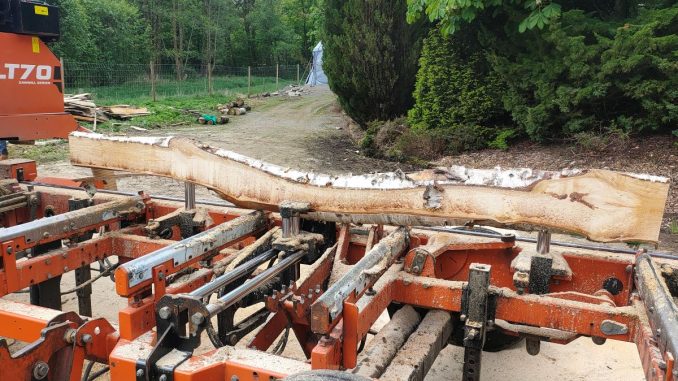
The market familiarity of oak is unrivalled amongst European hardwoods. Every hardwood sawmiller trades it and customers are perhaps even overrating the qualities of oak timber. Although probably more imported timber is used, British oak finds its way into structural uses, flooring, and furniture. The existing outlets make oak timber for testing comparably expensive, but we have sourced a few cubic metres of oak as part of the BfEW project. Some testing on compression strength and hardness has already been completed, while full size tests are following soon. The BfEW project has also demonstrated the use of British oak in CLT and glulam.
Oak is one of the most commonly used hardwoods also in Europe. Especially France and Germany have established value chains for oak, including structural uses. The research has shown, however, that commonly used grading technologies like visual grading or dynamic MOE are less effective for oak than for softwoods or lower-density hardwoods, and that automated grain angle measurements might be the way forward for achieving better grading results. The UK does not yet use this technology, but our research and partnerships with European institutes might allow us to establish laboratory measurements that simulate the technology for use in the UK.
Douglas-fir
Much of what we know about Douglas fir (Pseudotsuga mensziesii) is summarised in Tom Drewett’s PhD thesis on UK grown Douglas fir. Around 700 full-size tests have been completed on the species, and both visual and machine grading are possible. The dataset for machine grading is, however, not as extensive as for some of the other species. Because of the relatively small dataset and because the resource seems to be relatively variable, machine grading is influenced to a large extent by individual samples. Increasing the sample through some more testing might improve machine grading yields. Visual grading, too, might be improved. At the moment the visual grades GS and SS translate to less-commonly used strength classes (C14 and C18) and some data or perhaps slight tweaking of the rules could allow visual grading to more familiar strength classes.
Douglas fir topped the ranking of “high knowledge” species at the ICF conference. As one comment put it: “Douglas fir is the future. Great timber and flexibility for management.”
Scots pine
Scots pine (Pinus sylvestris) is often combined with Corsican pine (P. nigra subsp. laricio) and traded as ‘British pine’. Much of what we know about the species is summarised in “Wood properties and uses of Scots pine in Britain“. Around 500 full size tests have been completed, and the data we have are a combination of unpublished data from the BRE, testing by Forest Research, Edinburgh Napier University, and the National University of Ireland Galway. Visual grading is possible for the species, but machine grading is currently limited to the old bending-type machines and it is probably desirable to extend machine grading options to more modern sawmill standards.
Norway spruce
Norway spruce (Picea abies) is already processed and sold alongside Sitka spruce as ‘British spruce’. It is fair to assume the timber is almost the same.
Sitka spruce
Sitka spruce (Picea sitchensis) is, of course, Britain’s most important and most researched timber species. Around 2000 results of full size tests and thousands of small clear test results are available. Much of what we know is summarised in “Wood Properties and Uses of Sitka Spruce in Britain“, and it can be seen that the detailed test results give us a very good understanding of the wood properties and how they change over the tree’s life, as well as between trees and between sites. This knowledge allows us to predict yields and model the species’ behaviour under varying circumstances. But this doesn’t mean knowledge acquisition on Sitka is completed (although participants of the ICF conference certainly felt we had done enough research on spruce, and ranked Sitka 4th and Norway last). Whenever something changes in the growth of the tree (e.g. genetics, rotation lengths, silviculture) or processing of the timber (which trees make it into which uses, advances in grading technology), it needs to be confirmed that properties can still be predicted and grading assignments remain safe. We are currently working on this for ‘Super Sitka’.