Where do the sounds in film and television actually come from?
Most people would probably answer that they are recorded on set. Actors speak into microphones, explosions are captured as they happen and every sound naturally belongs to the image that accompanies it. Sound design therefore appears to be largely a matter of cleaning recordings, balancing levels and perhaps adding the occasional effect where production audio has fallen short.
Reality is far less literal than most audiences imagine. Many of the sounds audiences remember most vividly were never recorded at all. The impact of an iceberg striking the hull of a fishing vessel, the weight of an enormous stone door closing, the movement of impossible machinery or the atmosphere of a hostile environment may all be constructed from recordings that bear little resemblance to the finished result. An underwater explosion may become shifting ice. Body bags dragged through snow may suggest a frozen sea. The audience never hears the original recording. They hear the world it helps create.
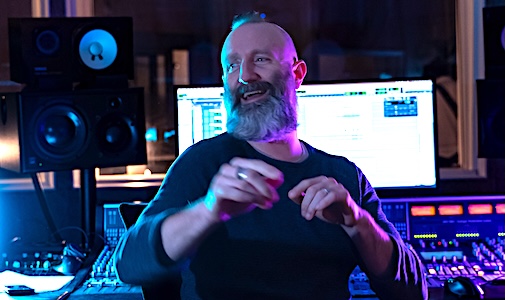
That creative process formed the starting point of Kevin Skaggs’ online guest lecture for Edinburgh Napier University. An award-winning sound editor whose work spans factual television, drama and feature productions, Skaggs has contributed to series including Deadliest Catch, where his sound effects editorial formed part of an Emmy-honoured production and earned him a Motion Picture Sound Editors Golden Reel Award. Across productions of every scale, one principle appears repeatedly throughout his work. Convincing sound is rarely discovered. It is designed.
One of the first lessons he offered had surprisingly little to do with sound itself. Before editing begins, Skaggs encourages editors to speak with the re-recording mixer who will eventually receive the session. Different mixers organise projects in different ways. Some prefer muted material arranged on dedicated tracks, while others expect particular naming conventions, layouts or methods of delivering effects. These practical conversations may appear mundane, yet they establish the conditions that allow the creative work to proceed smoothly. Successful sound design depends as much upon collaboration as it does upon imagination.
That perspective quietly challenges a common misconception about post-production. Sound editors are often imagined as working alone, making creative decisions in isolation before handing completed material to the mixing stage. Skaggs described something much more collaborative. Editors, mixers and supervisors each contribute different forms of expertise, and the quality of the finished soundtrack often reflects how effectively those people communicate long before the audience hears a single frame. Organisation therefore becomes part of creativity rather than an obstacle to it.
Viewed from that perspective, sound editorial becomes considerably more than assembling effects against picture. Every decision begins with a question about what the audience should experience rather than what happened during filming. A recording is valued not for what it originally captured, but for what it can become when placed into a new context. Sound design is therefore not about finding the correct sound. It is about creating the sound the audience believes belongs to the story.
The discussion quickly moved from these principles into the practical realities of professional sound editorial. Faced with a dramatic sequence from Deadliest Catch, Skaggs demonstrated how an apparently straightforward scene could require dozens of carefully chosen sounds, many drawn from entirely unexpected sources. Creating believable sound rarely begins with literal recordings. It begins with imagination.
If convincing sound is created rather than discovered, the obvious question becomes where those sounds actually come from. Audiences often assume that sound editors spend their time searching extensive libraries until they find the perfect effect. Reality is considerably less predictable. Kevin Skaggs demonstrated that some of the most convincing sounds emerge through experimentation, where recordings are valued not for what they are, but for what they might become.
One of his favourite examples came from an episode of Deadliest Catch. An enormous iceberg collides with a fishing vessel, creating one of the programme’s most dramatic moments. Recording the sound of a real iceberg striking a ship was never a realistic possibility. Instead, the sequence was built from a collection of entirely different recordings. Body bags dragged through snow created the shifting weight of moving ice, while underwater explosions provided the immense force of the collision. Individually, none of these sounds resembled an iceberg. Combined carefully against the picture, they produced an event that audiences readily accepted as authentic.
That example illustrates an important distinction between literal recording and perceptual realism. The objective is not to reproduce reality exactly as it sounded, assuming such a recording even exists. The objective is to create the version of reality that audiences expect to hear. Viewers judge the success of a soundtrack by whether it feels convincing within the story, not by whether every individual sound originated from the object appearing on screen. Believability, rather than literal accuracy, becomes the measure of success.
Skaggs described this creative process with characteristic simplicity. His advice was to “throw paint at the wall.” Rather than searching endlessly for a single perfect recording, editors should experiment freely, combining, layering and transforming sounds until something unexpected begins to emerge. Many ideas fail. Others reveal possibilities that would never have appeared through careful planning alone. Creativity therefore develops through exploration as much as intention.
Experimentation, however, depends upon preparation. Skaggs emphasised the importance of building and maintaining well organised sound libraries over many years. Recordings gathered for one production frequently solve entirely different problems later in a career. A sound captured for its obvious purpose may ultimately prove valuable for something completely unexpected. A library therefore becomes far more than a catalogue of effects. It becomes a resource for creative exploration, allowing editors to make connections that would otherwise remain undiscovered.
Professional sound design rarely begins with certainty. Editors experiment, combine unexpected recordings and refine ideas until the soundtrack supports the story convincingly. The recordings themselves are only the starting point. Creative judgement determines what those recordings ultimately become. The sounds that audiences remember most vividly are often those that began life as something entirely different, transformed through imagination rather than discovered through searching.
As the discussion moved from creative experimentation towards the practical realities of post-production, another aspect of the profession came into focus. Inventing convincing sounds is only one part of the process. Those sounds must also be organised, prepared and delivered in ways that allow the re-recording mixer to shape them into a coherent final soundtrack. Professional sound editorial depends as much upon disciplined workflow as it does upon imagination.
If imagination transforms unexpected recordings into believable worlds, collaboration determines whether those worlds survive to the final soundtrack. Audiences hear a seamless experience rather than the hundreds of individual sounds prepared behind the scenes. Kevin Skaggs argued that creating convincing effects is only part of the editor’s responsibility. Those sounds must also be organised, documented and delivered in ways that allow the re-recording mixer to shape them into a coherent whole.
Throughout the lecture, Skaggs returned repeatedly to the relationship between the sound editor and the re-recording mixer. Editors and mixers perform different roles, yet each depends upon the other. The editor constructs the individual building blocks of the soundtrack. The mixer balances those elements alongside dialogue and music, deciding how they ultimately contribute to the story. Every editorial decision therefore extends beyond the editing room. A thoughtfully prepared session allows the mixer to concentrate on creative choices. A poorly organised one forces valuable studio time to be spent searching for sounds, renaming tracks or untangling unnecessary complexity.
Organisation therefore becomes much more than administrative tidiness. Skaggs explained how effects should be arranged into logical groups, separating hard effects, backgrounds, design elements and other categories so that the structure of the session is immediately understandable. Consistent layouts, clear track names and predictable organisation all communicate the editor’s intentions before a single sound is played. A well organised session does not simply contain good work. It makes that work easy for someone else to use.
Thinking like the mixer also changes the way editors approach technical decisions. Skaggs discussed surround sound layouts, low frequency effects, rendered processing and the preparation of Pro Tools sessions, not as isolated technical topics, but as practical ways of giving the mixer greater flexibility. Some sounds need processing permanently embedded into the file to preserve their identity. Others are better left unprocessed, allowing creative decisions to be made later within the context of the complete soundtrack. Professional judgement lies in recognising which approach best serves the production rather than the editor’s personal preferences.
A recurring theme throughout the lecture was the importance of providing options rather than imposing decisions. Editors naturally develop strong ideas while building a soundtrack, yet the final mix brings together dialogue, music and effects in ways that cannot always be anticipated during editorial. Leaving appropriate flexibility allows the mixer to respond to changing creative priorities without sacrificing the quality of the underlying material. Professional sound editorial therefore depends as much upon enabling other people’s creativity as expressing one’s own.
Viewed from this perspective, collaboration becomes a creative skill in its own right. Technical knowledge, careful organisation and thoughtful preparation all exist to support the same objective: allowing every contributor to produce the strongest possible soundtrack. The most successful editors are not simply recognised for the sounds they create. They are valued for making the entire post-production process work more effectively.
Professional practice therefore extends well beyond individual creativity. It is built upon trust, communication and a shared understanding that every stage of post-production contributes to the finished soundtrack. Those same principles shape creative problem solving, strengthen professional relationships and underpin the collaborative culture on which successful sound design depends.
Technical expertise, creative experimentation and disciplined collaboration all contribute to a successful soundtrack, yet Kevin Skaggs demonstrated that none of these qualities stands alone. Behind every finished production lies a close working relationship between editors, mixers and supervisors, each contributing different expertise to a shared creative objective. A soundtrack succeeds not through the work of one individual, but through the way many specialists build upon one another’s decisions.
Professional relationships featured prominently throughout the lecture. Sound editorial does not end when an editor has created convincing effects. Those sounds must be delivered in ways that allow the re-recording mixer to understand them, adapt them and integrate them with dialogue and music. Editors rely upon mixers to realise the full potential of their work, while mixers depend upon editors to provide material that is organised, reliable and thoughtfully prepared. Trust therefore becomes an essential part of the creative process. Strong professional relationships allow discussions to focus on storytelling rather than technical obstacles.
That collaborative approach also shapes creative problem solving. Every production presents challenges that have not been encountered before, whether creating entirely new sound effects, finding unexpected recordings or adapting established workflows to suit a particular project. Solutions rarely emerge from following fixed rules. They develop through experimentation, discussion and a willingness to refine ideas until they serve the story effectively. Technical expertise and creative imagination achieve their greatest value when they allow other people to do their best work.
Throughout the lecture, Skaggs presented sound editorial as a profession built upon preparation rather than improvisation alone. Experimentation remains central, yet successful experimentation depends upon organised sessions, carefully maintained libraries, clear communication and an understanding of how every stage of post-production contributes to the finished soundtrack. Creativity does not replace professional discipline. It grows from it.
Viewed as a whole, the lecture described sound design as a sequence of connected decisions. Recordings become raw materials for experimentation. Experimentation develops into carefully organised editorial work. Editorial decisions provide the foundation for the final mix. Each stage supports the next, allowing individual contributions to become a single coherent soundtrack. No part of the process exists in isolation, and every contributor depends upon the expertise of others.
Audiences rarely notice the countless individual decisions that shape a soundtrack. They simply believe the world they are hearing. Achieving that illusion demands imagination, technical skill, careful organisation and, above all, collaboration between people who trust one another’s expertise. The finest sound design is therefore not measured by how many sounds the audience notices. It is measured by how completely those sounds allow the audience to believe the story.