Category: Foley

  • Creating the Sound of Bodies in Impossible Spaces: Nicolas Becker on Sci-Fi Foley and Embodied Listening

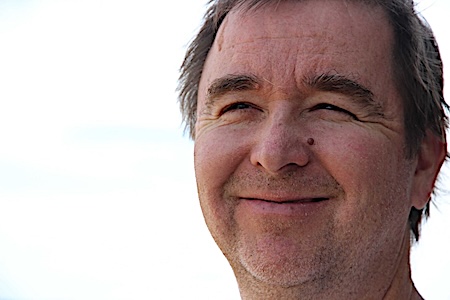
    Nicolas Becker

    Science fiction sound often risks becoming trapped inside its own history. Audiences become familiar with particular cinematic vocabularies so thoroughly that certain sounds gradually begin standing in for entire ideas. Futuristic interfaces shimmer with recognisable electronic textures, spacecraft doors release carefully sculpted hydraulic movements, while machines hum with tones inherited from decades of earlier films. Many of these sounds remain compelling, though repeated use can gradually create a strange effect. Instead of sounding like imagined futures, science fiction sometimes begins sounding primarily like other science fiction.

    Nicolas Becker’s guest lecture explored a rather different approach to sound design. Across discussions of Foley, experimentation, recording techniques, embodiment, resonance, acoustics, and material behaviour, a common principle gradually surfaced. Convincing futuristic sound may depend less upon inventing unfamiliar noises than reconnecting audiences with physical experiences they already understand through memory, vibration, pressure, texture, and the body itself. One of Becker’s central arguments was that audiences do not believe science fiction worlds merely through novelty. Completely unfamiliar sound can quickly become emotionally abstract. Futuristic environments instead become convincing once they remain anchored to recognisable sensory experience. Pressure, resonance, vibration, friction, breath, and spatial instability all carry meanings audiences already understand physically, even within worlds they have never encountered before.

    Becker described discovering Foley at the age of fifteen before immediately recognising that it brought together many different interests simultaneously. Cinema, movement, physical performance, listening, material experimentation, and interaction all converged within the practice. Yet one observation from early in the lecture became particularly revealing. He explained that he does not primarily create sound out of fascination with sound alone. What interests him more deeply involves the way sound transforms images.

    A sound placed against an image does not merely accompany what audiences already see. Something else emerges through the relationship between them. Becker described this as creating a kind of “third image”, neither entirely visual nor entirely sonic. Foley therefore ceases to become simple illustration. Sound does not simply confirm that a door closed or that footsteps occurred. Instead, sound reshapes how physical movement, material presence, scale, emotion, weight, fragility, and tension are perceived altogether. The image viewers believe they are watching is partly constructed through listening.

    This relationship becomes especially complicated within science fiction. Historical films already require reconstruction of worlds no longer accessible, though futuristic films involve constructing environments that have never existed at all. Such projects force sound designers into unusual territory. Audiences must believe experiences they have never directly encountered. A recurring theme throughout the lecture was that realism does not necessarily emerge through imitation of previous films. Instead, he suggested that audiences connect most strongly with sounds grounded in bodily memory and sensory experience. Sound becomes convincing once it resonates with sensations people already recognise, even if they cannot consciously identify why.

    Discussion of Gravity formed one of the clearest examples of this philosophy. Space immediately creates a problem for sound design. Vacuum prevents conventional sound transmission, meaning many familiar cinematic approaches become difficult to justify physically. Rather than treating this limitation as an obstacle, Becker approached it as an opportunity to rethink how listening itself might function.

    Traditional cinema frequently treats sound as external observation. Audiences hear worlds from an impossible perspective positioned outside events themselves. Becker’s approach repeatedly collapses this distance. Listening becomes embodied rather than observational. He began considering what astronauts would still perceive internally. A pressurised suit transmits vibration. Bodies conduct sound through tissue and bone. Contact with vibrating surfaces produces sensation physically before it becomes recognisable as hearing. Becker therefore started attaching hydrophones directly onto his own body while performing sounds physically through different materials and surfaces. His body effectively became an acoustic filter.

    The resulting sounds possess a striking quality precisely because they feel simultaneously internal and mechanical. Vibrations seem to emerge from within the listener rather than arriving externally from a distant cinematic environment. Becker connected this partly to experiences such as immersion underwater or entering an anechoic chamber, where external sound becomes reduced enough that internal bodily activity suddenly becomes perceptible. Heartbeats, blood movement, breathing, pressure, and friction begin dominating perception once surrounding acoustic information disappears.

    Much of Gravity therefore became less about designing conventional spacecraft sound and more about constructing a sensory relationship between bodies, pressure, vibration, and isolation. Rather than relying primarily upon inherited science fiction conventions, Becker searched for sounds grounded in experiences audiences already carry unconsciously within themselves. The objective was not reproducing what futuristic machines might literally sound like. Instead, the work repeatedly explored how bodies might experience impossible environments from within.

    This emphasis upon embodiment extended throughout the lecture. Becker frequently described recording less as a technical procedure than as a physical interaction with material. He spoke about “digging” into sound through microphones, surfaces, and objects almost like an animal searching for prey. Recording becomes exploratory rather than merely documentary. Instead of searching for predefined results, he experiments with materials, microphones, resonances, distortions, and spaces until unfamiliar possibilities begin emerging.

    Hydrophones, geophones, gyroscopes, seismic sensors, underwater acoustics, resonant structures, and sympathetic vibrations appeared throughout the lecture not as isolated technical curiosities but as expressions of a broader way of thinking about sound. Across these examples, Becker continually sought sound behaviours rooted in physical phenomena rather than cinematic shorthand.

    Microphones themselves therefore stop functioning merely as neutral capture devices. Different recording systems become ways of translating material behaviour into perception. Certain microphones approximate human hearing more naturally, while others emphasise transient aggression, resonance, spatial instability, or harmonic complexity differently. Technical systems therefore shape how audiences physically inhabit cinematic space.

    One particularly revealing example involved Becker’s rejection of familiar mechanical science fiction aesthetics built around gears, motors, and obvious physical contact. While developing robotic and futuristic sounds, he instead searched for systems involving minimal friction or direct interaction between moving parts. Gyroscopes, magnetic stabilisation systems, and no-contact mechanisms became especially attractive precisely because they produced movement without conventional mechanical aggression.

    This pursuit of unfamiliar material behaviour also led Becker towards geophones originally designed for oil exploration. Such devices normally detect vibrations travelling through the earth itself. After modifying them into recording devices for creative use, Becker discovered that they produced unusual forms of mechanical distortion unlike conventional electronic processing. Explosions, impacts, and vibrations acquired strange physical textures that felt simultaneously abstract and believable.

    What matters here is not novelty for its own sake. Throughout the lecture, he expressed dissatisfaction with science fiction sound becoming trapped inside references to earlier films. Once audiences unconsciously begin recognising cinematic conventions instead of connecting with physical sensation, realism weakens. He described this particularly clearly while discussing the enormous influence of Star Wars. Those films established an extraordinarily influential sonic vocabulary, though Becker noted that many later science fiction works gradually began imitating these established sounds rather than rediscovering material reality independently. Eventually futuristic worlds risk sounding less like futures than accumulated echoes of earlier cinema.

    Projects such as Gravity, Arrival, and Ex Machina interested him partly because they attempted moving away from these inherited vocabularies towards something more physically grounded. Becker argued that the real world already contains astonishing sonic material if designers remain willing to search for it. Lakes, seismic activity, industrial systems, underwater acoustics, resonant structures, pressure systems, wind, and vibration all contain textures far stranger than many artificially synthesised science fiction effects.

    Memory consequently became another major theme throughout the lecture. Becker repeatedly suggested that audiences respond most strongly once sound reconnects them with experiences they have already encountered physically, even if only indirectly. Rather than reminding viewers of earlier films, he aims to reconnect them with sensations stored within their own perceptual histories. Sound therefore stops functioning merely as representation. It begins activating remembered forms of bodily knowledge.

    These ideas shape even seemingly small technical decisions. Becker discussed reconstructing recording conditions with extreme precision, carefully considering acoustic environments, microphone placement, reflections, surfaces, and physical obstacles. A person walking behind furniture should sound physically constrained by that furniture. A room should behave according to its dimensions and materials. Exterior movement requires different transient behaviour than interior movement. Ribbon microphones become useful outdoors partly due to their softer transient response and spatial characteristics. These decisions emerge from a broader commitment to sensory plausibility rather than abstraction.

    Experimentation itself therefore occupies a central position within Becker’s practice. Constraints, unusual recording processes, collaborative exploration, and conceptual frameworks all become mechanisms for discovering unfamiliar sonic relationships. He repeatedly described projects less as standardised workflows than prototypes requiring entirely different approaches each time.

    Such an approach has increasingly pushed his work beyond conventional Foley stages altogether. Rather than always recording inside controlled studio environments, Becker often seeks real locations whose acoustics already contain the physical characteristics required by the film. Castles, industrial structures, resonant chambers, unusual landscapes, and environmental spaces become active collaborators within the recording process itself.

    Collaboration more generally emerged as another important dimension of his work. Becker repeatedly described involving musicians, engineers, scientists, architects, landscape designers, instrument builders, and conceptual artists within projects. Sound design becomes a form of interdisciplinary experimentation instead of isolated post-production labour. Conversations with geophysicists led towards seismic recording experiments. Underwater acoustic research informed approaches to resonance and transmission. Work with conceptual artists encouraged treating every project as a unique prototype requiring its own conceptual logic and constraints.

    One of the more compelling aspects of the lecture involved Becker’s refusal to separate technical experimentation from artistic thinking. Microphones, recording formats, resonances, distortions, acoustic physics, and bodily sensation never appeared merely as engineering problems. Technical systems instead became methods for reshaping perception itself.

    Curiosity emerged throughout the lecture as a driving force behind his practice. He described continual experimentation with new technologies, new collaborators, new recording situations, and unfamiliar physical systems. Yet beneath this openness sits a remarkably coherent underlying philosophy. Sound becomes meaningful once it reconnects audiences with material experience rather than cinematic habit.

    Perhaps this explains why Becker’s science fiction work often feels unusually tactile. Machines appear heavy, spaces feel pressurised, vibrations seem physically present, while futuristic environments retain connections to recognisable sensory reality. Audiences may never consciously identify the specific recording techniques involved, though they respond to the bodily logic underneath them.

    Science fiction frequently concerns imagined futures, impossible environments, and unfamiliar technologies. Becker’s lecture repeatedly suggested that convincing audiences of these worlds may depend less upon escaping physical reality than listening to it more carefully. The future begins feeling believable once sound reconnects viewers with the textures, pressures, resonances, and vibrations they already understand through lived experience.

    Rather than constructing futures entirely from abstraction, Becker instead builds impossible worlds from sensations audiences have carried within themselves all along.

  • There and Back Again: The Foley Journey of John Simpson

    The magic of cinema extends far beyond what appears on screen. The immersive power of film owes much to sound, particularly the subtle, often unnoticed details that breathe life into scenes. At the heart of this auditory craft is Foley, a specialised discipline within sound design that recreates everyday sounds to enhance the cinematic experience. From the rustling of fabric to the crunch of footsteps on gravel, Foley artists bring a level of realism and texture that elevates storytelling.

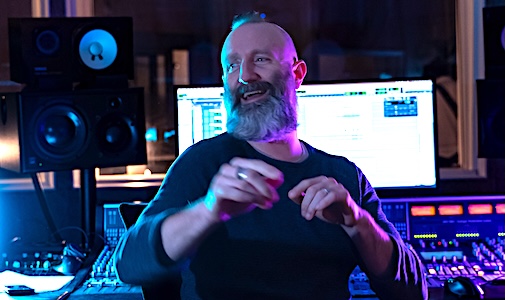
    John Simpson

    John Simpson’s Path into Foley

    A distinguished Foley artist, John Simpson, shared insights into the evolving landscape of the craft. With a career spanning decades, his journey into Foley was, like many others, serendipitous. Initially a Foley recordist, his early work took place in an era when Foley was far less complex than it is today. At that time, Foley was not a comprehensive soundscape but rather a tool for editors to fill in the gaps left by automated dialogue replacement (ADR). Soundtracks were often constructed from a limited number of layers, with minimal dedicated Foley elements. However, as film audio technology advanced and stereo soundtracks became standard, Foley took on a more significant role in shaping cinematic experiences.

    Bringing Iconic Films to Life

    John Simpson’s extensive film credits include work on major productions such as Mad Max: Fury Road, The Adventures of Tintin, Happy Feet, King Kong, The Lego Movie, and The Hobbit trilogy. His expertise has contributed to some of the most visually and sonically compelling films of recent times, adding depth and authenticity to their soundscapes. His ability to craft distinctive auditory textures has made him a highly sought-after Foley artist in the industry.

    The Art of Sound Creation

    Simpson detailed some of the unique approaches he has taken in his work. For The Adventures of Tintin, he described the challenge of creating exaggerated yet believable sounds for animation, including the intricate layers needed for the dog Snowy’s movements. He also explained how he and his team created the sound of ship sequences by recording inside a Foley room, using a specially built box to enclose a microphone and simulate the enclosed resonance of a ship’s interior.

    In Happy Feet, Simpson recalled working extensively on the penguin characters’ movements. To replicate the sound of their feet sliding on ice, he used his fingers on different textured gloves and employed frozen fish to achieve realistic wet movements. The Foley team also created unique water effects by stomping around in a bathtub. Additionally, for the character’s dance sequences, he used wooden boards and various shoe types to capture the different weights and styles of tap dancing.

    Crafting the Sounds of Middle-earth

    For The Hobbit films, he described the meticulous work involved in bringing the sounds of Middle-earth to life. One of the most memorable tasks was recreating the sound of Bilbo running through Smaug’s treasure hoard. This involved pouring and shifting buckets of metal coins across the floor and layering multiple elements, including washers, chains, and lightweight metal pieces, to achieve depth and variation. In addition, he highlighted the use of cloth and military-style rustling to enhance battle sequences. He also mentioned that much of the squishy, organic sounds of creatures in The Hobbit were recorded long before the film, creating a library of textures used in later productions. For dragon movements, he described using leather straps, adding weight by dragging them across various surfaces.

    Experimentation and Innovation

    Experimentation remains at the core of Foley. Simpson recalled a scene in King Kong that required simulating the movement of Kong’s enormous hands gripping the Empire State Building. Instead of relying solely on standard props, he used a large copper pot with padding inside to mimic the deep resonance of Kong’s fingers moving across the structure. He also shared how sounds for the ship sequences in King Kong were recorded by stomping around in different types of boots and walking across various wooden surfaces.

    For The Lego Movie, he described how the character MetalBeard’s mechanical movements were enhanced with retractable vacuum cords, chains, and various metallic elements to create an organic yet plastic sound. He also explained how he carefully mixed different Lego brick sounds at various angles and pressures to ensure authenticity while keeping the movements dynamic and engaging. He mentioned how he used garage sales and second-hand stores to find items that could be creatively repurposed for unique sounds.

    For Walking with Dinosaurs, Simpson shared how he approached the challenge of creating dinosaur footsteps. Boxing gloves were used to strike damp sand, providing a weighty, natural sound. To add layers of movement, leather straps and thick ropes were manipulated to simulate the shifting of large creatures. Additionally, he recorded various cloth and harness movements to replicate the creaking of dinosaur skin and muscle shifts. The roaring of creatures was sometimes constructed using unconventional means, such as dragging large, heavy objects across surfaces to create deep, guttural tones.

    Recording Techniques and Unique Methods

    Simpson also experimented with microphone placement to capture unique sounds. For heavy, weighty footsteps, he buried microphones underground and recorded stomping overhead. To simulate the distant echo of footsteps in deep caves, he used long metal pipes and recorded sounds reverberating through them. Additionally, he used hydrophones to capture underwater movements, such as recording splashing and bubbling sounds for ocean-based scenes.

    The Future of Foley

    Beyond feature films, Foley plays a crucial role in television, video games, and even virtual reality experiences. The craft continues to adapt alongside technological advancements, ensuring that sound remains an integral part of storytelling, no matter the medium. While Foley often goes unnoticed by audiences, its absence would be keenly felt, as it provides the subtle authenticity that draws viewers into the worlds they see on screen.

    This lecture highlighted the dedication and ingenuity required in the field of Foley. The work of Foley artists, often overlooked, remains a cornerstone of cinematic storytelling. As long as there are stories to be told, Foley will continue to shape the way audiences experience them, adding depth, realism, and emotional resonance to every scene.


  • Stepping into Sound: Insights from Dr Vanessa Ament’s Lecture on Foley

    Dr Vanessa Ament, an acclaimed Foley artist and author of The Foley Grail, shared her insights in a fascinating lecture that covered everything from the nuances of Foley artistry to the philosophy behind sound in film. The Foley Grail is widely recognised as a definitive guide to the craft, offering a comprehensive exploration into the techniques, history, and significance of Foley in cinema.

    Dr Vanessa Theme Ament

    The Power of Sound in Storytelling

    Dr Ament underscored how sound shapes emotional responses, sets the tone, and supports the narrative. She pointed to films like Dirty Rotten Scoundrels, where carefully placed silence enhances audience engagement, avoiding unnecessary auditory clutter. She also referenced The Color Purple, where subtle ambient sounds and quiet moments in key emotional scenes amplified the depth of character interactions, making the audience feel more intimately connected to the story.

    Beyond silence, she highlighted how specific sounds can evoke emotional shifts. In Edward Scissorhands, the delicate snipping noises of the protagonist’s scissors were not just functional but reflective of his emotional state—gentle and rhythmic in moments of tenderness, erratic and sharp in times of distress. This attention to sonic detail, she explained, enhances storytelling in a way that audiences often register subconsciously. By using these examples, Dr Ament reinforced the power of sound as an unseen yet essential component of cinematic storytelling.

    Foley as a Craft

    Foley is not just about adding footsteps or the rustling of fabric—it is about enhancing the believability of a character’s movements and interactions with their environment. Dr Ament explained how the best Foley is indistinguishable from production sound, ensuring seamless integration. In her discussion, she highlighted the difference between various approaches, particularly contrasting the Hollywood tendency for hyperrealism with more nuanced approaches in other parts of the world.

    Dr Ament’s Foley work exemplifies the creativity needed to craft immersive and convincing cinematic soundscapes. In Die Hard 2, she and her team crushed VHS tape cases underfoot to authentically replicate the sound of crunching snow, ensuring that each step taken by the characters felt natural and immersive.

    In Predator, the challenge was to give Arnold Schwarzenegger’s movements a sense of weight and power. To achieve this, Dr Ament used a combination of leather straps and metallic elements to create the sounds of his gear shifting with every step. This meticulous approach enhanced the character’s physical presence, ensuring that audiences felt the weight of his every movement.

    Beyond these, Dr Ament has employed unconventional techniques tailored to specific films. In Die Hard, she used a combination of cracked walnuts and frozen bell peppers to create the distinct sound of breaking bones during the film’s intense fight sequences. For The Addams Family, she layered fabric swishes and creaks to bring authenticity to Morticia Addams’ flowing gown, ensuring that every movement felt as elegant and eerie as Angelica Huston’s performance. Additionally, in Total Recall, she used compressed air bursts and manipulated rubber materials to enhance the futuristic, mechanical quality of the film’s synthetic environments and action-heavy sequences. These examples demonstrate how Foley is an indispensable tool in enhancing storytelling through sound.

    Working with Actors’ Performances

    One of the more compelling parts of Dr Ament’s talk was her exploration of how an actor’s physicality influences Foley. She spoke about working on Batman Returns, where Michelle Pfeiffer’s precise and deliberate movements as Catwoman allowed for equally meticulous Foley work. In contrast, Danny DeVito’s Penguin, though an interesting challenge, required more consistency in grotesque and exaggerated sounds rather than delicate nuances.

    Dr Ament used wet rags manipulated with precision to create the grotesque, slimy textures that defined Danny DeVito’s Penguin. This technique helped reinforce the unsettling nature of the character, making his movements feel more visceral and authentic. The Penguin’s waddling gait was accentuated by dampened fabrics, ensuring that every step carried an additional sense of discomfort and unease.

    Additionally, for the same film, various materials such as stiff rubber and leather were used to capture the distinct sound of Catwoman’s costume, bringing an additional layer of realism to Michelle Pfeiffer’s precise, feline movements. Every flick of her whip and the sleek motion of her tight-fitting suit required sonic precision to maintain the character’s agile and controlled presence. Dr Ament ensured that even the subtlest swish of fabric complemented Pfeiffer’s physicality, enhancing the illusion of fluidity and grace in Catwoman’s movement.

    The Influence of Backgrounds and Training

    Dr Ament discussed how a Foley artist’s personal background can shape their approach to sound, influencing the way they perceive and create auditory experiences. Coming from a performance background herself, she highlighted how musicians often have an acute sensitivity to rhythm, tempo, and tonal variation, which translates seamlessly into the nuanced timing of Foley sounds. Dancers, on the other hand, bring a deep understanding of movement and physicality, allowing them to interpret the kinetic energy of on-screen characters with precision.

    She also noted that artists with a fine arts education tend to approach Foley from a sculptural perspective, treating sound as a three-dimensional entity that interacts dynamically with visual storytelling. Additionally, she emphasised that some of the best Foley artists and sound designers emerge from musical backgrounds, where their appreciation for space, resonance, and dynamics enables them to craft sonic environments that are both immersive and expressive. Dr Ament underscored that this diversity in training enriches the field, allowing for a more varied and innovative approach to Foley work.

    The Evolution of Sound Design

    Comparing classic soundtracks with modern blockbusters, Dr Ament was candid in her critique of contemporary sound design trends. She highlighted how many recent films opt for an overwhelming auditory assault, where layers of sound effects, music, and dialogue compete for attention rather than complementing each other. This, she argued, often leads to sensory overload, diminishing the audience’s ability to engage with the film on a deeper emotional level.

    She contrasted this with earlier approaches where sound designers exercised greater restraint, allowing for moments of silence and subtle audio cues to build tension and heighten suspense. For example, in Predator, strategic use of environmental sounds and quiet moments amplified the sense of unease before action sequences, making the soundscape an active part of the storytelling rather than an indiscriminate barrage of noise. Similarly, in Die Hard, selective use of reverb and distant echoes added a sense of scale to the confined spaces of Nakatomi Plaza, reinforcing the intensity of John McClane’s experience without overwhelming the audience.

    Dr Ament noted that while digital advancements have simplified layering sound, they also pose the risk of overuse, reducing the clarity and impact of a film’s auditory landscape. She suggested that modern filmmakers could benefit from revisiting classic films to appreciate how purposeful restraint in sound design can create a more immersive and emotionally resonant experience.

    Global Perspectives on Foley

    Dr Ament has conducted extensive interviews with Foley artists from around the world, uncovering innovative practices that differ from Hollywood’s established methods. She described how some European Foley artists prefer to record sound effects outdoors for authenticity, capturing the natural resonance of footsteps on varied terrain or the organic rustling of leaves. Others incorporate real-world spaces into their recordings, using locations such as abandoned buildings, underground tunnels, or historic courtyards to enhance the authenticity of their sounds.

    She also highlighted the differences in approach across regions, such as how Scandinavian Foley artists often integrate the natural acoustics of forests and icy landscapes into their recordings, while Japanese practitioners frequently employ traditional materials and handcrafted props to achieve unique textures. Additionally, some European studios encourage improvisation by bringing actors into Foley sessions, allowing them to physically engage with props to create more naturalistic performances.

    Dr Ament’s research underscores the vast diversity of Foley techniques worldwide, demonstrating how each region’s cultural and environmental influences shape the soundscapes of cinema in distinctive ways.

    Final Thoughts

    Dr Vanessa Ament’s lecture offered a compelling exploration of sound design and Foley, highlighting craftsmanship, industry challenges, and the evolving role of sound in cinema. For anyone interested in film, her insights serve as a reminder that sound is not just an accompaniment to visuals—it is a storytelling force in its own right.

    She emphasised that effective Foley seamlessly blends into a film, subtly enhancing the experience without drawing attention to itself. As the industry continues to evolve, the challenge remains to balance technical advancements with artistic integrity, ensuring that sound continues to serve the story rather than overwhelm it.