Category: Mixing

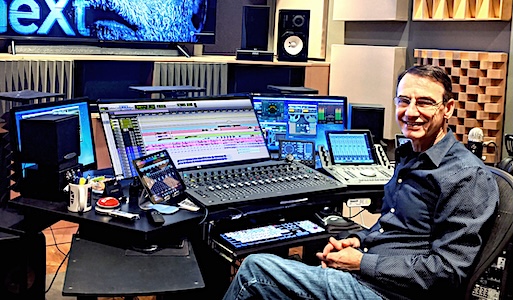
  • How Do You Design the Sound of a Blockbuster Game? Michael Caisley on Creativity, Recording, and Crafting the Sound of Call of Duty

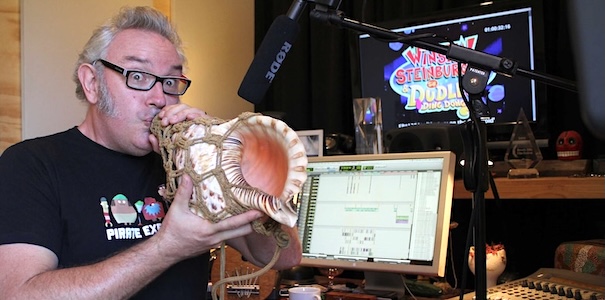
    Michael Caisley

    How do you design the sound of a blockbuster game?

    Modern video games are built from extraordinarily complex systems. Artificial intelligence, physics, animation, graphics and networking all operate simultaneously to create worlds that respond continuously to the player’s decisions. Sound design must function within that same complexity. Unlike film, where every frame is predetermined, game audio unfolds differently every time someone plays. Thousands of individual sounds interact dynamically, responding to changing environments, player behaviour and gameplay events without losing clarity or dramatic impact. During his online guest lecture for Edinburgh Napier University, Michael Caisley drew upon his experience as Senior Sound Designer on Call of Duty: Advanced Warfare to explore how one of the industry’s largest productions approached this challenge. Throughout the session, one principle emerged repeatedly. Great game audio is designed as a complete system rather than a collection of individual sound effects.

    This philosophy shaped every stage of the project’s development. Rather than asking how individual weapons, footsteps or explosions should sound, the audio team began with a broader question. How should the player experience the world? Every recording, editing decision and implementation technique ultimately served that objective. Sound design therefore became an exercise in shaping perception rather than simply producing assets. Individual recordings remained important, though their true value emerged only through the relationships they formed with every other element of the soundtrack. The player never experiences sounds in isolation. They experience an acoustic world.

    Caisley explained that this perspective influenced one of the team’s earliest decisions. Although Call of Duty already possessed an established sonic identity developed across multiple successful titles, the audio team resisted the temptation simply to inherit those conventions. Instead, they treated Advanced Warfare as an opportunity to rethink the game’s entire sound philosophy from first principles. Existing assets, familiar production techniques and long-standing implementation methods were all reconsidered. Their ambition was not to reject the past, but to ensure that every creative decision continued to serve the experience they wanted players to have. Innovation therefore emerged through careful questioning rather than change for its own sake.

    That philosophy also transformed the relationship between sound design and implementation. In many production pipelines, sound designers create assets that are later integrated into the game by other specialists. Caisley described a markedly different approach. Sound designers remained responsible for implementation inside the game itself, allowing them to shape how recordings behaved once they became part of the interactive experience. The timing of a sound, the circumstances under which it played, the way it interacted with other events and its contribution to the overall mix all became part of the design process. Creating an excellent recording represented only the beginning. The player’s experience ultimately depended upon how successfully that recording functioned within the wider system. Implementation was therefore not separate from sound design. It was an essential part of it.

    The same systems-oriented thinking naturally extended to recording. Rather than relying primarily upon commercial sound libraries, the team invested heavily in producing original recordings specifically for the game. Specialist libraries remained valuable resources, particularly carefully curated collections produced by experienced field recordists, though Caisley consistently argued that original recording provides opportunities to discover sounds that nobody else possesses. More importantly, recording becomes a creative process rather than simply a method of gathering raw material. Unexpected textures, unusual perspectives and subtle acoustic details often emerge only when designers capture sounds for themselves. Distinctive game audio begins long before editing or implementation. It begins with listening carefully to the world.

    One particularly revealing example involved footsteps. Traditional Foley often records isolated footsteps on carefully prepared surfaces inside controlled studio environments. Caisley questioned whether this approach remained appropriate for a first-person game in which movement is experienced continuously through the player rather than observed from an external viewpoint. Instead, the team carried lightweight portable recorders into forests, hillsides and outdoor locations, capturing complete performances that naturally progressed from walking to running and sprinting. Rather than constructing movement artificially from disconnected recordings, they captured the changing rhythm, effort and momentum that emerge naturally when people move through real environments. The resulting recordings felt noticeably more convincing, illustrating that authenticity sometimes depends less upon technical precision than upon preserving the natural behaviour of the performer.

    The recording equipment itself reflected the same practical philosophy. Caisley encouraged students not to become preoccupied with expensive technology at the expense of creative opportunity. Much of the team’s field recording relied upon compact portable recorders that could be deployed quickly whenever an interesting sound presented itself. Mounted directly onto lightweight boom poles, these systems reduced handling noise while allowing recording sessions to remain flexible and spontaneous. The lesson extended far beyond the specific equipment being used. Interesting sounds rarely arrive when it is convenient to record them. Designers therefore benefit from tools that allow them to respond immediately rather than waiting for ideal conditions or elaborate recording setups. Creativity, he suggested, often rewards preparedness more than perfection.

    The same willingness to question established practice shaped the recording of weapons. Rather than organising one large recording session intended to capture every firearm in a single location, the team divided the work across numerous smaller sessions. This approach simplified logistics, though its greatest benefit proved creative rather than organisational. Each session could be reviewed afterwards, allowing the team to identify opportunities for improvement before returning to record additional material. Different environments also introduced naturally varying acoustic characteristics, providing a richer collection of perspectives than a single location could have offered. Recording therefore became an iterative process in which every session informed the next. The objective was not simply to accumulate material, but to refine the sonic identity of the game through continual experimentation.

    Perhaps the most important lesson from this stage of the lecture concerned the relationship between individual sounds and the finished player experience. Caisley observed that players rarely remember isolated recordings. They remember moments. The impact of those moments depends upon countless design decisions working together, from recording and editing through implementation, mixing and gameplay design. The audio team’s objective was therefore never to create the loudest explosion or the most detailed weapon recording. It was to build a soundtrack in which every element supported the player’s understanding of the world. Call of Duty: Advanced Warfare consequently adopted a more dynamic approach to mixing, allowing important sounds to occupy the foreground while leaving space for the rest of the soundtrack to breathe. Restraint became every bit as valuable as spectacle. The most memorable moments did not emerge from individual sound effects alone. They emerged from a coherent acoustic world in which every element strengthened the player’s belief that the environment around them was responsive, believable and alive.

    Having established the technical foundations of the project, Caisley turned towards the creative decisions that ultimately give a game its identity. Recording and implementation provide the raw materials, though they do not determine how a player experiences a moment. That depends upon judgement. Throughout the remainder of the session, he returned repeatedly to an idea that sounds deceptively simple but lies at the heart of professional sound design. Every sound reflects a design decision. The role of the sound designer is not merely to create convincing audio, but to decide what deserves to be heard, when it should be heard and, just as importantly, what should remain absent.

    This philosophy shaped the way Caisley approached almost every design problem. Instead of searching immediately for the perfect recording, he preferred to build what he described as palettes of possibilities. Families of related sounds sharing particular textures, movements and tonal characteristics were assembled through recording, processing and experimentation. Organic recordings of motors, impacts, machinery and environmental sounds were manipulated repeatedly, gradually forming a collection of materials from which the final design could emerge. Creativity therefore developed through exploration instead of beginning with a predetermined solution. Designers rarely know exactly what they are searching for at the start of a project. They discover it by experimenting until unexpected relationships begin to reveal themselves.

    His workflow reflected the same exploratory mindset. Projects often began in apparent disorder, with sounds accumulating rapidly as multiple ideas were investigated simultaneously. Immediate organisation was deliberately given lower priority than experimentation. Once a broad range of possibilities had been created, the process shifted towards careful refinement. Caisley compared this approach to sculpting. A sculptor begins with a block of material and gradually removes everything that does not belong until the final form becomes visible. Sound design, he suggested, often develops in exactly the same way. Instead of continually asking what should be added, designers should also ask what can be removed.

    This idea challenges one of the most common assumptions made by new sound designers. Richer sound does not necessarily result from adding more layers. As recordings accumulate, frequency masking increases, textures become crowded and important details begin to disappear. Caisley described repeatedly muting, removing and simplifying elements until only those making a genuine contribution remained. Equalisation, dynamics processing, timing adjustments and careful layering all supported this process, though none represented the objective in itself. Their purpose was to improve clarity, strengthen communication and ensure that every remaining sound justified its place within the mix. Professional sound design therefore depends less upon the quantity of material than upon the quality of the decisions shaping it.

    A particularly memorable example came from a sequence in which the player escapes across a glass roof before an ally destroys the structure beneath pursuing enemies. The obvious solution might appear to involve recording increasingly dramatic glass impacts before combining them into one spectacular crash. Caisley approached the problem very differently. The event was divided into a sequence of distinct dramatic stages. Initial bullet impacts, subtle structural weakening, growing instability and the final collapse each received their own carefully judged sonic treatment. Texture, pacing and silence changed gradually as the scene unfolded, allowing players to follow the progression of the collapse as a connected series of events rather than experiencing a single overwhelming burst of noise. The sequence derived its dramatic impact from the way the sound evolved over time, allowing the narrative of the scene to unfold naturally through listening as well as through the visuals.

    The same attention to dramatic pacing shaped Caisley’s approach to synchronisation. Students often assume that every visible action should be matched precisely by an accompanying sound. Professional practice, he suggested, is considerably more nuanced. Delaying one sound slightly, allowing another to emerge first or simplifying an otherwise crowded moment can produce a stronger dramatic effect than strict synchronisation alone. Rhythm, pacing, expectation and contrast all become compositional tools that guide the player’s attention. Instead of following every visual event mechanically, sound design helps determine what players notice, what they anticipate and how they interpret the unfolding action. Games therefore rely upon many of the same principles of dramatic storytelling found in music and cinema, while remaining responsive to player interaction.

    Equally revealing was Caisley’s discussion of realism. Throughout the lecture, he challenged the assumption that authentic sound must originate from authentic sources. Recording larger explosions does not necessarily produce better explosions, nor does striking more metal automatically create more convincing mechanical impacts. Professional sound designers routinely combine recordings whose original sources bear little resemblance to the finished result. Environmental ambiences, machinery, organic textures and countless unexpected recordings may all contribute qualities that literal recording alone cannot provide. What ultimately matters is not the origin of the sound, but whether it supports the player’s perception of the world. Believability depends upon the finished experience rather than literal accuracy.

    Technical processing formed part of this broader creative process rather than existing as an end in itself. Equalisation, compression, distortion and other processing tools undoubtedly shape the final soundtrack, though Caisley resisted presenting them as universal recipes. Every adjustment served a specific purpose within the wider composition. Heavy compression might transform an otherwise unremarkable recording into the perfect supporting layer. Subtle timing adjustments could reveal details previously hidden within the mix. Equalisation often preserved recordings that might otherwise have been discarded. Considered individually, many processed sounds appeared incomplete or even unattractive. Their value emerged only through their relationship with every other element. As throughout the lecture, the emphasis remained firmly upon systems rather than isolated sounds.

    Towards the end of the session, Caisley reflected upon the qualities that distinguish successful sound designers from merely competent technicians. Technical expertise undoubtedly matters, though he argued that curiosity, collaboration and the willingness to accept constructive criticism exert a far greater influence over long-term professional development. Working alongside experienced colleagues continually challenges assumptions and exposes designers to alternative ways of thinking. Equally valuable is the habit of listening analytically to other people’s work. Rather than deciding whether an entire game succeeds or fails, Caisley encouraged students to identify individual moments that demonstrate particularly thoughtful creative decisions. Examining one successful interaction in depth often teaches far more than making broad judgements about an entire soundtrack. Developing as a sound designer therefore depends as much upon careful listening as upon creating new sounds.

    Taken together, Caisley’s presentation revealed that blockbuster game audio is built as much through judgement as through technology. Recording, editing, implementation and mixing undoubtedly provide the necessary tools, though those tools acquire meaning only through the decisions that shape them. Every sound exists in relation to every other sound, every moment contributes to a larger dramatic experience and every creative choice influences how players understand the world around them. Sound design is not the art of creating more sound, but of making better decisions. Technology provides the tools. Careful listening, thoughtful judgement and an understanding of human perception transform those tools into interactive experiences that players instinctively accept as real.

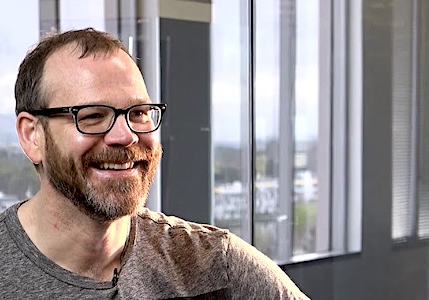
  • How Do You Make an Orchestra Fit Inside a Television Show? Phil McGowan on Recording, Mixing, and the Sound of Star Trek: Picard

    Phil McGowan

    How do you make an orchestra fit inside a television show?

    At first glance, the answer appears straightforward. Musicians gather in a studio, microphones are placed around the room, a conductor raises a baton, and the music is recorded. Yet during his online guest lecture for Edinburgh Napier University, recording and mixing engineer Phil McGowan revealed a process that is considerably more complex. Drawing upon his work on Star Trek: Picard, McGowan described a world of orchestral recording that combines musical performance, engineering, editing, production management, and problem-solving. By the end of the lecture, it became clear that recording an orchestra is only one small part of a much larger process. Throughout the lecture, McGowan repeatedly returned to the importance of preparation, organisation, and communication. Although microphones, software, and recording techniques played important roles, many of the challenges he described ultimately concerned coordinating people, decisions, and workflows across an unusually complex production process.

    McGowan began by introducing the recording sessions for the third season of Star Trek: Picard. Across ten episodes, the score was recorded using large orchestral forces, with most episodes featuring a sixty-five-piece ensemble recorded at Warner Brothers Studios in Burbank. For the majority of the season, the orchestra was divided across separate recording sessions. Strings and woodwinds were recorded together, while brass was recorded later. Only the final episode brought the entire eighty-piece orchestra into the room simultaneously. Although audiences often imagine a film score as a single orchestra performing together, McGowan explained that modern production frequently relies upon these layered recording approaches. Recording sections separately provides greater flexibility during mixing while allowing music editors and dubbing mixers more control later in the production process.

    Yet even before a note is recorded, a surprising number of decisions have already been made. The placement of every section within the room affects both the recording and the eventual mix. Strings, woodwinds, brass, piano, harp, and other instruments each occupy carefully chosen positions. Microphone placement becomes equally important. Looking at the recording diagrams shown during the lecture, it was difficult not to be struck by the sheer number of microphones involved. Individual sections receive dedicated spot microphones, larger groups receive overhead microphones, and the entire orchestra is captured by an array of room microphones positioned high above the ensemble.

    What was particularly interesting, however, was McGowan’s repeated emphasis that the most important microphones are often not the closest ones. In a well-designed scoring stage, much of the orchestra’s character emerges from a relatively small number of carefully positioned room microphones. Spot microphones provide detail, definition, and control, though the overall impression of the orchestra often comes from the way the ensemble interacts with the acoustic space itself. Rather than constructing an orchestral sound entirely from individual instruments, the recording process begins with capturing the orchestra as a unified musical body.

    This relationship between detail and cohesion appeared repeatedly throughout the lecture. Modern recording technology allows engineers to place microphones extremely close to instruments. Individual players can be isolated with remarkable precision. Yet McGowan’s approach demonstrates considerable restraint. Spot microphones are available when needed, though many remain relatively low in the final mix. The objective is not to maximise separation. Instead, it is to preserve the sense that listeners are hearing a single orchestra performing together within a shared acoustic environment.

    Recording the orchestra is only the beginning. Once the sessions finish, the material enters a complex process of editing and mixing. Here, McGowan’s role becomes particularly interesting. The raw recordings arrive alongside extensive collections of programmed material supplied by the composer. Modern television scores often combine live orchestral recordings with sampled instruments, synthesizers, percussion libraries, pads, textures, and electronic elements. One of the mixer’s responsibilities is deciding how these different layers should coexist.

    What emerged from the lecture was a strong preference for using the live recordings whenever possible. Sampled instruments often provide useful support, additional weight, or subtle reinforcement, though McGowan repeatedly emphasised that the live orchestra remains the foundation of the sound. The samples are rarely intended to replace the musicians. Instead, they are carefully blended into the mix where appropriate.

    Organisation becomes essential at this stage. Large orchestral sessions generate enormous numbers of tracks. Strings, brass, woodwinds, percussion, piano, harp, synthesizers, effects, and auxiliary elements all require separate management. McGowan demonstrated how sessions are organised into stems, allowing different components of the score to be adjusted independently later in the production process. These stems become particularly important when the music eventually reaches the dubbing stage, where it must coexist with dialogue, sound effects, Foley, ambience, and every other element of the soundtrack.

    This relationship between music and the rest of the soundtrack formed one of the most revealing parts of the discussion. Audiences often imagine that a score reaches the screen in essentially the same form in which it leaves the recording studio. McGowan demonstrated that the reality is considerably more complicated. The music mixer occupies a position between composition and final dubbing, shaping material that must eventually coexist with dialogue, Foley, ambience, sound effects, and every other component of the soundtrack.

    This creates an unusual challenge. During the mixing process, the final soundtrack often does not yet exist. Dialogue may still be evolving. Effects tracks may be incomplete. Editorial changes may continue arriving. The mixer therefore works partly with the present version of the programme and partly with an anticipated future version. Decisions must account not only for what is currently on screen but also for what will eventually happen when the material reaches the dubbing stage.

    In this sense, music mixing becomes an act of translation. The composer’s intentions need to remain intact, though they must also survive the practical realities of television production. A passage that sounds spectacular in isolation may compete with dialogue once the final soundtrack is assembled. A delicate orchestral texture may disappear beneath effects. A dramatic crescendo may need flexibility if the editorial structure changes. The mixer therefore balances musical priorities with narrative requirements, ensuring that the score remains expressive while still serving the larger needs of the programme.

    McGowan described the importance of communication throughout this process. Conversations with composers, music editors, producers, and re-recording mixers help establish how the material will ultimately be used. Stem structures become especially valuable here. By separating different orchestral and electronic elements into organised groups, later stages of production retain the flexibility needed to support storytelling decisions. What appears to be a purely technical workflow is therefore deeply connected to narrative concerns.

    Seen in this light, the music mixer occupies a remarkably important position within the production chain. The role involves much more than balancing levels or applying plug-ins. It requires understanding composition, orchestration, recording, editing, post-production, and storytelling simultaneously. The objective is not simply to make the music sound good. The objective is to ensure that the music can fulfil its dramatic function once every other element of the soundtrack is finally assembled.

    Questions of storytelling therefore remain central throughout the process. Although the lecture contained detailed discussions of microphones, reverbs, routing structures, and plug-ins, these technical topics were rarely presented as ends in themselves. Instead, they were framed as tools supporting dramatic communication. Reverb is not merely an acoustic effect. It helps create scale, atmosphere, and emotional character. Stem structures are not simply organisational devices. They provide flexibility for storytelling. Even microphone choices ultimately serve narrative goals.

    A particularly striking example emerged in McGowan’s discussion of reverberation. For Star Trek: Picard, the production deliberately embraced a more expansive orchestral sound inspired by earlier generations of science-fiction scoring. Rather than pursuing absolute clarity or dryness, the score was allowed to inhabit larger acoustic spaces. The resulting sound connects contemporary production practices with earlier traditions of science-fiction scoring associated with composers such as Jerry Goldsmith and James Horner. Listening to McGowan describe these decisions, it became clear that technical choices often carry historical and aesthetic significance as well.

    The lecture also offered a fascinating glimpse into the practical realities of large-scale media production. Television schedules are rarely generous. Recording sessions must fit within union regulations, musicians’ availability, studio bookings, editorial deadlines, and dubbing schedules. Scores are often recorded while other parts of the production remain unfinished. Picture edits may continue evolving. Visual effects may still be in development. Deadlines continue approaching regardless.

    Under such conditions, consistency becomes invaluable. McGowan described how recording setups, templates, routing structures, and mixing approaches are designed to remain stable across multiple episodes. Establishing reliable systems allows creative decisions to happen more efficiently. Rather than reinventing workflows repeatedly, engineers can focus their attention on the musical and dramatic needs of each project.

    Another recurring theme throughout the lecture was collaboration. Large orchestral productions depend upon extensive networks of expertise. Composers, orchestrators, contractors, recording engineers, Pro Tools operators, music editors, re-recording mixers, musicians, producers, and showrunners all contribute to the final result. No individual controls every aspect of the process. Instead, successful productions emerge through coordination between specialists whose work overlaps at crucial moments.

    Listening to McGowan describe recording sessions, one gains a strong sense of the trust involved. Musicians are trusted to perform complex scores with remarkable efficiency. Engineers are trusted to capture those performances accurately. Music editors are trusted to manage revisions and conforming. Dubbing mixers are trusted to integrate the score into the larger soundtrack. The finished music reflects not only technical skill but also a highly collaborative production culture.

    Perhaps the most interesting aspect of the lecture was the way it challenged romantic ideas about orchestral recording. Popular accounts often focus on dramatic moments: the orchestra enters the room, the conductor raises a baton, and the music comes to life. Those moments certainly exist. Yet McGowan’s account suggests that the real craft often lies elsewhere. It lies in preparation, organisation, consistency, communication, editing, and the countless small decisions that allow large productions to function successfully.

    Looking back across the lecture, what emerges most clearly is not simply a story about recording orchestras. It is a story about connecting different stages of a creative process. Recording sessions, editing workflows, stem preparation, music mixing, and final dubbing all form part of a chain in which every decision influences what follows. Managing that chain requires technical expertise, though it also requires communication, anticipation, and an understanding of how music functions within narrative storytelling. Every stage of the process involves balancing competing demands. Technical precision must coexist with musical expression. Flexibility must coexist with consistency. Individual details must support larger dramatic goals. The orchestra must sound impressive in its own right while still serving the needs of the programme.

    For students interested in recording, mixing, or film music production, this may be the lecture’s most valuable lesson. Technology remains important. Microphones matter. Software matters. Recording techniques matter. Yet none of these elements exist in isolation. They are part of a larger system whose purpose is ultimately narrative. The audience does not hear microphone placements, stem structures, or routing templates. They hear music supporting a story.

    For Phil McGowan, the challenge is not simply recording an orchestra. The challenge is shaping hundreds of performances, thousands of audio tracks, and countless technical decisions into something that helps bring a fictional world to life. By the time audiences sit down to watch Star Trek: Picard, most of that work has become invisible. The orchestra feels as though it simply belongs there. Achieving that illusion, however, requires an extraordinary amount of craft.

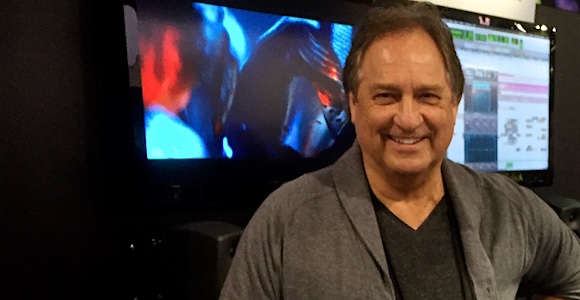
  • What Did They Say? Gary Bourgeois on Dialogue, Attention, and the Art of Film Mixing

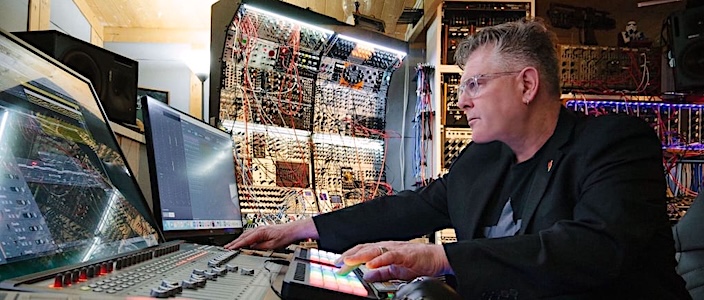
    Gary Bourgeois

    What happens when an audience misses a line of dialogue?

    At first glance, the consequences seem relatively minor. A viewer leans towards a friend. Someone quietly asks for clarification. A sentence is repeated. Yet during his online guest lecture for Edinburgh Napier University, veteran re-recording mixer Gary Bourgeois suggested that this moment reveals something important about the relationship between sound and storytelling. The audience has stopped following the narrative and started thinking about the soundtrack. For Bourgeois, whose career spans more than five decades across film, television, music, and streaming media, preventing that moment has remained one of the central responsibilities of a mixer.

    This might appear surprising. Popular discussions of film sound often focus on spectacle. We talk about explosive action sequences, immersive surround sound systems, powerful musical scores, and increasingly sophisticated technologies. Yet Bourgeois repeatedly returned to a much simpler idea. Sound exists to support communication. Every creative and technical decision ultimately serves the story. If audiences cannot understand what matters at the moment it matters, even the most technically impressive soundtrack has failed in its primary task.

    Throughout the lecture, Bourgeois described film mixing as a process of guiding attention. A finished soundtrack may contain dialogue, Foley, ambience, music, effects, backgrounds, transitions, and countless other elements. These sounds do not all demand equal attention simultaneously. Their relationships are constantly shifting. During a conversation, dialogue may occupy the foreground while music retreats slightly into the background. During a dramatic reveal, music may briefly become the dominant element. An action sequence may allow effects to take centre stage before returning attention to character and narrative. Mixing therefore involves much more than balancing levels. It involves shaping the audience’s experience of a story.

    This perspective helps explain why Bourgeois places such importance on dialogue. Writers spend months or years developing scripts. Actors devote enormous effort to performance. Directors construct scenes around the communication of information, emotion, and character. If a crucial line becomes unintelligible, the audience loses access to part of that work. More importantly, they momentarily leave the fictional world. Instead of thinking about the characters, they begin thinking about the soundtrack. The illusion is interrupted.

    One of the most interesting aspects of the lecture concerned the relationship between film mixing and human perception. During the discussion, we explored the idea that many mixing decisions effectively replicate forms of selective attention that listeners perform naturally. In everyday life, people can focus on a particular voice within a crowded room, follow a conversation in a noisy taxi, or attend to one sound source while ignoring dozens of others. The auditory system constantly prioritises information. Bourgeois agreed that much of professional mixing involves recreating these perceptual priorities for audiences. The mixer helps listeners focus on what matters without drawing attention to the process itself.

    Seen in this light, many familiar audio tools acquire a different significance. Equalisation is not simply a way of adjusting frequencies. Compression is not merely a method of controlling dynamics. Reverb is not only about creating a sense of space. These processes become valuable insofar as they help establish relationships between sounds. A dialogue track may require subtle equalisation to distinguish it from surrounding ambience. A sound effect may need certain frequencies reduced so that speech remains intelligible. A reverberant environment may need careful shaping to preserve clarity. The technical operations matter, though their ultimate purpose remains perceptual. Ultimately, they help prevent the audience from asking the question that opened the lecture. What did they say?

    Several examples from Bourgeois’ career illustrated this philosophy particularly well. Large-scale productions such as Transformers are often associated with spectacle, scale, and sonic intensity. Audiences remember giant robots, enormous impacts, and dense layers of sound. Yet Bourgeois described how even the most elaborate action sequences depend upon careful control of attention. One memorable example involved introducing a single frame of silence immediately before an explosion. The audience never consciously notices this interruption. Nevertheless, the brief absence of sound creates a perceptual contrast that makes the subsequent impact feel considerably larger. The effect depends not on additional volume but on the way listeners perceive change.

    Examples such as this reveal a recurring principle running throughout the lecture. Effective sound design often depends less upon adding material than upon managing relationships between existing elements. A soundtrack filled continuously with dramatic gestures eventually loses its ability to surprise. Contrast becomes difficult. Emphasis becomes impossible. Restraint therefore plays an important role within the mixer’s craft. Sometimes the most effective decision is deciding what not to hear.

    This concern with attention also shapes Bourgeois’ attitude towards immersive audio formats such as Dolby Atmos. The technology provides extraordinary creative possibilities. Sounds can move through three-dimensional space with remarkable precision. Environments can become more detailed and immersive than ever before. Yet Bourgeois consistently framed these capabilities in relation to storytelling rather than technology. An Atmos mix succeeds when it helps audiences engage more deeply with a scene. It fails when the technology becomes the focus of attention itself. More speakers do not automatically produce better storytelling. The same principles still apply. Audiences need to understand what matters and why it matters.

    A particularly revealing section of the lecture explored Bourgeois’ lifelong curiosity about listening. Long before spatial audio became a major industry topic, he was conducting informal experiments with binaural recording, environmental acoustics, and perceptual phenomena. Rather than treating recording purely as a professional necessity, he approached it as an opportunity to investigate how sound behaves.

    One story involved recording a stream in rural Canada. Expecting to capture clear differences between close, medium, and distant perspectives, he recorded the same source from multiple locations. When he returned to the studio, however, the recordings sounded remarkably similar. What initially appeared disappointing became an important lesson. Distance is often communicated less by direct sound than by reflections, environmental interactions, and contextual cues. The stream itself had changed very little. The surrounding environment had provided most of the information listeners normally use to judge distance. Stories such as this reveal another dimension of Bourgeois’ approach. Technical expertise emerges not only from formal training but also from observation. Throughout the lecture, he repeatedly emphasised the importance of listening carefully to the world. Many of the insights that shaped his professional practice originated in moments of curiosity rather than commercial necessity. A recording experiment, an unusual acoustic environment, or an unexpected perceptual effect could become the foundation for future creative decisions.

    His reflections on Canada extended this theme further. Bourgeois noted that a surprisingly large number of Hollywood film mixers originate from Canada. While partly humorous, the observation led into a broader discussion about listening environments. Growing up in quieter surroundings encouraged attention to subtle acoustic details, spatial relationships, and environmental sounds. Whether or not this fully explains the phenomenon, the anecdote reinforced a larger point. Listening is not a passive activity. It is a skill developed through experience, practice, and sustained attention.

    The conversation eventually turned towards emerging technologies, particularly artificial intelligence. Here again, Bourgeois adopted a perspective shaped by decades of professional experience. Throughout his career he has witnessed repeated technological transformations. Analogue workflows gave way to digital systems. New recording formats emerged. Distribution platforms changed. Entire production processes evolved. Each transition created uncertainty alongside opportunity.

    Rather than treating AI as fundamentally different from earlier technological developments, Bourgeois viewed it as another stage within a continuing process of change. New tools will inevitably alter professional practice. Some tasks may become easier. Others may disappear entirely. Yet the underlying challenge remains remarkably consistent. Practitioners must learn how new technologies work, understand their limitations, and identify meaningful ways of applying them. Avoiding change rarely proves productive. Understanding it usually does.

    Looking back across the lecture, what emerges most clearly is a conception of mixing rooted in attention. Compressors, equalisers, reverbs, Atmos systems, loudness standards, recording technologies, and AI tools all matter. Yet they matter only insofar as they help audiences remain connected to a story. Bourgeois repeatedly returned to the same fundamental question. Can the audience understand what matters at the moment it matters?

    Many discussions of sound focus primarily on technology. Gary Bourgeois offered a useful reminder that technology is ultimately a means rather than an end. The purpose of a soundtrack is not to demonstrate technical sophistication. Its purpose is to support communication, emotion, and narrative understanding. The most successful mixes often pass unnoticed precisely because they allow audiences to remain fully absorbed in the world unfolding before them.

    Perhaps that is why the simple question that opened the lecture remains so revealing. What happens when an audience misses a line of dialogue? For Bourgeois, the answer extends far beyond a few misunderstood words. It represents a brief fracture in the relationship between story and listener. Much of the mixer’s craft is devoted to preventing that fracture from occurring. Every adjustment, every balance decision, every technical process ultimately serves the same goal: helping audiences hear not merely the sounds of a film, but the story those sounds are trying to tell.

  • Dubbed to Perfection: Graham Hartstone’s Guide to Enhancing Storytelling Through Sound

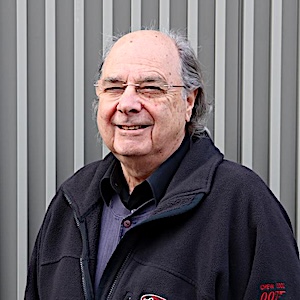
    Graham Hartstone, a highly respected dubbing mixer and former head of post-production at Pinewood Studios, shared his expertise in an online guest lecture. Drawing on his extensive career in film sound, which spans decades and includes work on major productions, he offered a wealth of insights into the art and technical precision of rerecording sound for film.

    Graham Hartstone

    The Evolution of Sound and Its Role in Storytelling

    Hartstone’s career began in 1961 as a cable operator, progressing through various roles in sound before ultimately leading the dubbing team at Pinewood. His experience includes working on iconic films such as the James Bond series and collaborations with directors like Stanley Kubrick and Ridley Scott. He reflected on the shift from analogue mixing techniques to the expansive digital tools available today, discussing how technological advancements have changed the sound mixing process.

    Throughout his career, Hartstone emphasised that sound must serve the narrative, with careful attention to dialogue clarity, atmospheric cohesion, and the interplay between sound effects and music. He discussed the importance of premixing, highlighting how dialogue, effects, and Foley must be balanced to create a seamless final mix. Foley, he stressed, should blend naturally rather than draw attention to itself. Using Aliens as an example, he described how even background movements were carefully crafted to maintain immersion without overwhelming the primary action.

    Collaborations, Challenges, and International Versions

    Hartstone shared experiences working with directors who had strong opinions on sound, such as James Cameron and Stanley Kubrick. Kubrick was known for personally directing foreign language dubs to maintain creative control, often insisting that his own team handle translations to ensure consistency across different languages. Hartstone recalled how Kubrick’s meticulous nature extended to every aspect of post-production, with dialogue edits often requiring multiple iterations to match the director’s high standards. Kubrick even insisted on making foreign dubs sound as close to the original English version as possible, ensuring that voice tone and performance retained the same impact.

    James Cameron was similarly demanding, particularly about technical precision in sound. Hartstone shared an example from Aliens, where Cameron required the sound of motion trackers to be carefully crafted to enhance suspense. He recalled how Cameron would repeatedly review sound effects, adjusting subtle details to make sure they perfectly complemented the tension of each scene. This attention to detail extended to mixing explosions and gunfire, where Cameron wanted the audience to feel every impact without overwhelming the dialogue.

    The challenges of working on large-scale productions also included meeting tight deadlines and working with evolving edits. Hartstone noted that in films like Blade Runner, changes were often made up to the last minute. He shared how the iconic ambient soundscape of Los Angeles in Blade Runner was built from unused Alien sound elements, giving the city a layered, futuristic atmosphere. He also recounted how Ridley Scott requested late-stage changes to music and sound effects after test screenings, requiring the mixing team to make quick adjustments to balance the soundtrack effectively.

    For international versions, Hartstone explained that dialogue premixes had to be prepared well in advance of final mixes to allow time for translation and dubbing. On GoldenEye, special care was taken to ensure the foreign dubs matched the English version’s intensity, particularly during action sequences. His team provided detailed mixing notes, ensuring that foreign versions retained the same dynamic range and impact. He also explained the additional complexities of preparing mixes for different distribution formats, including airline and television edits, which required removing or replacing strong language while maintaining natural speech flow.

    Practical Techniques for Mixing

    Hartstone provided a wealth of practical advice for sound mixers, focusing on achieving clarity, balance, and impact.

    Dialogue Mixing and Clarity

    He advised using high-pass and low-pass filters to enhance dialogue clarity, suggesting a high-pass filter at around 80Hz to eliminate unwanted low-end rumble and a low-pass filter at around 9kHz to reduce sibilance. He explained that dialogue should be prioritised in the mix, ensuring that off-screen lines remain intelligible by adjusting levels and adding subtle reverb to match distance perception.

    Hartstone also discussed the importance of perspective in dialogue mixing. He emphasised that the audio should match the framing of the shot—voices should not shift unnaturally in relation to the camera’s viewpoint. For example, close-up dialogue should be crisp and intimate, while wide shots should have a more open sound, reflecting the environment. When working with ADR (Automated Dialogue Replacement), he recommended blending it with the original production sound by matching room acoustics and microphone placement to avoid inconsistencies.

    Balancing Sound Elements and Surround Mixing

    Hartstone stressed the importance of dynamic balance between different sound elements. He warned against overusing compression, explaining that while it can help smooth out levels, excessive compression can make a mix sound unnatural. Instead, he recommended using automation and manual level adjustments to retain natural dynamics, especially for dialogue-driven scenes.

    For surround mixing, Hartstone advised positioning ambient sounds carefully to avoid distracting the audience. Dialogue and primary sound effects should remain anchored in the front channels, while environmental sounds and subtle atmospheric elements should be spread across the surround channels. He suggested that surround effects should be used sparingly in dialogue-heavy scenes but can be more pronounced in action sequences to enhance immersion.

    Layering Explosions and Action Sequences

    Hartstone shared techniques for mixing action-heavy films, particularly regarding explosions and gunfire. He explained that layering sound elements helps create depth and realism. For an explosion, he suggested layering three key components: a bass-heavy thump for impact, a mid-range crack for texture, and high-end debris for detail. He recommended ensuring that these layers are carefully mixed so that the low end does not overpower dialogue and other important sounds.

    He also discussed the importance of spatial placement for action scenes. For instance, gunfire should have directional placement in the mix to match the on-screen perspective. He recalled how, on James Bond films, the team carefully panned gunfire and bullet ricochets to follow the action, adding realism and depth to chase and fight sequences.

    Checking Mixes Across Different Playback Systems

    To ensure consistency, Hartstone recommended testing mixes on multiple playback systems, from large cinema screens to nearfield monitors. He suggested switching between full surround and stereo playback to detect phase issues or missing elements. He also noted that checking the mix at lower volumes can help identify problems with clarity, as important dialogue or sound effects may get lost when played at lower levels.

    Additionally, he highlighted the importance of attending final screenings to verify the mix in the intended playback environment. He recalled how, during a Blade Runner premiere screening, last-minute mix adjustments were needed to correct sound balance issues, reinforcing the importance of checking the final product under real-world conditions.

    Final Thoughts

    Graham Hartstone’s lecture provided a detailed exploration of film sound design, offering valuable lessons for professionals and enthusiasts alike. His expertise underscored how vital a well-crafted soundtrack is in shaping the audience’s experience, blending technical precision with creative storytelling.