Category: Television

  • How Does a Crowd Find Its Voice? David Monteath on Crowd ADR, Performance, and Creating Believable Worlds

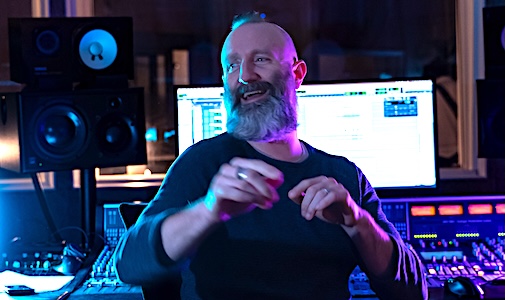
    David Monteath

    How does a crowd find its voice?

    When audiences watch a film or television programme, their attention naturally settles upon the principal actors. Far less notice is taken of the countless background voices that transform a collection of images into a believable social world. Conversations drifting through a restaurant, murmured discussions in an office, distant arguments in a crowded street or the indistinct atmosphere of a busy marketplace all contribute to the impression that life continues beyond the central characters. Remove those voices, and even the most carefully photographed scene can feel strangely artificial. During his online guest lecture for Edinburgh Napier University, David Monteath returned to the University as a Sound Design alumnus to explore the specialised craft of crowd ADR. Drawing upon more than three decades working as an actor and voice artist, he demonstrated that believable crowd performances depend upon observation, improvisation and an understanding of dramatic context rather than simply recording large numbers of voices. One principle underpinned the discussion. Context is king.

    Rather than replacing the dialogue of principal actors, crowd ADR creates the sense that an entire world exists beyond them. A small group of performers may become the customers in a restaurant, the spectators at a football match, the passengers waiting on a railway platform or the crowd gathered in a courtroom. Individual conversations overlap, reactions ripple through the group and emotional responses emerge at precisely the right moments, creating the impression that every person visible on screen possesses a life extending beyond the immediate story. Audiences rarely notice these performances consciously, yet they immediately recognise when they are missing. Scenes that lack convincing crowd performances often feel unexpectedly empty, regardless of how carefully they have been photographed or edited.

    Monteath repeatedly challenged the assumption that this work consists simply of creating background noise. Crowd ADR is first and foremost a form of acting. Every performance responds to the circumstances of the scene, the relationships between characters and the emotional atmosphere established by the director. People waiting quietly in a hospital corridor behave differently from supporters leaving a football stadium. Conversations in an expensive restaurant differ from those heard in a busy café, while voices surrounding a royal procession carry a very different energy from those accompanying a political protest. Every reaction, interruption and fragment of conversation exists to support the dramatic reality of the scene rather than to attract attention in its own right. Authenticity emerges from understanding how people genuinely behave in different situations, not from making scenes louder or busier.

    This emphasis upon dramatic context shaped every practical discussion throughout the lecture. Monteath encouraged students to think beyond individual words and instead consider the circumstances in which those words are spoken. Before deciding how loudly to speak, how quickly to react or even what might be said, performers first need to understand where they are, who surrounds them and what is happening within the story. The same phrase may require entirely different delivery depending upon whether it takes place in a library, an airport, a football ground or the middle of a battlefield. Successful crowd performers therefore begin by observing people. Everyday behaviour, casual conversations, shared laughter, hesitation, disagreement and excitement all provide material that can later be adapted naturally within the recording studio. The objective is not to invent behaviour, but to recognise and recreate it convincingly.

    Perhaps the most revealing insight from this opening part of the lecture concerned the relationship between realism and audibility. Many beginning sound designers instinctively assume that important sounds should always be heard clearly. Monteath argued for almost the opposite approach. Successful crowd ADR often succeeds precisely when audiences remain largely unaware of it. Background voices should usually be felt rather than heard, contributing movement, texture and emotional energy without competing with the principal dialogue. Monteath returned repeatedly to the idea that audiences should sense the presence of a living world long before they consciously identify individual voices. Crowd ADR achieves its greatest success not when listeners admire the performance, but when they accept the world on screen without ever questioning how it came to life.

    One of the most valuable themes running through the lecture concerned the difference between sounding natural and sounding believable. These ideas are not always identical. Performers working in crowd ADR rarely speak at the same level they would use in everyday conversation, yet exaggeration can become equally unconvincing. Monteath described the continual process of judging how voices should sit within the perspective of the scene. A performer passing close to the camera requires a different vocal presence from someone crossing the background several metres away, while conversations taking place outdoors demand a different energy from those occurring in confined interior spaces. Every decision depends upon dramatic perspective rather than fixed performance rules. Context, once again, determines everything. For sound designers, these distinctions become equally important during editing and mixing. A crowd recording that sounds entirely convincing in isolation may feel unexpectedly prominent once placed alongside production dialogue, Foley and ambience. Perspective therefore emerges through the relationship between every element of the soundtrack rather than through any individual recording considered on its own.

    This attention to perspective extends beyond volume alone. Monteath discussed the subtle adjustments people make instinctively when speaking in different environments. Outside, voices naturally rise in level before settling into an appropriate projection as people unconsciously judge the surrounding space. He compared this process to a form of echolocation. Speakers continually test their surroundings, modifying projection almost instantly until their voice feels appropriate for the environment. Recording inside a studio removes many of the environmental cues that normally guide these unconscious adjustments, requiring performers to recreate them deliberately. The challenge is not simply to speak more loudly for an exterior scene, but to reproduce the natural behaviour that accompanies speaking outdoors. Audiences rarely analyse these details consciously, though they recognise immediately when they feel unconvincing. Successful crowd ADR therefore depends upon recreating patterns of human behaviour rather than merely increasing vocal intensity.

    The physical demands of crowd ADR also proved far greater than many students had expected. Scenes involving panic, conflict or large-scale action often require sustained shouting over many hours, placing considerable strain on performers’ voices. Monteath reflected upon sessions in which actors had pushed themselves to the point of temporary vocal exhaustion, particularly when recording intense battle scenes. Curiously, he observed that shouting repeatedly inside a recording studio often proves more tiring than raising the voice naturally outdoors. In everyday life, people instinctively project according to their surroundings. Within the artificial environment of a studio, performers can find themselves holding unnecessary tension in the throat in ways that feel surprisingly unnatural. Maintaining vocal health therefore becomes an important professional skill alongside acting itself. It also reflects another aspect of professional sound design that audiences rarely consider. Recordings capable of conveying fear, excitement or urgency often depend upon performers sustaining physically demanding work throughout lengthy recording sessions while preserving consistency from one take to the next.

    The discussion of large battle sequences illustrated another revealing aspect of the profession. Crowd performers may spend an entire day creating layers of screams, reactions and movement for scenes involving hundreds or even thousands of people, fully aware that much of their work will eventually disappear beneath music, sound effects and the principal action. Monteath recalled recording material for a major battle sequence in Game of Thrones, where hours of physically demanding vocal performances ultimately became almost imperceptible within the finished soundtrack. Rather than expressing disappointment, he presented this as an inevitable consequence of professional sound design. The objective was never for individual performances to stand out. Their purpose was to contribute energy, scale and credibility to the scene, even if audiences remained almost entirely unaware of their presence. The irony is that some of the hardest work in post-production often becomes the least conspicuous in the finished mix.

    Monteath’s recurring phrase, “Context is king,” captures this philosophy particularly well. Every vocal decision derives from the dramatic situation rather than from the performer. Voices rise or fall according to the surrounding environment, emotional reactions emerge in response to the unfolding action and every fragment of conversation exists to reinforce the illusion that life extends beyond the principal characters. Successful crowd ADR is therefore measured not by how clearly individual voices are heard, but by how convincingly they allow audiences to believe in the world unfolding around them. Like many aspects of professional sound design, its greatest achievement lies in remaining almost invisible while making the fictional world feel entirely real.

    The lecture concluded with a discussion that moved beyond recording techniques and towards the broader decisions that shape professional sound design. One student described the challenge of creating the atmosphere for a bank robbery scene. Adding more and more voices had seemed the obvious solution, yet the result quickly became cluttered and distracted from the drama. Monteath’s response illustrated once again why crowd ADR depends upon judgement rather than quantity. Real crowds rarely behave as a single, unified group. Even in moments of fear, surprise or excitement, different people react at different times and in different ways. Some remain silent, others whisper, a few call out, while many simply watch events unfold. Attempting to represent every visible person with an equally prominent vocal performance often produces a soundtrack that feels less realistic rather than more so. Believability emerges through carefully judged variation, allowing individual reactions to appear and disappear naturally instead of competing continuously for the listener’s attention.

    This observation extends well beyond crowd ADR. Throughout post-production, sound designers continually decide what deserves the audience’s attention and what should remain part of the wider acoustic environment. A convincing soundtrack is not created through the accumulation of detail, but through the careful organisation of that detail into a coherent dramatic experience. Crowd performances occupy a role similar to ambience, Foley and environmental sound. They establish context, scale and emotional texture without constantly demanding attention. Their purpose is not to demonstrate how much work has been carried out, but to convince audiences that the world extending beyond the principal characters already exists. Like every other element of a soundtrack, their success depends upon supporting the story rather than competing with it.

    Towards the end of the lecture, discussion turned to the growing influence of artificial intelligence within the voice industry. Monteath acknowledged that AI is already beginning to affect areas such as commercial voice-over, where some clients have started experimenting with synthetic voices. He regarded crowd ADR rather differently. While aspects of the work may eventually become automated, authentic crowd performance depends upon subtle variations that emerge naturally whenever people work together. Voices change over the course of a recording session as performers become tired. Emotional intensity shifts between takes. Individual personalities influence rhythm, timing and vocal colour in ways that are difficult to predict or reproduce consistently. These variations might appear inconvenient from a purely technical perspective, yet they contribute directly to the richness, unpredictability and authenticity that audiences instinctively recognise as human. Technology will continue to evolve, though observation, collaboration and performance remain at the heart of believable sound design.

    For sound design students, perhaps the most valuable lesson lay in the way Monteath described his profession. Crowd ADR may appear to occupy the margins of post-production, hidden beneath dialogue, music and sound effects, yet it influences how audiences perceive almost every scene they watch. Every murmur in the background of a restaurant, every distant conversation in a station concourse and every carefully judged reaction during a moment of crisis contributes to the illusion that life continues beyond the frame. These performances do not simply fill silence. They create social spaces that feel inhabited, allowing viewers to concentrate on the story without questioning the reality of the world surrounding it.

    Throughout the lecture, Monteath returned repeatedly to one deceptively simple principle: “Context is king.” Crowd ADR succeeds not through memorable performances or individually recognisable voices, but through creating the impression that every environment extends beyond the limits of the frame. Every carefully judged laugh, argument, whispered conversation and fleeting reaction reinforces a believable social world without distracting from the principal narrative. For sound designers, this represents a broader lesson that reaches far beyond dialogue replacement. Successful audio is rarely measured by how noticeable it becomes. More often, it is measured by how completely it allows audiences to believe in the world they are experiencing. Crowd ADR exemplifies that philosophy. It remains one of the least visible aspects of professional sound design, yet it is also one of the crafts that most quietly transforms moving images into convincing places inhabited by believable people.

  • How Do You Make an Orchestra Fit Inside a Television Show? Phil McGowan on Recording, Mixing, and the Sound of Star Trek: Picard

    Phil McGowan

    How do you make an orchestra fit inside a television show?

    At first glance, the answer appears straightforward. Musicians gather in a studio, microphones are placed around the room, a conductor raises a baton, and the music is recorded. Yet during his online guest lecture for Edinburgh Napier University, recording and mixing engineer Phil McGowan revealed a process that is considerably more complex. Drawing upon his work on Star Trek: Picard, McGowan described a world of orchestral recording that combines musical performance, engineering, editing, production management, and problem-solving. By the end of the lecture, it became clear that recording an orchestra is only one small part of a much larger process. Throughout the lecture, McGowan repeatedly returned to the importance of preparation, organisation, and communication. Although microphones, software, and recording techniques played important roles, many of the challenges he described ultimately concerned coordinating people, decisions, and workflows across an unusually complex production process.

    McGowan began by introducing the recording sessions for the third season of Star Trek: Picard. Across ten episodes, the score was recorded using large orchestral forces, with most episodes featuring a sixty-five-piece ensemble recorded at Warner Brothers Studios in Burbank. For the majority of the season, the orchestra was divided across separate recording sessions. Strings and woodwinds were recorded together, while brass was recorded later. Only the final episode brought the entire eighty-piece orchestra into the room simultaneously. Although audiences often imagine a film score as a single orchestra performing together, McGowan explained that modern production frequently relies upon these layered recording approaches. Recording sections separately provides greater flexibility during mixing while allowing music editors and dubbing mixers more control later in the production process.

    Yet even before a note is recorded, a surprising number of decisions have already been made. The placement of every section within the room affects both the recording and the eventual mix. Strings, woodwinds, brass, piano, harp, and other instruments each occupy carefully chosen positions. Microphone placement becomes equally important. Looking at the recording diagrams shown during the lecture, it was difficult not to be struck by the sheer number of microphones involved. Individual sections receive dedicated spot microphones, larger groups receive overhead microphones, and the entire orchestra is captured by an array of room microphones positioned high above the ensemble.

    What was particularly interesting, however, was McGowan’s repeated emphasis that the most important microphones are often not the closest ones. In a well-designed scoring stage, much of the orchestra’s character emerges from a relatively small number of carefully positioned room microphones. Spot microphones provide detail, definition, and control, though the overall impression of the orchestra often comes from the way the ensemble interacts with the acoustic space itself. Rather than constructing an orchestral sound entirely from individual instruments, the recording process begins with capturing the orchestra as a unified musical body.

    This relationship between detail and cohesion appeared repeatedly throughout the lecture. Modern recording technology allows engineers to place microphones extremely close to instruments. Individual players can be isolated with remarkable precision. Yet McGowan’s approach demonstrates considerable restraint. Spot microphones are available when needed, though many remain relatively low in the final mix. The objective is not to maximise separation. Instead, it is to preserve the sense that listeners are hearing a single orchestra performing together within a shared acoustic environment.

    Recording the orchestra is only the beginning. Once the sessions finish, the material enters a complex process of editing and mixing. Here, McGowan’s role becomes particularly interesting. The raw recordings arrive alongside extensive collections of programmed material supplied by the composer. Modern television scores often combine live orchestral recordings with sampled instruments, synthesizers, percussion libraries, pads, textures, and electronic elements. One of the mixer’s responsibilities is deciding how these different layers should coexist.

    What emerged from the lecture was a strong preference for using the live recordings whenever possible. Sampled instruments often provide useful support, additional weight, or subtle reinforcement, though McGowan repeatedly emphasised that the live orchestra remains the foundation of the sound. The samples are rarely intended to replace the musicians. Instead, they are carefully blended into the mix where appropriate.

    Organisation becomes essential at this stage. Large orchestral sessions generate enormous numbers of tracks. Strings, brass, woodwinds, percussion, piano, harp, synthesizers, effects, and auxiliary elements all require separate management. McGowan demonstrated how sessions are organised into stems, allowing different components of the score to be adjusted independently later in the production process. These stems become particularly important when the music eventually reaches the dubbing stage, where it must coexist with dialogue, sound effects, Foley, ambience, and every other element of the soundtrack.

    This relationship between music and the rest of the soundtrack formed one of the most revealing parts of the discussion. Audiences often imagine that a score reaches the screen in essentially the same form in which it leaves the recording studio. McGowan demonstrated that the reality is considerably more complicated. The music mixer occupies a position between composition and final dubbing, shaping material that must eventually coexist with dialogue, Foley, ambience, sound effects, and every other component of the soundtrack.

    This creates an unusual challenge. During the mixing process, the final soundtrack often does not yet exist. Dialogue may still be evolving. Effects tracks may be incomplete. Editorial changes may continue arriving. The mixer therefore works partly with the present version of the programme and partly with an anticipated future version. Decisions must account not only for what is currently on screen but also for what will eventually happen when the material reaches the dubbing stage.

    In this sense, music mixing becomes an act of translation. The composer’s intentions need to remain intact, though they must also survive the practical realities of television production. A passage that sounds spectacular in isolation may compete with dialogue once the final soundtrack is assembled. A delicate orchestral texture may disappear beneath effects. A dramatic crescendo may need flexibility if the editorial structure changes. The mixer therefore balances musical priorities with narrative requirements, ensuring that the score remains expressive while still serving the larger needs of the programme.

    McGowan described the importance of communication throughout this process. Conversations with composers, music editors, producers, and re-recording mixers help establish how the material will ultimately be used. Stem structures become especially valuable here. By separating different orchestral and electronic elements into organised groups, later stages of production retain the flexibility needed to support storytelling decisions. What appears to be a purely technical workflow is therefore deeply connected to narrative concerns.

    Seen in this light, the music mixer occupies a remarkably important position within the production chain. The role involves much more than balancing levels or applying plug-ins. It requires understanding composition, orchestration, recording, editing, post-production, and storytelling simultaneously. The objective is not simply to make the music sound good. The objective is to ensure that the music can fulfil its dramatic function once every other element of the soundtrack is finally assembled.

    Questions of storytelling therefore remain central throughout the process. Although the lecture contained detailed discussions of microphones, reverbs, routing structures, and plug-ins, these technical topics were rarely presented as ends in themselves. Instead, they were framed as tools supporting dramatic communication. Reverb is not merely an acoustic effect. It helps create scale, atmosphere, and emotional character. Stem structures are not simply organisational devices. They provide flexibility for storytelling. Even microphone choices ultimately serve narrative goals.

    A particularly striking example emerged in McGowan’s discussion of reverberation. For Star Trek: Picard, the production deliberately embraced a more expansive orchestral sound inspired by earlier generations of science-fiction scoring. Rather than pursuing absolute clarity or dryness, the score was allowed to inhabit larger acoustic spaces. The resulting sound connects contemporary production practices with earlier traditions of science-fiction scoring associated with composers such as Jerry Goldsmith and James Horner. Listening to McGowan describe these decisions, it became clear that technical choices often carry historical and aesthetic significance as well.

    The lecture also offered a fascinating glimpse into the practical realities of large-scale media production. Television schedules are rarely generous. Recording sessions must fit within union regulations, musicians’ availability, studio bookings, editorial deadlines, and dubbing schedules. Scores are often recorded while other parts of the production remain unfinished. Picture edits may continue evolving. Visual effects may still be in development. Deadlines continue approaching regardless.

    Under such conditions, consistency becomes invaluable. McGowan described how recording setups, templates, routing structures, and mixing approaches are designed to remain stable across multiple episodes. Establishing reliable systems allows creative decisions to happen more efficiently. Rather than reinventing workflows repeatedly, engineers can focus their attention on the musical and dramatic needs of each project.

    Another recurring theme throughout the lecture was collaboration. Large orchestral productions depend upon extensive networks of expertise. Composers, orchestrators, contractors, recording engineers, Pro Tools operators, music editors, re-recording mixers, musicians, producers, and showrunners all contribute to the final result. No individual controls every aspect of the process. Instead, successful productions emerge through coordination between specialists whose work overlaps at crucial moments.

    Listening to McGowan describe recording sessions, one gains a strong sense of the trust involved. Musicians are trusted to perform complex scores with remarkable efficiency. Engineers are trusted to capture those performances accurately. Music editors are trusted to manage revisions and conforming. Dubbing mixers are trusted to integrate the score into the larger soundtrack. The finished music reflects not only technical skill but also a highly collaborative production culture.

    Perhaps the most interesting aspect of the lecture was the way it challenged romantic ideas about orchestral recording. Popular accounts often focus on dramatic moments: the orchestra enters the room, the conductor raises a baton, and the music comes to life. Those moments certainly exist. Yet McGowan’s account suggests that the real craft often lies elsewhere. It lies in preparation, organisation, consistency, communication, editing, and the countless small decisions that allow large productions to function successfully.

    Looking back across the lecture, what emerges most clearly is not simply a story about recording orchestras. It is a story about connecting different stages of a creative process. Recording sessions, editing workflows, stem preparation, music mixing, and final dubbing all form part of a chain in which every decision influences what follows. Managing that chain requires technical expertise, though it also requires communication, anticipation, and an understanding of how music functions within narrative storytelling. Every stage of the process involves balancing competing demands. Technical precision must coexist with musical expression. Flexibility must coexist with consistency. Individual details must support larger dramatic goals. The orchestra must sound impressive in its own right while still serving the needs of the programme.

    For students interested in recording, mixing, or film music production, this may be the lecture’s most valuable lesson. Technology remains important. Microphones matter. Software matters. Recording techniques matter. Yet none of these elements exist in isolation. They are part of a larger system whose purpose is ultimately narrative. The audience does not hear microphone placements, stem structures, or routing templates. They hear music supporting a story.

    For Phil McGowan, the challenge is not simply recording an orchestra. The challenge is shaping hundreds of performances, thousands of audio tracks, and countless technical decisions into something that helps bring a fictional world to life. By the time audiences sit down to watch Star Trek: Picard, most of that work has become invisible. The orchestra feels as though it simply belongs there. Achieving that illusion, however, requires an extraordinary amount of craft.

  • Sound Advice: John Rodda’s Insights into Production Mixing

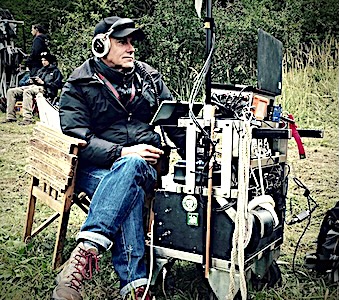
    John Rodda’s online guest lecture offered an engaging and in-depth exploration of the world of production sound mixing, drawing from his extensive experience across film and television. With a career spanning 35 years and work in over 40 countries, John has established himself as a leading figure in the industry, contributing to productions ranging from documentaries and dramas to major feature films. His lecture provided a rare glimpse into the craft, techniques, and challenges of capturing high-quality audio on set.

    John Rodda

    A Journey Through Sound

    John began by sharing his journey into sound mixing, highlighting how his background in theatre and electronics laid the foundation for his work in film and television. His early experiences included building computers in the late 1970s and working on corporate films and news coverage before transitioning into drama and feature films. He detailed how he navigated the industry at a time when union regulations created significant barriers for newcomers, requiring perseverance and adaptability to succeed.

    Key Roles in Production Sound

    John emphasised the collaborative nature of sound production, highlighting the distinct but interdependent roles within the department:

    • Production Sound Mixer: Oversees all aspects of sound recording on set, ensuring high-quality dialogue capture. They operate the primary recording equipment, balance microphone levels, and collaborate with the director to maintain the intended audio aesthetic. Additionally, they liaise with post-production teams by providing properly labelled sound files and detailed reports.
    • Boom Operator: Responsible for positioning the boom microphone to capture dialogue while staying out of the frame. They must anticipate actor movements, adjust positioning accordingly, and minimise unwanted noise. Boom operators often work in challenging conditions, ensuring optimal sound capture in dynamic filming environments.
    • Sound Assistant: Supports both the mixer and boom operator by setting up equipment, managing cables, placing wireless microphones on actors, and troubleshooting technical issues. They also help maintain sound logs and ensure the smooth operation of the sound department throughout filming.

    Each of these roles contributes to delivering clear, high-quality audio, ultimately enhancing the storytelling experience.

    Adapting to Industry Changes

    John reflected on the evolution of sound recording technology, from mono Nagra tape recorders to sophisticated multi-track digital systems. He discussed how advancements such as wireless microphones and timecode synchronisation have improved sound recording flexibility while accommodating modern filmmaking techniques, including multi-camera setups and wide-and-tight shot combinations. Current industry hardware has significantly improved efficiency and reliability, with modern digital recorders offering multi-track recording, high-resolution audio, integrated timecode systems, and advanced metadata management, enabling seamless file transfers to post-production. Wireless microphone systems now feature extended range, improved RF stability, and digital encryption, enhancing dialogue capture even in challenging environments. Additionally, timecode synchronisation tools ensure frame-accurate alignment between cameras and audio recorders, streamlining workflows and making location sound recording more adaptable for complex setups.

    Challenges and Solutions in Sound Mixing

    John provided practical examples of overcoming sound challenges on set. While working on Downton Abbey, he had to radio mic every actor to meet the director’s preference for unrestricted camera movement. The historical costumes posed additional difficulties in concealing microphones without compromising sound quality. To mitigate these issues, he collaborated with the wardrobe team and developed discreet mic placements that preserved clarity while remaining hidden.

    Another notable example involved a dinner scene, where the clinking of silverware risked overpowering dialogue. John strategically positioned boom microphones and used lavalier mics hidden within costumes to isolate voices while maintaining natural ambiance.

    Similarly, while working on Shackleton, extreme cold conditions threatened equipment functionality. He employed insulated batteries and performed regular system checks to ensure uninterrupted recording.

    For Airport, John devised a wireless timecode system that allowed independent sound recording, enabling him to position himself optimally while the camera moved freely in a busy airport setting.

    Memorable Projects and Industry Recognition

    John shared stories from notable projects, including The Fifth Estate, Longitude, and Shackleton. Longitude, a historical drama, posed unique challenges in capturing the sound of intricate mechanical clockwork, which was integral to the story. In The Fifth Estate, which dealt with the WikiLeaks controversy, he had to navigate fast-paced newsroom settings and international locations, ensuring clear dialogue in constantly shifting environments. His ability to adapt to different genres and production styles has earned him industry recognition, including a BAFTA for Airport and a nomination for Paddington Green. John also spoke about his time on 24: Live Another Day, where he balanced complex action sequences with high-pressure recording environments, demonstrating how experience and quick thinking are essential for a sound mixer.

    Advice for Aspiring Sound Professionals

    John advised aspiring professionals to develop technical skills, gain hands-on experience, and build strong working relationships within the industry. He stressed that attention to detail is key, as minor sound issues can become major post-production problems. He recommended learning about different recording techniques, experimenting with mic placement, and understanding the physics of sound to become a well-rounded professional.

    He also highlighted the importance of being adaptable and proactive. On sets where unexpected technical issues arise, being able to think on one’s feet and offer quick solutions is invaluable. He recalled an instance on 24 when a hidden microphone placement failed during a take, requiring an immediate, seamless backup solution to avoid disrupting the shoot.

    Additionally, he encouraged those entering the field to shadow experienced professionals, seek mentorship opportunities, and remain up to date with industry advancements. Sound recording techniques and equipment continue to evolve, and staying informed about the latest innovations ensures ongoing career growth.

    Conclusion

    John Rodda’s lecture provided invaluable insights into the world of production sound mixing. His extensive experience and practical knowledge underscored the critical role of sound in storytelling. As technology continues to evolve, his insights serve as a testament to the enduring importance of high-quality sound in film and television. For those looking to enter the field, his expertise offered both inspiration and guidance, reinforcing the idea that persistence, adaptability, and a strong technical foundation are crucial to success.