How do you design the sound of reality?
A whale dives beneath the surface of the Atlantic Ocean. Filmed from a distant boat, its tail disappears into the water and a splash is heard. The moment appears entirely natural, yet the camera crew may have been hundreds of metres away, surrounded by engine noise and incapable of recording anything resembling the sound presented in the finished film. Perhaps the splash came from a sound-effects library. Perhaps somebody dropped an object into water. Perhaps a Foley artist moved a scuba flipper through a bathtub. Does adding that sound make the documentary less truthful, or does it help audiences experience an event that genuinely occurred but could not be captured adequately during filming?
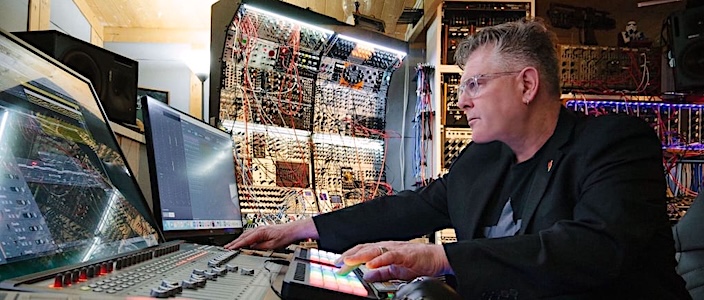
During his online guest lecture for Edinburgh Napier University, London-based sound designer, composer and dubbing mixer Sefi Carmel explored the creative and ethical questions surrounding soundtrack creation for documentaries. Drawing upon experience of mixing more than one hundred documentaries, he challenged the assumption that factual filmmaking requires a fundamentally different sonic vocabulary from drama. Dialogue, music, atmospheres, spot effects, Foley and abstract sound design can all contribute towards documentary storytelling. The crucial issue is not whether a sound was recorded at the moment shown on screen, but what its addition asks the audience to believe.
Throughout the lecture, Carmel returned to a broad understanding of the soundtrack. Everything emerging from the speakers belongs to a single composition created in relationship with the image. Dialogue, music and effects may be separated technically, but audiences experience their combined movement through time and space. Like music, a soundtrack arranges rhythm, dynamics and timbre to communicate emotions and ideas. Documentary sound therefore involves much more than cleaning interviews and placing music underneath them. It is the construction of an audiovisual experience whose materials may come from reality while their organisation remains an act of filmmaking.
Carmel began by questioning a belief he had held as a young sound designer. News reporting and documentary filmmaking had once appeared to occupy similar positions on a spectrum between reality and fiction. At one extreme, news aspires towards an account of events with minimal manipulation. At the other, drama openly asks audiences to accept scripted performances, constructed edits, designed sound effects and music intended to influence emotion. Documentary can initially appear closer to the first model, yet Carmel’s experience of the form led him towards a different conclusion. A feature-length documentary still has to hold an audience for sixty, ninety or more minutes. It communicates ideas, develops relationships, establishes places, controls pace and creates emotional movement. Those demands make it filmmaking rather than an extended news report.
Understanding documentary in those terms considerably widens its creative possibilities. Music can shape emotional interpretation, sound effects can strengthen actions and atmospheres can establish locations that production recordings fail to communicate. Archive footage can be reconstructed into a convincing audiovisual world, Foley can restore physical detail and abstract sound design can emphasise an important transition or idea. Documentary makers have access to almost the complete filmmaking toolbox. With that freedom comes an ethical problem. If documentary claims a relationship with reality, how far can its soundtrack depart from literal recording before enhancement becomes deception?
The whale provides a useful test. The animal really entered the water and its tail really created a splash, even though the filmmakers could not capture that sound from their position. Adding a plausible splash does not invent the event. It reconstructs an acoustic consequence already implied by the image, allowing audiences to experience the animal’s movement and scale more immediately without asking them to believe that something happened when it did not. Matters become more difficult when sound influences interpretation rather than restoring an unheard event. Carmel drew his clearest ethical line around speech. Reconstructing the likely sound of an action differs substantially from editing somebody’s words in a manner that changes their meaning or context. The latter can alter the evidence from which audiences understand an event. For Carmel, creative sound design remains legitimate when it serves the film without becoming a gross lie.
A much less serious encounter with perceptual truth came during his work on a documentary about the Winter Olympics. Faced with a distant shot of a skier slaloming down a snowy slope, the director wanted the movement to have greater sonic presence. Library searches failed to produce a suitable recording, so Carmel created one himself. The director liked the result and repeatedly asked what had produced it. Carmel initially refused to answer, but eventually revealed the source: a knife scraping across toast. The sound had worked perfectly while the director perceived it as skiing. Once its origin became known, however, the illusion collapsed. The director could hear only toast and eventually asked for it to be removed. Nothing in the waveform had changed. Image, expectation and context had previously allowed one event to become another, while knowledge of the source created a new and apparently irreversible interpretation.
Listeners do not identify sounds solely through their acoustic properties. Visual information, expectation, context and prior knowledge shape perception. A recording does not acquire credibility merely through sharing a physical origin with the object shown on screen, and a constructed sound does not automatically become deceptive through coming from somewhere else. Credibility emerges from the relationship between sound, image and meaning. Documentary sound design occupies a space between physical truth and perceptual credibility, requiring the designer to consider where a sound came from alongside what audiences understand it to represent.
Reality presents another difficulty long before questions of creative enhancement arise. Documentary crews work in environments that cannot be controlled in the manner of a drama production. Interviews happen near roads, beneath aircraft routes, inside noisy buildings and beside machinery. Important moments may occur only once, leaving post-production dependent upon whatever the location recordist managed to capture. Documentary also has limited access to ADR. Replacing a contributor’s voice with a later studio performance can compromise spontaneity, authenticity and practicality. An imperfect recording of an essential contribution therefore has to be made intelligible and aesthetically acceptable even when the original conditions were hostile.
Some problems are comparatively manageable. Low-frequency rumble can be reduced, while constant noises such as air conditioning, electrical hum or an aircraft cabin may respond well to noise reduction. Variable interference presents a much harder problem. An accelerating motorcycle can move through the same frequency regions as speech while continually changing its spectral character, making removal difficult without damaging the voice. Aggressive processing introduces further compromises. Equalisation can isolate the most intelligible part of a voice while leaving it thin and unnatural. Noise reduction can remove interference at the cost of audible artefacts. A line may become technically clearer but aesthetically less convincing. Restoration is not a contest to remove the greatest possible quantity of unwanted sound. Every intervention changes the material audiences hear.
Carmel connected this problem to the idea of aesthetic disturbance. Drawing upon Ludwig Wittgenstein, he described aesthetics partly through the recognition of something being wrong: a picture hanging at an angle, for example, produces a disturbance that disappears when the relationship is corrected. Documentary sound can create similar disturbances. A close image accompanied by an unexpectedly distant, reverberant voice may produce audiovisual dissonance. Distortion attracts attention, while harshness, brittleness or excessive boxiness can make listening uncomfortable even when every word remains understandable. Intelligibility is necessary but insufficient. Dialogue also needs to feel congruent with the image and surrounding soundtrack, and a technically rescued voice can still undermine a scene if its perspective, spectrum or acoustic character appears disconnected from what viewers see.
Modern restoration tools have expanded what can be recovered. Carmel discussed noise reduction, de-clicking, de-crackling, de-clipping, dereverberation and spectral repair as processes capable of rescuing recordings that might once have been considered unusable. Constant noise can sometimes be reduced substantially, while sophisticated interpolation may reconstruct clipped or distorted speech with surprising effectiveness. Greater capability does not remove the need for judgement. Restoration can erase information that belongs to the story. Crackle on an old recording may be technically undesirable while simultaneously communicating historical distance. The noise of an old shellac disc or archive recording can help audiences understand that they are hearing material from another period. Removing every imperfection may weaken the narrative. Technical possibility matters less than understanding what the existing sound already communicates.
This tension between repair and preservation led to one of Carmel’s central principles: ideally, every layer of the soundtrack should be capable of telling the story. Dialogue carries narrative through words. An atmosphere can communicate location, weather, time of day and activity without spoken explanation. Music can reveal emotional direction. A forest atmosphere containing birds, wind and running water immediately places listeners within a particular kind of environment. Each layer contributes different information, and the complete soundtrack emerges from their interaction rather than from one dominant element surrounded by decoration.
Documentary production rarely provides ideal materials, so those layers often have to support one another. Aggressively cleaned dialogue recorded on a windy location may no longer contain enough environmental information to make its setting believable. Carefully constructed atmospheres can return that context. Sound effects can reinforce actions the original recording failed to capture, while music can support emotional movement that damaged or fragmented production sound cannot carry alone. None of these layers needs to become conspicuous. A weak recording may become convincing once placed inside an appropriately designed environment, since audiences hear relationships between elements rather than evaluating every track in isolation.
Voiceover introduces another distinctive element within those relationships. Casting is often a directorial decision, though Carmel argued that sound professionals can contribute valuable thinking when invited into the process. The appropriate voice depends upon the subject, intended audience and emotional character of the film. A documentary about the rise of a young pop group requires a different vocal identity from one exploring humpback whales in the North Atlantic. Performance matters as much as casting. Tone, energy, pacing and character shape the audience’s relationship with the film, while the chosen voice influences the space available for music, effects and atmosphere. Voiceover is part of the soundtrack’s composition, not information simply placed above it.
Music performs an equally integrated role. Carmel distinguished between music existing within the world shown on screen and music functioning as score. Source music might come from a visible performer, radio, jukebox or other plausible location within the scene, while score operates outside that visible world and shapes emotion from another level. Documentary makers can also blur the distinction deliberately. An old rock-and-roll song treated with band-limiting and room reverberation might appear to come from a jukebox in a diner, allowing music to reinforce the setting, contribute historical or cultural information and perhaps help mask weaknesses in the location sound.
Selecting or composing music requires an understanding of everything else occupying the scene. Dialogue-heavy sequences need music capable of supporting speech without continually competing for attention. Dense lead instruments or vocals can occupy perceptual and spectral territory similar to the human voice, forcing the music much lower in the mix. More restrained arrangements can create emotional colour while leaving space for narration and interviews. Other sequences allow music to carry more of the narrative. An expansive aerial view with little dialogue may support a large thematic statement that would overwhelm an intimate interview. Musical effectiveness in isolation matters less than the role a piece needs to perform at a particular moment and the relationships it forms with the rest of the soundtrack.
Location dialogue complicates those relationships further. A controlled voiceover recording tends to maintain comparatively stable level and performance, while spontaneous speech can vary considerably. Contributors may begin sentences with energy and trail away as thoughts conclude. Music automation must respond to those changing patterns. A static reduction may leave quieter words obscured or make stronger phrases feel unnecessarily exposed. Mixing becomes a continual negotiation between intelligibility and musical continuity, with the soundtrack moving around the natural behaviour of voices that were never performed for the convenience of the mixer.
Atmospheres perform several roles simultaneously. Most obviously, they tell audiences where they are. Traffic, birds, wind, room tone, distant machinery or human activity can define an environment before viewers consciously analyse the image. They also smooth editorial transitions. Documentary scenes are frequently assembled from material recorded at different moments, positions or even days, and a continuous environmental bed can help separate pieces of location sound feel as though they belong to a coherent space. Carmel identified another, less obvious function: atmospheres can contribute spectral balance. If a scene feels sonically empty within a particular frequency region, an appropriate environmental layer can help create a more aesthetically satisfying whole. The choice still needs to make narrative sense, but storytelling and sonic composition overlap here. Atmosphere can provide information, continuity and texture at the same time.
Spot effects operate on a more local scale. A car door closes, a telephone is placed down or a gun fires. Brief synchronised events can reinforce visible actions and restore details absent from production recordings. Archive footage provides particularly rich opportunities for this kind of reconstruction, especially when historical images arrive without usable synchronous sound. Old footage may be silent or accompanied by narration and music unsuitable for the contemporary documentary. A battlefield sequence showing tanks, artillery and soldiers therefore presents the sound designer with an empty world that needs to be rebuilt.
For Carmel, archive reconstruction can be approached with the same dramatic ambition used in fiction. Tanks can advance through the frame, gunfire can occupy different distances and artillery can establish scale, while wind across an exposed landscape gives the environment continuity. The designer might process the soundtrack to suggest historical recording technology or create a vivid modern sound world that places the audience imaginatively inside the event. A deliberately aged soundtrack reminds viewers that they are encountering archive material, while a contemporary reconstruction can reduce historical distance and make an event feel immediate. Neither choice is neutral. Both interpret history, leaving the designer to consider the relationship the documentary seeks to create between the audience and the past.
Foley can contribute in much the same way, although documentary schedules and budgets rarely permit complete coverage. Selective use can still transform significant moments. A historical reconstruction showing chainmail being worn, armour handled or a sword drawn may deserve detailed physical sound even when none was captured during filming. If the moment carries narrative importance, there is no reason to reject Foley merely through an assumption that documentary sound must remain limited to location recordings. Abstract sound design extends the same principle further. Drones, impacts and heavily processed transitions can strengthen important ideas or structural moments, creating unease, giving a cut greater dramatic force or helping an audience experience a transition emotionally as well as intellectually.
For Carmel, the legitimacy of these devices depends upon purpose. Dramatic sound should strengthen the film rather than substitute manipulation for argument. Documentary editing, cinematography and music already influence how audiences understand material, and sound design participates in the same process. Ethical responsibility lies in recognising what each construction communicates rather than pretending that construction does not occur. Documentaries are built from real people, events, evidence and places, yet films do not emerge automatically from those materials. Someone selects shots, orders sequences, chooses where music begins, decides when silence matters and determines which details audiences hear. Soundtrack creation is part of that authorship.
Creative decisions are only part of the work. The documentary must also survive the circumstances in which it will be heard. Carmel emphasised that mixing begins with the destination. A theatrical documentary, television broadcast, online film and festival screening present different playback conditions and technical expectations. Format, dynamics, equalisation and level decisions need to reflect those contexts. A large theatrical environment can support substantial low-frequency extension and wider dynamics, while television playback may occur through much smaller speakers and in less controlled surroundings. Processing that creates clarity in one context can become harsh or excessive in another.
Platform awareness connects technical delivery directly with audience experience. Spectral energy inaudible on small television speakers can still consume headroom. Extreme dynamics may work beautifully in a cinema while causing viewers at home to continually adjust volume. Loudness standards formalise part of that relationship, particularly for broadcast delivery, but Carmel’s broader point concerned the distribution of intensity across the film. Loudness can be understood as a budget. If every moment is treated as maximally intense, little room remains for genuine peaks. Dynamic planning becomes another form of storytelling, allowing contrast to carry dramatic meaning rather than treating level merely as a compliance problem.
Compression and limiting require similar contextual judgement. A theatrical mix may use comparatively subtle master processing, preserving headroom and contrast, while television and online material may tolerate or require greater control. One version is not inherently superior to another. Each mix needs to function within the medium for which it is intended, preserving the film’s intentions under different listening conditions.
Deliverables extend that responsibility beyond the primary audience. Documentary films may travel between territories and require new narration or dubbed dialogue. Music and effects tracks need to support localisation rather than reproduce automation created around the timing of the original language. Carmel explained the value of providing undipped music for this purpose. In an English version, music may be reduced beneath a particular phrase and raised again when the speaker stops. A translated version may take longer or shorter to communicate the same idea. If the music stem already contains automation tied to the English timing, the foreign-language mixer inherits a structure that no longer fits. Providing material without those dialogue-specific reductions allows the new mix to respond properly to the translated performance.
A soundtrack therefore exists as more than a finished mix. It may need to survive new languages, platforms and contexts, and good delivery anticipates the work of people who will encounter the material later. Carmel ended with an even simpler responsibility: check the work. Quality control may appear less intellectually exciting than documentary ethics or perceptual sound design, yet it protects every creative decision made before delivery. A mixer can spend days constructing a sophisticated soundtrack and still send an unusable file through a routing mistake or export error. Recording or exporting something does not prove that the expected material exists in the resulting file. Listen to it. Watch it. Check it.
That practical instruction sits neatly alongside the lecture’s larger argument. Documentary soundtrack creation moves constantly between interpretation and responsibility. Designers can construct sounds that were never recorded, rebuild silent archives, use Foley, shape emotion through music and introduce dramatic sonic devices. Those freedoms demand judgement. Does a sound restore an experience, clarify it, interpret it or falsify it? What does it ask the audience to believe? Does it support the film’s argument without altering the meaning of its evidence?
Carmel’s lecture presented documentary sound as an art of constructing experience from incomplete reality. Location recordings arrive damaged. Cameras capture actions from distances at which their sounds cannot be heard. Archive images survive after their original acoustic worlds have disappeared. Interviews need to coexist with music, while fragmented scenes require atmospheres capable of making them feel continuous. The documentary soundtrack is built through responses to these absences. Sometimes the response is technological: remove a constant noise, repair distortion or restore intelligibility. Sometimes it is editorial: create a continuous atmosphere around fragmented material. Sometimes it is performative: add Foley to a significant physical action. Sometimes it is musical, shaping the emotional direction of a sequence. At other moments, the solution may be a completely unrelated object whose acoustic behaviour happens to make an image believable.
A knife scraping toast can become a skier moving across snow, at least until somebody learns the secret. Reality does not arrive in post-production as a complete audiovisual object waiting to be preserved. It arrives as recordings, images, testimony, fragments and absences. Filmmakers decide how those materials should be organised into an experience that audiences can follow and understand. Sound designers participate in that process by reconstructing relationships between actions and consequences, voices and spaces, images and expectations.
Construction and dishonesty are not the same thing. A documentary soundtrack can be richly designed while remaining faithful to the people and events it represents. Literal accuracy may sometimes be essential. At other moments, perceptual credibility communicates an experience more effectively than an unusable or absent location recording ever could. A splash can give weight to a whale entering the ocean. An atmosphere can return a damaged interview to its environment. Designed sound can give silent archive footage physical immediacy. Music can reveal emotional relationships without changing the evidence shown on screen.
Documentary sound occupies the space between what happened, what could be recorded and what audiences need in order to understand and feel the film. Carmel’s lecture showed that this space is not a technical inconvenience to be hidden. Much of the creative work begins there. The documentary sound designer cannot preserve every sound of reality, since many were never captured in the first place. The responsibility is to decide what should be repaired, what can be reconstructed, what needs to remain imperfect and what must never be changed.