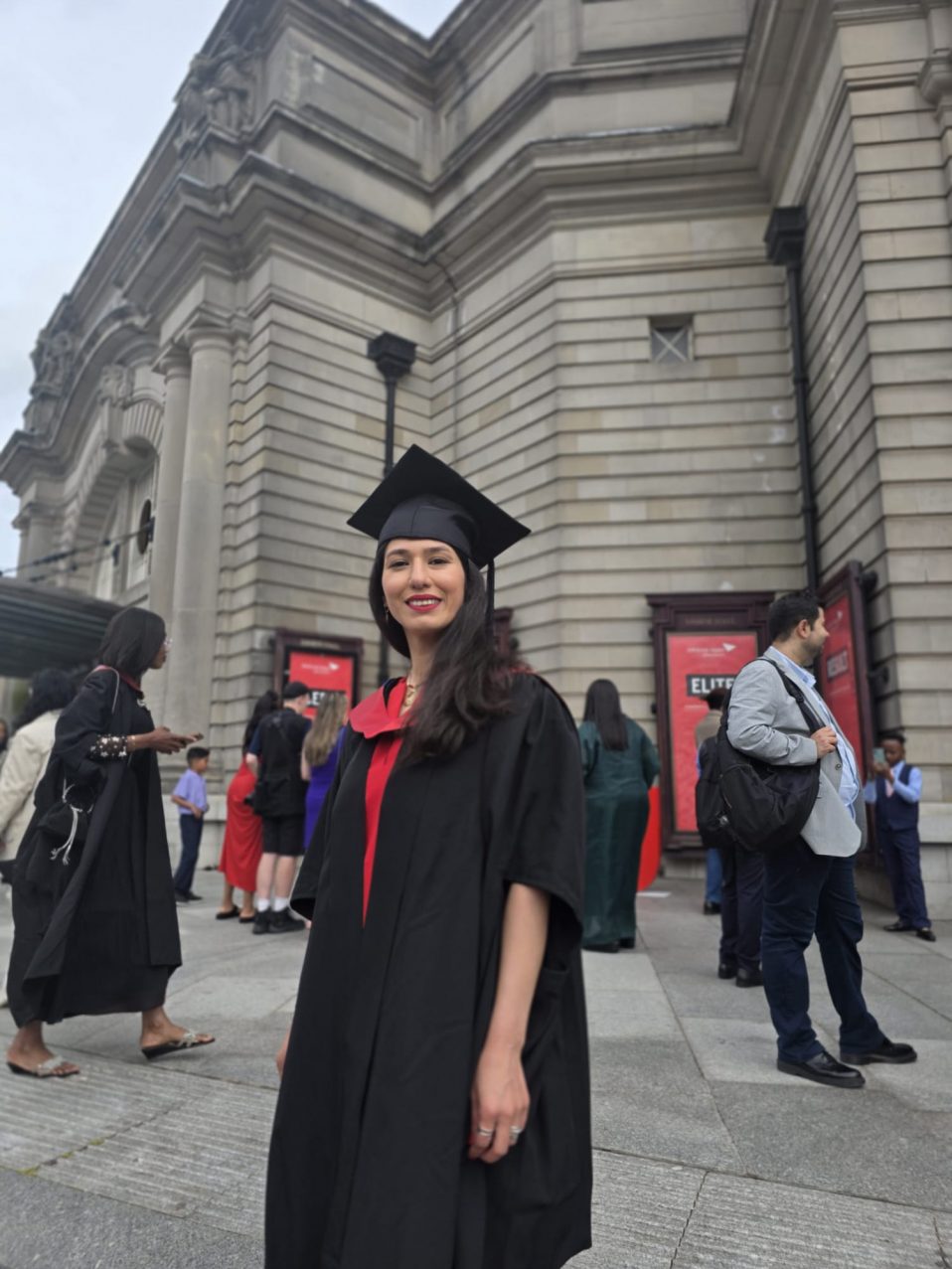
Meet Narges Momeni – MBA graduate – who talks about risk management in cosmetics and its link to her MBA dissertation
What sparked your interest in pursuing an MBA?
With 15 years of professional experience in management as a chemist across related industries, where quality has always been the cornerstone of production, I have developed a strong interest in management science. I see it as a vital bridge between the technological aspects of work and the human or organizational dynamics. From my points of view, without either component, meaningful progress is not possible. There is a missing link between the technical and the human (or even spiritual) side of business, and I believe that management plays a key role in connecting these dimensions. To enhance my ability not only to lead teams effectively but also to deepen my academic understanding of management, I decided to pursue a Master of Business Administration.
Furthermore, I strongly believe in the close and dynamic relationship between academia and industry. On one hand, academic research provides insights and innovations that can be applied in industrial settings; on the other hand, real-world challenges from industry offer valuable questions and direction for academic exploration. As an experienced manager, I am bridging this gap by studying management, especially strategic project management, in a way that directly connects with real-world industry challenges.
Research Focus: Risk Management and New Product Development
My research interest lies at the intersection of strategic project management, risk mitigation, and innovation, specifically, how organizations can manage the risks associated with new product development by using Artificial Intelligence.
My interest in project management originated from my professional experience as a Customer Order Manager, where I coordinated the production process based on specific client requirements. In this role, I observed that overlooking or underestimating potential risks, such as production delays, quality issues, market misalignment, supplier shortages, errors in new product design … can lead to significant failures, sometimes damaging the company’s reputation severely, more than the failure itself. These observations motivated me to explore how strategic project risk management could be integrated earlier into the product development process. My academic journey further deepened this interest, especially as I began studying the role of identifying risk factors in project success and the broader implications of reputational loss. Through my coursework, particularly in principles of project management, strategic project risk management, and leading strategic decision-making, I have become especially interested in how new technologies, such as Artificial Intelligence, can assist project teams and product designers in detecting risks at all stages, making well-informed decisions, and preventing failures that could harm the brand and organization’s reputation.
In today’s competitive and fast-changing markets, launching a new product involves not only innovation but also the creation and protection of credibility. I believe that the negative impact of a failed product on an organization’s reputation can often outweigh the potential benefits of introducing something new. Therefore, I focus on understanding the blind spots in product development that are frequently overlooked at all stages and gates of the new product development process.
What is the aim of your research?
As I focused on risk factors in the development of new cosmetic and hygiene products, my aim was to identify, address, and navigate these risks while redesigning and modifying the underlying reasons for failure or inadequacy. By investigating how AI tools can assist in risk identification and decision-making, my research seeks to support organizations in designing products more intelligently, thereby reducing the rate of failure and, most importantly, safeguarding their reputational integrity. Ultimately, the goal is to help companies avoid repeating past mistakes and to make more sustainable, reputation-conscious strategic decisions. Instead of solely highlighting success stories to encourage organizations to follow old paths, I believe that examining failure stories can provide valuable insights. By fostering collaboration among marketing, engineering, production, sales, finance, and supply chain teams, decision-makers and product designers can redefine risk factors based on each project’s requirements and the lessons learned from these failures.
Why did you choose to pursue your MBA at Edinburgh Napier?
As an international student, I initially concentrated on exploring study opportunities in the UK, particularly in Edinburgh, which captivated me with its breathtaking beauty and rich history. I quickly realized that Edinburgh Napier University was the perfect institution to pursue my aspirations, especially given its impressive student satisfaction ratings and its distinction as the first modern university in Scotland, as well as being recognized as the leading Scottish modern university for research power and impact. In my search for management programs within the Business School, I found the Master of Business Administration (Strategic Project Management) to be exceptionally well-designed. The selection of modules was both logical and practical, aligning perfectly with my professional background in management and my interests in further learning. I also valued the welcoming and well-supported admissions process, which featured comprehensive guidance and an extensive FAQ section that effectively addressed all my questions. Ultimately, the accreditation of the Edinburgh Napier Business School by AACSB for excellence in teaching, research, curriculum development, and student learning solidified my decision to pursue my master’s degree in business there.
What’s the best piece of advice you’ve received during your MBA journey?
As the student representative, I had the opportunity to engage with the Board of Studies and the Student and Staff Liaison Committee. My strong relationships with my lecturers, coupled with my ability to achieve distinction in my assignments, allowed me to gather valuable insights for my pursuit of a PhD. One of my lecturers particularly emphasized the importance of selecting a research area that I am genuinely passionate about. She warned that choosing a topic based solely on external factors could lead to a dull and frustrating experience. Ultimately, pursuing something I enjoy is essential for personal fulfilment, and success in earning the degree, and stepping forward to solving an issue.
Unusual Hobbies: Unwinding Through Adventure
Throughout my life, I have been engaging in a diverse range of indoor and outdoor activities, often influenced by my location, the weather, my mood, and the available time I have. I am an avid mountain and rock climber, a passionate reader, and a dedicated cyclist. In my leisure time, I relish the opportunity to connect with nature through climbing or to unwind with a captivating book. As an international student navigating a different educational system, I have come to recognize the importance of finding effective methods to relax and manage concerns. The stunning beauty of Edinburgh motivated me to start walking regularly, and I set myself the ambitious goal of climbing 10,000 steps per day. Although my busy schedule has limited my time to immerse myself in reading non-academic books, I have discovered joy in capturing the vibrant flowers and lush greenery of Edinburgh during my walks.
Furthermore, the program leader selected me as a student representative, which has expanded my understanding of the university experience and enabled me to foster connections with my fellow students. With a naturally social personality, I thoroughly enjoy meeting new people, listening to their stories, and sharing experiences. These interactions not only inspire me but also help me cultivate new ideas and approach various perspectives with a critical mindset.
Pursuing my MBA has enhanced my analytical skills, while my role as a student representative has enriched my social life and fostered a sense of belonging in this new country. Together, these experiences have significantly contributed to both my academic and personal growth.
In Conclusion
While my master’s journey has officially come to end, my pursuit of further studies, particularly in risk management and new product development is just beginning. As a proactive learner driven by a strong desire to apply and expand my knowledge, I am now eager to pursue a PhD. My objective is to delve deeply into how artificial intelligence can be seamlessly integrated into the new product development process to enhance risk identification, improve decision-making, and foster innovation.