Diversity and Inclusion strategies and backlash: Knowledge into Practice Event
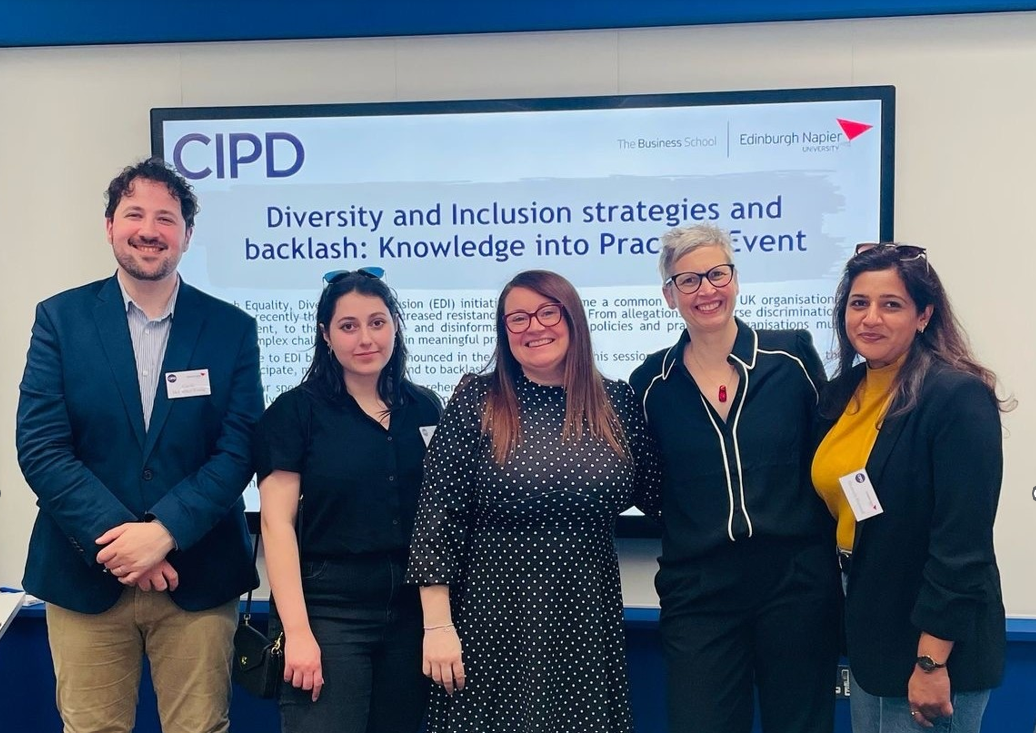
Edinburgh Napier University and the CIPD in South East Scotland Branch
written by Laura Gerard, Ciaran McFadden-Young, and Vicky Peakman
On Tuesday 29th April 2025, we had the pleasure of welcoming practitioners, academics and students alike to come together and discuss current challenges and organisational perspectives on embedding equality, diversity and inclusion whilst overcoming backlash.
Although Equality, Diversity and Inclusion (EDI) initiatives have become a common part of the UK organisational landscape, recently they are facing increased resistance and backlash. From allegations of “reverse discrimination” in recruitment, to the spread of mis- and disinformation about EDI policies and practices, organisations must navigate complex challenges to maintain meaningful progress.
As resistance to EDI becomes more pronounced in the UK and beyond, this session provided attendees with the tools to anticipate, mitigate, and respond to backlash effectively.
Our first speaker, Dr Ciaran McFadden-Young from the University of Stirling, brings a deep understanding of the theoretical underpinnings and empirical research of EDI. He is the author of “Equality, Diversity and Inclusion in the Workplace: International Contexts, Policies and Practices” (2024, Kogan Page), and conducts research and training sessions on EDI in the workplace. Ciaran outlined a number of interconnected narratives to enable exploration of potential reasons or rationalisations of backlash within organisations. Organised backlash can prevent organisations from implementing EDI strategies. However organisations can implement a number of initiatives to help overcome challenges and create effective strategies.
Complementing this academic perspective, we have a HR professional, Vicky Peakman from Fair Pay Partners Ltd who has over two decades of experience in HR both as a practitioner and consultant, is a fellow of the CIPD and founding director of Fair Pay Partners. For the last decade she has worked as a specialist in pay equity, providing consulting services to a myriad of businesses both independently and for leading consultancies. She now brings this expertise in pay equity and pay transparency to clients at Fair Pay Partners.
Systemic change is required to overcome challenges. Reclaiming the narrative and reaffirming meritocracy is central to EDI and in fact “EDI is the idea of a fair society”. Ideologies are important to explore and we must be aware of ‘invisible backpacks. Therefore, thinking of people as individuals. The programme shouldn’t just be about specific protected characteristics – these are vital but it is about all employees. A reset is often required to enable the organisation to focus on their practices to ensure the actions are not just prescriptive but are transformative. Recognising the impacts of organisational practices – especially if taking a strong stance and supporting this is shown to be effectively positive. To enable this our speakers created guiding principles as shown in figure one.
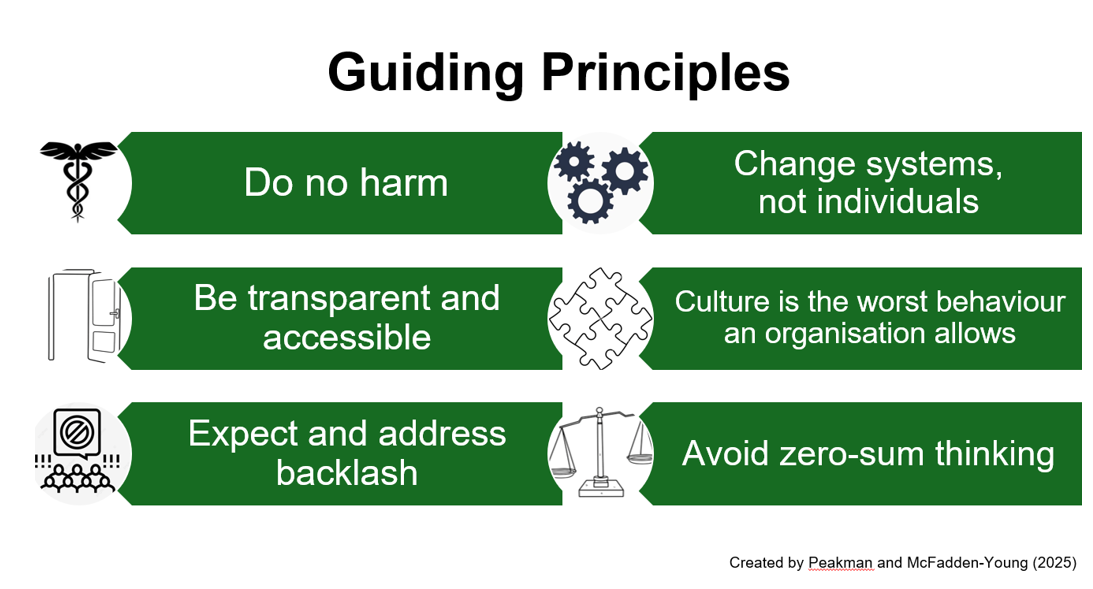
These guiding principles were implemented by attendees as they explored scenarios provided during the session. Throughout the event, our speakers offered a comprehensive view of DEI strategies, blending real-world applications with scholarly analysis. Through their combined expertise, attendees gained a deeper understanding of how organisations can drive positive change, and cultivate environments where individuals and organisations can thrive. We explored the context and narratives driving EDI resistance, and equipped participants with practical strategies to “backlash-proof” their policies and practices.
Sponsored by Edinburgh Napier University and the CIPD in South East Scotland Branch, the Knowledge into Practice events are targeted at practitioners, policy makers and academics interested in sharing views and perspectives. The aim is to foster and encourage collaborative discussions exploring contemporary topics from both theoretical and practitioner perspectives.