How do you design great sound for terrible speakers?
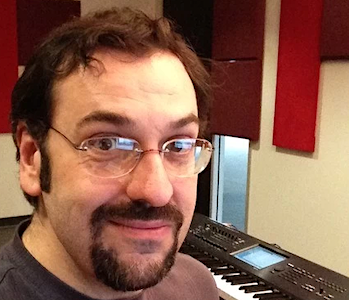
Modern games present players with remarkably convincing sonic worlds. Dialogue responds naturally to changing situations, environments feel alive with movement and atmosphere, interfaces communicate information almost instinctively, and music adapts to the pace of play. Looking at contemporary productions, it is easy to imagine that these achievements are primarily the result of increasingly powerful technology. During his online guest lecture for Edinburgh Napier University, Tracy Bush suggested something rather different. Drawing upon a career that has included Blizzard Entertainment, Sony Online Entertainment, NCSoft and Sphero, he described how some of the most effective sound design emerges when technology imposes severe limitations. Small memories, limited processors, unpredictable playback systems and tiny loudspeakers do not simply restrict creativity. They force designers to think more carefully about what listeners genuinely need to hear.
Bush’s own career reflected the rapid evolution of the games industry itself. Music had always formed an important part of his life, though his professional background began in information technology rather than audio. While working during the day, he spent evenings performing as a pianist in bars around San Francisco. After relocating to southern California, he joined Blizzard Entertainment in an IT role. His musical interests gradually became known throughout the company, leading colleagues to involve him in audio work whenever opportunities arose. Rather than following a carefully planned route into game sound, his career developed through a willingness to solve unfamiliar problems wherever they appeared. Looking back, Bush suggested that many people entered the industry in much the same way. Studios were small, responsibilities overlapped, and individuals frequently discovered new specialisms simply by becoming the person willing to tackle the next challenge.
The games industry of the late 1990s differed substantially from the one students encounter today. Development teams were comparatively small, production pipelines remained fluid and many working practices were still evolving. Audio departments often worked alongside programmers, artists and designers in highly collaborative environments where formal boundaries between disciplines were less rigid than they later became. Bush described an atmosphere in which experimentation emerged naturally from everyday work. New hardware appeared rapidly, production tools changed continuously and every project seemed to introduce another set of technical problems that required fresh solutions. Experience remained valuable, though it rarely eliminated uncertainty.
The computers on which players experienced those games introduced another level of unpredictability. Audio hardware varied enormously between systems, making consistent playback almost impossible to guarantee. Different sound cards reproduced music in noticeably different ways, while MIDI playback depended heavily upon whichever synthesis hardware happened to be installed inside an individual computer. A carefully balanced piece of music created inside the studio might sound dramatically different once it reached somebody else’s machine. Sound designers could control what left the studio. They could not control how it would ultimately be heard.
This uncertainty extended well beyond music. Dialogue, sound effects and ambience all passed through hardware whose behaviour remained largely outside the control of the development team. Rather than designing for one predictable playback system, audio professionals found themselves designing for thousands of possible listening environments. Bush described this as one of the defining characteristics of early game audio. The question was rarely how a soundtrack sounded under ideal conditions. Instead, designers learned to ask whether it continued to communicate effectively when reproduced by equipment they had never encountered. The playback system itself became part of the design problem.
Although contemporary technology has advanced enormously, the underlying challenge remains surprisingly familiar. Players now experience games through televisions, headphones, laptops, handheld consoles, mobile phones and increasingly varied listening environments, each introducing its own acoustic character. Perfect consistency remains elusive. The responsibility of the sound designer therefore extends beyond producing interesting sounds. It includes anticipating how those sounds will survive the journey from the studio to the listener.
Bush also reflected upon the rapid transformation of production tools during this period. Early editing systems offered comparatively limited support for assembling large projects, requiring significant manual organisation and making complex revisions both time-consuming and potentially destructive. The arrival of Pro Tools transformed those workflows, allowing audio teams to edit non-destructively, manage increasingly complex sessions and collaborate more effectively. At much the same time, improvements in virtual sampling gave composers access to increasingly expressive orchestral sounds without requiring every revision to involve live performers. These developments expanded what small audio teams could realistically achieve while allowing creative ideas to evolve throughout production rather than becoming fixed at an early stage.
The tools available to sound designers evolved just as quickly. Bush described middleware as another important step in that development. As implementation systems became more sophisticated, audio teams gradually assumed greater responsibility for how sounds behaved inside games rather than simply supplying recordings for programmers to trigger. Interactive playback, transitions and behavioural logic increasingly became part of the sound designer’s creative role. Technology expanded the possibilities available to audio departments, though it also broadened their responsibilities. Understanding implementation became almost as important as creating the sounds themselves.
One observation from Bush’s time at Blizzard challenged another common assumption about technological progress. Greater technical capability did not necessarily encourage increasingly elaborate soundtracks. He reflected upon how musical direction gradually changed across successive projects, with later productions often favouring greater restraint rather than greater complexity. Earlier scores frequently relied upon dense orchestral textures intended to create scale and spectacle. Later work often achieved stronger dramatic results through simpler arrangements that allowed individual musical ideas greater space to breathe. Rather than filling every available moment with sound, composers became increasingly selective about where music should lead the player’s attention and where silence or restraint could prove more effective.
The same principle appeared throughout sound design more generally. Memory budgets restricted how many sounds could be stored. Processor limitations reduced the number that could play simultaneously. Dialogue budgets limited the amount of recorded speech available to designers. Every technical restriction demanded choices. Which sounds genuinely communicated useful information? Which could be simplified without affecting the player’s experience? Which details would most influence the way a moment was perceived? Bush’s examples repeatedly suggested that successful sound design depends less upon including everything that is technically possible than upon identifying what is genuinely important for the listener.
By this stage of the lecture, the discussion had established a way of thinking that extended well beyond the technology of any particular decade. New hardware, new software and new production methods continually alter the practical challenges facing sound designers, yet they rarely change the underlying task. Every project begins with a listener, a playback system and a collection of technical constraints that cannot simply be ignored. The role of the sound designer is to understand those conditions and create the most convincing experience possible within them.
The relationship between creativity and constraint became considerably more tangible during Bush’s work with Sphero, where many of the assumptions underlying conventional game audio no longer applied. Working on licensed products featuring characters such as R2-D2, BB-8 and Lightning McQueen involved far more than transferring familiar techniques onto a different platform. Every sound would eventually emerge from a miniature loudspeaker housed inside a compact plastic enclosure containing motors, batteries, gears and electronic components. The finished product would be heard in kitchens, classrooms, living rooms and gardens rather than through carefully positioned studio monitors or high-quality headphones. Under those conditions, many established production practices simply ceased to be useful. The question was no longer how a sound performed inside the studio. It became how that sound survived once it reached the device for which it had actually been designed.
Bush described changing his workflow to reflect that reality. Rather than completing the sound design and then testing it on the finished hardware, he monitored much of his work directly through the loudspeaker installed inside the product itself. Equalisation, dynamics, tonal balance and overall character were judged using exactly the same hardware that customers would eventually hear. The acoustic behaviour of the enclosure, the resonances introduced by the plastic casing and even the mechanical sounds generated by the internal motors became part of the design process. Instead of treating these characteristics as defects to be corrected afterwards, they became factors that shaped creative decisions from the beginning.
The approach illustrates an important principle that extends well beyond embedded devices. Playback systems are never neutral. Every loudspeaker, pair of headphones, television or mobile phone colours the material passing through it. Sound designers often devote considerable attention to recording, editing and mixing, though the listening environment ultimately contributes just as much to the audience’s experience. Bush repeatedly returned to the importance of understanding where sounds will actually be heard. A design that performs beautifully on large studio monitors may communicate surprisingly little through the hardware used by most listeners. Successful sound design therefore depends not only upon creating interesting sounds, but also upon understanding the conditions under which those sounds will be experienced.
Tiny loudspeakers presented another unavoidable challenge. Their physical dimensions simply prevented them from reproducing deep bass with any real authority. Attempting to force low frequencies through such hardware produced distortion long before it created convincing weight. Rather than attempting to overcome those physical limitations directly, Bush exploited the way listeners perceive sound. By introducing carefully controlled upper harmonics, he encouraged the auditory system to infer the presence of frequencies that the loudspeaker itself could not reproduce. The hardware remained unchanged, though the listening experience became noticeably richer.
The solution depended upon psychoacoustics rather than brute force. Human hearing does not operate as a simple measuring device. Listeners continually reconstruct incomplete information, using harmonic relationships, timing cues and previous experience to build coherent auditory impressions. Bush’s work demonstrated how understanding those perceptual processes can prove more valuable than pursuing technically impossible specifications. The objective was never to reproduce frequencies that the loudspeaker could not generate. It was to create a convincing impression of fullness using the resources that remained available. Throughout the lecture, this distinction emerged repeatedly. Good sound design often depends less upon reproducing reality perfectly than upon understanding how listeners interpret what they hear.
Sampling rates introduced another practical compromise. Embedded devices offered only a fraction of the storage and processing power available to contemporary games, requiring careful management of bandwidth and memory. Bush explained that these restrictions became particularly noticeable when working with robotic characters such as R2-D2, whose personality depends upon bright electronic vocalisations occupying the upper regions of the frequency spectrum. Lower sampling rates inevitably reduced the highest frequencies that could be reproduced accurately, making filtering and careful spectral management essential parts of the design process. Concepts that students often encounter as digital audio theory became everyday creative decisions affecting how expressive and recognisable the finished character would become.
The material supplied by Lucasfilm also revealed how much organisation underpins apparently effortless performances. Bush did not receive complete scenes or finished sequences ready to be inserted into the product. Instead, he worked with an extensive collection of individual R2-D2 vocalisations drawn from the films. These recordings were not simply organised according to pitch or duration. Their emotional character proved considerably more important. Expressions of curiosity, excitement, concern, frustration and amusement were grouped together so that the robot’s responses could reflect changing situations while remaining faithful to the personality audiences already recognised.
Randomisation played an important role, though not in the simplistic sense of allowing any sound to play at any time. Bush described carefully controlled systems that introduced variation without sacrificing recognisability. Human listeners identify repeated patterns remarkably quickly, yet behaviour that appears completely unpredictable can feel equally artificial. Convincing interactive audio therefore occupies a position between repetition and randomness. Familiar vocalisations return often enough to establish character, while subtle variations prevent those repetitions from becoming mechanical. The objective is not to surprise the listener continually, but to create the impression of a responsive and expressive personality.
The same balance appears throughout interactive sound design. Footsteps, interface sounds, environmental ambiences and weapon effects all benefit from controlled variation rather than unlimited randomness. Collections of related recordings, small differences in pitch or timing and carefully managed playback logic often produce more convincing results than vast libraries of unrelated sounds. Bush’s examples demonstrated that believable behaviour frequently depends upon the relationships between sounds rather than the number of sounds available.
As the lecture broadened beyond embedded devices, Bush argued that creating individual sounds represents only one part of a modern sound designer’s role. Interactive media introduces challenges that simply do not exist in linear forms such as film or television. A film editor knows exactly when every line of dialogue will be heard and how every scene will unfold. Games surrender much of that control to the player. Conversations may begin unexpectedly, be interrupted, or never occur at all. Players may spend hours exploring one environment while another moves through it in minutes. The soundtrack therefore cannot be constructed as a fixed sequence of events. It has to respond continuously to changing circumstances.
Middleware transformed this aspect of production. Earlier generations of game development relied heavily upon programmers to implement even relatively modest audio behaviour. As middleware matured, sound designers gained much greater control over how sounds responded to events within the game itself. Playback logic, transitions, priorities and interactive behaviours increasingly became part of the sound designer’s creative responsibility. Recording remained an important part of the job, though implementation became equally significant. Designing how sounds behave proved just as important as designing the sounds themselves.
This shift also changed the relationship between audio departments and the wider development team. Bush repeatedly emphasised that sound design does not exist in isolation. Programmers determine what information becomes available. Designers establish the systems that govern player behaviour. Writers shape dialogue, animators influence timing and movement, while artists define the visual environments within which sounds operate. Audio departments respond to all of these decisions while contributing their own expertise in return. Successful interactive soundtracks emerge through continual collaboration rather than from any single discipline working independently.
One discussion during the lecture addressed the way sound professionals are perceived within development teams. Bush reflected on labels such as “the sound guy” or “the noise boy”, expressions that dramatically underestimate the breadth of contemporary audio practice. Modern sound designers contribute far beyond the creation of individual sound effects. They solve technical problems, shape interactive behaviour, collaborate across disciplines and influence how players ultimately experience the game. Titles such as Audio Director acknowledge that broader creative and technical responsibility.
Questions from students later turned towards virtual reality, where many of these relationships become even more apparent. Convincing virtual environments depend upon much more than visual realism. Sound provides continuous information about distance, movement, scale and spatial relationships, allowing users to build coherent mental models of spaces extending beyond their immediate field of view. Carefully designed spatial audio therefore contributes directly to presence, orientation and immersion rather than acting as a decorative addition to the visual experience.
Across subjects as varied as desktop games, embedded devices, robotic toys and virtual reality, Bush repeatedly returned to the same way of thinking. Every project began with an understanding of the available technology, the listening conditions and the perceptual abilities of the audience. The hardware changed dramatically throughout his career, though the questions facing the sound designer remained remarkably consistent. Rather than asking how to exploit every available technical capability, Bush continually asked what listeners actually needed to hear and how the available technology could communicate that experience most effectively.
Across projects as different as Blizzard’s games, Sphero’s robotic products and emerging virtual reality systems, Bush consistently returned to the same set of design questions. Technology continued to change throughout his career, introducing new platforms, workflows and constraints, yet the underlying task remained remarkably stable. Successful sound design depended upon understanding how people listen, how technology behaves and how creative decisions bridge the gap between the two. Whether working with a full orchestral score, an interactive dialogue system or a miniature loudspeaker inside a robotic toy, the objective was never simply to produce impressive sounds. It was to create listening experiences that remained convincing under the conditions in which they would actually be heard.