Category: Video games

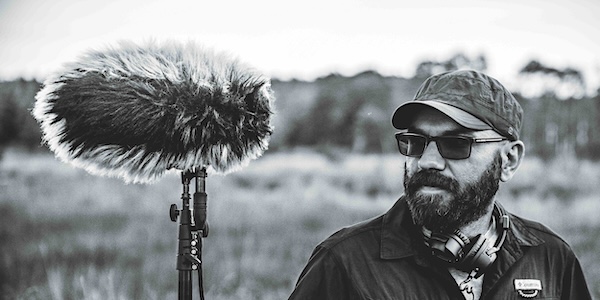
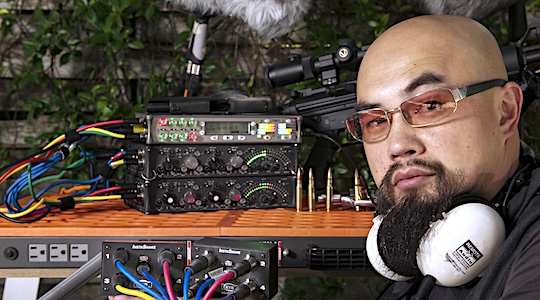
  • Getting Closer: Watson Wu on Field Recording, Curiosity, and the Search for Authentic Sound

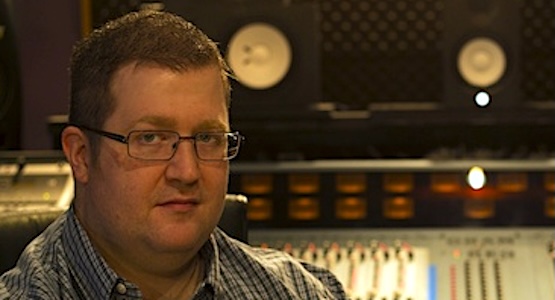
    Watson Wu

    What makes a great field recording?

    Many aspiring sound designers assume the answer begins with equipment. Better microphones, more expensive recorders, larger collections of accessories, or the latest recording technologies all seem like obvious places to start. Watson Wu has spent decades recording race cars, helicopters, weapons, sports crowds, military vehicles, steam trains, wilderness ambiences, and countless other sound sources for games, film, and television. Yet throughout his guest lecture at Edinburgh Napier University, he repeatedly returned to a very different conclusion. Great recordings rarely emerge from equipment alone. More often, they emerge from access, preparation, curiosity, and a willingness to get closer to the source than most people are prepared to go.

    Wu’s own journey into field recording began almost accidentally. Having studied music and worked extensively with recording equipment, he was asked by a client whether he could also provide sound effects for a project. The results proved successful enough to encourage him to continue. Looking back, what is striking is how quickly his attention shifted away from commercially available sound libraries and towards the sounds themselves. Existing libraries could certainly provide useful material, though they rarely offered complete creative control. If a designer records a skateboard personally, they can decide exactly where the microphone should be placed, which aspects of the sound should be emphasised, and which should be excluded. Rather than accepting someone else’s interpretation of an event, they can create their own. Recording therefore becomes more than acquisition. It becomes a way of understanding sound.

    That desire for direct engagement appears throughout Wu’s career. Again and again, he described situations in which recording personally provided opportunities that would have been impossible through library material alone. A Ferrari owner can be asked to accelerate, brake, idle, or corner in specific ways. A helicopter pilot can perform particular manoeuvres. A stadium crowd can be approached from multiple positions and perspectives. Rather than documenting a sound, the recordist begins exploring it. Questions emerge. What does the source sound like from the front? What changes when the microphone moves closer? Which details become audible when recording from inside rather than outside? The process becomes investigative. Recording is no longer merely collecting sounds. It becomes a way of learning how sounds behave.

    Perhaps surprisingly, this emphasis on source recording has also shaped Wu’s attitude towards technology. Early in his career, he assumed that only the most expensive microphones could produce professional results. Like many newcomers, he viewed prestigious manufacturers as essential components of successful recording practice. Experience gradually challenged this assumption. Expensive microphones certainly have their place, though many recording situations depend far more upon positioning, environment, and technique than upon cost alone. A moderately priced microphone placed correctly will often outperform a far more expensive microphone placed badly. Recording a gunshot, a racing vehicle, or a helicopter frequently requires practical decisions about durability, placement, weather resistance, and safety. In some situations, the most valuable microphone is not the most expensive one. It is the one that survives the session.

    This pragmatic attitude runs throughout Wu’s work. Rather than searching for a single perfect microphone, he has assembled a collection of tools suited to different purposes. Shotgun microphones provide focus and directionality. Ambisonic microphones capture complete acoustic environments. Lavalier microphones can be hidden inside vehicles and machinery. Dynamic microphones tolerate extreme sound pressure levels. Each offers a different perspective on the same event. Rather than asking which microphone is best, Wu encourages a different question: what exactly are you trying to hear?

    That question becomes particularly important when considering the different forms that field recording can take. Throughout the lecture, Wu repeatedly distinguished between focused recordings, environmental recordings, and combinations of both. A shotgun microphone pointed at a specific source allows unwanted sounds to be rejected. An ambisonic microphone captures the entire acoustic environment surrounding it. Many of the most useful recordings involve collecting both simultaneously. A racing vehicle, for example, may be recorded with a fixed stereo setup capturing the overall pass-by while another microphone actively follows the vehicle as it moves. Together, these perspectives provide far greater creative flexibility than either recording alone. The objective is not simply to obtain a sound. The objective is to gather options.

    This philosophy of collecting more than is immediately required appeared repeatedly throughout the lecture. If a client requests four recordings, Wu aims to deliver eight. If access is granted to a vehicle, he looks for every useful perspective that can be captured while the opportunity exists. The reasoning is practical. Recording opportunities are fragile. Weather changes. Locations become unavailable. Machines break down. Owners move away. Access disappears. A steam train hired for a day may never be available again. A military vehicle may only be accessible under tightly controlled conditions. A helicopter flight involves substantial planning, expense, and coordination. Throughout the lecture, Wu repeatedly encouraged students to think beyond the immediate request. Record the obvious sound, certainly, though record the unexpected sound as well. Capture the startup, the shutdown, the rattles, the controls, the mechanical details, and the surrounding environment. Future projects often benefit from recordings that initially appeared irrelevant. One of the advantages of personal recording is that it allows designers to build libraries that grow richer with every session.

    Several stories from the lecture illustrated this mindset particularly well. One involved the recording of a Huey helicopter, the distinctive aircraft familiar from countless war films and television programmes. For Wu, this represented a long-held ambition. Capturing the sound successfully required far more than simply arriving with a recorder. Multiple lavalier microphones were mounted inside the aircraft. Additional protection was added to cope with extreme airflow. Recorders were secured carefully to the airframe. Ground-based ambisonic and mid-side recording systems captured external perspectives. Wind protection had to be considered constantly. Safety procedures had to be followed. Every aspect of the session involved planning, experimentation, and adaptation. Yet what emerges most strongly from the story is not the equipment but the preparation. The quality of the recording depended upon decisions made long before the helicopter ever left the ground.

    A similarly revealing example involved the recording of a historic steam train. Rather than arriving, capturing a handful of pass-bys, and leaving, Wu approached the session as a rare opportunity to document an entire acoustic ecosystem. Exterior perspectives were recorded alongside onboard perspectives. Mechanical details were captured alongside broader environmental sounds. The objective was not simply to obtain a steam train recording. The objective was to understand how the train sounded from as many perspectives as possible. Such sessions reveal an important distinction between collecting sounds and collecting experiences. A library may contain a steam train. Spending a day with a steam train reveals how the machine breathes, rattles, resonates, and interacts with the world around it. Those observations often prove just as valuable as the recordings themselves.

    One of the more thought-provoking moments in the lecture concerned realism. Beginners often assume that accurate recording should be the ultimate goal. Professional practice is frequently more complicated. A racing car recorded exactly as it sounds may not feel sufficiently exciting inside a game. A weapon may require enhancement. An engine may need additional weight and aggression. Distortion, saturation, and other forms of processing are often introduced deliberately. Wu’s point was not that realism is unimportant. Rather, realism and believability are not always the same thing. The audience’s memory of an event may differ considerably from the event itself. Sound designers frequently work within that gap, creating experiences that feel authentic even when they depart from strict documentary accuracy. The objective is often emotional truth rather than literal accuracy.

    This willingness to adapt appears throughout Wu’s approach to problem-solving. Some of the lecture’s most memorable stories involved situations that failed to unfold as planned. During one recording session involving historic artillery, environmental conditions introduced an unexpected complication. Peacocks repeatedly vocalised at exactly the wrong moment, intruding into recordings that had required considerable effort to arrange. The story generated laughter, though it also illustrated an important reality of field recording. The world rarely cooperates completely. Animals, weather, traffic, aircraft, and countless other factors have a habit of appearing precisely when silence is required. Successful field recordists learn to work with uncertainty rather than imagining it can be eliminated entirely.

    What is perhaps most striking across all these examples is the extent to which recording depends upon people. Throughout the lecture, Wu repeatedly emphasised the importance of trust, professionalism, and respect. Vehicle owners are not simply providing sound sources. They are sharing something valuable. Pilots are not merely operating machinery. They are helping create recordings. Mechanics, assistants, safety personnel, and operators all contribute to the final outcome. Access depends upon relationships. Relationships depend upon how people are treated.

    This human dimension emerged repeatedly throughout the lecture. When discussing vehicle recording sessions, Wu described asking owners to tell him if a vehicle needs a break. During military recording sessions, he relies on guidance from experienced personnel regarding safe practice. Mechanics advise on microphone placement around engines and exhaust systems. Aircraft operators explain how equipment can be secured safely. Again and again, the quality of the recording depends upon collaboration rather than individual expertise alone.

    Such observations help explain why Wu devoted considerable attention to assistants and colleagues. Technical ability matters enormously, though professional success often depends just as much upon reliability, patience, and kindness. One assistant was praised for consistently anticipating what needed to be done before being asked. Equipment was packed away efficiently. Problems were solved calmly. Tasks were completed without drama. Such qualities may appear unrelated to sound design, though Wu clearly regards them as fundamental. People prefer working with those who make difficult jobs easier. Careers are often built as much through trust as through talent.

    Learning itself occupies a similarly important position within his philosophy. Throughout the lecture, Wu repeatedly described himself as a lifelong learner. New recording technologies are welcomed. New microphones are tested. New techniques are explored. Even after decades of professional work, he continues searching for improved approaches. The emergence of 32-bit float recording technology provided one example. Although enthusiastic about its possibilities, he discussed both its advantages and its limitations. Increased dynamic range solves certain problems, though it does not eliminate the need for careful microphone placement, thoughtful listening, or critical judgement. Technology changes. Core recording principles remain remarkably consistent.

    Listening, in fact, may be the most important skill of all. Wu frequently described removing one side of his headphones while recording in order to compare the microphone feed with the surrounding environment. The goal is not merely to record sounds. The goal is to understand what the microphones are actually capturing relative to lived experience. A recording may appear technically impressive while still failing to communicate what made the original event interesting. Conversely, unusual microphone positions or unconventional techniques sometimes reveal aspects of a sound that would otherwise remain hidden.

    This curiosity about sound extends well beyond the vehicles and weapons for which Wu is perhaps best known. Some of the lecture’s most engaging stories involved wilderness ambiences, rain, wind, and environmental soundscapes. While working on the television series The Underground Railroad, he travelled deep into remote areas of Florida in search of locations free from contemporary noise pollution. During a separate project in Iceland, he spent long periods experimenting with wind recordings around the Arctic Henge, exploring how subtle changes in microphone orientation transformed the resulting sound. Such examples reveal a practitioner who remains fascinated by listening itself. The technology matters. The environments matter. Yet underlying everything is a persistent curiosity about how the world sounds.

    Looking back across the lecture, what emerges most clearly is a conception of field recording rooted in curiosity. Microphones matter. Recorders matter. Ambisonics, 32-bit float recording, microphone placement, and technical expertise all matter. Yet none of these things create opportunities by themselves. Opportunities emerge through relationships, preparation, persistence, and a willingness to go where interesting sounds can be found. A helicopter recording begins with access to a helicopter. A vehicle recording begins with the trust of its owner. A remote ambience recording begins with a journey into an environment where that ambience still exists.

    Perhaps this is why Wu’s stories remain so memorable. They are never really stories about equipment. They are stories about people, places, and experiences. A helicopter with microphones attached to its frame. A steam train hired for an entire day. A military vehicle crossing rough terrain. A crowd erupting during a decisive sporting moment. Wind moving through an Icelandic landscape. Each recording represents a moment that had to be sought out deliberately.

    For aspiring sound designers, that may be the most valuable lesson of all. The next remarkable sound is unlikely to appear by accident inside a studio. It is probably waiting somewhere beyond the microphone case, attached to a person, a place, or an experience that has not yet been encountered.

    The challenge is getting close enough to hear it.

  • Why Game Sound Is Never Finished: Mariana Botero on Systems, Possibility, and Interactive Audio

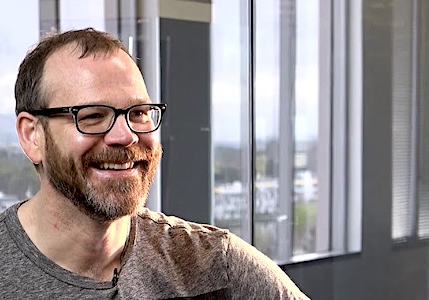
    Mariana Botero

    What does a sound designer actually create?

    For much of the history of recorded media, the answer has seemed relatively straightforward. A sound designer creates sounds. Those sounds are edited, arranged, mixed, and eventually delivered to an audience in a finished form. Whether working in film, television, radio, or theatre, the result remains largely fixed. Every audience member encounters the same sequence of events in the same order. A soundtrack may be replayed thousands of times, though the sounds themselves do not change. Sound design, in this traditional sense, is largely concerned with creating and refining artefacts. The work may be extraordinarily complex, though the outcome is ultimately stable. Once completed, the audience receives the experience that the creators intended.

    Games operate according to a different logic. During her guest lecture at Edinburgh Napier University, Mariana Botero, Sound Designer at Criterion Games, repeatedly returned to a challenge that sits at the centre of interactive audio. Players are unpredictable. They may rush through environments that designers expected them to explore carefully. They may spend an hour in a location intended for a few minutes of gameplay. They may repeat actions endlessly, ignore carefully placed cues, or discover solutions that nobody anticipated. A sound designer may spend weeks refining a particular moment, only for players to experience it in a completely unexpected way. This unpredictability creates a fundamental difference between games and most other forms of media. Film sound designers can assume a degree of control over audience experience. A scene unfolds at a predetermined pace. Music enters at a precise moment. Dialogue arrives exactly when it is needed. Sound and image progress together through a carefully authored sequence. Games surrender much of that control. Designers can establish possibilities, though they cannot determine exactly how those possibilities will be experienced. Every player creates a slightly different path through the material.

    Botero illustrated this distinction through a deceptively simple analogy. Traditional sound design can resemble baking a cake. Once the ingredients have been combined and baked, they become a finished object. Individual components can no longer be separated. The audience receives the completed result exactly as intended. Interactive audio often works differently. The ingredients remain available. They can be rearranged, adjusted, recombined, and reshaped while the experience is unfolding. What players hear depends not only on what the designer created but also on what they choose to do. A player who rushes through an environment may hear one version of the experience. Another who explores every corner may encounter something quite different. Neither experience is incorrect. Both emerge from the same underlying system. At first glance, this may appear to be a technical distinction, though throughout the lecture it became clear that something more significant is taking place. Interactive audio challenges assumptions that have shaped sound practice for decades. Rather than creating a finished soundtrack, game audio designers increasingly create systems capable of generating many possible soundtracks. The question is no longer simply what a sound should be. The question becomes how a sound should behave.

    Implementation sits at the heart of this shift. Students often encounter implementation through software platforms such as Wwise and Unity, where attention naturally gravitates towards events, switches, parameters, states, and scripting. Botero encouraged a broader perspective. These tools are not merely technical requirements added after the creative work has been completed. They are part of the creative process itself. They provide mechanisms through which sound can respond to player actions, environmental conditions, narrative developments, and changing game states. Once audio becomes interactive, implementation ceases to be a final stage of production. It becomes one of the primary ways in which experiences are designed. Many of Botero’s examples reflected this movement from sounds to systems. Consider something as apparently mundane as footsteps. Few sounds occur more frequently in games. A footstep that appears a handful of times in a film may occur thousands of times during a single play session. What initially feels satisfying can quickly become repetitive. Players generate these sounds through their own behaviour, meaning designers cannot simply assume that repetition will remain unnoticed. Botero discussed several implementation strategies designed to address this issue. Different recordings can be selected randomly. Pitch and volume may vary subtly between repetitions. Heel and toe impacts can be separated and recombined dynamically. A relatively small collection of recordings suddenly produces a far wider range of perceived outcomes. Yet what makes these techniques interesting is not their technical sophistication. Their significance lies in how they reveal a different philosophy of authorship. Rather than crafting every individual event directly, designers create rules governing how events are generated. They design the behaviour of the system rather than the precise form of every outcome.

    Her observations about footsteps led naturally into a broader discussion about attention. Not every sound deserves equal prominence throughout an experience. Early in a game, clearly audible footsteps may help players understand movement and control. Later, those same sounds can begin to dominate the soundscape unnecessarily. As players become familiar with core mechanics, environmental details often become more valuable. A distant owl, subtle weather activity, a passing vehicle, or an unexpected environmental cue may contribute more to a sense of place than another clearly articulated footstep. This may seem like a relatively small design decision, though it reveals an important principle running throughout the lecture. Sound design is not simply about creating sounds. It is about shaping attention. Designers are constantly deciding what players should notice, what they should ignore, and how their awareness should be directed through an experience. Interactive audio therefore becomes inseparable from broader questions of perception.

    Several examples from Botero’s work on Star Wars Battlefront II illustrated this relationship particularly clearly. One challenge involved creating a convincing sensation of speed during space combat. Space provides surprisingly few visual reference points. Without roads, buildings, or passing landscapes, players can struggle to judge how fast they are moving. From a purely visual perspective, extraordinary speeds can sometimes feel unexpectedly slow. Audio therefore assumes a more active role. Changes in acceleration, orientation, proximity, and manoeuvring can all be reinforced through sound, encouraging players to feel faster than they actually are. Importantly, the objective is not deception. The objective is alignment between what players see, what they hear, and what they believe they are experiencing. Sound helps bridge the gap between game mechanics and player perception. A related challenge emerged around spatial awareness. Players navigating complex three-dimensional environments often need information that visual displays cannot always communicate efficiently. Botero described examples where reflections, pass-bys, and environmental responses helped players understand their relationship to surrounding structures. Those sounds functioned as navigational aids as much as sound effects. Players may never consciously notice them, though their absence would make environments feel less intelligible. Such examples reveal another important aspect of interactive audio. Sound is not simply representing the world. It is helping players interpret the world. A successful design often communicates information, directs attention, reinforces emotion, and supports decision-making simultaneously. The most effective implementation frequently becomes invisible. Players simply feel that the game responds naturally to their actions.

    The same principles appeared again in Botero’s discussion of interactive music. Traditional composition assumes a relatively stable structure. A beginning leads towards a middle before eventually reaching an ending. Although composers may create complex and highly sophisticated works, they generally retain control over the order in which events occur. Games rarely provide such certainty. Players may linger in one location, interrupt events unexpectedly, revisit spaces repeatedly, or trigger narrative developments in unusual orders. Music must therefore accommodate possibilities that cannot be fully predicted in advance. Rather than composing a single linear sequence, designers often create collections of musical elements capable of being reorganised dynamically while preserving coherence. Botero compared the process to building with Lego bricks. Individual pieces remain consistent, though their arrangement changes according to context. Introductory passages, transitions, loops, and endings can be connected in different ways while still feeling musically coherent. Once again, the designer is not creating a single outcome. The designer is creating a framework capable of supporting many outcomes. What matters is not only the material itself but also the relationships that determine how that material behaves under changing circumstances.

    This way of thinking extends beyond music. One particularly revealing example discussed during the lecture involved a student project built around a time-slowing mechanic. In a traditional medium, slowing time might simply involve applying predetermined processing at specific moments. Within an interactive environment, however, the relationship becomes dynamic. Real-time parameter controls allowed player actions to influence audio behaviour directly. As gameplay changed, the soundscape changed alongside it. The mechanic was not merely accompanied by sound. The mechanic became part of the sound design process itself. Audio no longer functioned as a layer added on top of gameplay. It became woven into the behaviour of the system. Examples such as these help explain why programming increasingly occupies an important place within contemporary game audio. Throughout the lecture, Botero described learning through experimentation, tutorials, practical projects, and professional experience. Programming was presented not as a replacement for creative thinking but as a means of expanding creative possibilities. The more deeply designers understand systems, the more effectively they can connect audio to player experience. Technical knowledge becomes valuable not for its own sake but for the opportunities it creates.

    One of the more interesting consequences of this shift is that game audio designers increasingly resemble system designers as much as traditional sound designers. Much of the language surrounding audio production still reflects assumptions inherited from film, television, and music. We often speak about creating sounds, mixing sounds, or arranging sounds. Botero’s examples repeatedly pointed towards a broader form of practice. Designers create relationships between sounds, player actions, environmental conditions, and game states. Their work involves determining how sounds respond, adapt, and evolve rather than simply deciding what those sounds should be. The resulting experience emerges through interaction between the player and the system. In this sense, implementation is not something that happens after sound design. Implementation is increasingly part of sound design itself.

    This spirit of exploration appeared throughout Botero’s account of her own development. Long before working professionally in games, she was already engaging deeply with sound through recording, listening, and experimentation. Growing up in Colombia, she developed a fascination with environmental sound that later evolved into a broader interest in audio design. Looking back across the lecture, one of the most striking aspects of her career trajectory is how consistently curiosity appears as a driving force. New tools, new techniques, and new technologies repeatedly emerge, though progress often begins with a simple willingness to investigate how things work. Throughout her account there was little sense of a fixed pathway into game audio. Instead, learning appeared as an ongoing process of exploration in which technical knowledge, creative practice, and experimentation continually informed one another.

    That same curiosity remains visible within professional practice. One of the most memorable examples came from Criterion’s “Sound Design Thursdays”. Team members temporarily step away from production work and undertake creative challenges built around unusual constraints. Designers exchange recordings, limit themselves to small collections of source material, or pass sounds between colleagues with each person applying a single transformation before handing them on. The outcomes can be surprising, humorous, and occasionally absurd. A camel recording may gradually evolve into something resembling a bird. Familiar sounds acquire entirely new identities. Yet beneath the humour lies a serious lesson about creativity. Unexpected results often emerge when designers deliberately create conditions that encourage experimentation. Limitations become opportunities. Constraints become creative tools. In many respects, these exercises mirror the philosophy underlying interactive audio itself. Both involve constructing systems, establishing rules, and allowing surprising outcomes to emerge from interactions between different elements. Neither depends upon complete control. Both depend upon creating environments in which interesting possibilities can arise.

    Looking back across the lecture, what emerges most clearly is a view of sound design that extends well beyond the creation of individual sounds. Footsteps, adaptive music, spatial cues, implementation systems, real-time parameters, and creative experiments all point towards the same conclusion. Interactive audio requires designers to think in terms of relationships rather than isolated assets. Sounds gain meaning through how they respond to players, environments, and changing circumstances. The challenge is no longer simply to create a soundtrack. The challenge is to create a framework capable of supporting many different soundtracks.

    Perhaps this is what makes game audio such a distinctive area of contemporary sound practice. Film sound designers craft experiences that audiences receive. Game sound designers craft possibilities that audiences help create. Every play session unfolds differently. Every player encounters a slightly different combination of events. Every interaction generates new relationships between sounds, systems, and behaviours. The sounds matter. What matters just as much are the rules that determine what those sounds might become.

    In game audio, the work is never truly finished. It simply waits for the player to decide what happens next.

  • Designed Serendipity: Andy Martin on Creativity, Listening, and the Art of Surprise

    Andy Martin

    What does creativity sound like?

    For Andy Martin, Senior Sound Designer at Sucker Punch Productions, the answer is unlikely to be found in a carefully documented workflow or a rigid production methodology. Throughout his guest lecture at Edinburgh Napier University, Martin repeatedly returned to a very different idea. The most interesting sounds often emerge when designers deliberately place themselves in situations where they can be surprised.

    Martin refers to this philosophy as “designed serendipity”, a concept he credits largely to his mentor Randy Thom. The phrase initially appears contradictory. Serendipity implies chance, accident, and unexpected discovery. Design suggests planning and intention. Yet Martin’s career demonstrates how these ideas can work together. Creativity, in this view, is not about waiting for inspiration to appear. It is about constructing conditions in which unexpected discoveries become more likely. The designer cannot control what will be found, though they can shape the circumstances that make finding it possible.

    This perspective challenges many popular assumptions about creative work. Students often imagine that successful practitioners possess a hidden method, a reliable sequence of steps capable of transforming ordinary material into extraordinary results. Martin openly questioned this way of thinking. Asked about his workflow, he admitted that he does not really have one. Certainly, there are habits that reappear from project to project, though he remains wary of turning them into rules. Every game presents different creative challenges. Every project requires different forms of thinking. More importantly, repeating the same process too faithfully risks producing the same results. Creativity depends upon remaining open to possibilities that lie beyond familiar routines.

    The origins of this philosophy can be traced back to Martin’s time at Skywalker Sound, where he worked alongside Randy Thom. Looking back, he describes the experience as one of the most important periods of his professional development. Yet the lessons he absorbed were not primarily technical. What fascinated him was Thom’s approach to listening and organisation. Rather than treating sounds simply as recordings of physical events, Thom often approached them through their emotional qualities. His personal library contained sounds catalogued not only according to source, but also according to feeling. Recordings could be associated with loneliness, tension, aggression, calmness, mystery, or wonder. The objective was not to identify what a sound was. The objective was to understand what a sound might do.

    This distinction may appear subtle, though it reveals a fundamentally different way of thinking about audio. Conventional cataloguing systems encourage designers to search for sounds according to source categories. A door slam is stored alongside other door slams. A dog bark sits among other dog barks. Thom’s approach encouraged a different question. What emotional qualities does this sound possess? What might happen if it were combined with something unexpected? A sound recorded in one context could become something entirely different in another. A bird call might contribute to a creature vocalisation. A machine hum might become atmospheric tension. The process begins not with certainty, but with curiosity.

    For Martin, this lesson became foundational. Creativity ceased to be a matter of finding the correct answer and became an exercise in constructing opportunities for discovery. Throughout the lecture, he repeatedly returned to the importance of experimentation. Some of the most successful sounds emerge from combinations that nobody could have predicted at the outset. The designer’s task is not necessarily to know where the process will end. The designer’s task is to remain attentive enough to recognise valuable discoveries when they occur.

    Curiosity therefore becomes more than a personality trait. It becomes a professional practice. Martin encouraged students to seek out unfamiliar experiences, explore unexpected places, and deliberately disrupt habitual routines. One piece of advice that particularly resonated with him was deceptively simple. If you walk the same route every day, occasionally take a different street. If there is a shop you have passed a hundred times without entering, go inside and see what is there. The purpose is not efficiency. The purpose is exposure. Creative people often benefit from encountering situations they did not expect. Novel experiences generate new observations, new questions, and new possibilities for connection.

    Listening occupies a particularly important place within this philosophy. During the development of Infamous: Second Son, Martin became fascinated by a deceptively simple question: what makes Seattle sound like Seattle? At first glance, the answer appears straightforward. Record traffic, crowds, construction activity, public transport, and environmental ambience. Yet Martin quickly discovered that acoustic identity operates at a much more detailed level. Cities possess distinctive sonic signatures that emerge from countless small elements working together. Particular bird species occupy particular environments. Certain sounds appear more frequently at specific times of day. Weather influences behaviour. Geography influences acoustics. Local infrastructure contributes characteristic textures. Many of these details pass unnoticed by casual listeners, though collectively they contribute to a powerful sense of place.

    Birds became especially important. Martin described spending significant time listening to and recording bird activity, paying close attention to how different calls contributed to the atmosphere of specific environments. A city heard at dawn feels different from the same city heard in the afternoon. Seasonal changes alter acoustic behaviour. Even subtle variations in bird populations can influence how a place is perceived. Most players may never consciously identify these details while exploring a virtual environment, though they contribute to an overall impression that the world feels convincing. Authenticity often emerges not from a single spectacular detail but from the accumulation of many small observations.

    What matters, however, is not strict realism. Throughout the lecture, Martin repeatedly emphasised what he referred to as “the feels”. A sound does not necessarily need to reproduce reality perfectly. It needs to produce an emotional response that feels appropriate to the experience being created. Sound design therefore occupies an interesting position between documentation and interpretation. The goal is not simply to record reality. The goal is to understand which aspects of reality contribute most effectively to a desired emotional experience. A city can feel alive, lonely, welcoming, dangerous, or mysterious depending upon how listeners are encouraged to interpret what they hear.

    This emphasis on interpretation helps explain Martin’s enthusiasm for recording. Like many professional sound designers, he regularly uses commercial sound libraries. Yet he repeatedly stressed the value of gathering material personally. Recording is not simply a way of collecting assets. It is a way of discovering possibilities. The act of listening often becomes just as important as the recordings themselves.

    One of the most memorable examples emerged from his work on Infamous: Second Son. One of the game’s superpowers involved manipulating video and television signals, creating an unusual design challenge. How does a fictional power based upon digital transmission actually sound? Rather than beginning with familiar science-fiction conventions, Martin started exploring the electromagnetic world hidden within everyday electronic devices. This led him towards one of his favourite recording tools: a telephone pickup microphone designed to capture electromagnetic activity rather than airborne sound.

    The results reveal a hidden acoustic world that most people never realise exists. Televisions emit fluctuating tones. Computer monitors generate complex electronic textures. Power supplies buzz, pulse, and whine. Fluorescent lights produce unexpected patterns of activity. Arcade machines reveal layers of sonic behaviour completely absent from ordinary listening. Through the telephone pickup microphone, familiar objects become strange again. The recordings frequently bear little resemblance to the devices that produced them. Ordinary electronics become sources of futuristic energy, abstract textures, and unusual sonic gestures.

    More importantly, these recordings illustrate Martin’s broader philosophy. Creativity often emerges when attention is directed towards places that others overlook. The sounds themselves are valuable, though the deeper lesson concerns perspective. A designer who remains curious about the world continually discovers new material. Inspiration rarely appears as a mysterious force descending from nowhere. More often, it emerges from paying close attention to phenomena that already exist around us.

    Play occupies an equally important role within this process. Martin repeatedly described sound design as an activity that retains a fundamentally playful character even within highly professional production environments. His studio contains a constantly evolving collection of objects, materials, and devices that may one day prove useful. Springs, wires, bottles, sheets of metal, broken electronics, improvised resonators, and unusual recording tools coexist alongside more conventional equipment. Some objects are kept for specific projects. Others remain simply because they are interesting. The distinction between experimentation and work often becomes difficult to identify.

    This attitude reflects a deeper commitment to exploration. Play creates opportunities for accidental discoveries. A sound recorded for one purpose may become useful elsewhere. An object collected years earlier may suddenly solve a completely unrelated problem. Maintaining an environment that encourages experimentation therefore becomes part of the creative process itself. Rather than waiting for inspiration to arrive, Martin actively cultivates situations in which surprising ideas can emerge.

    Questions of creativity ultimately led Martin towards a broader discussion about the nature of sound design itself. One of the most thought-provoking moments in the lecture emerged when he distinguished between sound effects design and sound design. The difference may initially appear semantic, though it reveals an important shift in emphasis. Sound effects design concerns the creation of individual sounds. Sound design concerns the shaping of experience. A sound effect may be technically impressive, though successful sound design depends upon how sounds influence perception, attention, and interpretation.

    This distinction becomes especially important within interactive media. Players do not simply observe events. They participate within them. Sound therefore contributes not only to atmosphere but also to understanding. Audio can communicate danger, reward exploration, reinforce character identity, or guide attention towards important information. Decisions about timing, context, implementation, and interaction become just as significant as the sounds themselves. Technical skill remains essential, though it ultimately serves a broader creative objective.

    Martin’s discussion of feedback reinforced this perspective. Throughout development, he regularly seeks responses from people outside the immediate audio team. Interestingly, he rarely focuses on technical details during these conversations. Rather than asking whether a sound is realistic or well produced, he prefers to understand how people feel. Does a sequence feel exciting? Does a character feel powerful? Does an environment feel believable? Such questions reveal far more about the success of a design than detailed discussions of frequency content or signal processing. Emotional responses often provide the clearest indication of whether creative intentions have been achieved.

    Looking back across the lecture, what emerges most clearly is a conception of creativity rooted in curiosity. Martin’s stories ranged from bird recording and urban listening to electromagnetic microphones and emotional cataloguing systems. Yet beneath these diverse examples lies a remarkably consistent philosophy. Creative practice depends upon remaining receptive to possibilities that have not yet been imagined. New ideas often emerge from unexpected encounters, unusual observations, and playful experiments rather than from rigid adherence to predetermined plans.

    Perhaps this is why the concept of designed serendipity feels so compelling. Creativity is frequently described as a search for answers. Martin presents something closer to a search for opportunities. The role of the designer is not simply to know what to do next. It is to create circumstances in which new possibilities can reveal themselves.

    A different route through the city. A strange sound hidden inside a fluorescent light. A bird call heard at the right moment. A forgotten object waiting on a studio shelf.

    Sometimes the most valuable discoveries are not the ones we set out to find.

  • Why Do the Sounds of Don’t Starve Feel So Alive? Matthew Marteinsson on Experimentation, Voice, and Play

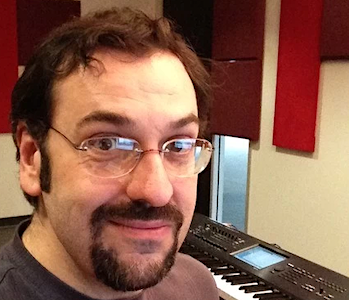
    Matthew Marteinsson

    Many games strive for realism. They aim to reproduce the sound of the world as accurately as possible, carefully modelling spaces, materials, physics, and behaviours so that players feel immersed in a believable environment. Don’t Starve takes a rather different approach. Its world is filled with living scarecrows, walking trees, giant spiders, impossible creatures, and surreal landscapes that seem to have escaped from the pages of a dark storybook. Very little about it appears realistic in any conventional sense. Yet despite this, the game feels remarkably alive.

    Matthew Marteinsson’s guest lecture explored how that happened. Although the talk covered specific technical systems, recording techniques, production challenges, and implementation details, a broader idea repeatedly emerged beneath them. The sounds of Don’t Starve do not feel convincing because they imitate reality. They feel convincing because they remain connected to physical performance, playful experimentation, and a constant willingness to explore unexpected possibilities.

    During the early development of Don’t Starve, Marteinsson was effectively the sole audio designer working alongside two composers, with no dedicated audio programmer and no substantial audio department behind him. Development moved rapidly, content changed constantly, and there was little opportunity for elaborate production pipelines. Rather than treating these limitations as obstacles, the team repeatedly used them as opportunities to find simpler and more creative solutions. Constraints were not merely something to overcome. They actively shaped the character of the game’s sound world.

    The game’s character voices provide an excellent example. Traditional voice acting would have required large quantities of dialogue recording, scheduling actors, and continuously updating content as the game evolved. Such an approach was difficult to reconcile with the speed at which the project was being developed. Yet the characters still needed personality, emotional expression, and identities that players could immediately distinguish. Instead of using spoken language, Marteinsson turned to musical instruments. Inspired partly by the adults in Peanuts cartoons and partly by Peter and the Wolf, where different instruments represent different characters, each character in Don’t Starvereceived its own instrumental voice. Wilson’s distinctive muted trumpet became the starting point, with subsequent characters developing from their own carefully chosen instrumental identities. What began as a practical solution ultimately became one of the most recognisable features of the game.

    Human vocal performance appeared repeatedly as a creative tool throughout the lecture. Many memorable sounds originated not from extensive libraries or complex synthesis chains but from experimentation with the voice itself. The spiders, for example, were largely built from Marteinsson’s own vocal performances combined with processing. The Gobbler, one of the game’s most beloved creatures, began with attempts to gather suitable turkey recordings. After examining the animation, however, he found himself instinctively making a strange vocal sound that immediately felt more appropriate than any authentic turkey call. The library recordings were discarded and the vocal performance became the creature. As he noted, the deliberately exaggerated human performance communicated personality far more effectively than realism alone could have achieved.

    Realism and believability emerged as distinct ideas within Marteinsson’s approach to sound design. A perfectly accurate turkey recording might have sounded more realistic, though it may not have felt more alive. The Gobbler succeeds precisely because it occupies an unusual space between animal, caricature, and performance. Players are not simply hearing a creature. They are hearing a performance of a creature. The sound communicates character as much as biology.

    Personality often seemed more important than realism throughout the lecture. Many of the creatures in Don’t Starveexist within a visual world that is intentionally exaggerated, stylised, and slightly absurd. Conventional fantasy sound design might have felt strangely out of place. Marteinsson instead described grounding many creatures in a “weird reality”, where recognisable physical behaviours remain present but become filtered through performance, humour, and experimentation. Human vocalisations proved especially valuable in this regard. Audiences are extraordinarily sensitive to nuances in human expression. Even heavily processed vocal sounds can communicate intention, emotion, vulnerability, aggression, or curiosity in ways that are difficult to achieve through purely synthetic or animal-based recordings.

    Environmental audio presented an equally interesting challenge. Procedurally generated worlds create difficulties that traditional environmental sound design rarely encounters. Designers cannot assume where players will travel or which environments they will encounter. Marteinsson described a system that continuously examines the terrain surrounding the player, identifies the dominant biome types within the immediate area, and dynamically blends the corresponding ambiences. Grasslands, forests, marshes, and other environments continuously mix together according to what the player is actually seeing at that moment. Rather than creating a fixed soundtrack for a predetermined world, the system responds to the world being generated in real time.

    What makes this system particularly interesting is that the underlying idea remains remarkably simple. Players should hear the world they are looking at. Technical sophistication only becomes valuable when it strengthens the player’s experience. Systems matter not because they are complex but because they help players understand the world around them. Throughout the lecture, Marteinsson repeatedly demonstrated a preference for elegant solutions that serve a clear experiential purpose.

    The broader design philosophy became especially clear during the discussion following the lecture. Marteinsson argued that game audio should generally perform one of two functions: it should either build the world or inform the player. If a sound accomplishes neither, its value becomes questionable. Such a statement sounds straightforward, though it carries considerable implications for design practice. Many games accumulate audio over time, layering additional sounds onto already crowded mixes. The result can be confusion rather than clarity. Marteinsson instead advocates careful consideration of why a sound exists and what purpose it serves. Sound is not decoration. It is communication.

    Small details often became surprisingly important within this design philosophy. During the lecture, he discussed how player feedback during early access revealed complaints about a particular pickup sound. Some players even requested a dedicated option to disable it. Rather than immediately changing the sound itself, Marteinsson investigated further and discovered that the underlying issue was simply that the sound was mixed too loudly. Once its level was adjusted, the complaints disappeared. The lesson was not that players were wrong. Rather, it highlighted the importance of identifying the underlying problem rather than accepting proposed solutions at face value. Players are often very effective at identifying areas where something feels wrong. Determining why it feels wrong remains part of the designer’s responsibility.

    Recording sessions often sounded closer to scientific experiments than conventional sound production. Music boxes, improvised instruments, jelly, pudding, toys, unusual household objects, mines, and novelty items discovered in shops all found their way into Marteinsson’s recording collection. A music box originally intended for composing melodies eventually became the basis for the unsettling sounds associated with the Shadow Hand. A visit to a local mining museum produced unique underground ambience recordings for the game’s cave systems. Strange objects were collected not because a specific project required them, but because they might become useful in the future.

    Playfulness often appeared not as a break from the work but as part of the work itself. Making strange noises while watching an animation, experimenting with unusual objects, collecting sounds without a specific purpose in mind, or exploring unexpected combinations of recordings all reflect a willingness to follow curiosity wherever it leads. Listening to these stories, it became increasingly clear that creativity often depends upon creating opportunities for surprise. The value of an unusual object or recording does not necessarily become apparent immediately. A sound designer may encounter something intriguing, record it, store it away, and only discover its purpose years later.

    Technical decisions rarely appeared separate from creative ones during the lecture. Recording techniques, implementation systems, middleware, debugging tools, and production constraints were all discussed in detail. Yet none of these elements were treated as separate from creativity itself. Debug tools existed to facilitate experimentation. Procedural systems existed to strengthen immersion. Recording techniques existed to discover new forms of expression. Technology remained important throughout the talk, though it rarely appeared as the primary source of innovation.

    Reflections on game development brought many of the lecture’s themes together. Marteinsson acknowledged the challenges facing the industry, including long hours, instability, and periods of significant uncertainty. Yet his reflections consistently returned to enthusiasm, curiosity, and the joy of creating experiences that players genuinely care about. That optimism felt closely connected to the ideas that had surfaced throughout the lecture. The sounds of Don’t Starve emerged not from a search for perfection but from a willingness to experiment, adapt, collaborate, and occasionally embrace absurd ideas simply to see where they might lead.

    Perhaps that helps explain why the world of Don’t Starve feels so distinctive. Its sounds rarely seem trapped by expectations about what things ought to sound like. A spider may begin as a human vocal performance. A terrifying shadow creature may emerge from a modified music box. An iconic turkey may owe more to an impulsive noise made while watching an animation than to any field recording. Throughout the lecture, Marteinsson repeatedly demonstrated that memorable sound design often emerges when curiosity is allowed to guide the process.

    Rather than attempting to recreate reality exactly, Don’t Starve constructs a world that feels alive through performance, experimentation, and play. Many of the sounds discussed during the lecture began as accidents, improvisations, constraints, or strange ideas that simply seemed worth exploring. What emerged from that process was not merely a collection of sound effects but a coherent sonic world. Listening to the lecture, it became difficult to separate the sound of Don’t Starve from the spirit in which it was created. Both are defined by curiosity.

    In doing so, Marteinsson offered a useful reminder that some of the most memorable sounds are not discovered by following established rules. They emerge when designers remain willing to ask a simple question: what happens if we try this?

  • Creating Sounds for Things We Cannot See: Kenny Young on VR, Music, and Guiding Attention

    Kenny Young

    Many forms of media depend upon controlling attention. Films decide where audiences look through editing, framing, and camera movement. Theatre guides attention through staging and movement. Conventional games frequently do something similar through interface design, visual effects, or camera behaviour. Important information rarely appears entirely by accident. Designers often decide where attention should go long before audiences realise those decisions are being made. Most of this guidance becomes invisible precisely when it works well. Players rarely stop to think about how often games quietly redirect their attention from one place towards another. Experiences simply feel natural. Objectives appear at appropriate moments, important events seem difficult to miss, and information arrives when required.

    Kenny Young’s guest lecture explored what happens once some of these assumptions begin disappearing. Virtual reality introduces a relatively simple change that gradually creates much larger consequences. Players control the camera continuously. Looking left means physically turning left. Looking upwards requires physically raising the head. Looking away from something important may simply mean missing it altogether. Initially this sounds like a relatively minor alteration, though the consequences begin spreading surprisingly far once control over attention starts shifting away from designers themselves.

    Imagine hearing something important happening behind you in a conventional game. Designers possess numerous methods for ensuring that players notice it. Cameras may shift automatically, indicators can appear around the screen, and control may even be briefly interrupted. Decades of game design have produced increasingly sophisticated methods for solving these problems. Virtual reality complicates many of these solutions. Fixed interface elements become intrusive, large overlays can weaken immersion, and information existing outside the player’s field of view can remain entirely unnoticed. Questions therefore begin emerging around how players discover important information once designers can no longer simply place it directly in front of them.

    Young suggested that sound changes role at precisely this point. Human vision behaves selectively. We actively choose where to direct our eyes and ignore much surrounding information. Hearing functions rather differently. Sounds continue arriving whether or not we intentionally seek them out. A player may choose not to look towards something important, though hearing something nearby can still trigger an immediate response. Sound therefore begins moving away from a supporting role attached to visible events and towards something more active.

    Players do not simply hear sounds in games. They gradually learn them. Initially a sound may exist only as another event occurring within a larger environment. Yet repeated exposure slowly changes its role. Through familiarity, sounds begin accumulating meaning. This process often happens without players consciously noticing it. A sound that initially appears neutral gradually becomes linked with expectations, actions, and outcomes. Eventually hearing the sound no longer involves interpreting something unfamiliar. Players instead recognise patterns they have already learned.

    Young discussed the familiar alert sound from Metal Gear Solid as an example. During early encounters players hear a brief cue alongside visual information, though repeated exposure gradually changes the relationship. Eventually players stop hearing the sound as a sound effect at all. Instead, it begins behaving almost like language.

    Language may not be entirely the right word, though the comparison becomes useful. Words themselves do not naturally contain meaning. People gradually learn relationships between sounds and ideas through repeated experience until recognition becomes almost immediate. Something similar begins happening within games. A short musical cue or brief sound effect acquires meaning through use rather than explanation. Players are not consciously translating sounds each time they hear them. Recognition simply becomes increasingly automatic.

    Nobody pauses a game to explain that a particular sound means danger. Players learn these relationships through repeated experience. Over time certain sounds become linked with expectations, actions, and outcomes until responses begin occurring almost automatically. Listening changes in subtle ways once these associations form. Players stop consciously analysing what they hear, as attention begins shifting before deliberate thought catches up. Sound therefore becomes something more than feedback occurring after an event. It starts creating expectations about what might happen next.

    Music introduces another layer to these learned relationships. Discussions around game music frequently focus on emotion, atmosphere, and immersion. Players may notice tension increasing during combat, emotional themes returning around familiar characters, or changing musical textures supporting movement through a world. Young explored another possibility entirely. Under certain conditions, music may also begin operating as information.

    Much of his work on Tethered explored whether these kinds of relationships could be developed within virtual reality environments. Strategy games already involve unusually large amounts of simultaneous information. Resources require management, environments continue changing, threats emerge unexpectedly, and events occur across multiple locations at once. Conventional interfaces frequently solve these problems visually. Players monitor maps, indicators, menus, and notifications distributed around the screen. Translating these expectations into VR introduced a more difficult question. How can players remain aware of a world once they can comfortably see only part of it at any given moment?

    Rather than functioning purely as atmosphere or emotional support, musical phrases could gradually become learned signals recognised through repeated interaction. Certain sounds became associated with changing conditions, important events, or emerging situations. Initially these sounds carried little meaning beyond existing as recognisable musical gestures. Over time something rather different happened. Players were not simply listening to music accompanying a world. They were gradually learning the world itself.

    Listening consequently begins developing an unusual relationship with navigation. Physical landmarks help people orient themselves within real environments, though players may also begin constructing sonic landmarks. Certain sounds become associated with places, behaviours, or changing conditions. Listening therefore starts becoming part of understanding how a world behaves. Particular musical phrases began functioning almost like landmarks within an environment. Certain combinations of sounds became associated with emerging threats or opportunities requiring attention. Over time players could respond before consciously thinking about what had changed. Listening therefore became intertwined with understanding the behaviour of the world itself.

    Examples such as these begin shifting the discussion slightly. Rather than asking whether music sounds appropriate or emotionally effective, another question begins appearing. How do people learn sonic environments? Under what circumstances do sounds stop behaving like sounds and begin behaving more like information? Underlying processes of this kind may already exist across many forms of game audio, even if virtual reality makes them easier to recognise.

    Extending these ideas into working systems introduced additional challenges. Sounds needed to remain distinctive while fitting comfortably alongside underlying music. Delays had to remain short enough that players still connected events with their causes, while multiple simultaneous events could create confusion or dissonance. Initial solutions often resolved one issue only to reveal another elsewhere. Technical constraints, musical decisions, and player behaviour continually interacted throughout development. Creative work therefore emerged less as a process of executing perfect ideas and more as a continual process of adjustment.

    Running throughout the lecture was a broader observation concerning the role of sound itself. Discussions surrounding game audio frequently emphasise realism, emotion, and atmosphere. These remain important concerns, though Young’s work suggested something slightly different. Once familiar methods for directing attention become less reliable, sound begins taking on responsibilities traditionally associated with cameras and interfaces.

    Virtual reality may therefore reveal something that has existed quietly within games for much longer. Sound has rarely functioned only as decoration or atmosphere. It has also shaped where players look, what they notice, and how they organise experiences around them.

    Perhaps the more interesting question is not whether sound helps players understand virtual worlds. It may instead involve asking how much of our experience has always depended upon sound guiding us in ways we barely notice. Once designers lose many familiar methods for directing attention, sound begins moving from the background towards the centre of interaction itself.

  • Creating Sounds for Worlds That Refuse to Sit Still: Malin Arvidsson on Game Audio and Interactive Design

    Sound in games often feels invisible when it is working well. Players notice visual worlds immediately. Landscapes stretch into the distance, characters move through environments, and stories unfold through action and dialogue. Sound tends to arrive more quietly. Footsteps simply seem to belong beneath a character, background ambiences appear to exist naturally around us, and a creature’s voice feels inseparable from its personality. Everything seems to fit together so naturally that the work behind these experiences often disappears from view.

    Yet creating sound for games involves a challenge that differs fundamentally from many other forms of media. Film and television unfold through fixed sequences of events. A sound designer working on a film knows exactly when a door opens, when dialogue occurs, when music begins, and when tension rises. Audiences experience those moments in the same order every time. Games behave rather differently. Players stop unexpectedly, move in different directions, repeat actions endlessly, ignore objectives, or spend long periods interacting with things designers never anticipated would receive much attention. Some players rush directly through environments while others investigate every possible corner of a world. A sound designer may know what can happen inside a game, though cannot always know what will happen, when it will happen, or how often particular experiences will occur. Sound therefore cannot simply be attached permanently to images and left alone. It must continue adapting long after the designer has stepped away.

    During an online guest lecture, Malin Arvidsson explored this challenge through reflections on her own experiences working across game audio. Throughout projects involving children’s games, procedural systems, and large-scale interactive worlds, a recurring idea gradually emerged. Game audio frequently involves building systems rather than constructing isolated sounds. Designers create frameworks, relationships, and behaviours that continue operating within worlds that remain unpredictable.

    Arvidsson described discovering games somewhat unexpectedly. Having decided at an early age that she wanted to work with sound, she initially pursued sound engineering and recording work before later encountering opportunities in game production. Games had not necessarily appeared to be an obvious destination at the time. Film and television perhaps felt more visible as career directions, while game audio remained relatively unfamiliar. Yet after joining Audio Interactive and working on early projects, games gradually became something much larger than a temporary opportunity. Part of this attraction appeared to emerge from constant change. Technologies evolve rapidly, development processes shift, while projects rarely require exactly the same approaches twice. Many creative fields involve continual learning, though games introduce an additional layer of complexity through their combination of artistic decisions and technical systems. Sound designers are often required to think simultaneously about recording, editing, implementation, behaviour, memory, interaction, and player experience.

    Some of the earliest examples discussed during the lecture illustrated how dramatically workflows have changed over time. While working on Action Man: Jungle Storm, implementation tools remained extremely limited compared with contemporary systems. There were no dedicated audio middleware environments, no simple methods for previewing sounds directly within gameplay, and no convenient ways of rapidly testing ideas. Implementation frequently involved manually replaying sections of gameplay while attempting to synchronise sounds externally. Looking back, the process appears cumbersome and time-consuming. Yet despite those limitations, hearing newly created sounds finally appearing inside the game still produced a strong sense of satisfaction.

    Later projects introduced another challenge as assumptions taken from linear media no longer translated effectively into interactive environments. Arvidsson described work on Republic: The Revolution, where large numbers of character animations required accompanying sounds. Initial approaches appeared straightforward enough. Individual animations were paired with carefully designed sounds in much the same way they might be within film production. Footsteps, movements, and interactions each received specific audio elements designed to support visual actions. Problems quickly appeared once these sounds entered gameplay. Memory limitations immediately became one issue, with thousands of individual files consuming valuable resources. Yet another issue proved equally important. Players repeatedly encountered exactly the same actions throughout long periods of gameplay. A movement animation viewed once might feel entirely convincing, though hearing precisely the same sound attached to the same movement hundreds of times gradually became distracting rather than believable.

    This problem reveals something broader about realism itself. Human beings often tolerate variation without noticing it consciously, while exact repetition becomes highly noticeable. Everyday experiences rarely unfold identically from one moment to another. Footsteps change subtly according to movement, surfaces, speed, and context. Someone walking across gravel rarely produces exactly the same sound twice. Objects interact slightly differently each time they collide, while environmental sounds fluctuate continuously. We generally ignore these small differences, though their absence can become surprisingly noticeable. Once a sound begins repeating with complete consistency, attention gradually shifts away from the world itself and towards the system generating it. Perfect consistency can therefore begin feeling less realistic than controlled variation.

    Solutions required a different form of thinking. Rather than attaching one sound permanently to one action, sounds became collections of possibilities. Footsteps could exist within larger groups of variations, different surfaces could trigger different responses, and small adjustments in pitch, timing, and volume could introduce subtle differences between repetitions. Players no longer heard identical events replaying endlessly. Instead, they experienced systems capable of producing varied outcomes.

    Arvidsson reflected on this through an observation extending beyond the immediate technical problem. She noted that changing sounds can sometimes create the impression that animations themselves are changing. Sound was therefore no longer simply accompanying visual information. It had begun influencing how visual information itself was interpreted.

    Repetition emerged again through examples involving dialogue. While working on Evil Genius, background conversations between characters introduced similar difficulties. Real dialogue becomes recognisable very quickly once repeated frequently, though replacing speech with meaningless placeholder sounds created worlds that felt strangely artificial. The eventual solution involved constructing thousands of vocal recordings using invented forms of structured nonsense speech. Colleagues recorded large collections of vocal performances resembling language without becoming meaningful dialogue. The purpose was not literal realism. Players were not expected to understand these conversations or extract semantic meaning from them. Instead, the objective involved creating evidence that activity continued occurring around the player. Worlds rarely feel alive merely through visual detail alone. People often listen for small signals suggesting that environments continue existing independently of their own actions. Background conversations, distant movement, as well as changing environmental activity all contribute to the impression that spaces continue functioning whether or not the player directly observes them.

    Memory constraints returned in a different form during discussion of LittleBigPlanet. Storage restrictions within the PSP version introduced significant constraints compared with larger console releases. Some reductions remained relatively straightforward. Numbers of variations could be lowered and certain content could be simplified, though environmental soundscapes proved more difficult. Long ambient recordings consumed considerable amounts of memory, while straightforward looping solutions introduced repetition problems of their own. Instead, Arvidsson described constructing simpler environmental foundations combined with shorter sound fragments including birds, insects, and environmental details. Individual elements could then appear according to changing probabilities and timings while introducing subtle variation. Rather than hearing static recordings replaying continuously, players experienced environments appearing more dynamic and less predictable.

    Examples such as these suggested that technical limitations did not merely reduce possibilities. Constraints frequently redirected attention towards different forms of design thinking. Rather than storing larger quantities of material, systems could generate richer experiences from fewer resources.

    Increasingly interactive systems introduced another layer of complexity. Physics systems created situations where players themselves generated outcomes that designers could not fully predict beforehand. Within LittleBigPlanet, players could construct objects using different combinations of materials and structures. Objects then collided using changing amounts of force under varying conditions. Questions that initially appeared simple quickly became more complicated. Which material should dominate when metal collides with sponge? Should paper dominate plastic? What happens when multiple materials contribute simultaneously? Questions such as these reveal how game sound often shifts away from designing isolated sounds towards establishing behaviours and rules. Designers create relationships and systems, allowing games themselves to determine outcomes dynamically.

    Broader reflections on working within the industry also appeared near the end of the lecture. Networking, persistence, and long-term relationships emerged repeatedly throughout these discussions. Freelancing across games, film, and television introduced uncertainty alongside flexibility, requiring continual adaptation as projects, collaborators, and opportunities changed over time. One comment near the conclusion captured this relationship clearly. Arvidsson described game sound design as roughly forty percent creativity and sixty percent technical implementation and problem solving.

    Initially this ratio may appear unexpected. Sound design often seems associated primarily with creativity and artistic expression. The examples discussed throughout the lecture suggested something slightly different. Creativity within games frequently emerges through solving problems. Memory restrictions, implementation systems, player unpredictability, and technical limitations all shape the final experience.

    Players rarely notice these systems directly. They simply hear worlds that feel alive. Background conversations seem to continue without them, environments appear to change naturally, as movement feels connected to the spaces around it. Much of the underlying complexity disappears beneath the experience itself.

    Perhaps that invisibility forms part of the achievement. Successful game audio may involve more than creating individual sounds. It may involve building worlds capable of continuing to surprise players long after the designer has stepped away. Rather than asking whether a sound works in isolation, a broader question may involve whether an entire system continues behaving convincingly once players begin doing things nobody predicted.

  • The Fast and the Sonorous: Vehicle Sound Design Insights from Codemasters’ Jethro Dunn

    Jethro Dunn, Senior Audio Designer at Codemasters, has contributed to a range of projects, from tactical military shooters to arcade racing games. During his lecture, he shared how vehicle sound effects are shaped by technical constraints, creative objectives, and genre-specific requirements—whether simulating the weight of an armoured convoy or signalling damage in a playful kart racer.

    Drawing on titles such as Operation Flashpoint: Red River and F1 Race Stars, Dunn focused on practical techniques for crafting immersive vehicle soundscapes, managing acoustics, and enhancing player feedback.

    Jethro Dunn

    Streamlining Vehicle Audio in Tactical Shooters

    In Operation Flashpoint: Dragon Rising and Red River, vehicles like jeeps and APCs required sound design that balanced realism with hardware limitations. Early designs utilised layered loops for engines, transmissions, and mechanical effects, but this approach led to unnecessary system overhead.

    “We were wasting more memory managing complex sound events than on the actual audio data, so we had to rethink how we structured vehicle sounds.” — Jethro Dunn

    The team restructured vehicle audio into smaller, independent elements. Engine and exhaust sounds were separated to enhance spatial realism, and mechanical “sweeteners” were introduced at low acceleration to add life and responsiveness during slower movements.

    Shaping Player Perspective: Interior and Exterior Vehicle Sound

    When players moved inside a vehicle, soundscapes shifted to reflect enclosed acoustics. Manual adjustments ensured consistent transitions between interior and exterior perspectives, with positional tweaks placing engine noise appropriately whether driving, seated as a passenger, or operating a turret.

    Conveying Distance: Designing Distant and Ultra-Distant Vehicle Sounds

    Vehicle sounds were deliberately simplified at distance, becoming ambient rumbles to reflect real-world acoustic behaviour. For ultra-distant scenarios, low-frequency layers simulated convoys heard kilometres away, enhancing environmental awareness without cluttering the soundscape.

    Practical Choices: Avoiding Granular Synthesis

    Dunn noted that granular synthesis, commonly used in racing games for dynamic engine sounds, was intentionally avoided for military vehicles.

    “We didn’t use granular synthesis for these vehicles because we didn’t have the recordings, and we didn’t need that level of complexity.”

    Adding Mechanical Detail: Transmission Whine and Brake Squeals

    To enhance realism, layers such as transmission whine and brake squeals were incorporated, helping players interpret vehicle behaviour and reinforcing the mechanical character of military vehicles.

    Communicating Through Sound: Feedback in Arcade Racing

    In F1 Race Stars, sound effects prioritised clear communication over realism.

    “In arcade racing, players need to hear when something’s wrong before they even look at the screen.”

    Exaggerated mechanical noises signalled damage, while distinct cues marked repairs or performance drops—providing immediate, intuitive feedback in a fast-paced environment.

    Recording Challenges and Creative Solutions

    Capturing vehicle audio involved logistical challenges, from limited access to military hardware to managing motorsport recordings.

    “You can’t ask a military driver to do ten perfect laps for recording—you get what you get.”

    For smaller projects, Dunn recorded toy cars in controlled environments—demonstrating adaptability across varying project scopes.

    Reflections on Vehicle Sound Design

    Jethro Dunn’s lecture demonstrated how vehicle sound effects are shaped by technical awareness, efficient workflows, and responsiveness to gameplay needs. From spatial realism through engine and exhaust separation to mechanical sweeteners and clear gameplay cues, his approach highlights the practical decisions that define vehicle sound design across both realistic and stylised game environments.

  • Playing Along: When Music Is Part of the Game World

    “We talk about music that originates from within the diegesis — and not from some non-diegetic player outside of it.”
    — Axel Berndt

    In a guest lecture on game audio, Dr.-Ing. Axel Berndt examined the role of diegetic music — music that exists within a game’s fictional world and can be heard, performed, or even disrupted by its characters. This kind of music, Berndt argued, is not background or emotional subtext. It is part of the world itself.

    Berndt, is a member of the Center of Music and Film Informatics within the Detmold University of Music, working at the intersection of sound design, musical interaction, and adaptive systems. His lecture brought together commercial examples, music-theoretic distinctions, and design considerations to illustrate how music behaves differently when it belongs to the world rather than framing it from outside.

    Dr. -Ing. Axel Berndt

    Inside the World: What Makes Music Diegetic

    Diegetic music refers to music that originates within the game’s diegesis — its fictional environment. Berndt described it as everything “within this world”: sounds that characters can hear and react to, including wind, speech, and music performed or played through in-world devices.

    “If someone switches the radio on, triggers the music box, sings a song, or plays an instrument… their music is also diegetic.”

    Examples included a street musician in The Patrician, a pipe player at a party, and the bard at the start of Conquest of the Longbow. In Doom 3, a gaming machine plays music within the scene; in Oceanarium, a robot performs in a clearly defined virtual space. These are not aesthetic flourishes — they anchor music in the logic of the world.

    Berndt contrasted this with non-diegetic music, which accompanies a scene without being part of it — such as a film score swelling during a battle. “There is no orchestra sitting on an asteroid during the space battle,” he remarked, highlighting the artificiality of non-diegetic scoring in game environments that otherwise strive for realism.

    Sound That Can Be Interrupted

    Once music is part of the world, it becomes subject to physical space, interruption, and interaction.

    “The simplest type of interaction may be to switch a radio on and off, but there is much more possible.”

    Berndt categorised musical interactions as either destructive — disrupting a performance — or constructive, where player input enriches or alters the musical output. In Monkey Island 3, players must stop their crew from singing an extended shanty by choosing responses that are woven into the rhyme scheme. Each interruption is musical and interactive.

    “The sequential order of verses and interludes is arranged according to the multiple choice decisions the player makes.”

    Such scenes turn performance into a mechanic. Music is not a layer applied to gameplay — it is the gameplay.

    When Music Isn’t Polished — And Why That Matters

    Berndt emphasised that diegetic music should not always sound flawless. Live performance in reality includes irregularities: tuning fluctuations, missed notes, imperfect timing. Simulating this can enhance believability.

    “Fluctuations of intonation, rhythmic asynchrony, wrong notes — these things simply happen in life situations. Including them brings a gain of authenticity.”

    He cited the harmonica player in Gabriel Knight, whose wavering tone subtly reinforces the impression of a street musician with limited technical control. Imperfection isn’t failure — it is context-aware design.

    Berndt also warned against repetitive loops that expose the limits of a system. When the player leaves and re-enters a scene, and the same music starts again from the beginning, the world appears frozen. “We reached the end of the world,” he said. “There is nothing more to come.”

    To counter this, he advocated techniques such as generative variation, asynchronous playback, and music that continues even when not audible — preserving the impression of an autonomous, living environment.

    Games Where Music Is the Environment

    Berndt’s second category of diegetic music is visualised music — where players engage not just with music in the scene, but with music as the environment itself. This includes rhythm games like Guitar Hero, Dance Dance Revolution, and Crypt of the Necrodancer, where music structures time, space, and action.

    “What we actually interact with is music itself. The visuals are just a transformation — an interface that eases our visually coined interaction techniques.”

    In Audiosurf, players import their own tracks and race through colour-coded lanes shaped by the waveform. In Rez, players shoot targets that trigger rhythmic events. These games represent a shift from music as accompaniment to music as system.

    “The diegesis is the domain of musical possibilities. The visual layer follows the routines of the music.”

    Berndt emphasised that this kind of interaction demands careful timing, expressive range, and sometimes even simplification to make musical gameplay accessible.

    From Instruments to Systems

    Not all music-based interaction takes the form of traditional games. Electroplankton allowed Nintendo DS users to create sound patterns through direct manipulation — drawing curves, arranging nodes, or triggering plankton-like agents.

    “Interestingly, all these concepts don’t really need introduction. Give it to the players, let them try it out, and they will soon find out by themselves how it works.”

    Berndt distinguished between note-level interaction (e.g. triggering individual sounds, as in Donkey Konga) and structural interaction, where players influence arrangement, progression, or generative systems. Both approaches are valid, but they ask different things of the player — and of the designer.

    Designing with Music in Mind

    Berndt’s lecture underscored a recurring principle: if music is situated in the world, it should behave accordingly. It must continue when out of frame, shift based on player presence, and reflect changes in the environment. When music is visualised or systematised, it should offer feedback and form, not simply decoration.

    “Music as part of the world has to be interactive, too.”

    This is not a stylistic preference — it is a design commitment. When music is embedded in the rules of the world, it becomes not only more believable, but more meaningful. It can reflect character, reinforce consequence, and establish rhythm within both narrative and mechanics.

    Berndt’s examples — from Monkey Island to Rez, from ambient performance to interactive music toys — show how music can operate on multiple levels at once: as texture, mechanic, and presence. His lecture made clear that diegetic music in games is not a solved problem or a historical curiosity. It remains a rich site for experimentation and design.

  • David Chan on Game Audio: When It Is Done Right, No One Will Notice

    Game audio is an invisible practice, when executed well, players barely notice it. Yet, it is fundamental in shaping an engaging experience. In an insightful online guest lecture, David Chan, Audio Director at Hinterland Games, explored the philosophy and craft of video game sound design. Drawing from a career spanning over 37 titles, including Mass Effect, Knights of the Old Republic, and Splinter Cell, he detailed how sound can enhance immersion, create emotional impact, and bring virtual worlds to life.

    David Chan

    The Philosophy of Sound Design

    Chan described sound design as performing two essential roles: creating an illusion and reinforcing reality. He linked this to historical examples, such as stage performances that used wooden blocks to mimic galloping horses or metal sheets to simulate thunder. The same principles apply to games, where sound designers must craft worlds that feel authentic, even when they do not exist in reality.

    A clear example comes from Red Dead Redemption, where audio designers carefully reconstructed the sonic environment of the Old West. The ambient sound of the game—horses neighing, conversations on the streets, distant gunfire—contributes to a sense of time and place. Chan explained how these elements reinforce reality, ensuring that the world feels lived-in. He noted that the game’s soundtrack, inspired by spaghetti westerns, further supports this atmosphere, seamlessly integrating music with environmental sounds.

    How Sound Shapes a Scene

    One of the most striking examples Chan presented was how sound can completely change the mood of a scene. He demonstrated this by stripping the original audio from a video clip and replacing it with two different soundscapes:

    • The first version used subtle ambient sounds like birds chirping and distant city noise, creating a neutral, everyday setting.
    • The second version replaced these with an ominous drone and eerie music, transforming the same footage into something foreboding and tense.

    This exercise highlighted how sound designers influence perception and steer player emotions without altering the visuals.

    A more extreme example of this approach comes from Splinter Cell, where Chan and his team had to create the illusion of a prison riot without actually animating one. Due to technical limitations, they could not show hundreds of rioting prisoners on-screen. Instead, they relied on audio cues—distant shouting, the clanging of metal doors, and muffled alarms—to make players believe chaos was unfolding nearby. As the player moved into enclosed spaces, the soundscape changed, becoming quieter and more muffled, reinforcing the illusion that the riot was occurring just out of sight.

    Designing Sound for Fictional Worlds

    One of the key challenges in game audio is developing sounds for fantasy and science fiction worlds. Chan spoke at length about Star Wars: The Old Republic, a game set in the Star Wars universe but in an era not explored in the films.

    He explained that while they aimed to remain faithful to the franchise’s iconic sounds, many of the game’s effects were newly created. For instance, the game introduced new droids that needed to sound as if they belonged in Star Wars, without directly copying R2-D2’s beeps and whistles. The sound team designed robotic sounds that felt authentic to the universe but were built from scratch.

    Another challenge was designing energy weapons for the game’s melee combat—something rarely seen in the Star Wars films. The team had to develop a sound signature that fit within the established audio landscape while remaining distinct from traditional blaster sounds. Chan saw it as a success when players assumed the game had simply reused sounds from the films, when in reality, much of the audio was entirely new.

    In Prey, Chan tackled a different challenge: designing sounds for organic weapons. Unlike traditional sci-fi firearms, these weapons were hybrids of living creatures and technology. One example was a grenade-like alien that the player had to rip apart before throwing. To make this sound believable, the team blended:

    • Wet, organic textures to give the impression of tearing flesh.
    • Squelching and bubbling effects to suggest the creature was still alive.
    • Mechanical clicks and pings to remind the player that it was still a weapon.

    This careful layering of sounds helped create an unsettling but intuitive experience for players.

    Building a Scene with Sound

    Chan provided a detailed breakdown of his sound design process using a scene from Prototype. He demonstrated how game audio is constructed layer by layer:

    1. Environmental Ambience – The first layer consisted of background sounds such as distant city noise, wind, and subtle echoes, setting the foundation for the world.
    2. Character Actions – Next, footsteps, breathing, and interactions with the environment were added to reinforce the character’s presence.
    3. Emotional Elements – Music and additional sound cues were introduced to enhance tension, guiding the player’s emotions.
    4. Final Mix – Once all elements were combined, the scene felt alive and convincing, despite being constructed entirely from separate sound sources.

    This method is essential in games, where every sound must be placed with intention. Unlike film, where microphones capture real-world sounds during production, game soundscapes are built from scratch.

    The Risks of Distracting Sound Design

    While sound design enhances immersion, poorly implemented audio can have the opposite effect. Chan discussed how reusing sounds from other games can break immersion. He pointed to Team Fortress 2, which reused audio effects from Half-Life, making the soundscape feel out of place.

    He also shared humorous examples, such as a reimagined Super Mario Bros. scene where realistic voice acting was added to Mario’s jumps, falls, and collisions. The exaggerated grunts and pain sounds turned the classic game into something unintentionally comedic, showing how audio choices can completely shift a game’s tone.

    Another example came from The Elder Scrolls IV: Oblivion, where a voice line was accidentally repeated in the same conversation. These small mistakes, while often unintentional, can pull players out of the experience and serve as a reminder that they are in a game.

    The Human Side of Game Audio

    Chan also discussed the role of voice acting in game sound. He played outtakes from recording sessions, showing how voice actors experiment with different tones and deliveries. He noted that good voice performances must match the world—whether it is gritty realism in Watch Dogs or over-the-top fantasy in Jade Empire.

    He also shared a humorous example from MDK2, where an alien species communicated by expelling gas—a creative but comedic take on alien speech design. While some sounds need to be grounded in reality, others allow for creative and exaggerated approaches.

    Final Thoughts

    David Chan’s lecture provided an insightful look at the complexities of game audio, from crafting subtle background sounds to designing entire worlds through sound alone. His key message was clear: Great game audio should be felt, not noticed.

    When done well, it deepens the player’s immersion, enhances emotions, and makes virtual worlds more believable. Whether creating the ambience of the Old West, the tension of a sci-fi battle, or the chaos of an unseen riot, the principles he shared continue to shape the way game audio is approached today.

  • Ben Minto’s Guest Lecture: The Complexity and Craft of Runtime Sound Design in Video Games

    Ben Minto, Audio Director at DICE in Sweden, recently delivered an engaging guest lecture on the intricate world of runtime video game sound design. With a career spanning over 15 years in game audio, including work on Star Wars Battlefront and Battlefield 4, Minto shared insights into the evolution of interactive sound, the technical and creative challenges of implementing audio in real time, and the balance between realism and stylisation in modern video games. His talk provided fascinating insights into the process of creating dynamic, responsive soundscapes, where audio is not just a background element but a crucial part of gameplay and player immersion.

    Ben Minto

    From Simple Playback to Dynamic Sound Design

    Minto reflected on how game audio has evolved from its early days, where sound was handled using two basic types: one-shot sounds and looping sounds. Previously, sound was mapped directly to game events, meaning a door opening would always trigger the same sound effect. Over time, game audio has moved towards a more interactive, system-driven approach, where runtime parameters influence how sounds are played.

    Instead of a single “door opening” sound, modern games now generate variations based on factors such as who opened the door, how quickly it was moved, and whether it had been used recently. This shift extends to more complex systems like weapons, explosions, and vehicles, where sounds are constructed from multiple component layers, ensuring they react dynamically to gameplay conditions.

    Case Study: The Explosion System in Battlefield 4

    Minto detailed how Battlefield 4 moved away from pre-recorded explosion sounds and instead dynamically constructed them from multiple elements. The explosion system in the game considers various factors, including the initial crack, the main body of the explosion, reflections and echoes based on the surrounding environment, and additional sounds caused by debris. The way an explosion sounds is also influenced by the player’s distance from the event, with close-up explosions featuring sharper, high-energy transients and distant ones creating a rolling, thunderous effect.

    The environmental setting also plays a key role, with explosions in urban environments producing sharp, slapback echoes while those in forests have a more diffuse, drawn-out reverb. Destruction layers add further realism by introducing the appropriate material sounds, such as metal debris, shattered glass, or splintering wood, depending on what has been damaged. By using this method, Battlefield 4 ensures that no two explosions sound exactly the same, making each in-game encounter feel distinct and grounded in its environment.

    Field Recording and “Embracing the Dirt”

    Minto emphasised the importance of authentic field recording in capturing believable soundscapes. The team at DICE combines high-fidelity recordings with those made using everyday devices like smartphones and handheld recorders. This approach, which he refers to as “embracing the dirt,” acknowledges that imperfections in sound recordings often add to their authenticity.

    For example, explosions recorded with professional microphones provide clean, detailed transients, while those captured with handheld recorders or consumer devices introduce compression, clipping, and saturation, mimicking how explosions might sound on news footage or personal recordings. This method was particularly effective in Battlefield 4, where the audio aesthetic was influenced by real-world military footage captured on handheld cameras.

    Dynamic Range and Player Experience: “War Tapes” Mode

    Minto also discussed the HDR (High Dynamic Range) audio system used in Battlefield 4, which dynamically prioritises important sounds. In fast-paced combat, players rely on audio cues to stay aware of their surroundings. The HDR system ensures that critical sounds like gunfire and footsteps are emphasised while background noise is adjusted in real time to prevent clutter.

    The team also implemented player-adjustable sound profiles, including the “War Tapes” mode, which heavily compresses and saturates the sound for a raw, documentary-like aesthetic. Other modes were tailored for home cinema systems and standard TV speakers, allowing players to adjust the dynamic range based on their listening environment.

    The Role of Foley in Game Audio

    Unlike traditional Foley in film, where sounds are added in post-production, game Foley must be implemented as modular elements that adapt to in-game actions. The sound design approach varies depending on the project. For Mirror’s Edge, Foley was recorded in a highly controlled studio environment, resulting in clean, precise sounds. In contrast, Battlefield used a more organic approach, recording footsteps and clothing movements outdoors to capture the natural imperfections of real-world sound.

    DICE’s Foley system separates different elements into multiple layers, including upper body fabric movement, torso and equipment rustling, boot sounds, and surface interactions such as gravel, snow, or metal. By combining these layers in real time, the system creates a responsive, realistic movement system that changes based on the character’s actions and surroundings.

    The Future of Game Audio

    Minto concluded by discussing the future of runtime sound design, highlighting advancements in procedural sound synthesis, frequency-based mixing, and AI-assisted adaptive soundtracks. He emphasised the importance of collaboration across disciplines, noting that sound designers must work closely with animators, programmers, and level designers to create truly immersive audio experiences.

    One of his key takeaways was the importance of curiosity and adaptability in game sound design. Aspiring sound designers should experiment with different recording techniques, explore procedural sound methods, and challenge traditional workflows to push the medium forward.

    Conclusion

    Ben Minto’s lecture provided a detailed look into the evolving world of video game sound, highlighting the technical expertise and creative problem-solving required to craft dynamic and immersive audio experiences. His insights underscored that sound is not just an add-on to games but a fundamental part of storytelling, player immersion, and emotional engagement. As game worlds become increasingly complex and interactive, sound will continue to shape the way players experience and engage with virtual environments.