
Category: Robotics

  • How Do Robots Communicate Through Sound? Connor Moore on Audio UX, Robotics, and Designing Meaningful Interactions

    Connor Moore

    How do robots communicate through sound?

    People increasingly interact with technology through sound. Smartphones acknowledge completed payments, electric vehicles alert drivers to potential hazards, wearable devices provide subtle notifications and intelligent products communicate through a growing vocabulary of tones, chimes and alerts. Yet these sounds rarely receive the same attention as visual design. During his online guest lecture for Edinburgh Napier University, Connor Moore explored the growing discipline of Audio User Experience (Audio UX), demonstrating how carefully designed sounds help products communicate naturally, build trust and express personality. Drawing upon projects for companies including Google, Tesla and Postmates, he argued that successful product sound design extends far beyond creating attractive audio. It begins with understanding the people for whom they are designed. Throughout the session, one principle emerged repeatedly. Every sound should communicate with purpose.

    Moore introduced his work by describing the remarkable breadth of modern Audio UX. Working from California’s Bay Area, he collaborates with companies developing products across robotics, automotive technology, connected devices, consumer electronics and digital services. Although these industries appear very different, they all share a common challenge. Products increasingly communicate with people through sound, requiring designers to think carefully about what those sounds communicate and how they contribute to the wider identity of a brand. Rather than approaching each project as an isolated collection of sound effects, Moore described building coherent sonic systems that extend across products, marketing, physical environments and user interactions. Individual sounds matter, though they become most effective when they form part of a larger and recognisable design language.

    This broader perspective also explains why strategy sits at the beginning of every project rather than at the end. Before designing a single sound, his team seeks to understand the objectives of the product, the identity of the organisation and the experience that users should ultimately have. Brand workshops, creative discussions and detailed reviews of existing sounds all contribute towards this early stage of development. Competitor analysis also plays an important role. Understanding how other companies sound allows designers to identify opportunities for meaningful differentiation rather than unintentionally reproducing familiar ideas. The objective is not simply to sound different. It is to create a sonic identity that genuinely reflects the values and personality of the organisation. Sound therefore becomes a strategic design material rather than a decorative addition introduced once the product has already been completed.

    One of the most thought-provoking ideas introduced during the presentation concerned what Moore described as connected audio ecosystems. Many organisations continue to commission isolated sounds for individual products or services, yet users increasingly encounter the same company across multiple devices and environments. A person may hear a notification on a smartphone, interact with a smart speaker at home, use an in-car navigation system and later encounter advertising or public installations produced by the same organisation. Rather than allowing each experience to develop independently, Moore argued that they should all share recognisable sonic characteristics. Consistent instrumentation, similar timbral qualities and carefully related musical ideas allow users to recognise a brand without needing to see a logo or screen. Sound therefore becomes another component of brand identity, working alongside visual design to create familiarity and trust.

    Google’s product ecosystem provided one of the clearest illustrations of this philosophy. Moore described how his work began during the development of Google Glass, a product that sought to make an unfamiliar technology feel approachable. Rather than emphasising futuristic electronic sounds, the design drew upon simple acoustic instruments such as piano, chimes and mallet percussion. These familiar timbres helped ground an otherwise unfamiliar experience, making the product feel more human and intuitive. As Google’s product portfolio expanded through devices such as Pixel phones, Google Pay and automotive systems, this underlying sonic character evolved while remaining recognisably connected. Different products naturally demanded different technical solutions and frequency ranges, though the overall identity remained remarkably consistent. Moore argued that brands evolve in much the same way as people do. Their sonic identities should therefore develop over time while retaining a recognisable sense of continuity.

    Perhaps the most unexpected principle discussed during the session concerned silence. Designers often assume that every interaction requires another notification, another confirmation or another layer of feedback. Moore challenged this instinct directly. As products increasingly incorporate sound into everyday life, designers also acquire a responsibility not to make the world unnecessarily louder. Like negative space in graphic design, silence performs an important communicative function. It creates contrast, draws attention to genuinely important events and prevents users from becoming overwhelmed by constant auditory stimulation. Successful Audio UX therefore depends not only upon knowing which sounds should exist, but equally upon recognising which moments deserve silence instead.

    He illustrated this philosophy through the development of Sense, a sleep monitoring device designed to help users understand the quality of their sleep. Conventional alarm clocks often rely upon abrupt, attention-grabbing sounds that force people awake almost instantly. Moore saw an opportunity to rethink that experience entirely. Instead of beginning loudly, the alarms gradually evolved over time, introducing increasing musical complexity, richer timbres and subtle changes in tempo. Lighter sleepers could wake during the earliest stages, while heavier sleepers would gradually encounter a more energetic composition. Even error tones and voice interactions were designed using soft, restrained timbres that preserved the calm atmosphere of the bedroom rather than disrupting it. The project demonstrated that product sounds need not simply communicate efficiently. They can also influence the emotional quality of everyday experiences.

    Moore then introduced one of his central design philosophies: communicative and expressive design. Throughout the presentation, he repeatedly distinguished between creating sounds that merely reinforce a brand and creating sounds that genuinely help people understand what is happening. Branding undoubtedly matters, though communication always takes priority. Every sound should first convey meaning. Only then should it contribute towards a wider sonic identity. This perspective encourages designers to think carefully about urgency, expectation and human perception rather than treating every notification as another opportunity for creative expression. Product sounds exist to guide behaviour as much as they exist to establish identity.

    Tesla provided a particularly revealing case study. Moore described developing different categories of sounds according to the urgency of the information they needed to convey. Low-priority events, such as incoming calls, were designed to emerge gradually using softer timbres and lower levels of perceptual urgency. Medium-priority notifications, including seatbelt reminders, employed greater repetition and brighter timbres, encouraging users to respond without becoming unnecessarily stressful. High-priority warnings, including forward collision alerts, demanded a very different approach. Higher frequency content, more percussive attacks and rapid repetition ensured that these sounds immediately captured attention during situations where rapid action could prevent an accident. Rather than relying upon arbitrary aesthetic decisions, Moore demonstrated how pitch, repetition, harmonic content and timbre can all be manipulated systematically to communicate different levels of urgency. Sound becomes a carefully designed language through which products communicate urgency, intention and behaviour.

    By this stage, a clear philosophy had emerged. Audio UX is not simply concerned with creating pleasant sounds or memorable sonic logos. It asks how products should communicate with the people who use them every day. Strategy, branding, silence, musical structure and perceptual psychology all contribute towards that objective, though none of them represents the ultimate goal. Every design decision serves the relationship between people and technology. Once sound is understood as a form of communication rather than decoration, the challenge shifts from asking what a product should sound like to asking what it should say. That question became even more significant when Moore turned to the rapidly developing world of robotics.

    The second half of Moore’s presentation shifted from broad design principles towards a detailed case study that demonstrated how those ideas are applied in practice. The project centred on Serve, the autonomous delivery robot developed by Postmates. Rather than treating the robot simply as another product requiring notification sounds, Moore used it to explore a far broader question. How should an intelligent machine communicate with people as it moves through shared public spaces? The answer, he suggested, depends upon much more than selecting attractive sounds. It requires understanding personality, context, expectation and human behaviour long before the first sound is ever designed.

    Like every project discussed earlier in the presentation, the design process began with strategy rather than sound. Before any recording or composition took place, the team explored what the robot represented, how people would encounter it and the personality it should express. Several distinct sonic directions were developed around different interpretations of the brand before being refined through successive design reviews and evaluated within the robot itself. Moore emphasised that successful Audio UX develops through continual iteration rather than moments of inspiration. Sounds that appear convincing inside a studio may behave very differently once reproduced by a moving robot navigating busy streets, restaurants and crowded pavements. Testing therefore becomes an integral part of the creative process rather than simply a means of checking technical performance.

    One of the most revealing aspects of the project concerned personality. Popular culture has encouraged audiences to expect robots to communicate through futuristic electronic sounds or highly expressive synthetic voices. Moore deliberately avoided both extremes. The ambition was to create a robot that felt warm, approachable and reassuring without pretending to possess human intelligence or emotional awareness. At the same time, the team resisted the temptation to rely upon recorded speech, recognising that a natural voice would create expectations that the technology could not consistently fulfil. Instead, they searched for a middle ground in which sound suggested character without imitating humanity. This balance between familiarity and honesty reflected one of the most thoughtful ideas running throughout the presentation. Good Audio UX should communicate clearly without misleading users about a product’s capabilities.

    Developing that personality required exploration rather than immediate certainty. Moore described creating several contrasting sonic directions, each expressing a different interpretation of the robot’s identity. Some embraced more mechanical qualities that acknowledged the machine’s physical presence. Others explored vocal-like synthesis capable of suggesting expression without becoming literal speech. A third direction employed simple sine-wave tones that created a calmer, softer and more abstract character. Rather than choosing a favourite instinctively, these alternatives became prototypes through which designers could observe how people responded emotionally to different sonic identities. The final design combined warmth, clarity and subtle expressiveness, producing a robot that felt approachable without becoming theatrical or sentimental. The process illustrated an important principle: successful sound design rarely emerges fully formed. It develops through comparison, evaluation and refinement.

    Attention then shifted from the robot’s overall personality to the design of individual interactions. Different situations demanded different styles of communication. Interactions inside restaurants, where staff loaded deliveries into the robot, prioritised efficiency through short, direct auditory cues that confirmed actions without interrupting the workflow. Encounters with members of the public required a gentler approach. Longer note durations, more relaxed phrasing and softer musical gestures created the impression of patience rather than urgency. In effect, the robot adapted its acoustic behaviour according to the social environment in which it operated, much as people instinctively alter their own behaviour between professional and public settings.

    A particularly memorable example centred on one of the simplest interactions imaginable: saying, “Excuse me.” Rather than relying upon recorded speech, Moore developed a brief auditory gesture that politely attracted attention before allowing the robot to continue its journey. The intention was not to surprise pedestrians or demand an immediate response. Instead, the sound functioned more like a courteous acknowledgement of another person’s presence. This small interaction captured a principle that extended throughout the presentation. Effective communication often depends upon restraint rather than intensity. Products should seek attention only when attention genuinely needs to be given.

    Safety presented a different set of priorities. Warning sounds must communicate immediately and unambiguously, leaving little room for ambiguity or interpretation. Here, Moore returned to ideas introduced earlier in the presentation. Instead of inventing unfamiliar sonic languages, the design frequently drew upon acoustic references that people already understood from everyday experience. Turn indicators, movement cues and other operational sounds retained familiar characteristics while remaining consistent with the robot’s wider sonic identity. This reduced the need for users to learn entirely new sonic conventions. Familiar sounds could be interpreted almost instinctively, allowing people to respond appropriately without consciously analysing what they had heard.

    Perhaps the most technically demanding challenge involved the robot’s continuous movement through public space. Moore explored several possible solutions, including humming, whistling and slowly evolving tonal textures that he described as “glowing.” Each communicated the robot’s presence in a slightly different way. Some attracted attention more effectively, while others blended more comfortably into the surrounding soundscape. Extensive user testing, including sessions involving blind participants, revealed that restrained harmonic complexity and carefully controlled modulation proved more effective than more elaborate alternatives. Yet Moore resisted the temptation to increase the amount of sound simply to improve awareness. His longer-term ambition was quite the opposite. Intelligent products should become quieter rather than louder. If a robot recognises that nobody is nearby, there may be no need for it to produce sound at all.

    This idea provides a fitting conclusion to Moore’s broader philosophy of Audio UX. The discipline is not concerned with filling products with attractive sounds or memorable sonic logos. It asks how technology can communicate clearly, respectfully and appropriately with the people who use it. Whether designing for autonomous robots, electric vehicles, smartphones or medical devices, the same principles continue to apply. Strategy comes before implementation. Communication matters more than novelty. Personality should remain authentic. Silence deserves to be designed as carefully as sound itself. When those ideas come together successfully, sound ceases to be decoration and becomes an essential part of the conversation between people and technology.
  • How Do You Design Great Sound for Terrible Speakers? Tracy Bush on Creative Constraints, Game Audio, and Designing for the Real World

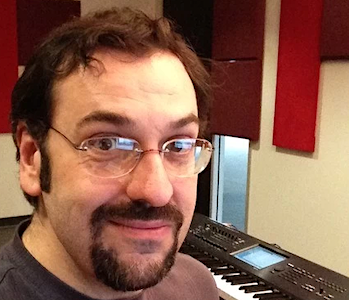
    Tracy Bush

    How do you design great sound for terrible speakers?

    Modern games present players with remarkably convincing sonic worlds. Dialogue responds naturally to changing situations, environments feel alive with movement and atmosphere, interfaces communicate information almost instinctively, and music adapts to the pace of play. Looking at contemporary productions, it is easy to imagine that these achievements are primarily the result of increasingly powerful technology. During his online guest lecture for Edinburgh Napier University, Tracy Bush suggested something rather different. Drawing upon a career that has included Blizzard Entertainment, Sony Online Entertainment, NCSoft and Sphero, he described how some of the most effective sound design emerges when technology imposes severe limitations. Small memories, limited processors, unpredictable playback systems and tiny loudspeakers do not simply restrict creativity. They force designers to think more carefully about what listeners genuinely need to hear.

    Bush’s own career reflected the rapid evolution of the games industry itself. Music had always formed an important part of his life, though his professional background began in information technology rather than audio. While working during the day, he spent evenings performing as a pianist in bars around San Francisco. After relocating to southern California, he joined Blizzard Entertainment in an IT role. His musical interests gradually became known throughout the company, leading colleagues to involve him in audio work whenever opportunities arose. Rather than following a carefully planned route into game sound, his career developed through a willingness to solve unfamiliar problems wherever they appeared. Looking back, Bush suggested that many people entered the industry in much the same way. Studios were small, responsibilities overlapped, and individuals frequently discovered new specialisms simply by becoming the person willing to tackle the next challenge.

    The games industry of the late 1990s differed substantially from the one students encounter today. Development teams were comparatively small, production pipelines remained fluid and many working practices were still evolving. Audio departments often worked alongside programmers, artists and designers in highly collaborative environments where formal boundaries between disciplines were less rigid than they later became. Bush described an atmosphere in which experimentation emerged naturally from everyday work. New hardware appeared rapidly, production tools changed continuously and every project seemed to introduce another set of technical problems that required fresh solutions. Experience remained valuable, though it rarely eliminated uncertainty.

    The computers on which players experienced those games introduced another level of unpredictability. Audio hardware varied enormously between systems, making consistent playback almost impossible to guarantee. Different sound cards reproduced music in noticeably different ways, while MIDI playback depended heavily upon whichever synthesis hardware happened to be installed inside an individual computer. A carefully balanced piece of music created inside the studio might sound dramatically different once it reached somebody else’s machine. Sound designers could control what left the studio. They could not control how it would ultimately be heard.

    This uncertainty extended well beyond music. Dialogue, sound effects and ambience all passed through hardware whose behaviour remained largely outside the control of the development team. Rather than designing for one predictable playback system, audio professionals found themselves designing for thousands of possible listening environments. Bush described this as one of the defining characteristics of early game audio. The question was rarely how a soundtrack sounded under ideal conditions. Instead, designers learned to ask whether it continued to communicate effectively when reproduced by equipment they had never encountered. The playback system itself became part of the design problem.

    Although contemporary technology has advanced enormously, the underlying challenge remains surprisingly familiar. Players now experience games through televisions, headphones, laptops, handheld consoles, mobile phones and increasingly varied listening environments, each introducing its own acoustic character. Perfect consistency remains elusive. The responsibility of the sound designer therefore extends beyond producing interesting sounds. It includes anticipating how those sounds will survive the journey from the studio to the listener.

    Bush also reflected upon the rapid transformation of production tools during this period. Early editing systems offered comparatively limited support for assembling large projects, requiring significant manual organisation and making complex revisions both time-consuming and potentially destructive. The arrival of Pro Tools transformed those workflows, allowing audio teams to edit non-destructively, manage increasingly complex sessions and collaborate more effectively. At much the same time, improvements in virtual sampling gave composers access to increasingly expressive orchestral sounds without requiring every revision to involve live performers. These developments expanded what small audio teams could realistically achieve while allowing creative ideas to evolve throughout production rather than becoming fixed at an early stage.

    The tools available to sound designers evolved just as quickly. Bush described middleware as another important step in that development. As implementation systems became more sophisticated, audio teams gradually assumed greater responsibility for how sounds behaved inside games rather than simply supplying recordings for programmers to trigger. Interactive playback, transitions and behavioural logic increasingly became part of the sound designer’s creative role. Technology expanded the possibilities available to audio departments, though it also broadened their responsibilities. Understanding implementation became almost as important as creating the sounds themselves.

    One observation from Bush’s time at Blizzard challenged another common assumption about technological progress. Greater technical capability did not necessarily encourage increasingly elaborate soundtracks. He reflected upon how musical direction gradually changed across successive projects, with later productions often favouring greater restraint rather than greater complexity. Earlier scores frequently relied upon dense orchestral textures intended to create scale and spectacle. Later work often achieved stronger dramatic results through simpler arrangements that allowed individual musical ideas greater space to breathe. Rather than filling every available moment with sound, composers became increasingly selective about where music should lead the player’s attention and where silence or restraint could prove more effective.

    The same principle appeared throughout sound design more generally. Memory budgets restricted how many sounds could be stored. Processor limitations reduced the number that could play simultaneously. Dialogue budgets limited the amount of recorded speech available to designers. Every technical restriction demanded choices. Which sounds genuinely communicated useful information? Which could be simplified without affecting the player’s experience? Which details would most influence the way a moment was perceived? Bush’s examples repeatedly suggested that successful sound design depends less upon including everything that is technically possible than upon identifying what is genuinely important for the listener.

    By this stage of the lecture, the discussion had established a way of thinking that extended well beyond the technology of any particular decade. New hardware, new software and new production methods continually alter the practical challenges facing sound designers, yet they rarely change the underlying task. Every project begins with a listener, a playback system and a collection of technical constraints that cannot simply be ignored. The role of the sound designer is to understand those conditions and create the most convincing experience possible within them.

    The relationship between creativity and constraint became considerably more tangible during Bush’s work with Sphero, where many of the assumptions underlying conventional game audio no longer applied. Working on licensed products featuring characters such as R2-D2, BB-8 and Lightning McQueen involved far more than transferring familiar techniques onto a different platform. Every sound would eventually emerge from a miniature loudspeaker housed inside a compact plastic enclosure containing motors, batteries, gears and electronic components. The finished product would be heard in kitchens, classrooms, living rooms and gardens rather than through carefully positioned studio monitors or high-quality headphones. Under those conditions, many established production practices simply ceased to be useful. The question was no longer how a sound performed inside the studio. It became how that sound survived once it reached the device for which it had actually been designed.

    Bush described changing his workflow to reflect that reality. Rather than completing the sound design and then testing it on the finished hardware, he monitored much of his work directly through the loudspeaker installed inside the product itself. Equalisation, dynamics, tonal balance and overall character were judged using exactly the same hardware that customers would eventually hear. The acoustic behaviour of the enclosure, the resonances introduced by the plastic casing and even the mechanical sounds generated by the internal motors became part of the design process. Instead of treating these characteristics as defects to be corrected afterwards, they became factors that shaped creative decisions from the beginning.

    The approach illustrates an important principle that extends well beyond embedded devices. Playback systems are never neutral. Every loudspeaker, pair of headphones, television or mobile phone colours the material passing through it. Sound designers often devote considerable attention to recording, editing and mixing, though the listening environment ultimately contributes just as much to the audience’s experience. Bush repeatedly returned to the importance of understanding where sounds will actually be heard. A design that performs beautifully on large studio monitors may communicate surprisingly little through the hardware used by most listeners. Successful sound design therefore depends not only upon creating interesting sounds, but also upon understanding the conditions under which those sounds will be experienced.

    Tiny loudspeakers presented another unavoidable challenge. Their physical dimensions simply prevented them from reproducing deep bass with any real authority. Attempting to force low frequencies through such hardware produced distortion long before it created convincing weight. Rather than attempting to overcome those physical limitations directly, Bush exploited the way listeners perceive sound. By introducing carefully controlled upper harmonics, he encouraged the auditory system to infer the presence of frequencies that the loudspeaker itself could not reproduce. The hardware remained unchanged, though the listening experience became noticeably richer.

    The solution depended upon psychoacoustics rather than brute force. Human hearing does not operate as a simple measuring device. Listeners continually reconstruct incomplete information, using harmonic relationships, timing cues and previous experience to build coherent auditory impressions. Bush’s work demonstrated how understanding those perceptual processes can prove more valuable than pursuing technically impossible specifications. The objective was never to reproduce frequencies that the loudspeaker could not generate. It was to create a convincing impression of fullness using the resources that remained available. Throughout the lecture, this distinction emerged repeatedly. Good sound design often depends less upon reproducing reality perfectly than upon understanding how listeners interpret what they hear.

    Sampling rates introduced another practical compromise. Embedded devices offered only a fraction of the storage and processing power available to contemporary games, requiring careful management of bandwidth and memory. Bush explained that these restrictions became particularly noticeable when working with robotic characters such as R2-D2, whose personality depends upon bright electronic vocalisations occupying the upper regions of the frequency spectrum. Lower sampling rates inevitably reduced the highest frequencies that could be reproduced accurately, making filtering and careful spectral management essential parts of the design process. Concepts that students often encounter as digital audio theory became everyday creative decisions affecting how expressive and recognisable the finished character would become.

    The material supplied by Lucasfilm also revealed how much organisation underpins apparently effortless performances. Bush did not receive complete scenes or finished sequences ready to be inserted into the product. Instead, he worked with an extensive collection of individual R2-D2 vocalisations drawn from the films. These recordings were not simply organised according to pitch or duration. Their emotional character proved considerably more important. Expressions of curiosity, excitement, concern, frustration and amusement were grouped together so that the robot’s responses could reflect changing situations while remaining faithful to the personality audiences already recognised.

    Randomisation played an important role, though not in the simplistic sense of allowing any sound to play at any time. Bush described carefully controlled systems that introduced variation without sacrificing recognisability. Human listeners identify repeated patterns remarkably quickly, yet behaviour that appears completely unpredictable can feel equally artificial. Convincing interactive audio therefore occupies a position between repetition and randomness. Familiar vocalisations return often enough to establish character, while subtle variations prevent those repetitions from becoming mechanical. The objective is not to surprise the listener continually, but to create the impression of a responsive and expressive personality.

    The same balance appears throughout interactive sound design. Footsteps, interface sounds, environmental ambiences and weapon effects all benefit from controlled variation rather than unlimited randomness. Collections of related recordings, small differences in pitch or timing and carefully managed playback logic often produce more convincing results than vast libraries of unrelated sounds. Bush’s examples demonstrated that believable behaviour frequently depends upon the relationships between sounds rather than the number of sounds available.

    As the lecture broadened beyond embedded devices, Bush argued that creating individual sounds represents only one part of a modern sound designer’s role. Interactive media introduces challenges that simply do not exist in linear forms such as film or television. A film editor knows exactly when every line of dialogue will be heard and how every scene will unfold. Games surrender much of that control to the player. Conversations may begin unexpectedly, be interrupted, or never occur at all. Players may spend hours exploring one environment while another moves through it in minutes. The soundtrack therefore cannot be constructed as a fixed sequence of events. It has to respond continuously to changing circumstances.

    Middleware transformed this aspect of production. Earlier generations of game development relied heavily upon programmers to implement even relatively modest audio behaviour. As middleware matured, sound designers gained much greater control over how sounds responded to events within the game itself. Playback logic, transitions, priorities and interactive behaviours increasingly became part of the sound designer’s creative responsibility. Recording remained an important part of the job, though implementation became equally significant. Designing how sounds behave proved just as important as designing the sounds themselves.

    This shift also changed the relationship between audio departments and the wider development team. Bush repeatedly emphasised that sound design does not exist in isolation. Programmers determine what information becomes available. Designers establish the systems that govern player behaviour. Writers shape dialogue, animators influence timing and movement, while artists define the visual environments within which sounds operate. Audio departments respond to all of these decisions while contributing their own expertise in return. Successful interactive soundtracks emerge through continual collaboration rather than from any single discipline working independently.

    One discussion during the lecture addressed the way sound professionals are perceived within development teams. Bush reflected on labels such as “the sound guy” or “the noise boy”, expressions that dramatically underestimate the breadth of contemporary audio practice. Modern sound designers contribute far beyond the creation of individual sound effects. They solve technical problems, shape interactive behaviour, collaborate across disciplines and influence how players ultimately experience the game. Titles such as Audio Director acknowledge that broader creative and technical responsibility.

    Questions from students later turned towards virtual reality, where many of these relationships become even more apparent. Convincing virtual environments depend upon much more than visual realism. Sound provides continuous information about distance, movement, scale and spatial relationships, allowing users to build coherent mental models of spaces extending beyond their immediate field of view. Carefully designed spatial audio therefore contributes directly to presence, orientation and immersion rather than acting as a decorative addition to the visual experience.

    Across subjects as varied as desktop games, embedded devices, robotic toys and virtual reality, Bush repeatedly returned to the same way of thinking. Every project began with an understanding of the available technology, the listening conditions and the perceptual abilities of the audience. The hardware changed dramatically throughout his career, though the questions facing the sound designer remained remarkably consistent. Rather than asking how to exploit every available technical capability, Bush continually asked what listeners actually needed to hear and how the available technology could communicate that experience most effectively.

    Across projects as different as Blizzard’s games, Sphero’s robotic products and emerging virtual reality systems, Bush consistently returned to the same set of design questions. Technology continued to change throughout his career, introducing new platforms, workflows and constraints, yet the underlying task remained remarkably stable. Successful sound design depended upon understanding how people listen, how technology behaves and how creative decisions bridge the gap between the two. Whether working with a full orchestral score, an interactive dialogue system or a miniature loudspeaker inside a robotic toy, the objective was never simply to produce impressive sounds. It was to create listening experiences that remained convincing under the conditions in which they would actually be heard.