How does a film speak every language?
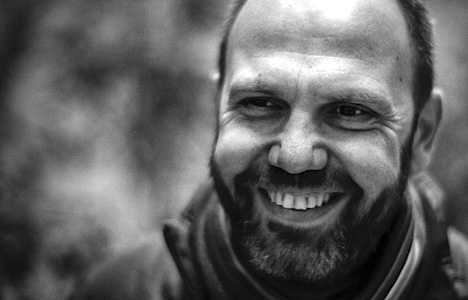
Most audiences rarely stop to consider the question. A film appears in a cinema or on a streaming service, characters speak naturally in the local language, performances feel convincing, and the soundtrack appears entirely coherent. Nothing suggests that thousands of individual decisions, spread across months of work and involving specialists in numerous countries, have contributed to what appears to be a seamless experience. During his online guest lecture for Edinburgh Napier University, George Mikrogiannakis drew back the curtain on that process. Drawing upon many years supervising international localisation for Walt Disney Studios, DreamWorks Animation, and other major productions, he revealed that dubbing represents only one small part of a much larger undertaking. Localisation combines translation, performance, dialogue editing, sound design, recording, mixing, quality control, and project management into a production process whose success depends upon remaining almost completely invisible.
Before discussing localisation itself, Mikrogiannakis addressed a question that many sound design students might reasonably ask. Why should someone interested in sound effects, Foley, ambience, or mixing concern themselves with dubbing? His answer challenged the assumption that localisation belongs solely to translators or dialogue editors. Film sound does not end when the final mix has been approved. Modern productions are expected to travel internationally, and that expectation influences decisions made throughout post-production. Deliverables, session organisation, music and effects mixes, dialogue editing, documentation, and recording practice all determine whether a soundtrack can later be adapted successfully into dozens of different languages. Understanding localisation therefore provides a wider understanding of professional sound production itself.
The distinction between dubbing and localisation formed the starting point for the discussion. Dubbing describes the replacement of spoken dialogue with performances recorded in another language. Localisation encompasses everything required to ensure that a film functions naturally within another culture while preserving the creative intentions of the original production. Dialogue must communicate the same dramatic ideas, fit the visible movements of actors’ mouths, respect timing, preserve emotional performances, and integrate seamlessly into the original soundtrack. A successful localisation should never feel like a compromise. Audiences should simply experience the film as though it had always belonged in their own language.
Commercial realities make this work indispensable. For many major studio productions, international audiences account for the majority of ticket sales. A film that performs well domestically may still depend upon worldwide distribution for its overall commercial success. Localisation therefore becomes an essential stage of production rather than an optional addition. Mikrogiannakis illustrated the scale of this work with one striking example. Pirates of the Caribbean eventually required more than six hundred separate versions to satisfy different languages, territories, exhibition formats, airlines, and distribution requirements. Once work reaches this scale, localisation no longer resembles a straightforward translation exercise. It becomes an international production pipeline operating alongside the creation of the original film.
Maintaining consistency across so many versions requires careful coordination between numerous creative and technical disciplines. Scripts pass from translators to dialogue adaptors, from recording directors to voice actors, from editors to mixers, and through repeated rounds of quality control before final approval. Every participant contributes something different while working towards the same objective. The audience should experience the same characters, the same emotional performances, and the same dramatic pacing regardless of which language they hear.
Translation itself proved far more creative than many students had expected. Mikrogiannakis explained that translators receive extensive supporting documentation describing characters, situations, cultural references, jokes, and dramatic context. Their task is not to reproduce individual words as literally as possible. Instead, they seek to preserve the intention behind the dialogue. Humour frequently illustrates this challenge. A joke that depends upon an English idiom or a cultural reference may simply fail when translated directly. Rather than forcing audiences to decode unfamiliar expressions, adaptors reconstruct the underlying comic idea so that viewers in another country experience a similar moment of humour, even if the dialogue itself changes substantially.
Lip synchronisation introduces further complications. Different languages occupy different amounts of time. A short English sentence may require considerably more syllables elsewhere, while other languages express the same meaning much more concisely. Dialogue therefore undergoes continual adjustment until it satisfies several competing requirements simultaneously. It must sound natural, preserve the original dramatic meaning, fit within the available time, and remain synchronised with the visible movements of the actor’s mouth. Accuracy alone is never enough. Rhythm, emphasis, breathing, pacing, and performance all contribute to whether audiences believe what they are watching.
The recording process reflects the same attention to detail. Unlike dramatic productions in which actors frequently perform together, dubbing sessions normally record performers individually, allowing every voice to remain completely controllable throughout the final mix. Consistency becomes one of the engineer’s principal responsibilities. Mikrogiannakis emphasised the importance of using the same recording environment, microphone, and acoustic conditions throughout an entire production. Local studios are generally expected to deliver clean recordings with minimal processing. Equalisation, dynamics processing, reverberation, and other creative treatments remain the responsibility of the originating production rather than the individual dubbing facility. Every language version therefore begins from comparable source material before being shaped into the finished soundtrack.
One particularly memorable example demonstrated just how carefully these productions preserve even the smallest creative details. During the localisation of How to Train Your Dragon, one character briefly speaks while wearing a leather mask. Rather than leaving each territory to interpret the scene independently, the production required two separate recordings of every affected line. One version was performed normally. The second was recorded with an obstruction placed in front of the actor’s mouth to recreate the acoustic effect of speaking through the mask. Such requests may appear unusually specific, though they illustrate a broader principle running throughout the lecture. Localisation seeks to reproduce the experience of the original production as faithfully as possible, even when that requires remarkably detailed technical preparation.
For sound design students, the most revealing discussion centred upon the music and effects mix, more commonly known as the M&E. At first glance, creating an international version might appear straightforward. Remove the original dialogue, record new voices, and place them into the existing soundtrack. Mikrogiannakis demonstrated why this assumption quickly breaks down. Production dialogue rarely contains voices alone. Clothing movement, footsteps, room reflections, environmental ambience, prop handling, breathing, incidental vocalisations, and countless other sounds often exist within the same recordings. Removing dialogue therefore removes far more than speech.
Producing a convincing M&E requires many of these elements to be rebuilt separately before localisation can even begin. Foley artists recreate physical actions. Ambience editors restore the acoustic character of locations. Sound editors recover or redesign details that disappear when production dialogue is removed. Every reconstructed element must integrate naturally with the remaining soundtrack so that audiences remain unaware that significant parts of the scene have effectively been recreated. Localisation therefore exposes something that audiences rarely notice. Successful dialogue replacement depends upon the invisible work of many other sound professionals whose contributions make the reconstructed world feel complete.
The same attention to detail extends into the organisation of production sessions. Mikrogiannakis explained that major studios prescribe how dialogue sessions should be structured long before recording begins. Lead characters, supporting roles, incidental dialogue, and background voices occupy predetermined locations within Pro Tools sessions so that material arriving from different countries can be assembled without confusion. Track layouts, naming conventions, file structures, and version numbers follow equally strict standards. These systems may appear administrative rather than creative, though they exist for a practical reason. Hundreds of dialogue files may pass between translators, recording studios, editors, mixers, and quality-control teams before a film reaches cinemas. Small inconsistencies introduced at the beginning of the process can rapidly become expensive problems once productions begin moving between countries.
For students accustomed to working alone, this offers an interesting perspective on professional practice. Large productions depend upon predictability as much as originality. Other members of the production team must be able to identify recordings immediately, locate the correct version of every file, and understand how sessions have been organised without needing lengthy explanations. Good organisation does not restrict creativity. It allows creativity to survive within projects involving hundreds of contributors working across multiple continents.
The recording sessions themselves reflect similar priorities. Actors rarely record together, even when their characters share a conversation. Instead, every performance is captured independently under carefully controlled acoustic conditions. Recording engineers seek consistency above all else, maintaining the same microphones, recording chains, and studio environments wherever possible. Performances can then be balanced, edited, and integrated into the soundtrack with considerably greater precision than would otherwise be possible. The objective is not simply to record dialogue. It is to provide material that remains flexible throughout every subsequent stage of post-production.
Security introduces another layer of complexity. Long before a film reaches cinemas, localisation teams may already be working on dialogue in numerous languages. Scripts, images, and recordings therefore become highly confidential. Mikrogiannakis described productions protected through extensive non-disclosure agreements, secure online workflows, watermarked media, and carefully controlled distribution systems. In particularly sensitive cases, even the picture supplied to dubbing studios may reveal only a small area surrounding a character’s mouth while the remainder of the image remains concealed. The performers receive enough visual information to synchronise their dialogue without exposing details of the story before release.
These precautions reveal another aspect of contemporary sound production that audiences rarely encounter. Localisation frequently begins while visual effects continue to evolve, editorial changes remain possible, and marketing campaigns have yet to reveal significant elements of the film. Sound departments therefore work within productions that remain in constant development. Flexibility becomes as valuable as technical expertise. Dialogue may require revision, scenes may be shortened, and editorial decisions may continue long after recording has begun. Every change must then be reflected consistently across every language version.
Once recording has finished, another phase begins. Every performance is reviewed against the original production to evaluate synchronisation, pronunciation, dramatic intention, technical quality, and consistency with previously approved material. Recordings that satisfy one requirement may still require revision for another. A technically perfect recording may not match the emotional intensity of the original actor. A convincing performance may reveal a slight synchronisation problem. A translation may preserve meaning while sounding unnatural when spoken aloud. Each stage of review narrows these differences until the finished soundtrack supports the same dramatic experience as the original production.
The process depends upon specialists whose expertise overlaps rather than duplicates. Translators evaluate language. Dialogue directors shape performances. Recording engineers concentrate on technical quality. Editors refine timing and synchronisation. Mixers integrate new dialogue into the existing soundtrack. Supervisors compare each completed version with the original production before granting approval. None of these roles can replace another. The finished film emerges through collaboration between people whose responsibilities remain distinct while contributing towards a shared creative objective.
One aspect of the discussion resonated particularly strongly for sound design students. Many university projects naturally emphasise creating interesting sounds. Professional productions require that creativity to coexist with organisation, documentation, planning, and consistency. A beautifully designed soundtrack that cannot be delivered reliably to another department quickly becomes difficult to maintain. Localisation demonstrates this reality with unusual clarity. Every recording created during production may later support dozens of additional versions distributed across the world. Decisions made while organising sessions, preparing stems, documenting edits, or recording apparently insignificant details may continue influencing the production years after the original mix has been completed.
The relationship between creativity and organisation also changes the way professional sound departments approach collaboration. Rather than treating editing, Foley, dialogue, sound effects, ambience, and mixing as isolated activities, localisation reveals how closely each depends upon the others. Replacing dialogue successfully requires carefully prepared music and effects mixes. Those mixes depend upon dialogue editors separating production material accurately. Dialogue editors depend upon clean recordings, consistent session management, and comprehensive documentation. Every department inherits decisions made by the departments before it. Strong workflows therefore support creative outcomes rather than competing with them.
Audiences rarely recognise any of this work, and perhaps they should not. Successful localisation draws attention towards the story rather than the production process. Viewers become absorbed in performances, relationships, humour, and dramatic tension without considering how many different versions of the soundtrack exist or how many specialists contributed to the one they happen to hear. The technical achievement lies precisely in making reconstruction disappear.
For sound design students, localisation offers an unusually clear picture of contemporary professional practice. It demonstrates that sound production extends well beyond recording and mixing. Projects continue to evolve after the original soundtrack has been completed, passing through new languages, cultures, technologies, and distribution platforms while preserving a coherent creative identity. Every carefully organised session, every clean recording, every reconstructed ambience, and every accurately prepared deliverable helps make that possible.
A film may begin life in a single language, though its soundtrack is often expected to communicate with audiences across much of the world. Making that transition successfully depends upon considerably more than translation. It depends upon planning, technical precision, collaboration, and a shared commitment to preserving the creative intentions embedded within the original production. The better those foundations have been established, the more naturally the film speaks to audiences, regardless of which language they hear.