The World Leisure community gathered in Breda for the 18th World Leisure Congress: Leisure for a Better Society, held from August 25-28, 2025, bringing together over 400 participants and experts in the field from 40 countries. With a full program of inspiring sessions, vibrant poster presentations by emerging scholars, and the World Leisure Awards Ceremony, the event celebrated individuals and organizations driving leisure as a force for inclusion, human growth, and social transformation.
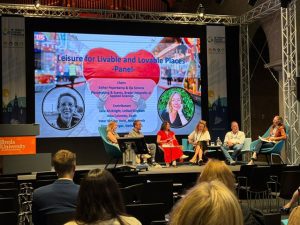
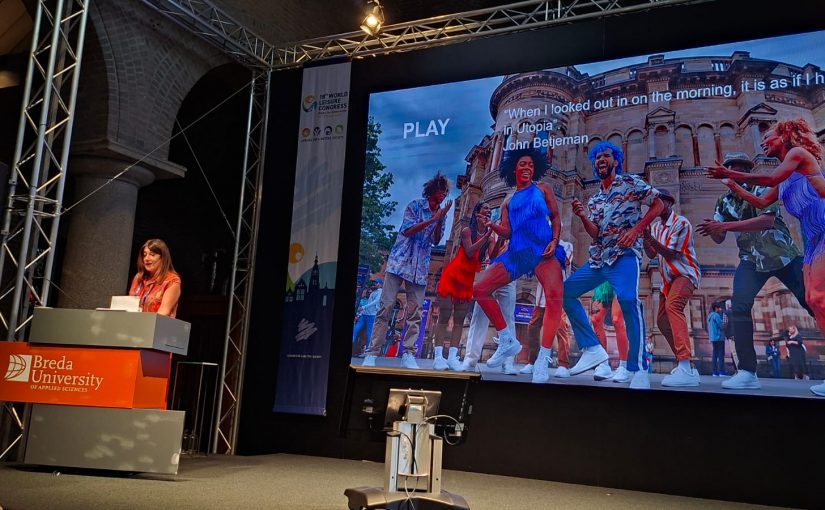
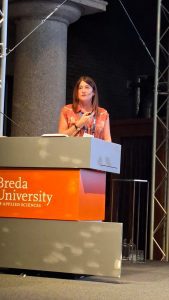
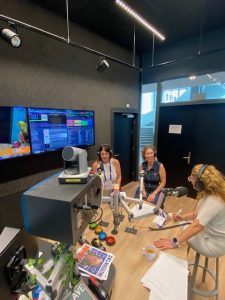
Professor Jane Ali-Knight sat on a panel discussing ‘The role of leisure in creating livable and lovable places’; participated in a WLJ Podcast and delivered one of the conferences keynote sessions titled: Fringe benefits: how the Edinburgh Festivals make the city a better place to live, work and play in. Drawing on recent research, examining Fringe Festival Networks in Perth, Adelaide and Edinburgh, Jane has been involved in with ENU colleague David Jarman and other academic collaborators from Australia, she delivered an interactive and informative presentation highlighting how the festivals contribute to the wellbeing of the city.
There is little doubt that the festivals significantly contribute to making Edinburgh a better place to live, both culturally and economically. They bring in visitors, boost local businesses, create jobs, and enhance the city’s global reputation which in turn generates soft power. The festivals also offer residents a variety of cultural experiences and contribute to their quality of life. Festivals also have a positive social impact on local communities: building community cohesion, offering positive emotions and shared connections, promoting social interaction and cultural exchange, and contributing to a general sense of wellbeing, especially in turbulent times (Yolal et al. 2016). The 2025 Edinburgh Fringe sold over 2.6m tickets featured 3,893 shows across 301 venues, and hosted performers from over 60 countries.
It is a myth that Edinburgh’s residents are anti the festivals. More residents support than oppose them with large numbers actively participating in and/or attending events. The latest study by BOP Consulting (2023), which surveyed 22,000 people – shows that the Edinburgh Festivals continue to be Scotland’s world-leading cultural brands. Recent studies show that a substantial percentage of residents believe the festivals make Edinburgh a better place to live and are ‘Loved by locals’. Around 1.5m festival attendances are local residents (that is c50% of total audience) while 89% of Edinburgh residents say that the festivals increase local pride in their home city.
Beyond direct employment, festivals play a critical role creating work and supporting many thousands of jobs for wider service businesses and local traders. The festivals alone create the full-time equivalent of 5,850 jobs in Edinburgh. This sector together with arts, entertainment, recreation and other services are significant employers in the city, accounting for 44,000 jobs between them. (Edinburgh Festival City, 2022).
Finally, festivals are playful…. one month of the year the city takes on a joyous carnival atmosphere which tens of thousands of locals join in. They are escapist and bring joy and laughter to communities, and the places in which they reside. It’s a privilege having so much world class, innovative art on our doorstep.
So, as the planning cycle begins for the 2026 festivals, amid a background of public funding cuts and drops in sponsorship revenue, rising inflation and production costs, cost-of-living challenges, and shortages of skilled labour and materials, the organisers of Edinburgh’s world leading events will have to assert the contribution of its festivals make to Edinburgh making it a better place to live. Echoing a Guardian writers’ opinion…’Cultural institutions like the fringe are about more than making money and stars. In our age of disinformation, artificial intelligence and alienation, such gatherings of people, talent and ideas are more vital than ever’ (2025).
Note: The 2025 Best Poster Award was presented to Dr. Afiya Holder for her outstanding presentation on Reimagining Leisure as a Tool for Inclusivity and Social Cohesion: The Transformative Potential of African-Caribbean-Scottish Shared Cultural Heritage Tourism.
Written by Dr Jane Ali-Knight