How do you make a game feel dangerous?
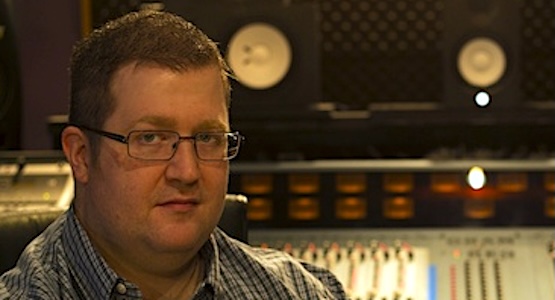
A gun can sound enormous and still fail to make a gunfight frightening. Every weapon may have a powerful attack, convincing mechanical detail and an impressive environmental tail, yet the player can remain strangely detached from the danger. Solving that problem may have little to do with redesigning the weapon itself. Bullets pass close to the head. Impacts strike nearby walls with exaggerated force. Brickwork breaks apart, fragments scatter and the environment appears to react violently to the threat. During his online guest lecture for Edinburgh Napier University, game audio designer Will Morton explored how sound can shape emotion, focus attention and guide players through complex interactive experiences. Drawing upon twelve years at Rockstar North, where his work included the Grand Theft Auto series, Red Dead Redemption and L.A. Noire, followed by the establishment of Solid Audio Works with fellow former Rockstar audio specialist Craig Connor, Morton presented game sound design as a discipline of selection. Thousands of sounds may exist within a game, but their value depends upon knowing which ones matter at any particular moment. Throughout the lecture, one principle repeatedly emerged. A designer must ask not only what a game world should sound like, but what the player needs to hear in order to feel what the game intends them to feel.
Morton began by placing creative decisions within the realities of AAA game production. Large games are expensive, technically constrained and continually changing. Development rarely follows a fixed design from beginning to end. Features evolve, producers reconsider decisions and new requests arrive late in production. Platform restrictions impose further limits through storage, memory, streaming performance and processing capability. Scale introduces organisational complexity as well. Larger games require larger teams, while experienced creative specialists can find increasing amounts of their time absorbed by scheduling, administration and coordination. Sound design develops inside a moving system of technical, financial and organisational constraints. Success requires more than imagining an ideal soundtrack. Designers must create one capable of surviving years of changing requirements.
Historical changes in technology have altered the scale of those constraints without eliminating them. Morton recalled Commodore 64 composer Martin Galway fitting numerous sound effects into approximately one kilobyte of memory. Restrictions of that magnitude appear almost comic from the perspective of contemporary production, yet modern open-world games can still leave audio teams fighting for storage and memory. Vastly greater resources are now available, while games simultaneously attempt to represent entire cities, landscapes and fictional worlds. Technological abundance creates new possibilities, but ambition expands alongside it. Designers still have to decide where limited resources will make the greatest contribution.
Money introduces another set of choices. Sound effects require designers, recording equipment, locations, editing time, libraries, software and continually changing computer systems. Dialogue adds writers, actors, directors, studios, recording staff and extensive editing. Music may involve composition, licensing, performers, orchestras, specialist recording facilities and interactive implementation. Morton’s overview exposed the consequences hidden behind apparently simple creative ambitions. Another recording variation, character voice or interactive music feature consumes time, money, memory and attention that cannot be spent elsewhere.
Dialogue provided one of the clearest examples of complexity hiding behind familiar production tasks. Morton spent much of his Rockstar career dividing his time between sound design and dialogue before the scale of Grand Theft Auto V led him to work entirely as dialogue supervisor. For story-heavy games, dialogue cannot be treated as a sequence of lines requested by designers and recorded by actors. Repetition needs consideration. Lines must make sense across changing gameplay situations. Story information may unfold over many hours or days of play, while players can interrupt, delay or alter the circumstances in which dialogue occurs. A dialogue designer therefore needs to understand the interactive structure of the game as deeply as the individual performances being recorded.
Direction presents a related challenge. Experience in film and television can produce excellent performances, yet game dialogue introduces problems absent from linear media. Cutscenes may operate much like conventional scenes, while in-game dialogue can occur within changing gameplay circumstances and across story structures experienced differently by individual players. Directors need more than an ability to elicit compelling performances. Detailed knowledge of the script, game and eventual context of each line becomes essential. A performance recorded in isolation must later remain convincing within circumstances that may not even be visible inside the recording studio.
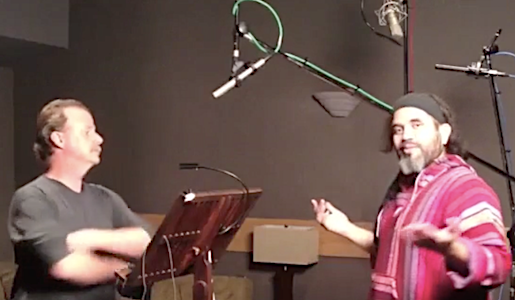
Morton also challenged assumptions about professional recording. Technically excellent dialogue can be captured with comparatively modest equipment in a carefully treated space. A suitable microphone, simple accessories and an acoustically controlled room may produce results approaching those of a far more expensive studio. Recording quality, however, forms only one part of a professional session. High-profile performers need confidence that they are participating in a serious production. Environment, organisation and treatment of the actor can influence trust in the project and relationships with agents and management. Professionalism encompasses the experience surrounding a recording alongside the technical quality of the resulting file.
From these production realities, Morton moved towards the central creative argument of the lecture. Designers can easily assume that everything visible in a game should automatically produce a sound. Faced with an unsounded world, teams begin filling every action with detail. Cars receive engines and collisions. Characters acquire footsteps. Objects gain interactions. Environments fill with ambiences. A technically comprehensive and entirely plausible soundtrack gradually emerges, yet plausibility alone cannot guarantee clarity, excitement or emotional effect.
Practical concerns provide one reason for restraint. Every additional sound requires creation, editing, implementation, memory and testing. Artistic considerations are even more important. If everything demands attention simultaneously, nothing receives focus. Morton encouraged designers to identify what deserves to be heard and what can remain absent. Important sounds require room to breathe. Dynamics rely upon contrast, while emotional emphasis depends upon moving attention between elements. Silence and omission become active design decisions.
Player experience consequently takes priority over literal acoustic reconstruction. Real events often sound less dramatic than audiences expect. A gunshot captured from a particular position may seem surprisingly small. A suppressed weapon does not necessarily produce the familiar cinematic whisper audiences have learned to associate with it. A real minigun may collapse into an almost continuous mechanical roar instead of revealing every stage of its operation. Decades of film, television and games have established sonic conventions that now influence how audiences expect objects and events to behave. Designers work within that accumulated perceptual history.
Morton demonstrated the point by comparing cinematic and real recordings of suppressed firearms. A familiar designed version sounded short, controlled and immediately recognisable, carrying characteristics audiences strongly associate with a silenced weapon. Real recordings behaved quite differently. Neither approach offered a universal answer. Documentary representation might favour acoustic accuracy, while an action game may need immediate recognition, excitement and dramatic satisfaction. Before designing a sound, Morton considers the role accuracy should play, whether an event needs to feel larger than reality and how strongly audience expectations should influence the result.
Miniguns provided an even clearer illustration. Morton discussed the famous weapon sequence in Predator, where mechanical movement, spinning and other details reinforce the spectacle shown on screen. Real recordings present a very different impression, dominated by the extraordinary density of rapid gunfire. Grand Theft Auto: Vice City and Grand Theft Auto V offered further interpretations, each constructing the weapon differently, while Terminator 2 adopted another cinematic approach that remained closer to aspects of the real sound. Comparing them did not reveal a correct minigun. Instead, their differences showed how each design serves the experience of a particular production.
Reality and relevance are therefore separate considerations. A game designed as escapism may gain little from reproducing everyday acoustic experience with complete fidelity. Players do not always need to hear events from the perspective of ordinary observers. They need a version that communicates the event’s importance within the game. Sound design selects, enlarges, simplifies and reshapes reality according to dramatic purpose.
Attention can be directed just as effectively through subtraction. Morton used a remotely detonated explosive from Grand Theft Auto IV: The Ballad of Gay Tony to demonstrate how removing surrounding sound can make a single event dominate awareness. Immediately before the explosion, the wider soundtrack recedes and the bomb’s warning becomes the focus. He compared the moment with the seismic charge sequence from Star Wars: Episode II, where a brief interruption in the expected sound field creates anticipation and gives the subsequent event greater impact. Both sequences derive part of their power from absence.
Focus involves more than increasing the level of an important sound. Every event competes with its surroundings. Removing distractions can achieve more than additional layers, greater loudness or further spectral exaggeration. Presence acquires meaning through contrast with absence. A fraction of a second of reduced activity can prepare an event more effectively than a continuously dense soundtrack.
Morton’s most revealing example concerned a producer asking for guns to sound more dangerous. Existing weapon sounds already seemed successful to the audio team. They contained convincing mechanical detail, a strong initial attack, substantial body and satisfying environmental tails. Reworking those qualities did not solve the problem. Although the request appeared to concern the sound of the guns, the underlying dissatisfaction was emotional.
An unexpected experience away from the studio suggested another approach. During a paintball game, Morton found himself sheltering behind structures made from metal oil drums. The paintball markers themselves produced relatively insignificant sounds. Fear came from sudden, violent impacts striking the metal around him. His immediate environment appeared to contract as attention focused upon nearby impacts, resonances and the sense that projectiles were arriving from directions he could not fully control. The weapon itself was not frightening. Being under fire was.
Recognising that distinction transformed the design problem. Bullet passes became more prominent, with their levels responding more strongly to proximity. Impacts against brick and concrete gained force. Low-frequency energy added physical weight, while debris and crumbling material made the environment appear to react to nearby gunfire. Details that might be acoustically subordinate to a real gunshot were deliberately brought forward. Stronger weapon sounds had never been the answer. Gunfights needed to communicate vulnerability and danger.
Here Morton identified a broader professional skill. Directors and producers rarely describe every sound problem in acoustic terms. They may ask for something to be louder, bigger, darker, faster or more dangerous while expressing dissatisfaction with an emotional result. Following the literal wording can send a designer towards the wrong solution. Morton argued for interpreting the intention behind the request. Someone asking for a more dangerous gun may actually be asking to feel vulnerable. Once the desired experience becomes clear, the designer can decide which part of the sound world needs to change.
Creative collaboration therefore requires translation between intention and acoustic action. Sound professionals develop specialised vocabularies for frequency, dynamics, spatial behaviour, envelope and processing. Producers may describe experiences through emotion, imagery or metaphor. Useful information can exist within both forms of language. Professional expertise includes moving between them and identifying the experience concealed inside an apparently vague request.
Gunfire also demonstrates how game audio operates through systems of cause and consequence. A weapon consists of more than the sound emitted when a trigger is pulled. Projectiles move through space. Near misses pass the player. Bullets strike walls. Debris falls afterwards. Environments respond differently according to material and distance. Danger emerges from relationships between these events. Concentrating exclusively upon the source can leave the wider experience emotionally incomplete.
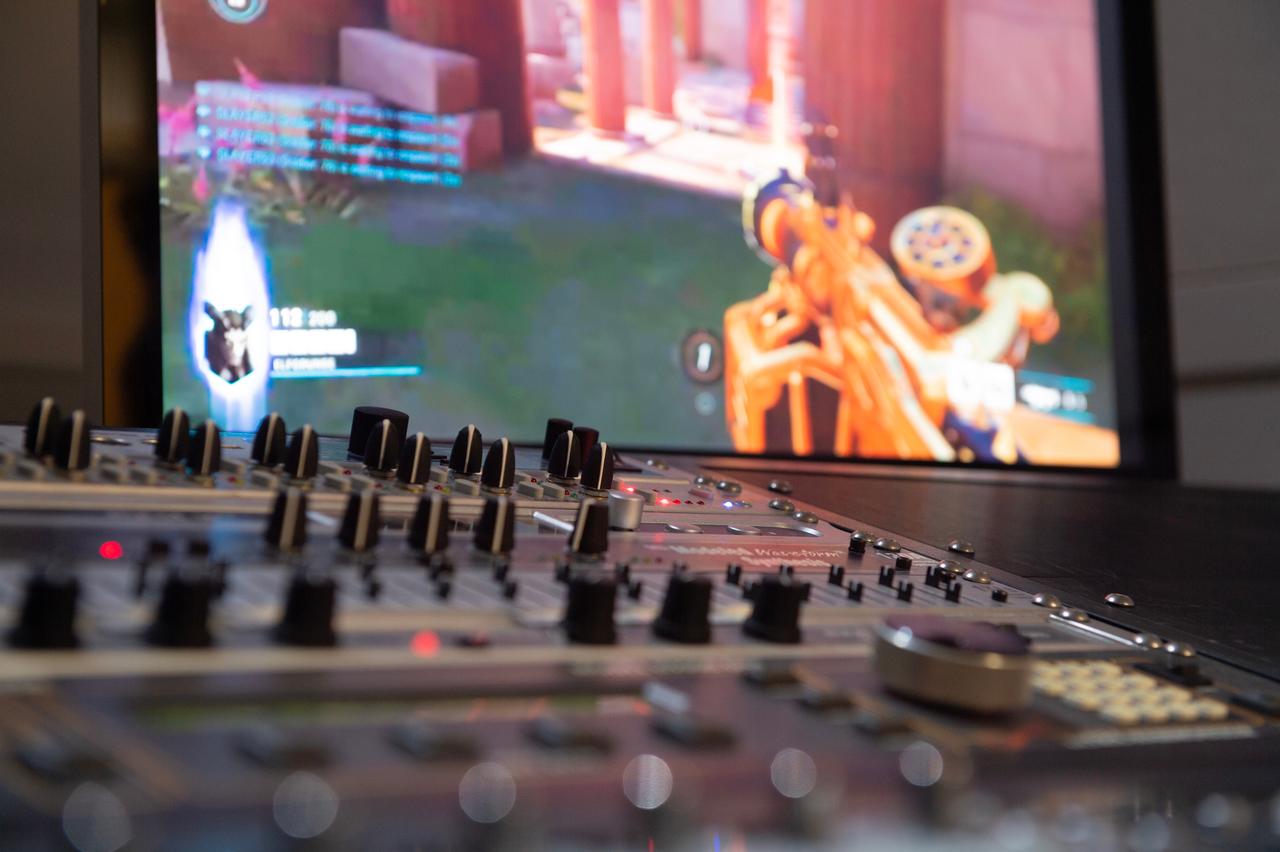
Similar systems govern the game mix. Morton described mixing a large game as a potentially overwhelming process involving thousands of assets and potentially hundreds of simultaneous channels, all changing according to gameplay. Exact combinations cannot be predicted in advance as they can within a linear soundtrack. Dialogue, music, ambience, vehicles, weapons, footsteps and environmental interactions combine differently according to player behaviour. Even excellent individual assets can produce an exhausting result when their relationships are poorly controlled.
Morton recalled playing games whose soundtracks felt like continuous acoustic assault. Constant density can be as tiring as excessive level. When every category remains active and prominent, listeners receive no opportunity for recovery and little indication of where attention belongs. More detail can therefore produce less communication.
Working with Craig Connor, Morton developed a useful analogy for managing this complexity: approach the game as a music producer approaches a song. Every element needs an appropriate place and enough space around it. The comparison does not imply imposing a static musical mix upon an interactive system. Its value lies in encouraging relational thinking. Sounds acquire meaning through their positions alongside other elements rather than through isolated perfection.
Arrangement offers another useful parallel. Music producers rarely expect every instrument to occupy the foreground continuously. Parts enter and leave, density changes and contrast creates structure. Individual elements occupy different spectral, spatial and dynamic roles. Interactive audio can apply similar principles while responding continuously to player action, with priority changing according to what the player is doing and what the game needs to communicate.
Waiting until asset production is complete before attempting a final mix creates serious problems. By the time thousands of sounds have accumulated, assumptions about level, density and priority may already be embedded throughout the project. Assets designed without a meaningful reference mix can prove difficult to reconcile, particularly when each has been created to sound impressive in isolation.
Morton recommended an iterative alternative. Early in development, designers can choose a small but representative collection of sounds and make them work together convincingly. A useful reference might include something loud, such as a gunshot or explosion, alongside quieter material such as footsteps. Approximate ambience establishes the environmental bed, while dialogue examples can cover a range from quiet speech through ordinary conversation to shouting. Mixing these elements early creates a working scale for everything that follows.
New assets can then be designed in relation to an existing sonic framework. Designers know roughly where a sound needs to sit and how much space surrounds it. Original reference assets may eventually be replaced, but their early role remains valuable. They establish relationships before growing complexity makes fundamental decisions harder to change.
Mixing, from this perspective, becomes part of sound design rather than a finishing process. Working without context encourages every gun, vehicle, impact and interaction to become enormous, detailed and impressive. Once combined, they compete. An evolving reference mix permits more varied decisions. Some sounds can remain small. Others can be narrow, distant or restrained. Detail can be reserved for moments when players have enough space to perceive it.
Focus also connects sound directly to gameplay. Players continually decide where to look, where to move and what to do next. Audio can support those decisions by drawing attention towards useful information or allowing distractions to recede. An approaching threat, important character, changing environment or imminent event may receive temporary priority. Elements contributing little to the current experience can move into the background.
Informational and emotional focus can coexist. A soundtrack can communicate danger without identifying an enemy’s exact position, or create suspense without explaining precisely what will happen next. Morton’s examples showed how game audio shapes a player’s state of mind while remaining part of the fictional world. Excitement, suspense, drama and humour are designed responses. A weapon feels powerful partly through its sound. An approaching explosion gains anticipation from the quiet preceding it. A gunfight becomes dangerous when incoming fire appears to tear apart the world immediately around the player.
Realism consequently remains flexible. Effective sounds may preserve recognisable aspects of reality while exaggerating qualities useful to the experience. A weapon can retain enough mechanical identity to remain believable while gaining additional weight. An impact can exceed its real counterpart without feeling inappropriate to the image. A suppressed firearm can satisfy an established cultural expectation even when that expectation differs from literal acoustic reality.
Morton resisted turning these observations into universal rules. Predator and Terminator 2 can present radically different miniguns while both succeeding on their own terms. A game pursuing realism may demand a different balance from an exaggerated action title. Intimate narrative experiences may use restraint where large-scale spectacle needs greater sonic scale. Designers need to understand what their particular project is asking players to experience.
Selectivity also shapes resource allocation. No production can pursue every possible recording session, dialogue variation or interactive feature. Large games generate an almost unlimited number of potential tasks while budgets and schedules remain finite. Designers select which events deserve sound, which sounds deserve prominence, which systems justify development time and which details will genuinely improve the experience.
Morton’s discussion of sound libraries introduced a longer view of professional practice. Building a useful collection of original recordings is expensive, but opportunities to capture interesting material should be taken when possible. A sound recorded today may remain unused for years before finding its purpose. Game audio professionals develop habits of listening beyond individual projects, continually noticing potential material in the world around them.
His paintball experience represents an even deeper form of professional listening. Morton did not return merely with a useful recording. He had experienced a relationship between threat, proximity and environmental impact that changed how he understood a design problem. Everyday experiences can reveal how attention and emotion respond to sound. Listening professionally involves recognising such relationships as well as collecting interesting timbres.
Technical constraints and psychological effects remain closely connected throughout Morton’s practice. Memory budgets, recording costs, dialogue systems, asset creation and mixing strategies eventually converge upon one question: what experience is the player having? Sophisticated technology has limited value when it does not support that experience. Conversely, a simple decision such as briefly removing surrounding sound can transform a moment when it directs attention effectively.
By the end of the lecture, Morton had presented AAA game audio as a discipline balanced between enormous complexity and deliberate restraint. Contemporary designers have access to more memory, processing, channels and real-time synthesis than earlier generations could have imagined. Additional technical capacity, however, does not remove the need to choose. More available sounds do not make more audible sounds desirable. Processing power cannot determine where attention belongs. Larger worlds make focus increasingly important.
His account also challenged the familiar suggestion that audiences notice game audio only when it fails. Players respond to powerful sound design even when they cannot describe every mechanism behind it. They feel the danger of a gunfight, anticipate an explosion during a sudden moment of quiet and recognise when a world has enough space to breathe. Good audio can elevate games whose code, visuals and other systems already represent enormous investment. Its contribution reaches far beyond correcting problems. Sound helps determine the emotional character of the experience.
Morton’s lecture ultimately revealed game sound design as the management of attention through an interactive world. Designers decide when reality should be preserved and when expectation should take priority. Silence can become more powerful than another layer. A producer’s request needs to be interpreted through the emotion it seeks to achieve. A gun may already sound excellent while the gunfight surrounding it remains ineffective. Thousands of assets can exist within a game, yet the success of the soundtrack depends upon knowing which ones deserve attention at a particular moment.
Perhaps the most important question is simply what the player needs to hear now. Sometimes the answer is a spectacular weapon. At another moment, it is the violent impact of a projectile against the wall beside them. Elsewhere, a quiet footstep, distant ambience or line of dialogue needs enough space to be understood. Occasionally, almost everything should disappear. Game audio becomes powerful when sound shapes experience rather than catalogues events. A virtual world may contain thousands of possible sounds. The art lies in choosing the ones that make the player feel something.