Author: iainmcgregor

  • Creating the Sound of Bodies in Impossible Spaces: Nicolas Becker on Sci-Fi Foley and Embodied Listening

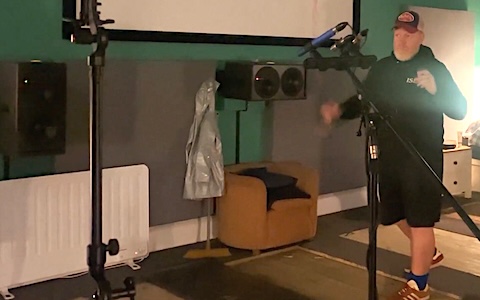
    Nicolas Becker

    Science fiction sound often risks becoming trapped inside its own history. Audiences become familiar with particular cinematic vocabularies so thoroughly that certain sounds gradually begin standing in for entire ideas. Futuristic interfaces shimmer with recognisable electronic textures, spacecraft doors release carefully sculpted hydraulic movements, while machines hum with tones inherited from decades of earlier films. Many of these sounds remain compelling, though repeated use can gradually create a strange effect. Instead of sounding like imagined futures, science fiction sometimes begins sounding primarily like other science fiction.

    Nicolas Becker’s guest lecture explored a rather different approach to sound design. Across discussions of Foley, experimentation, recording techniques, embodiment, resonance, acoustics, and material behaviour, a common principle gradually surfaced. Convincing futuristic sound may depend less upon inventing unfamiliar noises than reconnecting audiences with physical experiences they already understand through memory, vibration, pressure, texture, and the body itself. One of Becker’s central arguments was that audiences do not believe science fiction worlds merely through novelty. Completely unfamiliar sound can quickly become emotionally abstract. Futuristic environments instead become convincing once they remain anchored to recognisable sensory experience. Pressure, resonance, vibration, friction, breath, and spatial instability all carry meanings audiences already understand physically, even within worlds they have never encountered before.

    Becker described discovering Foley at the age of fifteen before immediately recognising that it brought together many different interests simultaneously. Cinema, movement, physical performance, listening, material experimentation, and interaction all converged within the practice. Yet one observation from early in the lecture became particularly revealing. He explained that he does not primarily create sound out of fascination with sound alone. What interests him more deeply involves the way sound transforms images.

    A sound placed against an image does not merely accompany what audiences already see. Something else emerges through the relationship between them. Becker described this as creating a kind of “third image”, neither entirely visual nor entirely sonic. Foley therefore ceases to become simple illustration. Sound does not simply confirm that a door closed or that footsteps occurred. Instead, sound reshapes how physical movement, material presence, scale, emotion, weight, fragility, and tension are perceived altogether. The image viewers believe they are watching is partly constructed through listening.

    This relationship becomes especially complicated within science fiction. Historical films already require reconstruction of worlds no longer accessible, though futuristic films involve constructing environments that have never existed at all. Such projects force sound designers into unusual territory. Audiences must believe experiences they have never directly encountered. A recurring theme throughout the lecture was that realism does not necessarily emerge through imitation of previous films. Instead, he suggested that audiences connect most strongly with sounds grounded in bodily memory and sensory experience. Sound becomes convincing once it resonates with sensations people already recognise, even if they cannot consciously identify why.

    Discussion of Gravity formed one of the clearest examples of this philosophy. Space immediately creates a problem for sound design. Vacuum prevents conventional sound transmission, meaning many familiar cinematic approaches become difficult to justify physically. Rather than treating this limitation as an obstacle, Becker approached it as an opportunity to rethink how listening itself might function.

    Traditional cinema frequently treats sound as external observation. Audiences hear worlds from an impossible perspective positioned outside events themselves. Becker’s approach repeatedly collapses this distance. Listening becomes embodied rather than observational. He began considering what astronauts would still perceive internally. A pressurised suit transmits vibration. Bodies conduct sound through tissue and bone. Contact with vibrating surfaces produces sensation physically before it becomes recognisable as hearing. Becker therefore started attaching hydrophones directly onto his own body while performing sounds physically through different materials and surfaces. His body effectively became an acoustic filter.

    The resulting sounds possess a striking quality precisely because they feel simultaneously internal and mechanical. Vibrations seem to emerge from within the listener rather than arriving externally from a distant cinematic environment. Becker connected this partly to experiences such as immersion underwater or entering an anechoic chamber, where external sound becomes reduced enough that internal bodily activity suddenly becomes perceptible. Heartbeats, blood movement, breathing, pressure, and friction begin dominating perception once surrounding acoustic information disappears.

    Much of Gravity therefore became less about designing conventional spacecraft sound and more about constructing a sensory relationship between bodies, pressure, vibration, and isolation. Rather than relying primarily upon inherited science fiction conventions, Becker searched for sounds grounded in experiences audiences already carry unconsciously within themselves. The objective was not reproducing what futuristic machines might literally sound like. Instead, the work repeatedly explored how bodies might experience impossible environments from within.

    This emphasis upon embodiment extended throughout the lecture. Becker frequently described recording less as a technical procedure than as a physical interaction with material. He spoke about “digging” into sound through microphones, surfaces, and objects almost like an animal searching for prey. Recording becomes exploratory rather than merely documentary. Instead of searching for predefined results, he experiments with materials, microphones, resonances, distortions, and spaces until unfamiliar possibilities begin emerging.

    Hydrophones, geophones, gyroscopes, seismic sensors, underwater acoustics, resonant structures, and sympathetic vibrations appeared throughout the lecture not as isolated technical curiosities but as expressions of a broader way of thinking about sound. Across these examples, Becker continually sought sound behaviours rooted in physical phenomena rather than cinematic shorthand.

    Microphones themselves therefore stop functioning merely as neutral capture devices. Different recording systems become ways of translating material behaviour into perception. Certain microphones approximate human hearing more naturally, while others emphasise transient aggression, resonance, spatial instability, or harmonic complexity differently. Technical systems therefore shape how audiences physically inhabit cinematic space.

    One particularly revealing example involved Becker’s rejection of familiar mechanical science fiction aesthetics built around gears, motors, and obvious physical contact. While developing robotic and futuristic sounds, he instead searched for systems involving minimal friction or direct interaction between moving parts. Gyroscopes, magnetic stabilisation systems, and no-contact mechanisms became especially attractive precisely because they produced movement without conventional mechanical aggression.

    This pursuit of unfamiliar material behaviour also led Becker towards geophones originally designed for oil exploration. Such devices normally detect vibrations travelling through the earth itself. After modifying them into recording devices for creative use, Becker discovered that they produced unusual forms of mechanical distortion unlike conventional electronic processing. Explosions, impacts, and vibrations acquired strange physical textures that felt simultaneously abstract and believable.

    What matters here is not novelty for its own sake. Throughout the lecture, he expressed dissatisfaction with science fiction sound becoming trapped inside references to earlier films. Once audiences unconsciously begin recognising cinematic conventions instead of connecting with physical sensation, realism weakens. He described this particularly clearly while discussing the enormous influence of Star Wars. Those films established an extraordinarily influential sonic vocabulary, though Becker noted that many later science fiction works gradually began imitating these established sounds rather than rediscovering material reality independently. Eventually futuristic worlds risk sounding less like futures than accumulated echoes of earlier cinema.

    Projects such as Gravity, Arrival, and Ex Machina interested him partly because they attempted moving away from these inherited vocabularies towards something more physically grounded. Becker argued that the real world already contains astonishing sonic material if designers remain willing to search for it. Lakes, seismic activity, industrial systems, underwater acoustics, resonant structures, pressure systems, wind, and vibration all contain textures far stranger than many artificially synthesised science fiction effects.

    Memory consequently became another major theme throughout the lecture. Becker repeatedly suggested that audiences respond most strongly once sound reconnects them with experiences they have already encountered physically, even if only indirectly. Rather than reminding viewers of earlier films, he aims to reconnect them with sensations stored within their own perceptual histories. Sound therefore stops functioning merely as representation. It begins activating remembered forms of bodily knowledge.

    These ideas shape even seemingly small technical decisions. Becker discussed reconstructing recording conditions with extreme precision, carefully considering acoustic environments, microphone placement, reflections, surfaces, and physical obstacles. A person walking behind furniture should sound physically constrained by that furniture. A room should behave according to its dimensions and materials. Exterior movement requires different transient behaviour than interior movement. Ribbon microphones become useful outdoors partly due to their softer transient response and spatial characteristics. These decisions emerge from a broader commitment to sensory plausibility rather than abstraction.

    Experimentation itself therefore occupies a central position within Becker’s practice. Constraints, unusual recording processes, collaborative exploration, and conceptual frameworks all become mechanisms for discovering unfamiliar sonic relationships. He repeatedly described projects less as standardised workflows than prototypes requiring entirely different approaches each time.

    Such an approach has increasingly pushed his work beyond conventional Foley stages altogether. Rather than always recording inside controlled studio environments, Becker often seeks real locations whose acoustics already contain the physical characteristics required by the film. Castles, industrial structures, resonant chambers, unusual landscapes, and environmental spaces become active collaborators within the recording process itself.

    Collaboration more generally emerged as another important dimension of his work. Becker repeatedly described involving musicians, engineers, scientists, architects, landscape designers, instrument builders, and conceptual artists within projects. Sound design becomes a form of interdisciplinary experimentation instead of isolated post-production labour. Conversations with geophysicists led towards seismic recording experiments. Underwater acoustic research informed approaches to resonance and transmission. Work with conceptual artists encouraged treating every project as a unique prototype requiring its own conceptual logic and constraints.

    One of the more compelling aspects of the lecture involved Becker’s refusal to separate technical experimentation from artistic thinking. Microphones, recording formats, resonances, distortions, acoustic physics, and bodily sensation never appeared merely as engineering problems. Technical systems instead became methods for reshaping perception itself.

    Curiosity emerged throughout the lecture as a driving force behind his practice. He described continual experimentation with new technologies, new collaborators, new recording situations, and unfamiliar physical systems. Yet beneath this openness sits a remarkably coherent underlying philosophy. Sound becomes meaningful once it reconnects audiences with material experience rather than cinematic habit.

    Perhaps this explains why Becker’s science fiction work often feels unusually tactile. Machines appear heavy, spaces feel pressurised, vibrations seem physically present, while futuristic environments retain connections to recognisable sensory reality. Audiences may never consciously identify the specific recording techniques involved, though they respond to the bodily logic underneath them.

    Science fiction frequently concerns imagined futures, impossible environments, and unfamiliar technologies. Becker’s lecture repeatedly suggested that convincing audiences of these worlds may depend less upon escaping physical reality than listening to it more carefully. The future begins feeling believable once sound reconnects viewers with the textures, pressures, resonances, and vibrations they already understand through lived experience.

    Rather than constructing futures entirely from abstraction, Becker instead builds impossible worlds from sensations audiences have carried within themselves all along.

  • Speaking into Spaces: Lou Mallozzi on Language, Sound, and Public Architecture

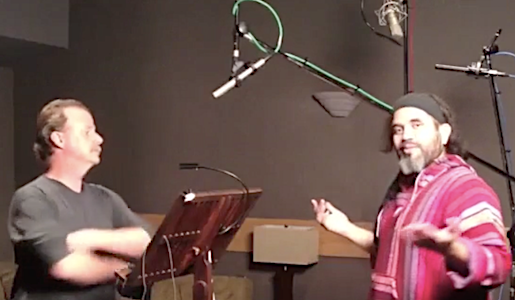
    Lou Mallozzi

    We often think of speech as a way of transmitting information from one person to another. Someone speaks, someone listens, and meaning moves between them. Language therefore appears relatively straightforward. Words describe things, explanations clarify ideas, and speech communicates intentions. Yet speaking also does something else that often receives much less attention. Voices establish relationships. A person standing quietly in a crowded room occupies space in one way, though speaking suddenly reorganises that same environment. Attention shifts. Distances feel altered, while public and private boundaries become less stable. Speech does not simply move through spaces. It also changes them.

    This broader relationship between sound, language, and space formed a recurring concern throughout an online guest lecture delivered by Lou Mallozzi, a Chicago-based sound artist whose work moves across performance, installation, moving image, and public intervention. Although the projects discussed during the lecture varied considerably in form, common questions repeatedly surfaced beneath them. What happens once language stops functioning simply as communication? What happens when speech becomes material rather than message? How do voices alter relationships between people and places?

    Mallozzi described some of these ideas through the notion of an “architectonics of public speech”. Rather than treating speech as something moving cleanly between speaker and listener, this perspective considers speech as something capable of creating structures around it. Speaking establishes relationships, gathers attention, and reshapes environments around it. Architecture repeatedly appeared throughout the lecture, though not always in conventional ways. Buildings establish boundaries physically through walls, rooms, doors, and passages. Sound establishes different kinds of structures. Voices create temporary boundaries of attention, while amplified speech can reorganise atmospheres entirely. A room filled with silent individuals does not feel identical to one organised around speech. The physical dimensions remain unchanged, though experiences of proximity, distance, and social relationships begin shifting once voices enter the environment.

    These ideas became particularly visible in discussion of La Patria Patrisci Patri Partiti, translated as The Fatherland Gives Birth to Departed Fathers. The work emerged partly through reflections on Mallozzi’s father’s experiences growing up in fascist Italy before emigrating to the United States. Historical documents, fascist texts, and autobiographical material became intertwined within the work. Materials themselves were not simply presented directly. Mallozzi instead described subjecting language to processes of subtraction through the removal of letters taken from his own family name.

    Initially this process appears procedural, though the consequences become more complicated once language itself begins breaking apart. Certain words survive while others collapse into fragments. Meaning becomes unstable. Speech no longer functions simply as a transparent carrier of ideas. Language begins behaving differently once removed from its usual role. Words become sounds, rhythms, repetitions, and interruptions. Fragments acquire physical presence independent of straightforward meaning. Listeners are no longer simply absorbing information. They become aware of language itself as material.

    Performance introduced another layer to these relationships through carefully controlled microphone feedback generated from microphones positioned within the mouth itself. Feedback was not presented simply as an acoustic effect. Mouths function as resonant chambers, while rooms similarly become chambers of resonance. Internal and external forms of architecture begin reflecting one another. The body itself begins appearing as another form of acoustic space rather than simply the source from which speech emerges.

    Questions surrounding public space appeared again through works such as Outpost, Peers, and Didact, which approached different environments though repeatedly returned to similar concerns involving observation, attention, and collective listening. Outpost involved Mallozzi standing above public spaces equipped with a telescope and amplified microphone system while verbally describing individuals moving below in real time. Descriptions themselves often remained entirely ordinary. Someone reached into a pocket, adjusted clothing, or walked across an open area. Little of obvious importance occurred.

    Yet amplification transformed the situation entirely.

    Nothing new was being revealed. Individuals already knew what they were doing, while others nearby could already see it happening. Information itself therefore became almost irrelevant. Attention had become the important factor.

    Public spaces frequently depend upon a delicate balance between visibility and anonymity. Most of the time these arrangements remain unnoticed precisely because they operate so quietly. People move through stations, streets, galleries, and public squares while occupying an unusual position between presence and absence. We recognise that others exist around us, though frequently without examining them closely. Shared environments therefore involve a form of social agreement in which attention remains distributed and unstable. Outpost disturbed that agreement. Someone who had previously existed as part of the background suddenly became the centre of attention.

    Surveillance formed part of this discussion, though not entirely in familiar ways. Contemporary surveillance systems frequently operate quietly from concealed positions. Cameras observe without drawing attention to themselves. Outpostinstead exaggerated observation until it became impossible to ignore. The telescope almost became absurd in its visibility. Observation itself became public.

    Related works such as Peers and Didact returned to similar concerns through multiple simultaneous voices. Speech that would normally appear as private reading or individual statements instead became layered, collective, and unstable. Meanings drifted in and out of focus as voices overlapped, while explanations gradually became textures and descriptions became atmospheres. A single voice often carries assumptions of coherence and individuality. Multiple voices instead create shifting relationships where language repeatedly moves between intelligibility and abstraction.

    Later works extended these concerns into moving image and impossible tasks. Screenplay 1-1 involved watching films with the sound removed while attempting to verbally describe everything appearing on screen in real time. Such a task immediately creates difficulty. Language struggles to keep pace with visual experience. Camera movements, gestures, editing, and events unfold more rapidly than speech comfortably allows.

    Mallozzi described many projects of this kind as involving impediments or impossible conditions. Failure therefore ceases to become something requiring avoidance. Contemporary discussions surrounding creative work often assume that limitations are problems waiting to be removed. Better technologies frequently promise greater control, speed, and precision. The projects discussed throughout the lecture repeatedly suggested something slightly different. Constraints sometimes generate possibilities that unrestricted situations would never produce. Impossible tasks force unexpected decisions. Gaps emerge between intention and outcome. Material appears that nobody initially planned.

    Throughout the lecture, speech repeatedly occupied a position between structure and instability. Voices organise attention while simultaneously disrupting it. Language communicates while also becoming detached from communication itself. Sound establishes relationships while continually reshaping them.

    Perhaps one of the more striking ideas emerging from the lecture involved recognising that speaking rarely involves transmitting information alone. Voices connect bodies, spaces, histories, and listeners around them. Speech therefore becomes something more than information moving between individuals. Voices gather people together, establish temporary structures of attention, alter atmospheres, and occasionally make familiar environments seem unfamiliar again.

    Much of this activity normally passes unnoticed. Conversations emerge and disappear. Announcements briefly reorganise public spaces. Voices drift across rooms before fading into the background once more. Listening often feels passive, though Mallozzi’s work repeatedly suggested something rather different. Speaking changes environments, while listening changes our relationships with them. Spaces may appear stable around us, though many of the ways we experience them are continually being reorganised through sound.

  • Creating Sounds for Things We Cannot See: Kenny Young on VR, Music, and Guiding Attention

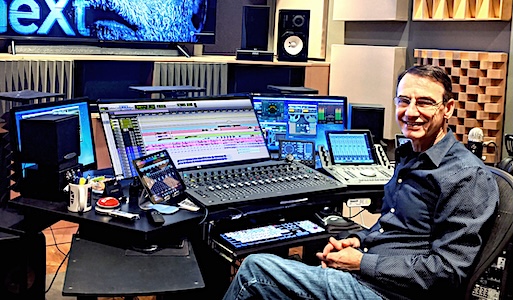
    Kenny Young

    Many forms of media depend upon controlling attention. Films decide where audiences look through editing, framing, and camera movement. Theatre guides attention through staging and movement. Conventional games frequently do something similar through interface design, visual effects, or camera behaviour. Important information rarely appears entirely by accident. Designers often decide where attention should go long before audiences realise those decisions are being made. Most of this guidance becomes invisible precisely when it works well. Players rarely stop to think about how often games quietly redirect their attention from one place towards another. Experiences simply feel natural. Objectives appear at appropriate moments, important events seem difficult to miss, and information arrives when required.

    Kenny Young’s guest lecture explored what happens once some of these assumptions begin disappearing. Virtual reality introduces a relatively simple change that gradually creates much larger consequences. Players control the camera continuously. Looking left means physically turning left. Looking upwards requires physically raising the head. Looking away from something important may simply mean missing it altogether. Initially this sounds like a relatively minor alteration, though the consequences begin spreading surprisingly far once control over attention starts shifting away from designers themselves.

    Imagine hearing something important happening behind you in a conventional game. Designers possess numerous methods for ensuring that players notice it. Cameras may shift automatically, indicators can appear around the screen, and control may even be briefly interrupted. Decades of game design have produced increasingly sophisticated methods for solving these problems. Virtual reality complicates many of these solutions. Fixed interface elements become intrusive, large overlays can weaken immersion, and information existing outside the player’s field of view can remain entirely unnoticed. Questions therefore begin emerging around how players discover important information once designers can no longer simply place it directly in front of them.

    Young suggested that sound changes role at precisely this point. Human vision behaves selectively. We actively choose where to direct our eyes and ignore much surrounding information. Hearing functions rather differently. Sounds continue arriving whether or not we intentionally seek them out. A player may choose not to look towards something important, though hearing something nearby can still trigger an immediate response. Sound therefore begins moving away from a supporting role attached to visible events and towards something more active.

    Players do not simply hear sounds in games. They gradually learn them. Initially a sound may exist only as another event occurring within a larger environment. Yet repeated exposure slowly changes its role. Through familiarity, sounds begin accumulating meaning. This process often happens without players consciously noticing it. A sound that initially appears neutral gradually becomes linked with expectations, actions, and outcomes. Eventually hearing the sound no longer involves interpreting something unfamiliar. Players instead recognise patterns they have already learned.

    Young discussed the familiar alert sound from Metal Gear Solid as an example. During early encounters players hear a brief cue alongside visual information, though repeated exposure gradually changes the relationship. Eventually players stop hearing the sound as a sound effect at all. Instead, it begins behaving almost like language.

    Language may not be entirely the right word, though the comparison becomes useful. Words themselves do not naturally contain meaning. People gradually learn relationships between sounds and ideas through repeated experience until recognition becomes almost immediate. Something similar begins happening within games. A short musical cue or brief sound effect acquires meaning through use rather than explanation. Players are not consciously translating sounds each time they hear them. Recognition simply becomes increasingly automatic.

    Nobody pauses a game to explain that a particular sound means danger. Players learn these relationships through repeated experience. Over time certain sounds become linked with expectations, actions, and outcomes until responses begin occurring almost automatically. Listening changes in subtle ways once these associations form. Players stop consciously analysing what they hear, as attention begins shifting before deliberate thought catches up. Sound therefore becomes something more than feedback occurring after an event. It starts creating expectations about what might happen next.

    Music introduces another layer to these learned relationships. Discussions around game music frequently focus on emotion, atmosphere, and immersion. Players may notice tension increasing during combat, emotional themes returning around familiar characters, or changing musical textures supporting movement through a world. Young explored another possibility entirely. Under certain conditions, music may also begin operating as information.

    Much of his work on Tethered explored whether these kinds of relationships could be developed within virtual reality environments. Strategy games already involve unusually large amounts of simultaneous information. Resources require management, environments continue changing, threats emerge unexpectedly, and events occur across multiple locations at once. Conventional interfaces frequently solve these problems visually. Players monitor maps, indicators, menus, and notifications distributed around the screen. Translating these expectations into VR introduced a more difficult question. How can players remain aware of a world once they can comfortably see only part of it at any given moment?

    Rather than functioning purely as atmosphere or emotional support, musical phrases could gradually become learned signals recognised through repeated interaction. Certain sounds became associated with changing conditions, important events, or emerging situations. Initially these sounds carried little meaning beyond existing as recognisable musical gestures. Over time something rather different happened. Players were not simply listening to music accompanying a world. They were gradually learning the world itself.

    Listening consequently begins developing an unusual relationship with navigation. Physical landmarks help people orient themselves within real environments, though players may also begin constructing sonic landmarks. Certain sounds become associated with places, behaviours, or changing conditions. Listening therefore starts becoming part of understanding how a world behaves. Particular musical phrases began functioning almost like landmarks within an environment. Certain combinations of sounds became associated with emerging threats or opportunities requiring attention. Over time players could respond before consciously thinking about what had changed. Listening therefore became intertwined with understanding the behaviour of the world itself.

    Examples such as these begin shifting the discussion slightly. Rather than asking whether music sounds appropriate or emotionally effective, another question begins appearing. How do people learn sonic environments? Under what circumstances do sounds stop behaving like sounds and begin behaving more like information? Underlying processes of this kind may already exist across many forms of game audio, even if virtual reality makes them easier to recognise.

    Extending these ideas into working systems introduced additional challenges. Sounds needed to remain distinctive while fitting comfortably alongside underlying music. Delays had to remain short enough that players still connected events with their causes, while multiple simultaneous events could create confusion or dissonance. Initial solutions often resolved one issue only to reveal another elsewhere. Technical constraints, musical decisions, and player behaviour continually interacted throughout development. Creative work therefore emerged less as a process of executing perfect ideas and more as a continual process of adjustment.

    Running throughout the lecture was a broader observation concerning the role of sound itself. Discussions surrounding game audio frequently emphasise realism, emotion, and atmosphere. These remain important concerns, though Young’s work suggested something slightly different. Once familiar methods for directing attention become less reliable, sound begins taking on responsibilities traditionally associated with cameras and interfaces.

    Virtual reality may therefore reveal something that has existed quietly within games for much longer. Sound has rarely functioned only as decoration or atmosphere. It has also shaped where players look, what they notice, and how they organise experiences around them.

    Perhaps the more interesting question is not whether sound helps players understand virtual worlds. It may instead involve asking how much of our experience has always depended upon sound guiding us in ways we barely notice. Once designers lose many familiar methods for directing attention, sound begins moving from the background towards the centre of interaction itself.

  • Creating Sounds for Worlds That Refuse to Sit Still: Malin Arvidsson on Game Audio and Interactive Design

    Sound in games often feels invisible when it is working well. Players notice visual worlds immediately. Landscapes stretch into the distance, characters move through environments, and stories unfold through action and dialogue. Sound tends to arrive more quietly. Footsteps simply seem to belong beneath a character, background ambiences appear to exist naturally around us, and a creature’s voice feels inseparable from its personality. Everything seems to fit together so naturally that the work behind these experiences often disappears from view.

    Yet creating sound for games involves a challenge that differs fundamentally from many other forms of media. Film and television unfold through fixed sequences of events. A sound designer working on a film knows exactly when a door opens, when dialogue occurs, when music begins, and when tension rises. Audiences experience those moments in the same order every time. Games behave rather differently. Players stop unexpectedly, move in different directions, repeat actions endlessly, ignore objectives, or spend long periods interacting with things designers never anticipated would receive much attention. Some players rush directly through environments while others investigate every possible corner of a world. A sound designer may know what can happen inside a game, though cannot always know what will happen, when it will happen, or how often particular experiences will occur. Sound therefore cannot simply be attached permanently to images and left alone. It must continue adapting long after the designer has stepped away.

    During an online guest lecture, Malin Arvidsson explored this challenge through reflections on her own experiences working across game audio. Throughout projects involving children’s games, procedural systems, and large-scale interactive worlds, a recurring idea gradually emerged. Game audio frequently involves building systems rather than constructing isolated sounds. Designers create frameworks, relationships, and behaviours that continue operating within worlds that remain unpredictable.

    Arvidsson described discovering games somewhat unexpectedly. Having decided at an early age that she wanted to work with sound, she initially pursued sound engineering and recording work before later encountering opportunities in game production. Games had not necessarily appeared to be an obvious destination at the time. Film and television perhaps felt more visible as career directions, while game audio remained relatively unfamiliar. Yet after joining Audio Interactive and working on early projects, games gradually became something much larger than a temporary opportunity. Part of this attraction appeared to emerge from constant change. Technologies evolve rapidly, development processes shift, while projects rarely require exactly the same approaches twice. Many creative fields involve continual learning, though games introduce an additional layer of complexity through their combination of artistic decisions and technical systems. Sound designers are often required to think simultaneously about recording, editing, implementation, behaviour, memory, interaction, and player experience.

    Some of the earliest examples discussed during the lecture illustrated how dramatically workflows have changed over time. While working on Action Man: Jungle Storm, implementation tools remained extremely limited compared with contemporary systems. There were no dedicated audio middleware environments, no simple methods for previewing sounds directly within gameplay, and no convenient ways of rapidly testing ideas. Implementation frequently involved manually replaying sections of gameplay while attempting to synchronise sounds externally. Looking back, the process appears cumbersome and time-consuming. Yet despite those limitations, hearing newly created sounds finally appearing inside the game still produced a strong sense of satisfaction.

    Later projects introduced another challenge as assumptions taken from linear media no longer translated effectively into interactive environments. Arvidsson described work on Republic: The Revolution, where large numbers of character animations required accompanying sounds. Initial approaches appeared straightforward enough. Individual animations were paired with carefully designed sounds in much the same way they might be within film production. Footsteps, movements, and interactions each received specific audio elements designed to support visual actions. Problems quickly appeared once these sounds entered gameplay. Memory limitations immediately became one issue, with thousands of individual files consuming valuable resources. Yet another issue proved equally important. Players repeatedly encountered exactly the same actions throughout long periods of gameplay. A movement animation viewed once might feel entirely convincing, though hearing precisely the same sound attached to the same movement hundreds of times gradually became distracting rather than believable.

    This problem reveals something broader about realism itself. Human beings often tolerate variation without noticing it consciously, while exact repetition becomes highly noticeable. Everyday experiences rarely unfold identically from one moment to another. Footsteps change subtly according to movement, surfaces, speed, and context. Someone walking across gravel rarely produces exactly the same sound twice. Objects interact slightly differently each time they collide, while environmental sounds fluctuate continuously. We generally ignore these small differences, though their absence can become surprisingly noticeable. Once a sound begins repeating with complete consistency, attention gradually shifts away from the world itself and towards the system generating it. Perfect consistency can therefore begin feeling less realistic than controlled variation.

    Solutions required a different form of thinking. Rather than attaching one sound permanently to one action, sounds became collections of possibilities. Footsteps could exist within larger groups of variations, different surfaces could trigger different responses, and small adjustments in pitch, timing, and volume could introduce subtle differences between repetitions. Players no longer heard identical events replaying endlessly. Instead, they experienced systems capable of producing varied outcomes.

    Arvidsson reflected on this through an observation extending beyond the immediate technical problem. She noted that changing sounds can sometimes create the impression that animations themselves are changing. Sound was therefore no longer simply accompanying visual information. It had begun influencing how visual information itself was interpreted.

    Repetition emerged again through examples involving dialogue. While working on Evil Genius, background conversations between characters introduced similar difficulties. Real dialogue becomes recognisable very quickly once repeated frequently, though replacing speech with meaningless placeholder sounds created worlds that felt strangely artificial. The eventual solution involved constructing thousands of vocal recordings using invented forms of structured nonsense speech. Colleagues recorded large collections of vocal performances resembling language without becoming meaningful dialogue. The purpose was not literal realism. Players were not expected to understand these conversations or extract semantic meaning from them. Instead, the objective involved creating evidence that activity continued occurring around the player. Worlds rarely feel alive merely through visual detail alone. People often listen for small signals suggesting that environments continue existing independently of their own actions. Background conversations, distant movement, as well as changing environmental activity all contribute to the impression that spaces continue functioning whether or not the player directly observes them.

    Memory constraints returned in a different form during discussion of LittleBigPlanet. Storage restrictions within the PSP version introduced significant constraints compared with larger console releases. Some reductions remained relatively straightforward. Numbers of variations could be lowered and certain content could be simplified, though environmental soundscapes proved more difficult. Long ambient recordings consumed considerable amounts of memory, while straightforward looping solutions introduced repetition problems of their own. Instead, Arvidsson described constructing simpler environmental foundations combined with shorter sound fragments including birds, insects, and environmental details. Individual elements could then appear according to changing probabilities and timings while introducing subtle variation. Rather than hearing static recordings replaying continuously, players experienced environments appearing more dynamic and less predictable.

    Examples such as these suggested that technical limitations did not merely reduce possibilities. Constraints frequently redirected attention towards different forms of design thinking. Rather than storing larger quantities of material, systems could generate richer experiences from fewer resources.

    Increasingly interactive systems introduced another layer of complexity. Physics systems created situations where players themselves generated outcomes that designers could not fully predict beforehand. Within LittleBigPlanet, players could construct objects using different combinations of materials and structures. Objects then collided using changing amounts of force under varying conditions. Questions that initially appeared simple quickly became more complicated. Which material should dominate when metal collides with sponge? Should paper dominate plastic? What happens when multiple materials contribute simultaneously? Questions such as these reveal how game sound often shifts away from designing isolated sounds towards establishing behaviours and rules. Designers create relationships and systems, allowing games themselves to determine outcomes dynamically.

    Broader reflections on working within the industry also appeared near the end of the lecture. Networking, persistence, and long-term relationships emerged repeatedly throughout these discussions. Freelancing across games, film, and television introduced uncertainty alongside flexibility, requiring continual adaptation as projects, collaborators, and opportunities changed over time. One comment near the conclusion captured this relationship clearly. Arvidsson described game sound design as roughly forty percent creativity and sixty percent technical implementation and problem solving.

    Initially this ratio may appear unexpected. Sound design often seems associated primarily with creativity and artistic expression. The examples discussed throughout the lecture suggested something slightly different. Creativity within games frequently emerges through solving problems. Memory restrictions, implementation systems, player unpredictability, and technical limitations all shape the final experience.

    Players rarely notice these systems directly. They simply hear worlds that feel alive. Background conversations seem to continue without them, environments appear to change naturally, as movement feels connected to the spaces around it. Much of the underlying complexity disappears beneath the experience itself.

    Perhaps that invisibility forms part of the achievement. Successful game audio may involve more than creating individual sounds. It may involve building worlds capable of continuing to surprise players long after the designer has stepped away. Rather than asking whether a sound works in isolation, a broader question may involve whether an entire system continues behaving convincingly once players begin doing things nobody predicted.

  • Listening to the Future: Dr Justyna Maculewicz on Sound Design for Intelligent Vehicles

    Dr Justyna Maculewicz

    Sound in vehicles often becomes noticeable only when something goes wrong. Most people can immediately recall an irritating warning tone, an intrusive navigation prompt, or repetitive notifications during a journey. These sounds tend to interrupt rather than accompany experience, appearing briefly to signal danger, demand attention, or communicate instructions before disappearing again. Much less attention is usually given to the wider role sound plays in shaping how journeys actually feel. Yet vehicles already communicate continuously through sound, although many of these interactions become so familiar that they disappear into the background of everyday travel. Indicators click rhythmically beside us, seatbelt reminders demand attention, parking systems announce approaching obstacles, and navigation systems guide movement through spoken instructions. A largely invisible conversation already exists between people and vehicles, though most of it remains unnoticed until something becomes irritating or disruptive.

    As vehicles become increasingly intelligent and potentially autonomous, this relationship begins changing in important ways. Traditional vehicles rely heavily on direct control. Drivers steer, brake, accelerate, and make continual decisions throughout a journey. Future vehicles may shift some of these responsibilities towards automated systems, creating a rather different experience. Attention may move away from the road itself and towards work, conversation, entertainment, or rest. Questions therefore begin emerging around whether sound should continue acting primarily as interruption or whether it might instead become a quieter form of support that helps people feel informed, comfortable, and connected to the actions of a vehicle.

    These questions formed the basis of an online guest lecture delivered by Dr Justyna Maculewicz, whose work explored user-centred approaches to sound design for future vehicles. Rather than beginning with technological possibilities alone, her work started with people and their experiences. The emphasis throughout the lecture repeatedly returned to an important principle: understanding users before designing sounds.

    Research presented during the lecture involved interviews with drivers and passengers across a range of commuting contexts. Participants discussed their daily experiences, frustrations, routines, and emotional responses during travel. The purpose was not simply to determine whether participants liked particular sounds but to understand how people experienced travel itself and where sound might play meaningful roles within those experiences.

    Findings suggested that travelling involves far more than moving physically from one place to another. A commute can become preparation for a working day, a brief period of quiet after a stressful afternoon, or one of the few moments available for concentration and reflection. Someone travelling home after a long day may seek quietness and reassurance, while another person beginning a working day may value engagement and awareness. A parent travelling with children may experience entirely different priorities from someone commuting alone. Expectations and needs therefore change continuously across situations.

    One of the more interesting aspects of the work involved moving away from rigid user categories and towards behavioural patterns. Three broad behavioural tendencies emerged from the interviews. One group preferred control and active engagement with driving experiences. Another sought reassurance and clarity, valuing confidence in the behaviour of systems around them. A third group prioritised comfort and productivity, viewing travel time as an opportunity to focus on other activities.

    Importantly, these were not treated as fixed personality types. Maculewicz emphasised that individuals could move between different behaviours depending on context, mood, fatigue, weather conditions, or travel purpose. Someone who normally enjoys driving may prefer a calmer and more supportive experience after a stressful day. Equally, a passenger travelling during unfamiliar conditions may suddenly seek additional reassurance and information. Behaviour therefore appeared dynamic rather than static.

    This distinction had important consequences for sound design. Traditional systems often assume that one solution should work equally well for everyone. Yet if user needs change over time, sound design may also need to become adaptive rather than fixed.

    For users seeking active engagement, richer sonic environments appeared more appropriate. Additional information and more expressive interactions could support a sense of control and awareness. Those seeking reassurance instead preferred clearer and calmer forms of communication that reduced uncertainty. Meanwhile users focused on work or productivity often preferred quieter interactions providing only essential information while avoiding unnecessary interruption. Rather than creating a single universal sound environment, the work explored whether future systems might adapt according to changing experiences and needs.

    A broader design framework was then introduced that organised vehicle interaction into multiple layers. These included perception, intention, current actions, required responses, strategy, and emotional context. Emotional framing operated across these categories rather than existing separately, helping shape the overall experience rather than acting as an isolated feature.

    What made this framework particularly interesting was that it treated sound as something larger than isolated alerts. Traditional warning systems often appear only during particular moments requiring immediate attention. In contrast, this approach considered how sound might support an ongoing relationship between users and vehicles. Instead of simply reacting to problems, sounds could help explain behaviour, communicate intentions, and create a sense of continuity throughout a journey.

    Among these ideas, intention sounds emerged as one of the most distinctive aspects of the lecture. Conventional warning sounds typically communicate information after an event has occurred or immediately before danger appears. Intention sounds operated rather differently. Rather than announcing what had already happened, these sounds communicated what a vehicle was about to do.

    Sounds associated with acceleration, braking, or turning were introduced slightly before physical movements occurred. Although this difference initially appears relatively small, it has interesting implications for perception. Human beings continuously anticipate actions and outcomes within everyday experience. When travelling in a vehicle driven by another person, passengers often prepare unconsciously for changes in movement based on visual information, driver behaviour, or expectations formed through experience. Autonomous systems may reduce some of these familiar cues.

    Without anticipation, even small delays between expectation and movement can create discomfort. This issue becomes particularly important when people are no longer focused directly on driving tasks. Someone reading, working, or looking away from the road may have fewer signals available for predicting changes in movement.

    Findings presented during the lecture suggested that intention sounds could help address this problem. Participants gradually became accustomed to these cues, often reporting that they stopped consciously noticing them over time. Yet despite becoming less consciously aware of the sounds, behavioural effects remained present. Participants reported greater comfort, improved trust, and reductions in motion sickness.

    This aspect of the work suggests an interesting possibility. Effective sound design may sometimes involve creating sounds that gradually disappear from conscious awareness rather than continually demanding attention. Successful design may occasionally involve fading into the background, allowing people to feel supported without constantly being reminded of the system itself.

    Trust formed another important theme running throughout the lecture. Autonomous systems raise practical questions concerning safety and reliability, though they also introduce psychological questions involving confidence and reassurance. People may intellectually understand that a system functions correctly while still feeling uncomfortable or uncertain.

    Sound therefore becomes important not only for transmitting information but also for shaping emotional responses. Perception sounds and intention sounds appeared capable of supporting trust while remaining acceptable during longer periods of use. Rather than overwhelming users with constant warnings or large quantities of information, carefully designed sonic interactions helped establish a feeling that the system remained understandable and predictable.

    Another particularly interesting aspect involved the methods used early within the design process itself. Maculewicz described vocalisation exercises in which participants and researchers used their own voices to explore sound concepts before detailed design work began. Instead of immediately creating polished digital sounds, people experimented using simple vocal expressions to communicate movement, intention, and emotional qualities.

    Although these exercises initially appeared playful, they served an important purpose. They helped clarify what sounds were intended to communicate before investing significant effort into production and implementation. Questions surrounding function and meaning could therefore be explored before technical decisions became fixed.

    Running throughout the lecture was a broader shift in thinking about the role of sound within vehicles. Traditional systems frequently focus on isolated moments of interruption and attention. Future sound interaction may instead become something quieter and more continuous, operating as an adaptive layer supporting comfort, anticipation, trust, and wellbeing throughout travel.

    Vehicles may therefore communicate with us in increasingly subtle ways. Sound within future systems may gradually move away from functioning as collections of warnings and alerts towards becoming a quieter layer of interaction that helps people understand not only what a vehicle is doing, but also how they relate to it.

  • Beyond the Frequency Response: Dr Nick Zacharov on Why Sound Quality Refuses to Stay Simple

    Sound quality appears to be something that should be relatively easy to define. Modern audio engineering has become remarkably precise, allowing engineers to measure frequency response, distortion, sound pressure level, impulse response, and countless other properties with extraordinary accuracy. Pages of graphs and measurements can describe how an audio system behaves in minute detail. Looking at these increasingly sophisticated tools, it becomes tempting to assume that the problem has largely been solved. Better systems should produce better measurements, while increasingly detailed measurements should gradually lead towards better listening experiences.

    Yet most people who spend time with sound eventually encounter an uncomfortable contradiction. A new pair of headphones may arrive with impressive specifications and glowing reviews, promising exceptional clarity and technical accuracy. Everything appears correct on paper, yet after listening for a while something feels slightly wrong. Another pair with less impressive measurements somehow sounds more engaging, or perhaps two products that appear remarkably similar perform very differently in practice. Even more confusingly, people listening to exactly the same material can disagree entirely about what they hear. Experiences like these raise an interesting question. If sound can already be measured with extraordinary precision, why do we still need people to listen?

    This question formed the starting point of an online guest lecture delivered by Dr Nick Zacharov, whose work has spent more than three decades exploring sound quality and sensory evaluation across industries including telecommunications, professional audio, and product development. As co-founder of AudioSense Lab, his work focuses on understanding how people experience sound rather than simply measuring the physical properties of signals. Across the lecture, one idea gradually became increasingly clear: sound quality is not hidden solely within the signal itself. It also emerges through the relationship between sound and the people hearing it.

    Part of the challenge begins with assumptions about hearing itself. Measurement systems generally behave in predictable ways. Microphones can be calibrated, repeated measurements can produce highly consistent results, and instruments respond reliably under controlled conditions. Human hearing behaves rather differently. Rather than functioning as a neutral recording device, the auditory system continuously interprets incoming information before we consciously become aware of it.

    Zacharov described hearing as an extraordinarily sophisticated process operating across enormous ranges of frequencies and intensities. Sounds arriving from different directions interact with the shape of the head and ears before even reaching the inner ear, while loudness, timing, and spatial position all influence the information ultimately reaching the brain. Listening therefore involves more than passively receiving information from the outside world. The auditory system actively reconstructs what we hear, continually shaping experience rather than simply recording it. Measuring sound pressure level may therefore be relatively straightforward, though measuring how people actually experience sound quickly becomes much more complicated.

    This issue becomes clearer when considering the language people commonly use to describe audio experiences. Terms such as brightness, warmth, spaciousness, clarity, depth, and fullness often feel straightforward and intuitive, and most listeners immediately recognise what these ideas mean. Yet many of these qualities do not correspond directly to simple physical measurements. Loudness provides a useful example. Loudness is not merely a sound pressure value but a perceptual experience allowing listeners to organise sounds along a continuum extending from quiet to loud. Anyone who has increased the volume of a quiet dialogue scene in a film only to be startled moments later by a sudden explosion or a swelling piece of music has experienced this distinction directly.

    Similar relationships exist for many of the characteristics listeners use when evaluating sound systems. Spaciousness involves more than physical distance between sound sources, warmth cannot simply be reduced to a particular frequency range, and clarity often emerges through interactions between multiple factors rather than a single measurable value. Describing sound therefore becomes surprisingly complicated. People often use similar words while imagining different things. One listener’s idea of warmth may not correspond exactly to another person’s understanding of the same term. Researchers and designers therefore face the challenge of developing shared vocabularies that allow experiences to be discussed more consistently.

    This need for a common language has led researchers towards the development of perceptual descriptors and sensory lexicons. Rather than relying on vague impressions such as “good” or “bad”, listeners are encouraged to think in terms of more specific qualities that can be identified repeatedly. The aim is not simply to produce more words for describing sound. Instead, the goal is to create reliable ways of connecting subjective experiences with measurable characteristics. The question therefore shifts again. Rather than asking whether sound itself can be measured, attention moves towards understanding whether measurements adequately describe the experiences listeners actually care about.

    One of the most interesting ideas discussed during the lecture emerged through a distinction between preference and perception. Initially these concepts seem almost interchangeable. If somebody prefers one sound over another, it appears reasonable to assume that the answer provides everything necessary. Preference feels direct and uncomplicated. Yet preference quickly becomes more unstable than it initially appears. People notice different details, bring different expectations into listening environments, and respond differently depending on context. Prior experiences shape listening behaviour, while cultural backgrounds and individual habits influence interpretation. Preferences can also change over time, meaning two listeners hearing exactly the same material can arrive at entirely different conclusions.

    To explain this distinction, Zacharov introduced an example involving cheese. Imagine placing several cheeses in front of a group of people and simply asking which one they prefer. Most people would answer almost immediately. The process feels natural and instinctive. Yet the situation changes once different questions begin appearing. Which cheese feels creamier? Which one seems more acidic? Which has a stronger texture? Attention gradually moves away from simple preference and towards analysis. People begin thinking differently about the experience itself.

    Listening behaves in much the same way. Zacharov noted that if people are simply asked what they prefer, they often respond immediately and instinctively. Once listeners are instead asked to evaluate characteristics such as distortion, bass, or other specific attributes, something changes in the listening process itself.

    “If I ask people what they prefer, they will instantly tell you. If I ask them to evaluate distortion and bass and all of these different characteristics, they start thinking consciously about things.”

    What initially appears to be a relatively small distinction gradually becomes much more interesting. Once people become consciously aware of what they are listening for, their relationship with sound itself begins changing. They are no longer responding naturally in the same way they might during everyday listening. Instead, they begin examining specific characteristics and separating experiences into individual components. Listening effectively becomes analytical rather than instinctive.

    This distinction sits at the centre of sensory evaluation. Rather than asking people simply whether they like something, sensory evaluation attempts to understand how people perceive particular characteristics and why those characteristics influence experience. The goal is not merely to identify winners and losers but to understand the qualities shaping listening itself.

    Zacharov described how this often involves training listeners to recognise and describe perceptual attributes systematically. This process does not necessarily involve teaching people what they should hear. Instead, it focuses on developing consistency. Listeners learn to identify particular forms of distortion, tonal differences, changes in spatial presentation, or other relevant characteristics. Over time, they develop a shared vocabulary allowing listening experiences to be discussed with greater precision.

    Training becomes particularly important since untrained listeners often respond differently from experienced listeners. Someone listening casually may immediately focus on broad impressions such as whether a sound feels enjoyable or unpleasant, while trained listeners may identify subtle changes in bass response, timbral colouration, spatial width, or artefacts introduced by processing systems. Neither response is inherently better than the other, though they provide different forms of information. One reflects instinctive experience while the other provides analytical detail.

    These methods become particularly valuable within product development. Preference testing can identify whether people generally favour one system over another, though such tests often reveal relatively little about why decisions occur. A product may consistently outperform competitors while leaving important questions unanswered. What exactly are listeners responding to? Greater spaciousness? Reduced distortion? Increased clarity? Better balance?

    Sensory evaluation attempts to bridge this gap by identifying the characteristics influencing perception, allowing researchers and designers to understand not simply whether products succeed but why they succeed. These approaches have applications across a wide range of industries. Telecommunications systems aim to optimise speech quality and intelligibility. Headphone manufacturers seek desirable listening experiences across different musical styles. Automotive companies increasingly design not only engines and interiors but also the sonic experience of travelling within vehicles. Consumer technologies ranging from smart speakers to voice assistants similarly depend on understanding how people perceive sound rather than simply reproducing signals accurately.

    Towards the end of the lecture, another issue gradually emerged concerning the relationship between controlled testing environments and everyday listening experiences. Listening tests often take place under carefully designed conditions intended to isolate variables and remove distractions. Such environments are extremely useful for identifying subtle differences and maintaining consistency, yet real listening situations rarely behave in the same way.

    People do not spend their lives sitting silently in isolated rooms rapidly switching between competing systems. Sound exists alongside movement, conversations, expectations, distractions, and activities unfolding simultaneously. Headphones are used on trains and buses, music accompanies exercise and travel, and films are experienced within social environments rather than laboratories. A technically ideal system under laboratory conditions may therefore not necessarily produce the same experience within everyday contexts.

    This raises questions surrounding ecological validity, a concept concerned with how closely experimental conditions resemble real-world experiences. Zacharov reflected on this as an increasingly important direction for future work, suggesting that listening research has gradually begun moving towards broader and more realistic forms of evaluation.

    “I think there is a trend in going more holistic nowadays and going more ecological.”

    Running throughout the lecture was a wider point. Sound quality is not simply a technical problem waiting to be solved through increasingly detailed measurements. Measurements remain essential and enormously valuable, though they only describe part of the listening experience. Signals, technologies, environments, expectations, and listeners continuously interact with one another. Understanding sound therefore may involve more than measuring systems accurately. It may also require understanding the people hearing them.

  • Listening Between Worlds: Dr Ximena Alarcón on Deep Listening and Sonic Migrations

    Dr Ximena Alarcón

    Migration is often described through borders, journeys, and distances travelled. People leave cities, cross countries, settle elsewhere, and gradually build new lives. Less often do we ask what migration sounds like. Yet movement between places changes more than physical location. Familiar sounds disappear from everyday life while new ones slowly become woven into routine experience. Voices remain in memory long after people and places have gone, and certain sounds can unexpectedly return us somewhere we thought we had left behind.

    During an online guest lecture, Dr Ximena Alarcón explored these less visible experiences through sound, asking whether listening might reveal dimensions of migration that geography alone struggles to capture. Drawing on her own experiences of moving from Colombia to Europe, alongside years of artistic and research practice, she explored how listening can become a way of understanding relationships between people, places, and memory.

    Dr Alarcón is a sound artist, researcher, and Deep Listening practitioner whose work combines collaborative performance, sound art, memory, and digital technologies. Across these projects and reflections, one idea repeatedly surfaced: listening is not simply an act of hearing sounds that already exist around us. It can also become a way of tracing experiences, understanding relationships, and making sense of where we belong.

    Many of these ideas first developed through an apparently ordinary experience. After growing up in Bogotá and later encountering underground transport systems in European cities, Alarcón became increasingly interested in the environments created by these systems. Most people barely notice them. Announcements repeat endlessly, trains arrive and disappear, and routine eventually turns entire spaces into background activity. Daily commuting often becomes something we stop consciously hearing. Yet beneath that familiarity, people continue forming subtle relationships with the spaces around them, carrying emotions, frustrations, routines, and memories through these environments day after day. Alarcón became interested in what kinds of traces these repeated experiences might leave behind.

    This question developed into Sounding Underground, a project exploring underground systems in London, Mexico City, and Paris. Participants recorded journeys, selected sounds they considered meaningful, and reflected on the experiences attached to them. Rather than documenting transport systems themselves, the project explored relationships formed through listening.

    “What memories have people when they listen during routine journeys?”

    Responses revealed something surprising. Participants recognised common rhythms and textures across different cities while also identifying details that felt distinctive to each place. One participant described experiencing the three underground systems as though they formed a single connected network rather than separate environments. Sounds that would usually disappear into the background of everyday life suddenly felt more intimate. Mechanical noises, station announcements, and passing voices acquired emotional significance, becoming linked with memory and familiarity in ways that might otherwise remain unnoticed.

    Questions that initially centred on transport systems gradually grew more personal. Listening repeatedly to memories of movement raised another question that redirected Alarcón’s work entirely: “I would like to listen to my own migration.” Attention moved away from cities themselves and towards the experiences carried through them. The question was no longer simply how environments sound, but how memories, identities, and relationships continue shaping listening long after movement has taken place. This transition led Alarcón towards Deep Listening, a practice developed by Pauline Oliveros that encourages expanded awareness of sound, body, memory, and environment.

    Deep Listening extends beyond identifying sounds within a space. Listening becomes connected with silence, bodily awareness, dreams, movement, and relationships with others. Alarcón described keeping dream diaries as part of this process, recording fragments of dreams before they disappeared into waking life. Listening was no longer directed only towards external environments. It became a way of tracing relationships between memories and experiences that might otherwise pass unnoticed. Migration consequently began to appear as something more complex than movement between locations. Memories from different places continue existing alongside present experiences, while voices from the past remain present within current surroundings. Different versions of ourselves emerge over time rather than simply replacing one another.

    Language became an important part of this exploration. During the lecture, Alarcón reflected on the experience of moving between English and Spanish, describing how speaking different languages can sometimes feel like moving between different versions of oneself.

    “When you speak more than one language, you start to create a different personality when you switch between languages.”

    Many people who speak more than one language immediately recognise this feeling. Words change, though something else changes as well. Rhythm changes, gesture changes, and emotional expression often shifts in subtle ways. Certain ideas suddenly become easier to express while others seem to disappear entirely. Alarcón described this through the idea of the “nomadic voice”, suggesting that migrants often inhabit spaces that are neither entirely one place nor another. Instead, memories, identities, and experiences overlap and remain in motion, creating what she described as in-between spaces.

    Questions about memory and identity eventually expanded beyond individual experience. If listening could reveal something about personal migration, could it also create meaningful connections between people separated by geography? This question shaped projects such as Letters and Bridges and Migratory Dreams, where participants in different countries exchanged letters, shared dreams, recorded sounds, and developed collaborative sonic performances across distance. Unexpectedly, participants often described feeling close to people they had never physically met.

    One of the most memorable moments emerged during Migratory Dreams. Participants in Bogotá perceived London as sonically dense and heavily urban. During performances they instinctively introduced sounds of nature, almost as if attempting to return something they felt migrants living in London had lost. Across continents, participants were not simply exchanging sounds or creating performances. Listening had become a way of caring for distant people through shared experience.

    Although these projects emerged through experiences of migration, the ideas discussed throughout the lecture extend far beyond migration itself. Sound design often focuses on realism, immersion, and technical precision, yet Alarcón’s work suggested broader possibilities. Sound can preserve memory, support identity, and create relationships between people separated by distance.

    Migration, in this sense, may involve more than moving between places. Physical journeys eventually end, yet the quieter journeys shaped by memory, identity, and listening often continue long afterwards. Alarcón’s lecture suggested that people do not simply travel across spaces. They also continue travelling through experiences, relationships, and sounds that remain with them long after they arrive.

  • The Fast and the Sonorous: Vehicle Sound Design Insights from Codemasters’ Jethro Dunn

    Jethro Dunn, Senior Audio Designer at Codemasters, has contributed to a range of projects, from tactical military shooters to arcade racing games. During his lecture, he shared how vehicle sound effects are shaped by technical constraints, creative objectives, and genre-specific requirements—whether simulating the weight of an armoured convoy or signalling damage in a playful kart racer.

    Drawing on titles such as Operation Flashpoint: Red River and F1 Race Stars, Dunn focused on practical techniques for crafting immersive vehicle soundscapes, managing acoustics, and enhancing player feedback.

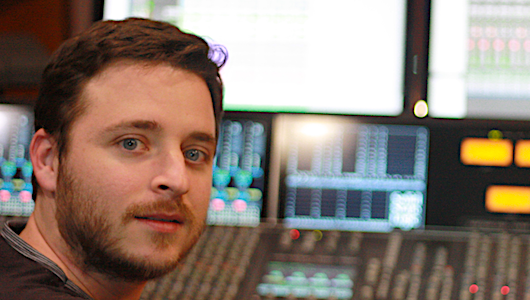
    Jethro Dunn

    Streamlining Vehicle Audio in Tactical Shooters

    In Operation Flashpoint: Dragon Rising and Red River, vehicles like jeeps and APCs required sound design that balanced realism with hardware limitations. Early designs utilised layered loops for engines, transmissions, and mechanical effects, but this approach led to unnecessary system overhead.

    “We were wasting more memory managing complex sound events than on the actual audio data, so we had to rethink how we structured vehicle sounds.” — Jethro Dunn

    The team restructured vehicle audio into smaller, independent elements. Engine and exhaust sounds were separated to enhance spatial realism, and mechanical “sweeteners” were introduced at low acceleration to add life and responsiveness during slower movements.

    Shaping Player Perspective: Interior and Exterior Vehicle Sound

    When players moved inside a vehicle, soundscapes shifted to reflect enclosed acoustics. Manual adjustments ensured consistent transitions between interior and exterior perspectives, with positional tweaks placing engine noise appropriately whether driving, seated as a passenger, or operating a turret.

    Conveying Distance: Designing Distant and Ultra-Distant Vehicle Sounds

    Vehicle sounds were deliberately simplified at distance, becoming ambient rumbles to reflect real-world acoustic behaviour. For ultra-distant scenarios, low-frequency layers simulated convoys heard kilometres away, enhancing environmental awareness without cluttering the soundscape.

    Practical Choices: Avoiding Granular Synthesis

    Dunn noted that granular synthesis, commonly used in racing games for dynamic engine sounds, was intentionally avoided for military vehicles.

    “We didn’t use granular synthesis for these vehicles because we didn’t have the recordings, and we didn’t need that level of complexity.”

    Adding Mechanical Detail: Transmission Whine and Brake Squeals

    To enhance realism, layers such as transmission whine and brake squeals were incorporated, helping players interpret vehicle behaviour and reinforcing the mechanical character of military vehicles.

    Communicating Through Sound: Feedback in Arcade Racing

    In F1 Race Stars, sound effects prioritised clear communication over realism.

    “In arcade racing, players need to hear when something’s wrong before they even look at the screen.”

    Exaggerated mechanical noises signalled damage, while distinct cues marked repairs or performance drops—providing immediate, intuitive feedback in a fast-paced environment.

    Recording Challenges and Creative Solutions

    Capturing vehicle audio involved logistical challenges, from limited access to military hardware to managing motorsport recordings.

    “You can’t ask a military driver to do ten perfect laps for recording—you get what you get.”

    For smaller projects, Dunn recorded toy cars in controlled environments—demonstrating adaptability across varying project scopes.

    Reflections on Vehicle Sound Design

    Jethro Dunn’s lecture demonstrated how vehicle sound effects are shaped by technical awareness, efficient workflows, and responsiveness to gameplay needs. From spatial realism through engine and exhaust separation to mechanical sweeteners and clear gameplay cues, his approach highlights the practical decisions that define vehicle sound design across both realistic and stylised game environments.

  • Playing Along: When Music Is Part of the Game World

    “We talk about music that originates from within the diegesis — and not from some non-diegetic player outside of it.”
    — Axel Berndt

    In a guest lecture on game audio, Dr.-Ing. Axel Berndt examined the role of diegetic music — music that exists within a game’s fictional world and can be heard, performed, or even disrupted by its characters. This kind of music, Berndt argued, is not background or emotional subtext. It is part of the world itself.

    Berndt, is a member of the Center of Music and Film Informatics within the Detmold University of Music, working at the intersection of sound design, musical interaction, and adaptive systems. His lecture brought together commercial examples, music-theoretic distinctions, and design considerations to illustrate how music behaves differently when it belongs to the world rather than framing it from outside.

    Dr. -Ing. Axel Berndt

    Inside the World: What Makes Music Diegetic

    Diegetic music refers to music that originates within the game’s diegesis — its fictional environment. Berndt described it as everything “within this world”: sounds that characters can hear and react to, including wind, speech, and music performed or played through in-world devices.

    “If someone switches the radio on, triggers the music box, sings a song, or plays an instrument… their music is also diegetic.”

    Examples included a street musician in The Patrician, a pipe player at a party, and the bard at the start of Conquest of the Longbow. In Doom 3, a gaming machine plays music within the scene; in Oceanarium, a robot performs in a clearly defined virtual space. These are not aesthetic flourishes — they anchor music in the logic of the world.

    Berndt contrasted this with non-diegetic music, which accompanies a scene without being part of it — such as a film score swelling during a battle. “There is no orchestra sitting on an asteroid during the space battle,” he remarked, highlighting the artificiality of non-diegetic scoring in game environments that otherwise strive for realism.

    Sound That Can Be Interrupted

    Once music is part of the world, it becomes subject to physical space, interruption, and interaction.

    “The simplest type of interaction may be to switch a radio on and off, but there is much more possible.”

    Berndt categorised musical interactions as either destructive — disrupting a performance — or constructive, where player input enriches or alters the musical output. In Monkey Island 3, players must stop their crew from singing an extended shanty by choosing responses that are woven into the rhyme scheme. Each interruption is musical and interactive.

    “The sequential order of verses and interludes is arranged according to the multiple choice decisions the player makes.”

    Such scenes turn performance into a mechanic. Music is not a layer applied to gameplay — it is the gameplay.

    When Music Isn’t Polished — And Why That Matters

    Berndt emphasised that diegetic music should not always sound flawless. Live performance in reality includes irregularities: tuning fluctuations, missed notes, imperfect timing. Simulating this can enhance believability.

    “Fluctuations of intonation, rhythmic asynchrony, wrong notes — these things simply happen in life situations. Including them brings a gain of authenticity.”

    He cited the harmonica player in Gabriel Knight, whose wavering tone subtly reinforces the impression of a street musician with limited technical control. Imperfection isn’t failure — it is context-aware design.

    Berndt also warned against repetitive loops that expose the limits of a system. When the player leaves and re-enters a scene, and the same music starts again from the beginning, the world appears frozen. “We reached the end of the world,” he said. “There is nothing more to come.”

    To counter this, he advocated techniques such as generative variation, asynchronous playback, and music that continues even when not audible — preserving the impression of an autonomous, living environment.

    Games Where Music Is the Environment

    Berndt’s second category of diegetic music is visualised music — where players engage not just with music in the scene, but with music as the environment itself. This includes rhythm games like Guitar Hero, Dance Dance Revolution, and Crypt of the Necrodancer, where music structures time, space, and action.

    “What we actually interact with is music itself. The visuals are just a transformation — an interface that eases our visually coined interaction techniques.”

    In Audiosurf, players import their own tracks and race through colour-coded lanes shaped by the waveform. In Rez, players shoot targets that trigger rhythmic events. These games represent a shift from music as accompaniment to music as system.

    “The diegesis is the domain of musical possibilities. The visual layer follows the routines of the music.”

    Berndt emphasised that this kind of interaction demands careful timing, expressive range, and sometimes even simplification to make musical gameplay accessible.

    From Instruments to Systems

    Not all music-based interaction takes the form of traditional games. Electroplankton allowed Nintendo DS users to create sound patterns through direct manipulation — drawing curves, arranging nodes, or triggering plankton-like agents.

    “Interestingly, all these concepts don’t really need introduction. Give it to the players, let them try it out, and they will soon find out by themselves how it works.”

    Berndt distinguished between note-level interaction (e.g. triggering individual sounds, as in Donkey Konga) and structural interaction, where players influence arrangement, progression, or generative systems. Both approaches are valid, but they ask different things of the player — and of the designer.

    Designing with Music in Mind

    Berndt’s lecture underscored a recurring principle: if music is situated in the world, it should behave accordingly. It must continue when out of frame, shift based on player presence, and reflect changes in the environment. When music is visualised or systematised, it should offer feedback and form, not simply decoration.

    “Music as part of the world has to be interactive, too.”

    This is not a stylistic preference — it is a design commitment. When music is embedded in the rules of the world, it becomes not only more believable, but more meaningful. It can reflect character, reinforce consequence, and establish rhythm within both narrative and mechanics.

    Berndt’s examples — from Monkey Island to Rez, from ambient performance to interactive music toys — show how music can operate on multiple levels at once: as texture, mechanic, and presence. His lecture made clear that diegetic music in games is not a solved problem or a historical curiosity. It remains a rich site for experimentation and design.

  • Understanding Binaural Hearing: Insights from Professor Jens Blauert’s Guest Lecture

    Binaural hearing is fundamental to how we perceive sound in space, influencing everything from daily interactions to the way we experience music, film, and interactive media. In a compelling online guest lecture, Professor Jens Blauert, a leading researcher in psychoacoustics and spatial hearing, provided an in-depth exploration of the principles behind binaural perception. His extensive research has shaped the fields of spatial audio, binaural recording, and 3D sound reproduction. Best known for his influential book Spatial Hearing: The Psychophysics of Human Sound Localization, his insights are particularly valuable for sound designers working in film, virtual reality, game audio, and immersive media.

    Professor Jens Blauert

    The Relationship Between Physics and Perception

    One of the key distinctions Professor Blauert made in his lecture was the difference between the physical properties of sound and auditory perception. Sound, as a physical event, consists of mechanical waves traveling through a medium, whereas auditory perception arises when the brain processes these waves, constructing an auditory event. This distinction is essential for sound designers because reproducing the physical properties of a sound does not guarantee that it will be perceived as intended. The auditory system is not a passive receiver but an active interpreter, reconstructing sound based on cues such as timing, intensity, and spectral content.

    How Humans Localise Sound

    A major focus of the lecture was the way humans determine the position of a sound source. Interaural time differences occur when a sound reaches one ear before the other. The brain interprets this difference as an indication of direction, which is particularly useful for localising low-frequency sounds below 1.5 kHz. At higher frequencies, interaural level differences become more significant, as the head acts as a barrier, creating differences in loudness between the ears. Another critical factor in sound localisation is spectral filtering by the outer ear. The pinnae modify the frequency spectrum of incoming sounds depending on the direction from which they arrive, helping the brain determine elevation and distinguish between front and back sound sources.

    For sound designers, understanding these cues is essential when working with spatial audio and binaural rendering. In virtual reality and gaming, the careful manipulation of interaural time differences and interaural level differences ensures that sound sources are perceived as truly occupying a three-dimensional space.

    The Role of Other Sensory Inputs

    Spatial hearing is not an isolated process but is influenced by other sensory inputs, particularly vision and proprioception. Professor Blauert discussed the ventriloquism effect, where conflicting auditory and visual information results in the brain prioritising vision. This is why, in a film, dialogue appears to come from the mouth of an on-screen character, even if the sound is emitted from off-screen speakers.

    Head movements also play an essential role in localisation, as the brain refines auditory perception based on changes in sound cues over time. In virtual reality, integrating real-time head tracking with binaural audio processing enhances immersion, ensuring that spatial cues remain accurate as the listener moves.

    Reverberation, Reflections, and Spatial Awareness

    Reverberation and sound reflections also shape spatial perception. In natural environments, sounds bounce off surfaces before reaching the ears, adding information about distance and space. Early reflections, which arrive within the first few milliseconds, provide cues about room size and material properties. Late reverberation contributes to the sense of spaciousness and immersion.

    For sound designers, controlling reflections is crucial for shaping an environment’s acoustics. Artificial reverberation can make a space feel larger, more intimate, or more diffuse, but excessive reverberation can blur spatial cues, reducing intelligibility.

    The Cocktail Party Effect and Binaural Signal Detection

    The lecture also explored how the auditory system processes multiple overlapping sound sources. One of the most fascinating aspects of binaural hearing is the ability to focus on a particular sound source while filtering out others, a phenomenon known as the cocktail party effect. When multiple sounds arrive at the ears, the brain can separate them based on spatial location and timbre.

    People with hearing impairments, especially those with asymmetrical hearing loss, struggle in noisy environments because they lose this spatial filtering ability. For sound designers, this principle is fundamental to mixing dialogue, music, and effects. Ensuring that critical sound elements remain perceptually distinct is essential for clarity and intelligibility.

    Professor Blauert also explained that binaural perception is not only responsible for spatial hearing but also plays a role in reverberation suppression and timbre correction. When listening with both ears, the auditory system can reduce the perceived reverberation of a space, making sounds clearer. It can also compensate for frequency distortions caused by reflections. A simple experiment demonstrates this effect: if a listener closes one ear while in a reverberant environment, the space sounds more echoic, and the timbre of sounds changes. When both ears are used, the brain naturally suppresses excess reverberation and restores a more natural balance.

    For sound designers, this means that spatial mixing must account for how the brain processes sound, ensuring that artificially introduced reverberation does not interfere with localisation or speech intelligibility.

    Applications for Sound Design and Spatial Audio

    The principles covered in this lecture have direct applications in binaural audio, 3D sound design, and immersive media. Headphone-based binaural recordings create highly realistic spatial experiences, making them ideal for virtual reality, augmented reality, and gaming. In film and theatre, spatial mixing techniques enhance realism and guide audience attention. In architectural acoustics, an understanding of how reflections shape perception is crucial for optimising venues for speech clarity and music performance.

    The research presented by Professor Blauert also informs the development of hearing aids and assistive listening technologies, improving speech intelligibility for individuals with hearing impairments.

    Final Thoughts

    Professor Blauert’s lecture reinforced the importance of understanding how humans perceive sound rather than focusing solely on its physical properties. For sound designers, the key takeaway is that perception determines how spatial audio is experienced. A strong grasp of binaural hearing principles enables the creation of immersive, natural, and convincing soundscapes, ensuring that audio enhances storytelling, gameplay, and user experience.

    As the demand for interactive and immersive media grows, these concepts remain essential tools for crafting engaging auditory environments.