
Category Archives: Theme: Enterprise Data Intelligence & Analytics

What Instagram Can Tell Us About Sustainability, Trust and the Future of Hospitality

In a world where people often choose hotels through what they see online, a photograph is no longer just a photograph. A guest’s Instagram post of a hotel room, a festival meal, a wellness retreat or a heritage building can quietly say a great deal about what people value, what they trust and what they expect from hospitality brands.

A new open-access study in Business Strategy and the Environment, co-authored by CBISS member Associate Professor Sujoy Bhattacharya, explores this changing landscape. The research looks at how user-generated content on Instagram can help hospitality businesses understand their environmental, social and governance, or ESG, reputation in real time.

The study focuses on the Indian Hotels Company Limited, one of India’s major hospitality groups and the owner of brands including Taj, Vivanta, SeleQtions and Ginger. Using 7,823 public Instagram posts, the research team analysed images, captions and hashtags to uncover how guests and online audiences communicate ideas about luxury, culture, safety, wellness and sustainability.

What makes the study interesting is that it moves beyond the usual focus on written reviews or survey responses. Many businesses still rely heavily on formal ESG reports, customer feedback forms or annual brand audits. These remain important, but they can miss the everyday signals that customers are already sending through social media. A guest may not use the word “sustainability”, but they may post about local heritage, wellness, nature, safety or community experiences. These images and captions can become small but powerful clues about how a brand is being understood.

The research used a mix of artificial intelligence and data analysis tools to study the posts. Images were labelled using Google Cloud Vision API, while captions and hashtags were analysed for sentiment and meaning. The team then grouped the content into themes such as room types, facilities, activities, festival promotions, hotel news and property images.

The findings show that ESG communication in hospitality is not always presented through direct statements about sustainability. Instead, it often appears through stories. Cultural festivals, heritage buildings, wellness activities, safety messages and community-facing images all helped shape how people interpreted the brand.

Social themes were especially visible. Posts linked to cultural heritage, festivals, wellness and guest experience generated strong engagement. These themes matter because hospitality is not only about accommodation; it is also about place, identity, memory and belonging. For a hotel group with historic properties and a strong cultural presence, these visual stories become part of the brand’s social value.

Environmental themes appeared more gradually but became important over time. Images connected to nature, wellness, eco-tourism and outdoor experiences helped signal a broader move towards sustainability-driven hospitality. This suggests that customers increasingly connect travel and hospitality with well-being, responsible experiences and a closer relationship with the environment.

Governance themes appeared differently. They tended to emerge during moments of crisis or concern, especially around safety, trust, transparency and security. This is important because it shows that online content can act as an early warning system. When people begin to associate a brand with risk, uncertainty or reputational concern, these signals may appear first in the language and imagery of social media.

For hospitality leaders, the message is clear: ESG reputation is not built only through official reports or corporate campaigns. It is also built through the images, captions and hashtags shared by guests, visitors and online communities. These everyday digital traces can reveal whether a brand’s sustainability message feels credible, whether its safety promises are trusted and whether its cultural storytelling resonates with people.

The study also offers a wider lesson for businesses beyond hospitality. In a digital economy, organisations need to listen more carefully to visual and social signals. A company may believe it is communicating sustainability effectively, but the public may be interpreting the brand in a different way. By analysing user-generated content, businesses can better understand this gap and respond more quickly.

For CBISS, the research speaks directly to our interest in business innovation, sustainability and responsible use of technology. It shows how AI-enabled tools can support more responsive and evidence-based decision-making, while also raising important questions about interpretation, ethics and trust.

The future of ESG communication will not be shaped by corporate messaging alone. It will also be shaped by what people see, share and discuss online. For hospitality brands, and for many other sectors, the challenge is no longer simply to say the right thing about sustainability. The challenge is to make sure that customers experience it, recognise it and believe it.

This research reminds us that the public is already telling businesses what matters. The question is whether businesses are listening closely enough.

Can Artificial Intelligence Help Fight Climate Change—Or Is It Part of the Problem?

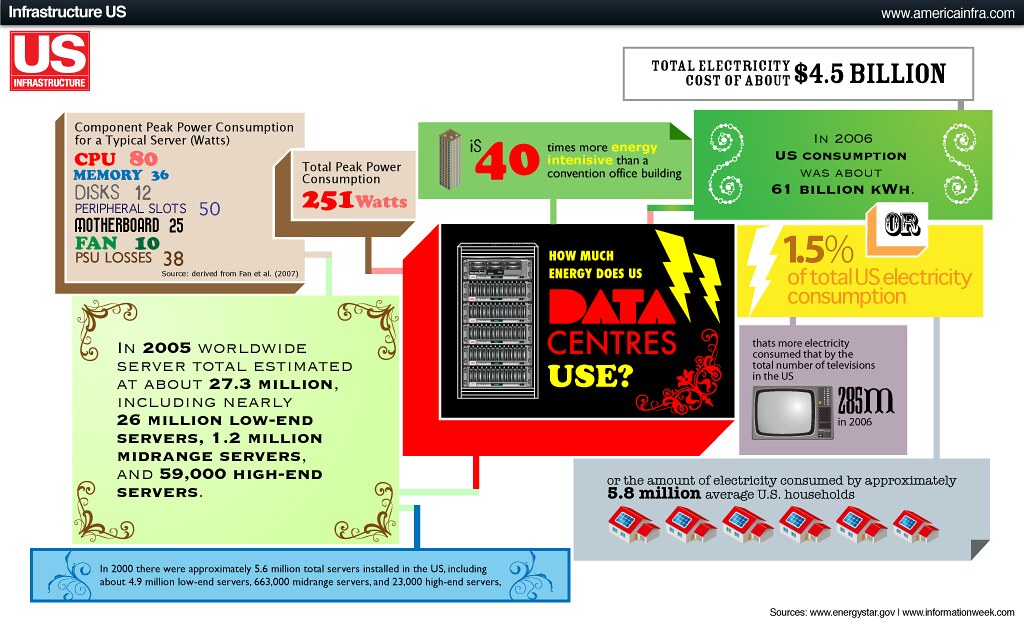
“Data Centres” by GDS Infographics is licensed under CC BY 2.0.

Artificial Intelligence (AI) is often hailed as a tool that can help us solve some of the world’s most pressing problems—from diagnosing diseases to predicting natural disasters. But as AI becomes more powerful, we’re also starting to ask some tough questions: What is the environmental cost of all this “intelligence”? Can AI be both the cause of and solution to climate change?

The Energy-Hungry Brain of AI

Training an AI model—especially large ones like ChatGPT or image generators—requires massive computing power, often running on thousands of powerful graphics processing units (GPUs) in data centres. These machines consume an enormous amount of electricity, often sourced from fossil fuels.

But energy is only part of the story. Did you know that training a single AI model can consume as much water as producing hundreds of smartphones? That’s because data centres use water to cool servers down, especially in hotter regions or during peak loads.

So while AI may live in the cloud, its environmental footprint is very much on the ground.

Could AI Be Reimagined Through a Circular Lens?

This is where the idea of a circular approach becomes exciting. Circular thinking means designing systems to reuse, recycle, and regenerate resources—in contrast to the current linear model of “take-make-dispose.”

What might this look like in the world of AI?

  • Smart energy routing: AI systems can be trained to self-monitor and switch to renewable energy sources when they’re available, or to process workloads during off-peak times when energy is cleaner and cheaper.

  • Model recycling: Instead of constantly building new models from scratch, researchers are exploring ways to retrain or fine-tune existing models, dramatically reducing the energy and resources needed.

  • Green data centres: Could we power AI with waste heat or recycled water? In some regions, innovative cooling systems using reclaimed water or even submersion cooling are helping to cut waste.

  • Carbon-aware computing: AI can be integrated with carbon tracking tools that flag when models are emitting more CO₂ than they should—essentially creating a kind of environmental conscience for algorithms.

A Tool That Teaches Us to Think Differently

Perhaps the most powerful role AI can play in the fight against climate change is psychological. It can help us model complex systems, simulate outcomes, and uncover hidden patterns in climate data—something humans struggle to do on their own.

For example:

  • AI is helping farmers predict droughts and optimise irrigation.

  • It’s being used to track deforestation from satellite images.

  • Even the fashion industry is using AI to reduce waste in supply chains.

But to truly “close the loop,” we must also rethink how we build, use, and discard AI systems. Just because an algorithm can do something doesn’t mean it should—especially if it costs us a planet in the process.

What We’re Doing at CBISS

At the Centre for Business Innovations and Sustainable Solutions (CBISS), we work with businesses and industries not only to integrate AI into their sustainability strategies, but also to rethink AI’s own environmental impact.

We’re helping organisations explore how to close the loop on AI consumption—by promoting circular thinking, designing low-impact digital systems, and adopting more responsible AI development and deployment practices.

If your business is exploring AI solutions and wants to ensure they’re part of a sustainable future, we’d love to talk.

👉 Connect with CBISS to learn more and collaborate here

Together, we can harness AI not just to solve climate change—but to do so responsibly.

Understanding Financial Crises: How Risks Spread Between Banks

When a financial crisis strikes, unexpected and severe events—referred to as “tail risks”—can rapidly spread from one bank to another, endangering the entire financial system. This spread of risk, known as “systemic risk,” occurs when issues in one bank trigger a chain reaction, leading to problems in other banks and potentially causing a widespread financial collapse. Our CBISS member, Associate Professor Sujoy Bhattacharya, delves into this critical topic, exploring how these risks develop and what can be done to prevent them.
 

Why Does This Happen?
Systemic risk is driven by two main things: how risky individual banks are and how connected they are to each other. For example, if one bank fails, it might owe money to other banks or be involved in shared investments, leading to a domino effect. Issues like liquidity problems (not having enough cash on hand), failing partners, or sudden market changes can all cause this risk to spill over to other banks.

To prevent this kind of contagion, it’s important to not only focus on individual banks but also to understand how they’re connected to each other. This helps identify potential threats that could bring down the entire system.

The Challenge of Predicting Risk

Predicting these risks is challenging because they don’t always follow a simple pattern. Traditional methods of risk assessment assume that changes are consistent and predictable, but in reality, small problems can quickly become big ones. This makes it hard to measure and manage these risks effectively.

To get a better handle on these risks, we need more flexible approaches that can adapt to changing conditions. However, with more flexibility comes the challenge of understanding exactly how different factors contribute to the overall risk. Advanced, data-driven models can help with this, offering clearer insights into how risks are connected.

How Technology Helps Manage Financial Risk

Recent research has introduced new ways to assess and manage systemic risk. For instance, some methods focus on identifying the most important factors that contribute to risk. This helps regulators and banks better understand which risks are the most dangerous and how they might spread.

Other approaches use network models to see how risk spreads between banks. These models can show which banks are the most vulnerable and how much risk they bring to the entire system. For example, during economic downturns like the COVID-19 pandemic, certain banks in Europe were found to be more at risk, especially in southern regions.

Technology like machine learning is also playing a big role in managing risk. For example, a method called LSTM (Long Short-Term Memory) can help predict how risks will spread within the financial system. This technology is particularly useful for analyzing complex financial data, like transactions over time.

In one study, researchers used LSTM to look at how risks from banks in the United States might affect banks in Japan. They found that during major events, such as the 2011 tsunami or the COVID-19 pandemic, risks were more likely to spread between these banks. Larger banks, with more assets, were especially at risk of both receiving and spreading these problems.

What Does This Mean for the Future?

Going forward, there’s an opportunity to improve these risk models even further by including more financial factors and using more advanced technology. As these tools get better, banks and regulators will be able to more accurately predict and manage risks, helping to prevent future financial crises.

In short, understanding and managing how risks spread between banks is crucial to keeping the financial system stable. By using advanced tools and focusing on how banks are connected, we can better protect our economy from the dangers of financial crises.

For a full research article please visit here

Can We Trust AI to Drive Sustainability Forward?

In today’s world, decision-makers in both government and business are under a lot of pressure to tackle big sustainability issues. AI, or Artificial Intelligence, promises to help by making it easier to handle large amounts of information, fill in data gaps, make better decisions faster, and automate time-consuming tasks. But despite these benefits, many people are still hesitant to rely on AI for making important decisions, even when AI has been shown to be more accurate than human judgment in some cases.

What Our Research Looked At

Our research, led by our CBISS member, Dr Ben Sebian, aimed to find out why decision-makers are wary of using AI, especially when it comes to sustainability. We used a mix of surveys and interviews to gather insights from people in government, businesses, and international organizations.

What We Found Out

  1. Need for Understanding and Trust: People don’t want to use AI tools they don’t understand. They need to know how these tools work to trust them.
  2. Involvement in Design: Decision-makers are more likely to use AI tools if they had a hand in creating them. Being part of the design process makes them more comfortable with the technology.
  3. Focus on Support Tasks: Many decision-makers prefer AI for automating less critical tasks, like gathering the right data. This frees up their time to focus on the more important aspects of their work.
  4. Direct Help with Decisions: There’s a strong interest in AI that can directly help make better decisions by providing relevant information and insights.

Working Together is Key

The study shows that to make real progress in sustainability, we need to involve various groups of people. A combined effort ensures that AI solutions are practical and accepted by everyone.

Using AI to help solve sustainability challenges is a big, complex task. But by building trust, involving decision-makers in the design process, and focusing AI on supportive tasks, we can make it easier for everyone to adopt this technology. Dr. Ben’s research sheds light on how we can overcome these hurdles and use AI to create a more sustainable future.

A Thought to Ponder:

As we move forward, the real question isn’t just about whether we can trust AI, but how we can shape and guide AI to become a reliable partner in our quest for sustainability. How do we balance the incredible potential of AI with our need for control and understanding? Can we afford to let go of some control to achieve greater good, or will our need for understanding and involvement always hold us back? The future of AI in sustainability depends not just on the technology itself, but on our willingness to adapt and collaborate with it.

Exploring Visual AI Humanoids: How They’re Changing Our World

"Artificial Intelligence & AI & Machine Learning" by mikemacmarketing is licensed under CC BY 2.0.
“Artificial Intelligence & AI & Machine Learning” by mikemacmarketing is licensed under CC BY 2.0.

In today’s high-tech world, mixing artificial intelligence (AI) with robots is creating some amazing new things. One of the coolest inventions is visual AI humanoids – robots that can see and think a bit like humans, but in their own robotic way. These robots are super smart and can do lots of things, which is great news for businesses and society.

Understanding Visual AI Humanoids

Visual AI humanoids are robots with clever AI brains that can see what’s around them. They have special cameras and smart computer programs that help them understand what they see. They’re good at recognising objects, understanding gestures, and talking to people.

Great Opportunities for Businesses

Visual AI humanoids, a fusion of artificial intelligence and robotics, are reshaping our society in remarkable ways, offering new possibilities for businesses and industries. These robots can assist customers in stores, improve manufacturing efficiency, refine advertising strategies, and enhance healthcare services.

In retail, they greet customers, offer assistance, and facilitate transactions, enhancing the overall shopping experience. Within manufacturing, they undertake tasks such as quality control and inventory management, collaborating with human employees to streamline operations. In advertising, they assess consumer preferences to deliver tailored messages, enhancing engagement. Within healthcare, they aid medical professionals by monitoring patients and providing assistance during procedures, leading to improved patient care.

Benefits for Everyone

Visual AI robots can help people who struggle with daily tasks due to disabilities. They make places more accessible for them, making life easier. These robots also help keep public areas safe by watching out for potential dangers and alerting authorities if needed.

Moreover, they’re great for teaching kids in a fun way. They can make learning enjoyable by playing and interacting with children, helping them learn better. Overall, these robots are helpful in various situations and can make a positive difference in people’s lives.

Facing Challenges

Despite the promising capabilities of visual AI humanoids, there are valid concerns that warrant attention. The potential invasion of privacy and the ethical implications of their actions raise significant questions about their widespread adoption. It is imperative to carefully assess the consequences of integrating these robots into various aspects of society, considering the potential risks and unintended consequences they may bring. Additionally, the dependence on visual AI humanoids could potentially lead to job displacement and exacerbate existing inequalities in society. Therefore, while acknowledging their potential benefits, it is essential to approach the deployment of visual AI humanoids with caution and foresight, ensuring that ethical and societal considerations are given due diligence.

Get Involved 

If you’re interested in discovering how emerging technology, data analytics, and progressive policies are shaping your industry, why not subscribe and join CBISS? You can connect with us on Twitter @mycbiss or LinkedIn . Our researchers at CBISS are conducting exciting work and are keen to share their insights with you. Join us to learn and collaborate!