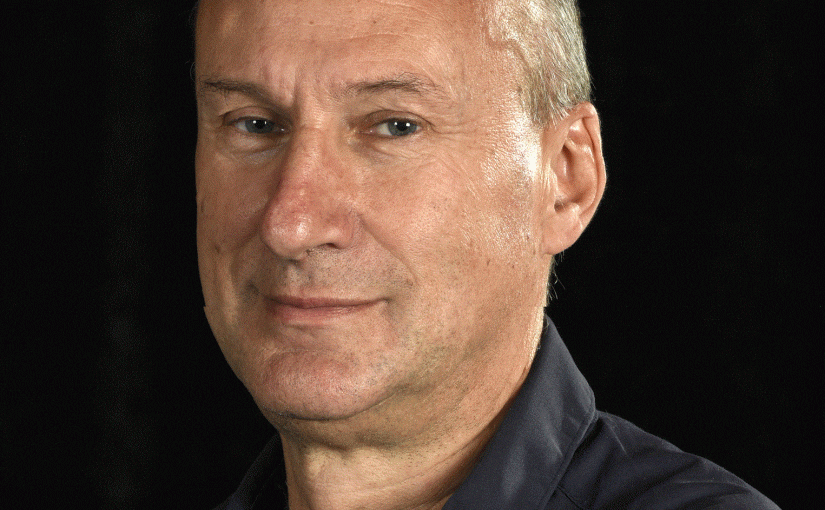
Meet the Visiting Professor – Dr Greg Richards

Travel is part of my DNA. I started travelling at a time when Brits still looked at you strangely if you had a suntan. As tourism became a mass phenomenon, I also took full advantage, travelling around Europe and kicking off my career as a research assistant on a PhD project with Chris Devereaux in the Algarve. I went on to work in the industry with my father, who had worked in airlines and hotels, and had set up a tourism research and marketing consultancy (TRAM), which I am still running today.

I was also lucky enough to start my academic career at a time when the EU was beginning to support Erasmus exchanges. That allowed me to meet lots of researchers from different countries and backgrounds, which eventually took me to the Netherlands to work at Tilburg University. In those days, teaching was still in Dutch, so of course I had to learn the language as well. That was my gateway into the culture, and an important basis for learning other languages later on. I set up the Association for Tourism and Leisure Education and Research (ATLAS), which generated yet more international contacts. ATLAS also brought me in touch with Napier, who has been a key member of the network for almost 20 years now. Napier staff were active participants in the ATLAS Cultural Tourism Research Project, and it was cultural tourism that took me to Spain in 2003, with a Marie Curie Post-Doc on festivals in Catalunya. I worked at the Interarts Foundation in Barcelona for a few years and also moved TRAM to Spain.

Coming back to the Netherlands a few years later, I had more contact with Napier, via events research. As my work developed around ‘eventful cities’, Edinburgh became a natural focus for collaboration. From Breda University, we sent groups of students (178 in 2012!) to Edinburgh, where they were ably hosted by Napier staff. The events’ connection with Napier continued through the ATLAS Events Special Interest Group, for which Napier organised a meeting in 2020. Unfortunately, this was during Covid, so I didn’t actually get to Edinburgh! But I did supervise David Jarman’s PhD thesis on Social network analysis and festival relationships together with Jane Ali-Knight. One thing I love about being linked to Napier is catching up with other old friends. These include fellow Visiting Professor Brian King on many research projects over the years, Angela Chu, who worked with Brian and I on cultural tourism and placemaking in the Greater Bay Area of China, and Afiya Holder, who I collaborated with at the UNWTO.

Written by: Professor Greg Richards
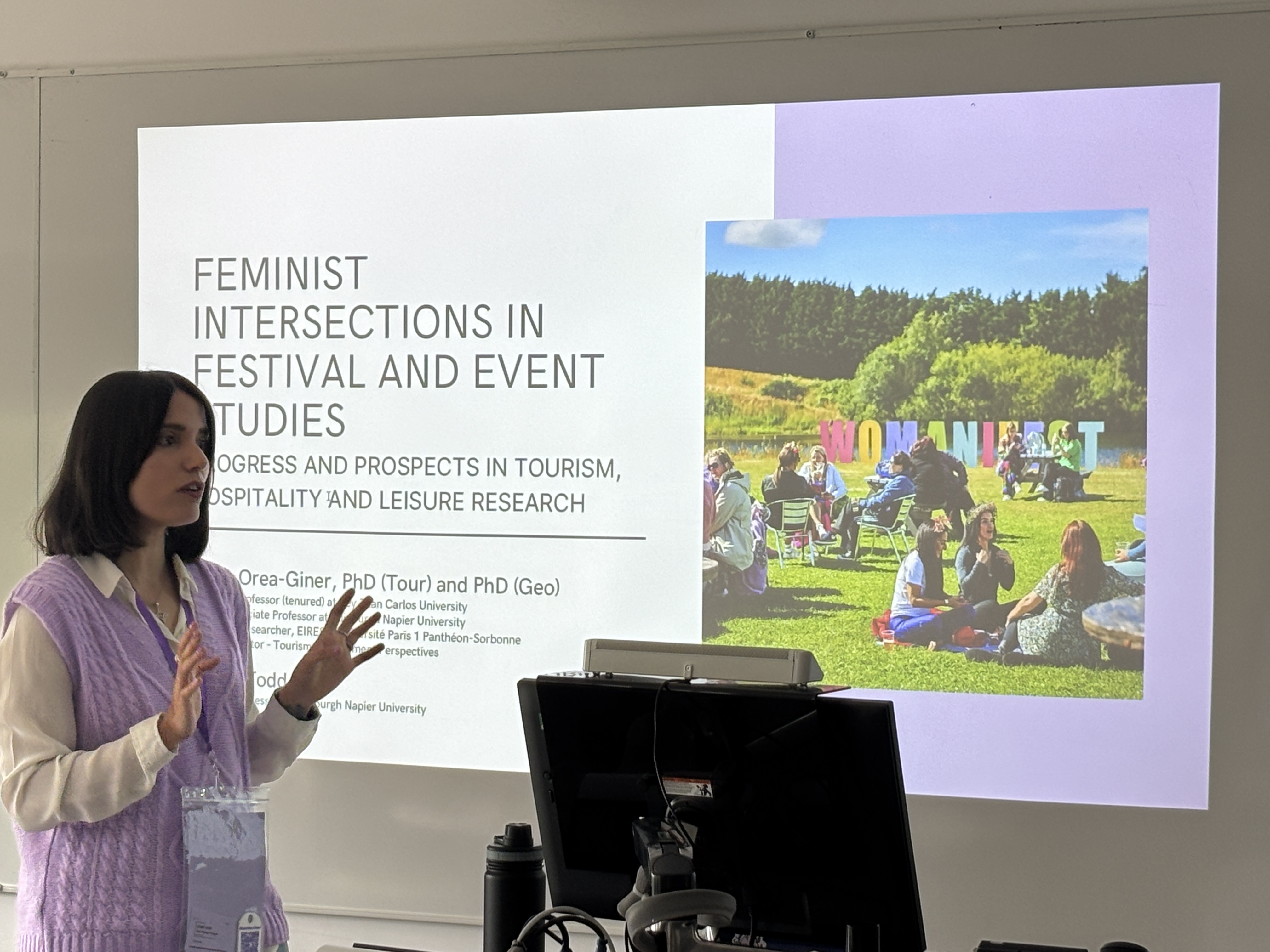
Meet the Visiting Professor – Dr Alicia Orea-Giner

In May 2022, I had the privilege of visiting Edinburgh Napier University. Over the course of a month, I immersed myself in the vibrant academic and professional community at the Tourism Research Centre (TRC), guided by Dr Louise Todd, with whom I established a strong collaborative connection.

One of the highlights of my visit was the CHME 2022 conference “The Human Touch in Hospitality”, hosted on Napier’s Craiglockhart campus from 24 to 27 May 2022. There, I engaged with leading scholars and practitioners, broadening my understanding of hospitality research and forging connections that would inform future collaborations with Louise and her team.

One unforgettable highlight was having Professor Donna Chambers, whose work I deeply admire, not only as the keynote speaker but also as an attendee in our session. At CHME 2022, I had the privilege of presenting the paper “Madrid LGTBIQ+ Pride in a Health Crisis Context” (co-authored with Gonzalo Recio-Moreno), which explored how the community navigated visibility, celebration, and resilience during the COVID-19 pandemic. Grounded in Social Exchange Theory, our study amplified the voices of activists, residents, and professionals at a moment when public expression was both urgent and vulnerable. Professor Donna Chambers’ presence was both inspiring and humbling, adding depth and significance to the entire experience. I am also grateful for the insightful feedback from Dr. Martin Robertson, whose thoughtful comments helped me critically reframe aspects of the research and encouraged a potential collaboration with the brilliant Faith Ong (paper available here).

Beyond the conference, the Tourism Research Centre kindly invited me to deliver research seminars on mental health in academia, early career challenges, and qualitative research methods.

Besides, thanks to this visit, I began a fruitful collaboration with Dr. Louise Todd on experience design, storytelling, and sustainable event management, an exchange that seeded our joint research. Building on our shared research interests and longstanding collaboration, Dr. Francesc Fusté-Forné, Dr. Louise Todd, Dr. Eerang Park, and I co-edited a Special Issue in Tourism Management Perspectives titled “Food Tourism Events for Social Sustainability.” This issue invites critical and interdisciplinary reflections on how food events operate as vehicles for social change, justice, and community well-being. By bringing together diverse methodological and geographical perspectives, the issue aims to advance theoretical and empirical understandings of how food tourism can contribute to sustainable futures, particularly in times of global uncertainty and socio-ecological transition.

Through our research collaboration (with Dr. Francesc Fusté-Forné) Food festivals, as we argue, are not simply about gastronomy, they are performative acts of place-making (paper available here). Through scenographic elements, walking practices, and digital tools, these events communicate layered histories and emotional geographies. By engaging with participants’ senses and memories, they construct an immersive experience that is both personal and collective. The “origin story” of a food festival, then, is often tied not just to regional identity or tradition, but to the narrative choices made by organizers: whose stories are told, whose tastes are elevated, and whose labour remains unseen.

Behind the scenes, we find complex negotiations: between stakeholders and residents, between authenticity and commodification, and between inclusion and silence. As we discovered in our collaborative walking research, these festivals are sites where identities are rehearsed and contested, not just consumed. This research trajectory also led us to collaborate with Dr. Mania Moysidou from Edinburgh Napier University, extending our exploration of food festivals to the Scottish context.

Building on this shared foundation, Dr Louise Todd and I are teaming up again to present at CHME 2025. It is a continuation of the intellectual trip that began with my first visit. It is an honour to return to Edinburgh Napier University as a Visiting Associate Professor, a position of great personal and professional significance. Edinburgh is without a doubt my favourite city in the world: it has always provided me with academic stimulation, creative inspiration and a sense of personal connection. Edinburgh Napier University welcomed me at a critical juncture in my academic career, providing not only room but also visibility, encouragement, and genuine engagement while I was still an early career researcher. That experience of being seen and heard is still at the heart of my approach to academic collaboration and mentorship.

Written by visiting Professor Alicia Orea-Giner, Associate Professor at Universidad Rey Juan Carlos.

Hosting a European colleague for a month: Alicia Orea-Giner’s eventful research stay at ENU

Alicia Orea-Giner – Associate Professor in Tourism at Rey Juan Carlos University in Madrid – has recently spent a month at Edinburgh Napier University after being invited by Dr Louise Todd. The two academics have related research topics that focus on Sustainable Tourism, Events and Technology. Alicia told us about her research and experiences at Edinburgh Napier University.

I believe that technology is not an isolated element or a tool that only facilitates processes but rather a part of the environment. In addition, that technology should be analysed from the perspective of technology itself, with its human connection and the way it creates, manages, and promotes relationships between human beings and between human beings and technology. I am currently working on analysing the stakeholders’ perceptions about events, among other topics, and decided to contact Edinburgh Napier University because of its research impact and the themes covered by the Tourism Research Centre.

During this research stay at Edinburgh Napier, I have participated in different activities and felt part of the staff. The first week I took part in the CHME conference. I had the opportunity to attend numerous presentations and meet researchers from different parts of the world at various stages of their careers. It was also an exciting experience as it was my first face-to-face conference since 2019.

The VM&E seminar took place in my second week at Edinburgh Napier. This symposium broadened my knowledge of visual and ethnographic methods with excellent keynotes and work presentations based on these methodologies. It was a highly fruitful meeting and discussion point.

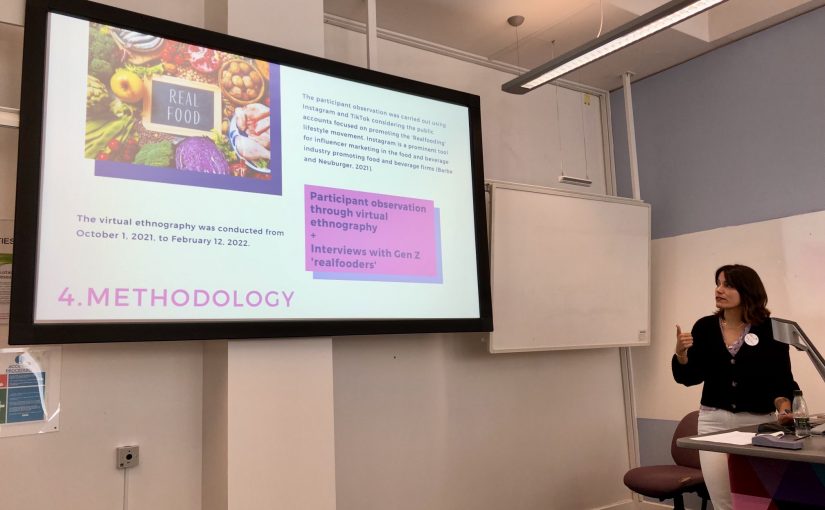
In the third week, as well as continuing to work on a future project with Dr Louise Todd, David Jarman and I were fortunate enough to present at the tourism group’s research seminars. My presentation focused on qualitative methodologies, specifically, virtual ethnography and big qualitative Data.

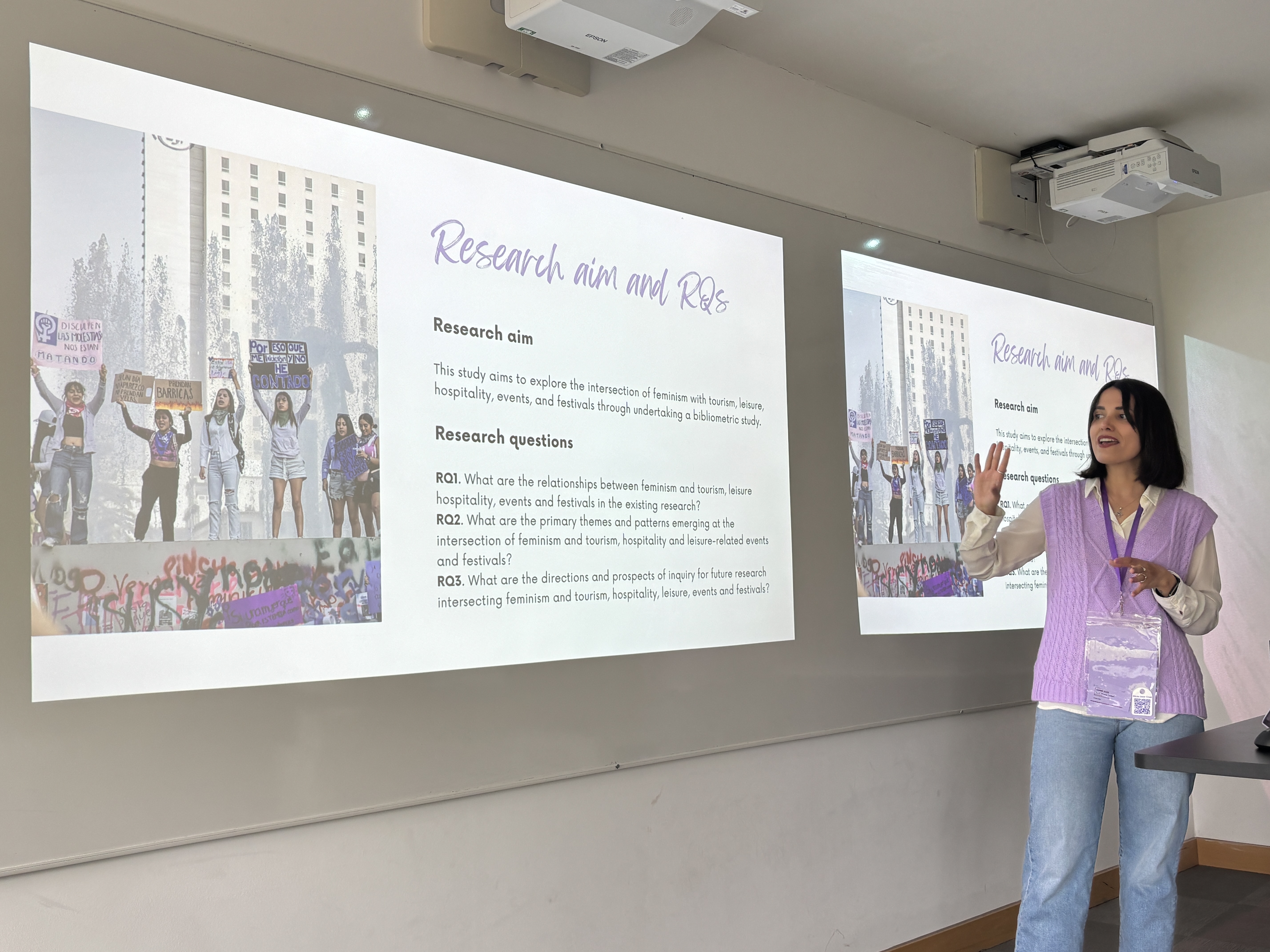
Finally, the last week I ran a seminar and workshop entitled Young in Academia and Mental Health: Publishing, Lecturing and Surviving. This talk explored what it is like being a young woman in academia: doing a PhD, publishing papers in top journals, lecturing (many hours a year), obtaining an academic post after finishing a PhD, and surviving, all at the same time.

During the weekends, I walked the streets of Edinburgh, enjoying what it has to offer, and I also visited the Highlands and other areas of Scotland. Activities such as these are important when your career revolves around tourism.

I want to thank the whole team for welcoming me and having me as part of the team. Being part of Edinburgh Napier for a few weeks has been a pleasure. I hope to be back in the future!

It was a great pleasure for the TRC to host such a respectable academic, and we hope to see Alicia again soon too.

Alicia Orea-Giner has a PhD in Tourism from Universidad de Alicante, Universidad de Málaga, Universidad de Sevilla and Universidad Rey Juan Carlos, Madrid; as well as a PhD in Geography from Université Paris 1 Panthéon-Sorbonne.

If you too are an academic and interested in a research stay at Edinburgh Napier University, please email a.leask@napier.ac.uk.