“Attending the Host City Conference 2025 in Glasgow was a valuable learning experience”

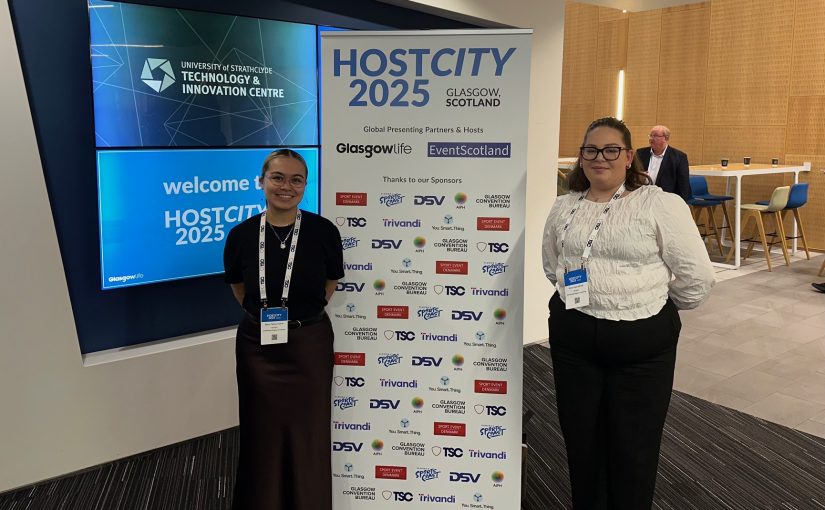
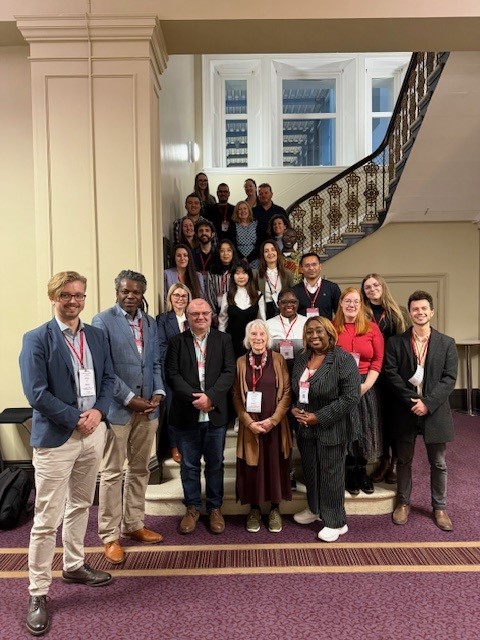
Attending the Host City Conference 2025 in Glasgow was a valuable learning experience as third-year Festival and Event students at Edinburgh Napier University. The conference provided us with the opportunity to apply what we had learned in our course to real-life examples and expand our professional network within the events sector.

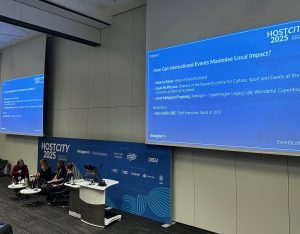
The Host City Conference brings together professionals from across the global events industry, including sporting, cultural, and major international events. Speakers represented backgrounds from host cities, event organisations and governing bodies. Through a series of panel discussions, the conference explored key themes such as event legacy, impact, and the future direction of the events industry. These discussions offered valuable insight into the complexity of event planning and delivery at a large scale.

An element and recurring topic that stood out to us was the evolving role of host cities within the event planning process. Rather than being solely venues for events, host cities are now increasingly involved in strategic planning and decision-making. A strong emphasis was placed on ensuring that host cities benefit meaningfully from events, particularly in terms of economic, social, and cultural legacy. This shift highlighted the importance of collaboration between organisers, stakeholders, and local communities.

Another important theme at the conference was the increasing focus on sustainable practices and inclusive planning, which closely reflected the topics we have studied at Napier. A few examples of panel discussions include sustainable catering practices and alternative sustainable public transport routes for event goers. This helped us connect our theoretical knowledge with real-world practice. Concepts from our lectures became much clearer when we heard practical examples from industry professionals. The conference also highlighted how the events landscape continues to evolve.

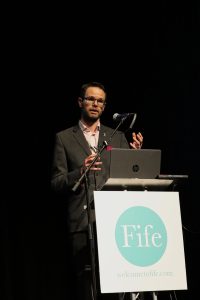
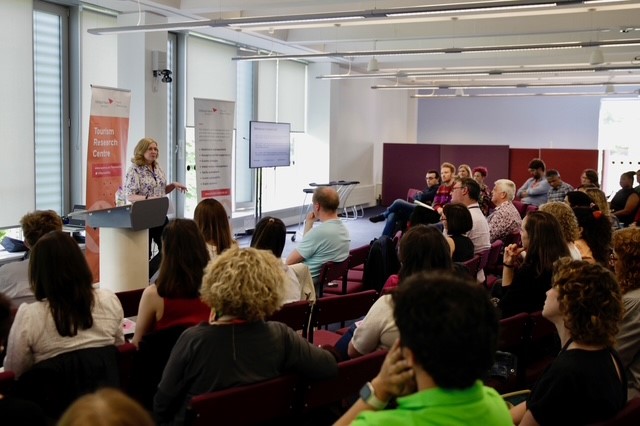
conference presentation

It was inspiring to be surrounded by professionals who are passionate and involved in delivering major, well-known events. The opportunity to speak with them during coffee and lunch breaks was particularly insightful, as it provided an informed perspective into the range of career paths available within the events industry. Hearing accomplished individuals share their career journeys and experiences made it clear that building strong professional relationships is one of the most important aspects of working in this sector.

Attending the conference has been an inspiring and motivating experience for us as students. It allowed us to think about our future careers in the events industry and how we can positively contribute to event planning and execution with sustainability, inclusivity and legacy.

We would like to extend our thanks to Ben Avison and Host City 2025 for the generous opportunity and to Dr David Jarman for encouraging students to attend such insightful events by presenting and facilitating experiences such as this.

For Host City 2025 Highlights watch this video: https://youtu.be/TG0Nay2U5SY

Written by Anna Kjærulff Dal & Maya Takagi-Vlahek, BA(Hons) International Festival and Event Management, third year students

Postgraduate Student Dissertations – Meet Ryan MSc International Festival & Event Management

An Investigation into Social Capital Generated or Impacted by Transformational Festivals

My dissertation studies the relationship between Social Capital (the ties between individuals and within social networks and the trustworthiness and reciprocity that is generated amongst the group as a result) and Transformational Festivals (typically week-long festivals in harsh or challenging environments with an emphasis on co-creation and ritualisation), expanding on previous festival and events literature and deploying a sociological lens within the field of Transformational Festivals. The Research utilised 11 semi-structured interviews over 4 time-zones and thematic analysis to identify and analyse recurring themes. Key findings were a high prevalence of Social Capital building at Transformational Festivals by most respondents, and a belief that powerful connections were built more rapidly than elsewhere. However, there was the understanding that these bonds were often temporal and not likely to expand beyond the festival perimeter, whereas occasionally bonds were not built at all, particularly when attending within a group with pre-defined social dynamics. Although these festivals are typically geared towards to collective experiences, the study found higher than expected levels of individual Social Capital. Finally, interviewees tended to agree that Transformational Festival attendance leads to societal advancement, yet the source of these improvements was disputed with more respondents believing them to be the result of transformational experiences and personal growth, rather than the building of community or social ties, again alluding to the individual dimension.

Read the full dissertation from Ryan Webster, MSc International Festival & Event Management

33rd Nordic Symposium on Tourism and Hospitality Research

From the 17th-19th September, I had the pleasure of attending the 33rd Nordic Symposium on Tourism and Hospitality, hosted by the Centre for Regional and Tourism Research (CRT) on the island of Bornholm, Denmark, under the theme “The transformative power and potential of tourism”.  The Nordic Society for Tourism and Hospitality Research (Northors), who organise the annual Nordic symposium, provides a platform for the development of hospitality and tourism in Nordic countries- Denmark, Sweden, Finland, Norway and Iceland, and surrounding areas in a European and global context.

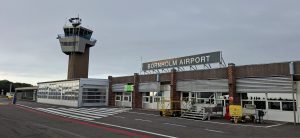
picture of airport

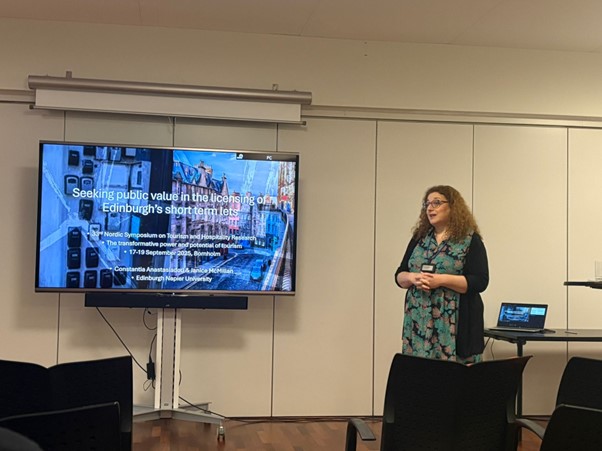
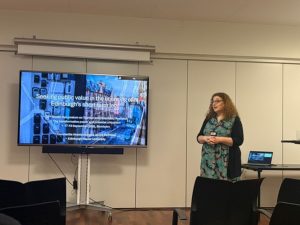
I presented findings from a public engagement activity on how making souvenirs at the destination can support visitor environmental education, with Drs. Xinguyu (Chloe) Tao and Sam Vettese from the School of Design at Edinburgh Napier University.  I presented a second paper titled seeking public value in the licensing of Edinburgh’s short term lets from my interdisciplinary work with Dr. Janice McMillan, Human Resource Management Group, at Edinburgh Napier University. Both papers were very well received and led to some very engaging conversations about what we truly value in tourism and its transformative potential for destinations, businesses, visitors and individuals. I was able to reconnect with researchers from Denmark and make new connections with participants from Finland, Norway and Scotland!

Professor giving presentation

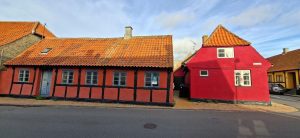
The island setting was significant for the conference – Anders Wiberg, director of destination Bornholm Forside – Destination Bornholm ApS – vi arbejder for turismen) discussed how the island has  positioned itself as a year-round destination for visitors, capitalising on nature, music and the island’s reputation as Denmark’s leading gastronomy destination.

The Green Solution House Hotel (GSH) which was the conference venue, is a global pioneer of sustainable hotel operations and design, named by The Guardian (UK) as one of the most sustainable hotels in Europe in 2021.

One of our evening activities involved setting on an island food tour, where we were lucky to sample locally produced drinks and participate in an interactive session with local entrepreneurs on the future of Bornholm as a food destination.

Additionally, Bornholm is a Maker’s Island. It has a vibrant arts and craft scene and is the first place in Europe and first island in the world to be designated World Craft Region, for producing unique handicrafts.

Edinburgh Napier Visiting Professor, Greg Richards, provided one of the keynote presentations entitled (Transforming Culture In the Curated Countryside) as part of the CROCUS project (www.crocus.europe.eu) around the transformation of tourism and experiences in rural areas through the transfer of gentrification processes usually associated with urban development.  Another highlight of the conference was the panel conversation “Enough with the rhetoric: How can we effectively work with tourism’s growth and challenges in the years to come?  considered how the work academics can inform broader discussions around the value of tourism and tourism policy priorities.

During the gala dinner, we enjoyed local folklore and storytelling accompanied by traditional Danish bagpipe music. The similarity to Scottish bagpipes was hard to miss and much of the island setting, pride in local food, heritage and cultural tradition, also served to remind us, how tourism can transform places and people if managed thoughtfully and with the local community at the driving seat.

Written by Professor Constantia Anastasiadou

Meet the Visiting Professor – Dr Greg Richards

Travel is part of my DNA. I started travelling at a time when Brits still looked at you strangely if you had a suntan. As tourism became a mass phenomenon, I also took full advantage, travelling around Europe and kicking off my career as a research assistant on a PhD project with Chris Devereaux in the Algarve. I went on to work in the industry with my father, who had worked in airlines and hotels, and had set up a tourism research and marketing consultancy (TRAM), which I am still running today.

I was also lucky enough to start my academic career at a time when the EU was beginning to support Erasmus exchanges. That allowed me to meet lots of researchers from different countries and backgrounds, which eventually took me to the Netherlands to work at Tilburg University. In those days, teaching was still in Dutch, so of course I had to learn the language as well. That was my gateway into the culture, and an important basis for learning other languages later on. I set up the Association for Tourism and Leisure Education and Research (ATLAS), which generated yet more international contacts. ATLAS also brought me in touch with Napier, who has been a key member of the network for almost 20 years now. Napier staff were active participants in the ATLAS Cultural Tourism Research Project, and it was cultural tourism that took me to Spain in 2003, with a Marie Curie Post-Doc on festivals in Catalunya. I worked at the Interarts Foundation in Barcelona for a few years and also moved TRAM to Spain.

Coming back to the Netherlands a few years later, I had more contact with Napier, via events research. As my work developed around ‘eventful cities’, Edinburgh became a natural focus for collaboration. From Breda University, we sent groups of students (178 in 2012!) to Edinburgh, where they were ably hosted by Napier staff. The events’ connection with Napier continued through the ATLAS Events Special Interest Group, for which Napier organised a meeting in 2020. Unfortunately, this was during Covid, so I didn’t actually get to Edinburgh! But I did supervise David Jarman’s PhD thesis on Social network analysis and festival relationships together with Jane Ali-Knight. One thing I love about being linked to Napier is catching up with other old friends. These include fellow Visiting Professor Brian King on many research projects over the years, Angela Chu, who worked with Brian and I on cultural tourism and placemaking in the Greater Bay Area of China, and Afiya Holder, who I collaborated with at the UNWTO.

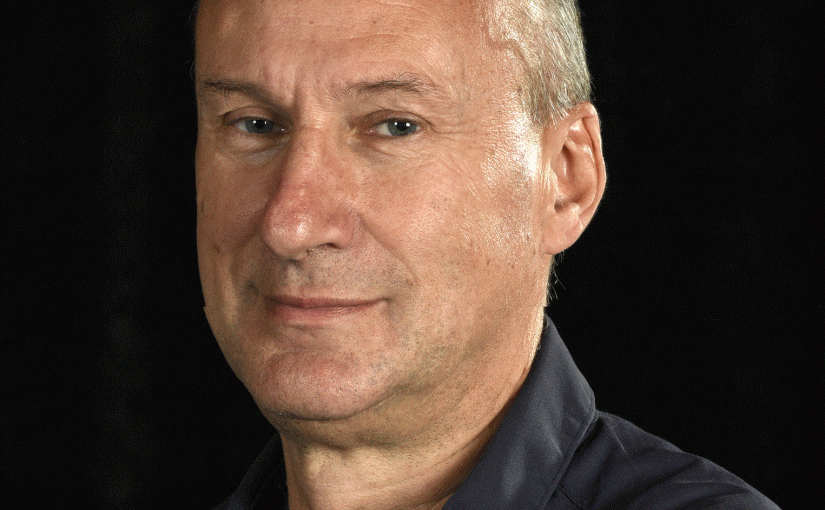
Written by: Professor Greg Richards

Postgraduate Student Dissertations – Meet Christy MSc Marketing with Festival and Event Management

Beyond the contract: Edinburgh festival fringe performers and their relationships with key stakeholders

“It becomes quite difficult to capture the Edinburgh Festival Fringe in a single sentence. With a programme that includes everything from theatre, comedy, and dance to music, cabaret, and spoken word, the options are seemingly endless. As the Edinburgh Fringe Society likes to illustrate, the festival plays host to the world’s greatest platform for creative freedom.

My dissertation examines the intricate relationships between performers and key stakeholders at the Edinburgh Festival Fringe, beyond the contract. With the use of a qualitative research approach, I was able to interview an array of key festival stakeholders to critically explore how these connections influence artists’ campaigns and the overall festival experience.

The findings uncovered the strategic use of power within the festival’s social structures and highlighted a collective objective among stakeholders to enhance the creative development for visiting companies and all artists venturing to the Edinburgh Fringe. The festival should be used as an inclusive development platform as opposed to a performance space for favored or polished productions. There is immense risk involved for all contributing stakeholders across the entire ecosystem in which the most damage falls on the financial. This paper takes a valuable look into the importance of stakeholder connections for the longevity of the festival. It also provides insights for both artists and key festival stakeholders on how to leverage these vital networks that inevitably elevates the performing arts and culture escapade.”

Read the full dissertation by Christy Tukalo, MSc Marketing with Festival and Event Management

Undergraduate Student Dissertations – Meet Natasha BA (Hons) International Business Management

Culture shocks encountered by Spanish expatriates in UK Hotels: Adapting to British working culture

“My dissertation explores the culture shocks experienced by Spanish expatriates working in UK hotels, focusing on how they adapt to British workplace culture. This research is fundamental as the hospitality industry heavily relies on international staff, particularly in the hotel industry. Understanding these cultural dynamics can improve employee integration, satisfaction, and retention. The findings offer practical insights for HR teams and hotel managers to create an inclusive and supportive work environment in a multicultural setting, in addition to providing Spanish expatriates planning to work or currently working in a British hotel with information regarding the cultural differences they may experience and how best to navigate them. Through qualitative interviews, key differences between British and Spanish working culture in the hotel industry were identified, including communication barriers, differences in management styles, and contrasting attitudes towards hierarchy and formality. This research also contributes to the understanding of different methods hotels may use to support Spanish expatriates in adjusting to their new work environment.”

Read the full dissertation by Natasha Anderson, BA (Hons) International Business Management

Undergraduate Student Dissertations – Meet Bethany BA (Hons) International Hospitality Management with Festivals and Events

Why not Scotland? An investigation of music festival attendance motivations and barriers amongst Scottish residents.

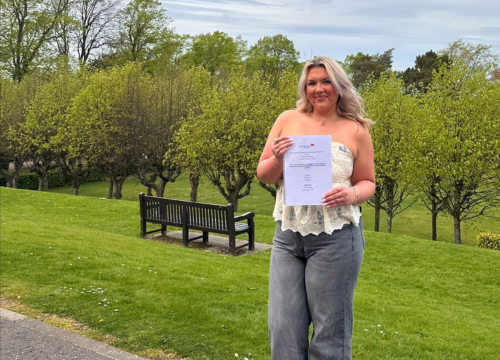
“Scotland possesses a proud musical heritage, yet many residents continually travel south to attend major music festivals in England. My dissertation explores the motivations behind this trend and the barriers discouraging festival attendance in Scotland. Using a quantitative survey of 90 Scottish residents, I identified that strong artist line-ups, immersive atmospheres, and social experiences are key drivers of attendance. Conversely, limited line-ups, poor weather, and lack of camping options were significant deterrents for Scottish festivals. Despite these challenges, there is clear enthusiasm regarding Scottish festivals if such improvements are made. My research offers practical recommendations for organisers such as enhancing infrastructure alongside creating deeper immersive experiences, to help Scotland compete more effectively in the UK’s vibrant festival landscape. This work aims to support the sustainable growth of Scotland’s music festival industry through a greater understanding of audience needs.”

Read the full dissertation by Bethany Tait, BA (Hons) International Hospitality Management with Festivals and Events

Undergraduate Student Dissertations – Meet Claudio, BA (Hons) International Tourism Managment

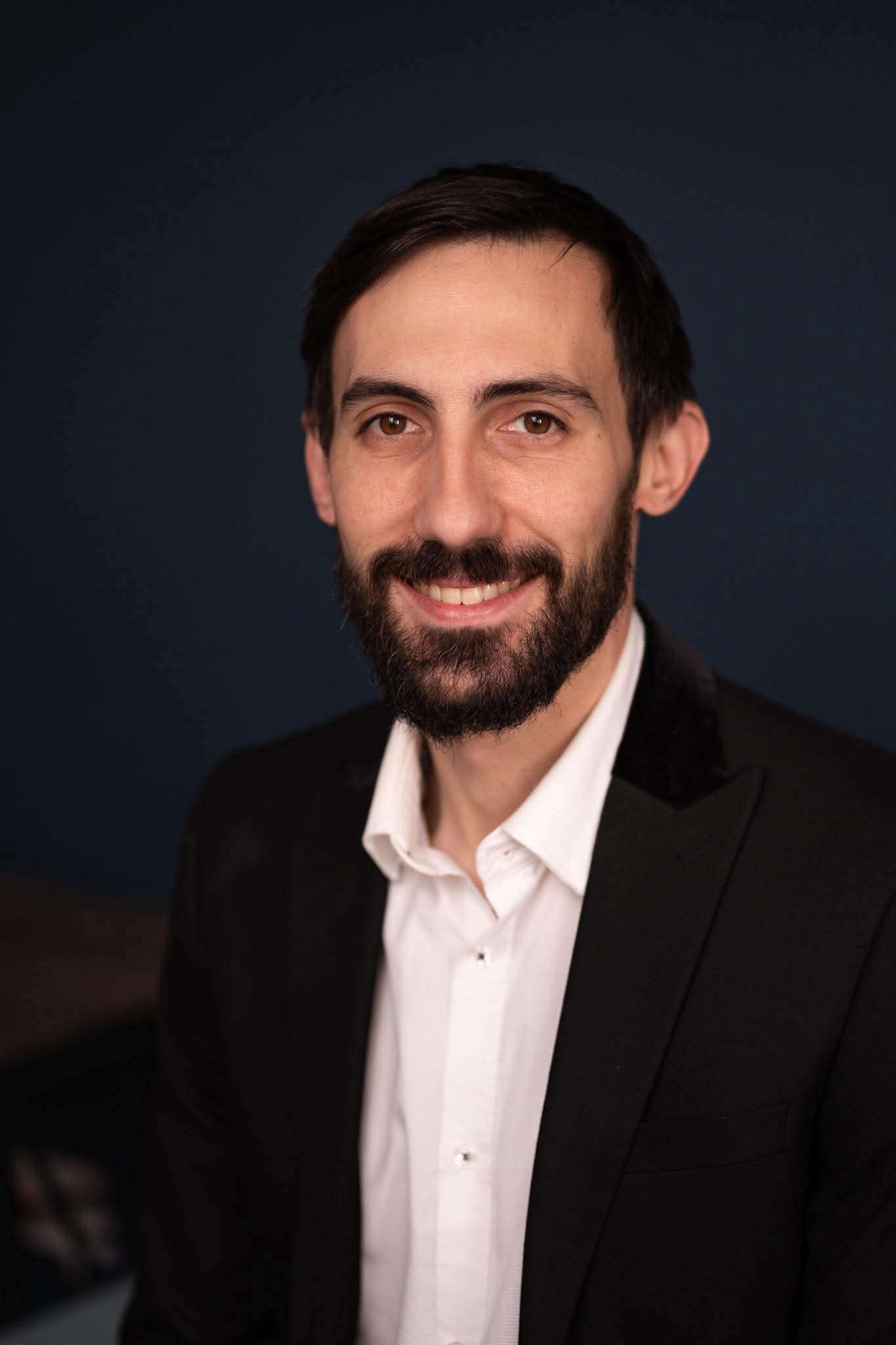
In this new section, some of our brilliant UG students who have excelled at their dissertations tell us more about their research. Today, we have Claudio Pigozzo,  whose dissertation is “Challenging Traditional Tourist Typologies through the Digital Nomad Lens”, which was supervised by Dr. Alexandra Witte.

Digital nomadism is reshaping how we think about travel. My dissertation explored how digital nomads, people who combine remote work with long-term travel, fit into traditional tourist typologies.

Through in-depth interviews with 13 nomads from around the world, five different types of digital nomads emerged: Flash Nomads, Cultural Immersive Nomads, Seasonal Nomads, Settled Sojourners, and Rooted Roamers. These categories reflect different motivations, lifestyles, concepts of “home”, and levels of mobility, yet all share a reliance on digital infrastructure, cost of living awareness and adaptive coping strategies. This research highlights how digital nomads blur the lines between being a tourist and a resident, work and leisure, and permanence and transience. It also offers practical insights for destinations looking to attract and support this growing group, co-working hubs, flexible visa policies, and inclusive communities.

As digital nomadism becomes more mainstream, tourism theory needs to catch up. This is just the beginning of understanding this mobile, connected lifestyle.

Read the full dissertation by Claudio Pigozzo, BA (Hons) International Tourism Management.


Celebrating 3 Years of the Tourism Research Centre at Edinburgh Napier University

This month marks a significant milestone for the Tourism Research Centre (TRC) at Edinburgh Napier University as it celebrates its third anniversary. Since its launch in 2021, the Centre has established itself as a hub of impactful and collaborative research in the field of tourism and has not only met but exceeded many of its Key Performance Indicators (KPIs), delivering on its ambitious vision to be a leading voice in tourism research locally, nationally, and globally.

The Centre was conceived with a clear mission: to produce and disseminate high-quality, impactful research that supports sustainable, inclusive, and resilient tourism development. True to this mission, the TRC has led and contributed to numerous interdisciplinary research initiatives focused on, for example, sustainable destination development, community engagement and placemaking, visual methods research and economic impact in the tourism sector. The TRC has also played a vital role in supporting postgraduate research, mentoring early-career researchers, and providing students with opportunities to engage in applied research projects.

A key strength of the Centre has been its commitment to working collaboratively. Over the past three years, the TRC has extended and built strong partnerships with a range of external organisations including VisitScotland, the British Council, UNESCO and Edinburgh Tourism Action Group. These collaborations have enabled the Centre to co-create research that directly informs policy and practice, contributing to a more sustainable and resilient tourism industry.

The TRC has also fostered vibrant relationships with researchers from across the UK and internationally. Drawing on the expertise of Edinburgh Napier colleagues, the Centre has brought together a multi-disciplinary team of academics and research students from, for example, the School of Arts & Creative Industries and the School of Applied Sciences. We also work closely with our Visiting Academics from around the world, whose insights help to expand our global reach and academic exchange. These partnerships have enriched the Centre’s research output and extended its influence across academic and professional communities.

Among the Centre’s notable achievements are a series of high-impact publications, successful funding applications, commercial projects and the delivery of knowledge exchange events and workshops that have brought together academics, industry leaders, alumni, research students and policymakers. This year’s annual Symposium on Innovative Practice in Business Events will be held on 24th June. Our LinkedIn page is an active platform for engagement and dissemination, featuring a fortnightly blog written by our researchers, research students, alumni, and visiting academics — sharing knowledge, best practices, and innovative ideas with the wider tourism community. Please follow the for all our news.

Looking ahead, the TRC remains focused on its core themes of sustainable tourism destinations; cultural heritage management; wellbeing and health tourism; critical studies in tourism; and sustainable festival and event experiences. The Centre is well positioned to continue its leadership in tourism research, particularly as the industry navigates the complex challenges of climate change, evolving consumer behaviour, and technological disruption.

This milestone year is also a moment of transition, as I will retire at the end of August 2025. I was delighted to be appointed as Lead in 2022 and have thoroughly enjoyed shaping the Centre’s vision and success, working with colleagues, businesses and organisations to build a centre of excellence in tourism research. I leave the TRC in the very capable hands of my colleagues – more on this in a blog towards the end of the summer.

As we celebrate this three-year milestone, we extend our thanks to all the collaborators, supporters, and researchers who have contributed to the Centre’s success. The journey so far has laid a strong foundation for continued interdisciplinary growth and impact, and we look forward to what the future holds.

Anna leask headshot

Written by Professor Anna Leask, Tourism Research Centre Lead

Meet the Visiting Researcher – Dr. Ivana Rihova

Welcome to “Meet the Visiting Academic”, a section dedicated to introducing to you our Visiting Academics, Professors and Researchers, where you will have the opportunity to get to know them and find out how they engage with Edinburgh Napier University, and specifically with the Tourism Research Centre (TRC).

Today, Dr Ivana Rihova, Lecturer at the Universidad Europea de Valencia, Spain, tells us about how her journey has always brought her back to ENU, first as a student, then as research assistant, becoming a full-time lecturer and now as TRC Visiting Researcher!

_________________________________________________________

“My journey with Edinburgh Napier University (ENU) began in 2006 as a postgraduate student pursuing an MSc in International Tourism Management. During my studies, I met Prof Anna Leask, who would later become my dissertation supervisor, and Prof Paul Baron, who contacted me a year after I graduated, asking if I would be interested in applying for a research assistant role at Napier. I went for it and was successful, marking the start of an academic career that took me from Edinburgh to Bournemouth, where I started my PhD in 2010, through Anglia Ruskin University in Cambridge, and then back to Edinburgh (via Glasgow), where I began a full-time lectureship at ENU in 2014.

Although my background is in tourism, my research and my teaching focussed on festival and event management and service marketing. At Napier, I visited and taught at a number of institutions across Europe and Asia, and developed a wide network of collaborations and research ties with colleagues from Macau, Poland, Austria, and the UK. ENU provided me with numerous opportunities for professional grow in both teaching and research. I was very happy to return to the university after two periods of maternity leave, always finding a supportive team of colleagues who over the years became good friends.

In 2022, I made the difficult decision to leave Edinburgh for a new life in Spain with my Valencian husband. Language barrier aside (I had started learning Spanish only a couple of years previously), I found it quite difficult to integrate into the new culture. I dedicated that period to think and write, and to look for new partnerships and projects. I was unable to work initially as I awaited the homologation of my UK doctorate by a Spanish university. When in July 2023 I was given the opportunity to re-join ENU as Associate Researcher at the Tourism Research Centre, I very happily took up the offer, starting a new collaboration with my Napier ex-colleagues Dr Sarah Snell, and Prof Constantina (Dina) Anastasiadou and her team.

Valencia is a fantastic place to be, and I am finally settling into my new home. I have also secured a lecturer position at Universidad Europea de Valencia, and while adapting to the new institutional and cultural context has been challenging, it is also very exciting. My Associate Researcher at ENU allows me to maintain strong connection with the university, and it has been a great excuse to escape the Spanish heat a couple of times a year to work on research projects and to visit friends.”