Behind Bars: Memory, Justice, and the Future of Penal Heritage Symposium

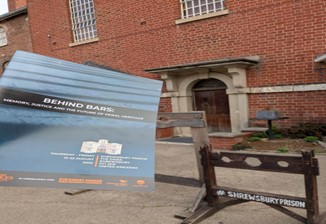
The “Behind Bars: Memory, Justice, and the Future of Penal Heritage” symposium took place on 21–22 August 2025 at Shrewsbury Prison. The event, led by Dr Brianna Wyatt (Oxford Brookes), Dr Rachael Ironside (RGU), and Professor Craig Wight (ENU) and hosted by Joel Campbell of the Cove Group drew an international audience of academics, practitioners, and museum professionals. The symposium represented a unique forum for cross-disciplinary debate on how penal heritage intersects with memory, justice, ethics, and dark tourism.

The setting itself was significant and helped to shape the discussion. Shrewsbury Prison, known as “The Dana,” first opened in 1793. It was rebuilt in the Victorian era before finally closing in 2013. Over its long history, it housed debtors, witnessed public and private executions, and served as a Category B men’s prison. It now operates as a heritage attraction, managed by the Cove Group. It serves as an events venue, where tours, education programmes, and commercial uses highlight the tensions between punishment, memory, and reuse. Presenting and debating inside a decommissioned prison served as a reminder to delegates that penal heritage is not abstract. Rather, it is embodied, emotional, and tied in with the stories that such institutions have often rendered invisible.

Keynote contributions by Dr Justin Piché (University of Ottawa) and Bev Baker (National Justice Museum) anchored the symposium. Justin Piché interrogated the ways prison narratives are constructed and consumed, while Bev Baker offered a critically-informed curatorial perspective on the balance between commemoration and commodification. Delegates repeatedly pointed to the value of such talks, and as one put it, “it was great to see some really excellent, critically-informed curatorial practice.”
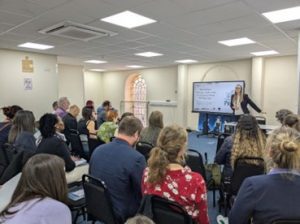
symposium

The programme featured parallel panels on themes ranging from penal heritage in the experience economy to the ethics of repurposing decommissioned prisons, and from punishment exhibitions to prison narratives on screen. The mix of papers gave participants space to consider both theoretical insights and practical challenges, with one attendee noting, “the most valuable takeaway is the recognition that narratives—whose voices are included, how stories are told, and for whom, are central to every form of prison reuse.”

Delegates valued the opportunity to network and collaborate, and they welcomed the diversity of perspectives. Others emphasised the personal inspiration gained, noting that even without presenting they left inspired and with new points of contact.

Feedback highlighted the event’s influence on future practice. For museum professionals, it sharpened their awareness of the ethics of penal heritage interpretation, and the risks of reducing complex histories to tourism products. For academics, it reinforced the need to bridge disciplinary divides, connect with practitioners, and confront tensions between profit, ethics, and participation.

Looking ahead, the symposium is expected to generate an edited volume of contributions, and to provide the foundation for a collaborative funding bid, ensuring that the conversations sparked in Shrewsbury carry forward.

Delegates left with stronger networks and sharper insights, but with a collective recognition: whilst penal heritage will always be about buildings and history, it is also about memory, justice, silences, and how we choose to remember, interpret, and engage with difficult pasts.

Written by Professor Craig Wright 
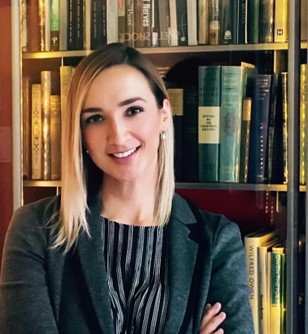
Where are they now? ENU alumnus, Brianna Wyatt, gives an overview of her career so far

Dark tourism is an increasingly popular subject nowadays. It implies the idea of visiting tourist attractions that are associated with death and suffering.

Edinburgh Napier alumnus, Brianna Wyatt has been researching dark tourism for many years, and is now a senior lecturer at Oxford Brookes University. She gave us an overview of her career and an update on where she is now.

Originally from California, I moved to Edinburgh in 2014 to undertake the MSc programme in Heritage and Cultural Tourism Management. After graduating, I was awarded Edinburgh Napier University’s 50th Anniversary Scholarship to undertake a PhD study in tourism.

Although initially I sought to explore ‘dark’ World Heritage Sites, which landed me in an internship at UNESCO World Heritage Centre in Paris (2015), I completed my PhD in 2019 focusing on the influences of interpretation at lighter dark visitor attractions. This effort was supported by my part-time work as a guest services staff member at The Real Mary King’s Close in Edinburgh and a Duty Manager for Edinburgh Dungeons, and later London Dungeons.

Supported by my previous awards (MA Humanities-History, California State University of Dominguez Hills, 2015; MA Museum Studies, Oklahoma University, 2012), and a PGC in Business Research Methods from Edinburgh Napier University (2017), I quickly became employed after graduation (2019) with Bath Spa University, as a Senior Lecturer in tourism at their sister campus in London.

I later made a transition to Oxford Brookes University, where I am now a Senior Lecturer in tourism and events and the PG Subject Coordinator for the Hospitality, Tourism and Events programmes. I am also an active academic with a research interest in interpretation design of dark tourism experiences.

In addition, I have an interest in experience design for heritage tourism, as well as events and festivals. I have acted as a consultant for a Horrible Histories workshop, providing insight into interpretation of dark histories, and have taken up two separate External Examiner posts for tourism and events programmes at two universities in Scotland.

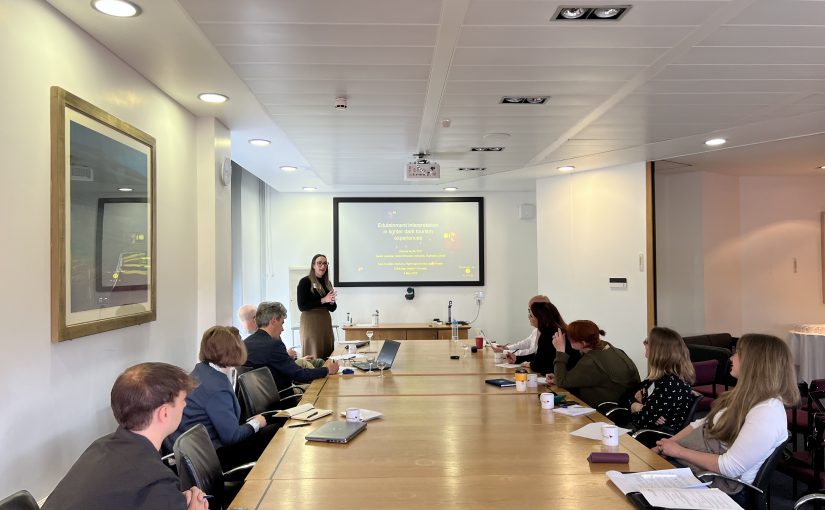
Most recently, I have been exploring defunct penal institutions, on a global scale, and their conversion into places of accommodation, which will be shown in forthcoming publications. I had the opportunity to showcase my research relating to edutainment interpretation within lighter dark tourism at Edinburgh Napier University’s dark tourism symposium on 5 May 2022.

Congratulations, Brianna, on all your achievements, we couldn’t be more proud!

If you too have an area of interest you would like to research whilst undertaking a PhD with us, please email Tourism Research Centre Lead, Prof. Anna Leask.

Dark tourism symposium attracts international interest, and the major authors in the discipline

by Dr Craig Wight

The Tourism Department (The Business School) and the School of Arts and Creative Industries hosted the first ever blended contact research symposium on dark tourism on Thursday 5th May.

Whilst the symposium steering group had modest ambitions in terms of the scale of the event, we we delighted to be joined by a host of delegates from nearby Glasgow, Edinburgh and Aberdeen, but also a number of contributors that travelled some distance to be at the event, including Brianna Wyatt, Lindsay Steenberg and Simon McFadden from Oxford Brookes university, Tony Seaton, one of the two official ‘godfathers’ of dark tourism (along with John Lennon who presented), from Luton, and Philip Stone and Hannah Stewart from UCLAN. Jeff Podoshen from Franklin and Marshall College, Lancaster Pennsylvania, USA even made the trip across the pond to be with us. The event attracted an audience of some 60 remote delegates from as far afield as Lithuania, the USA and Canada.

It was particularly pleasing that such a diverse range of researchers contributed to the event, from those considered to be the pioneers of dark tourism to its current leading authors, and some early career researchers and PhD students who are taking up the challenge of producing the next row of books in the library that focus on some of the contemporary research contexts that were explored, including tours, exhibitions, digitality and the the role of film and the big screen in dark tourism.

The event received some really positive feedback, and facilitated some new research collaborations on areas such as ‘drowned villages’ and supernatural tours.

Abstracts and recordings of the proceedings are available here https://www.napier.ac.uk/research-and-innovation/research-search/events/dark-tourism-research-symposium-memory-pilgrimage-and-the-digital-realm