Getting ready for Web3: Edinburgh Tourism industry workshops a TravelTech future

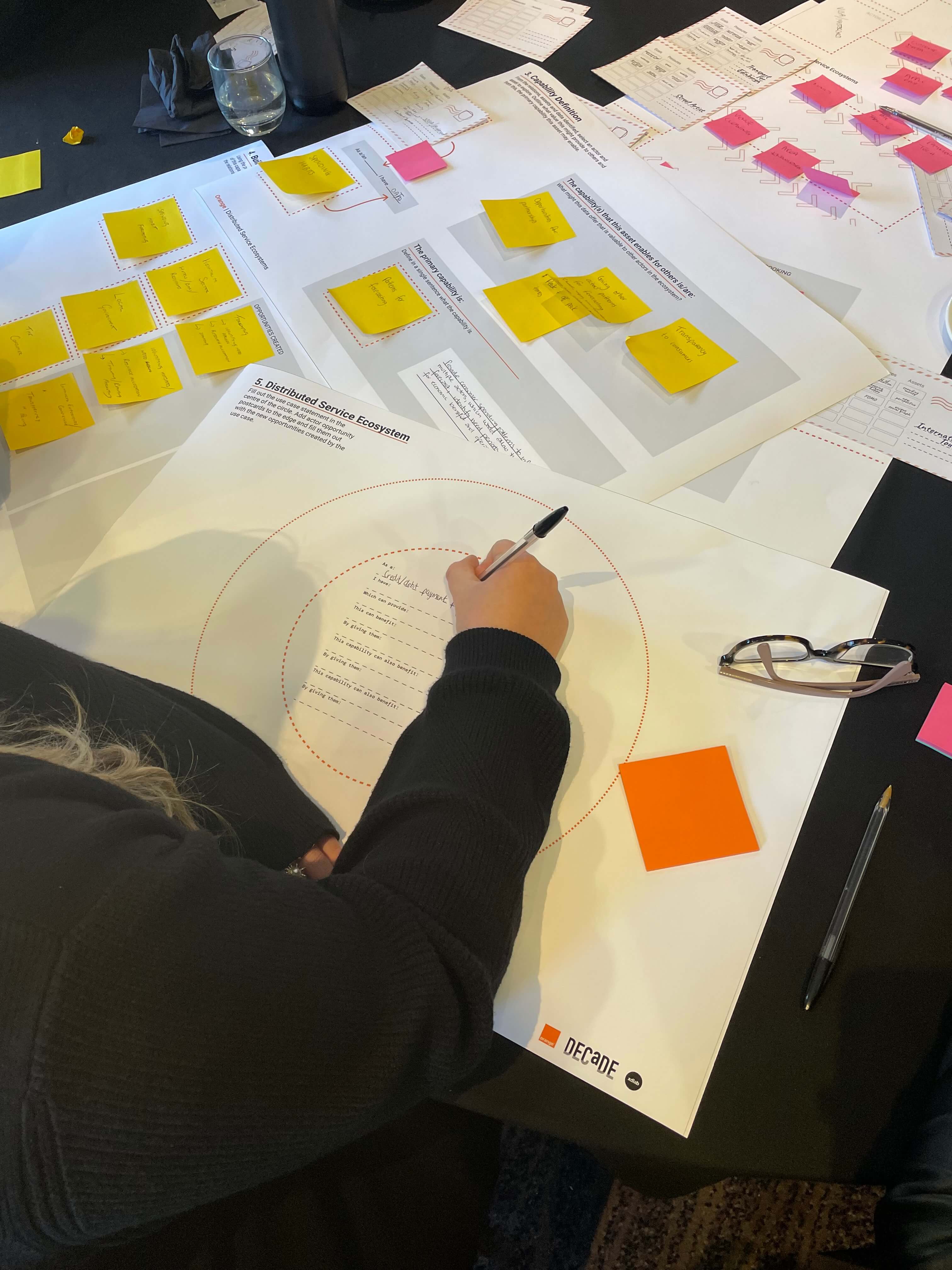
Last week Dr. Afiya Holder joined key tourism and hospitality professionals in a workshop hosted by Traveltech for Scotland,  Orange xdLab and the University of Edinburgh’s ‘DeCaDE’ Centre. The session aimed to explore how Edinburgh’s tourism stakeholders can leverage digital transformation and the possibilities of Web3 to unlock new opportunities and enhance transactional experiences for tourists and suppliers.

The tourism sector is constantly evolving with one of the most recent advancements emerging at the intersection of travel technology and Web3. This reality has prompted the event hosts to send a call out for Edinburgh’s experts to share insights on future possibilities for the region. However, one key question sparking the curiosity of all attendees was: What is Web3 and how is it used or could be used among the different stakeholders?  Some stakeholder opinions revealed: 

“I am just here to poke my nose in as I am really curious about it all….” 

“I am curious and a bit sick, to be honest, people fear for their jobs, people fear that we may lose the human touch in hospitality… but I challenged myself to come after attending Joshua Ryan-Saha’s [Traveltech for Scotland] webinar introducing this phenomenon”. 

Unanimously, attendees admitted being in a conundrum battling between, ignorance, curiosity, fear and eagerness for digital preparedness and readiness. Nonetheless, the collective curiosity and desire to position Edinburgh’s tourism as a prime contender for innovative practice created the right recipe to combine talents, knowledge and expertise to leverage digital transformations occurring in Traveltech and Web3.

Dr Holder mentioned some benefits during the discussions: “Digital transformation in tourism is inevitable and leading the trail has significant benefits for tourists, operators and residents alike. For example, megaevents such as the Olympics are already exploring Web 3 e-ticketing solutions that have positive implications for secure identity management, tokenisation and sustainable waste management.” 

Web3 in a Nutshell

Often referred to as the “Decentralised Web”, Web 3 encompasses blockchain technology, artificial intelligence, privacy and security in an equitable and fair online environment that is more user-centric. To date, we have seen Traveltech and Web3 revolutionize seamlessly how we search, compare and book multiple travel transactions, for example, utilising one platform to book hotels, airfare, car rentals, and tours encouraging more transparency in pricing and available options. Other examples include the use of AI, virtual reality (VR), and augmented reality (AR) to enhance user experience with capabilities for customisation and real-time immersion.

Getting Web3 Ready

In true innovative style, the hosts moderated a creative, design-thinking, roundtable-style workshop. This approach encouraged a cross-section of Edinburgh’s tourism, hospitality and event experts to explore creative solutions and potential use value for Web 3. The top 3 reflections from the discussions include:

  • The importance of understanding the tourism ecosystem, its Stakeholders, Pressures and Collective Goals to exist, thrive and compete in an evolving Web 3 landscape.
  • Delving deeper into Prioritizing Relationships and how decentralised possibilities can benefit each stakeholder based on their assets and capabilities.
  • Leveraging key Capabilities of primary and secondary stakeholders for enhanced tourist experience, increased economic benefit and consideration for sustainable and efficient operations.

Towards an Innovative Future

The day of discussions ended on a positive and hopeful note. The partnerships and connections cultivated in the room were essential. Tourism academics left with a stronger appetite for further collaborative research explorations. Edinburgh’s tourism industry practitioners expressed satisfaction, and greater awareness and felt more prepared to embrace and leverage the future possibilities of Web 3 and Traveltech in a decentralised tourism ecosystem.

The Tourism Research Centre has tourism scholars who specialise in research on Digital Transformations in Tourism, for more insights on the topic or collaborative opportunities see link for more information.
Introducing Lynn Minnaert, our new Head of Subject

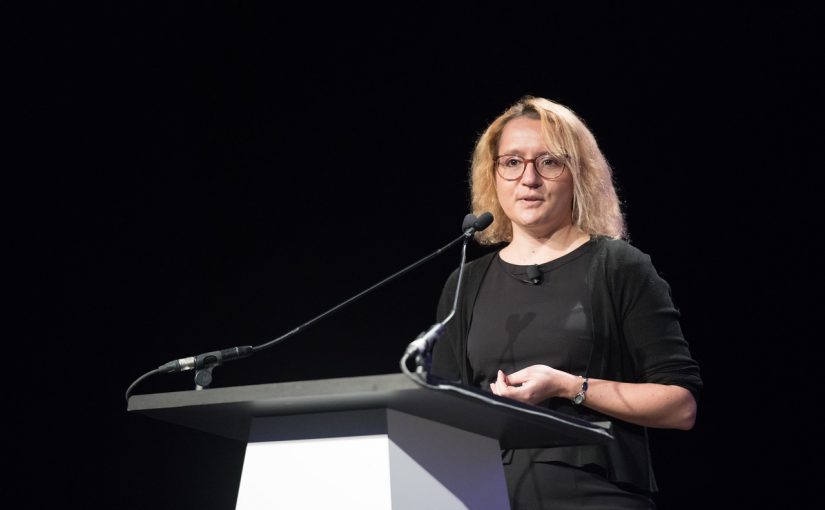
We sat down for a chat with Professor Lynn Minnaert, who has recently joined Edinburgh Napier University as the Head of Subject for Tourism and Languages. In this post, we find out more about her background and aspirations.

Can you tell us a bit about your background?

I am originally from Belgium. I have worked in tourism education for the past 20 years, most recently as the Academic Chair at the Tisch Center of Hospitality at New York University, and before that at the University of Surrey and the University of Westminster. I have also worked on projects in range of other countries, including Kazakhstan, Finland, Sweden, Dominica and Brazil.

What is your area of research interest? 

My research interest and passion is social inclusion in tourism: I have worked on studies about social tourism for low-income groups, family tourism, event legacies and DEI in the event sector.

Why did you decide to join Edinburgh Napier University?

I was excited about joining ENU because of its strong reputation in tourism, hospitality, events and intercultural communication. The teaching team is creative and dynamic, and has strong industry networks, which benefit students in and outside of the classroom. We have subject specialists who are world-renowned in their fields, and are one of the oldest providers of tourism, hospitality and event education in the nation. Also, Edinburgh is an amazing location to learn about and research these topics!

What are your aspirations for the subject group?

My aspirations are to strengthen our position and reputation as a centre for teaching and research excellence, and as a hub for industry innovation. The objective is that by delivering student-centred, applied and rigorous programmes, as well as producing cutting-edge research, our students, alumni and staff will play leading roles in their industries and communities, as a force for good.

Thank you, Lynn, for your time taking this interview. We are delighted to have you in the team and look forward to working together.

Where are they now? ENU alumnus, Brianna Wyatt, gives an overview of her career so far

Dark tourism is an increasingly popular subject nowadays. It implies the idea of visiting tourist attractions that are associated with death and suffering.

Edinburgh Napier alumnus, Brianna Wyatt has been researching dark tourism for many years, and is now a senior lecturer at Oxford Brookes University. She gave us an overview of her career and an update on where she is now.

Originally from California, I moved to Edinburgh in 2014 to undertake the MSc programme in Heritage and Cultural Tourism Management. After graduating, I was awarded Edinburgh Napier University’s 50th Anniversary Scholarship to undertake a PhD study in tourism.

Although initially I sought to explore ‘dark’ World Heritage Sites, which landed me in an internship at UNESCO World Heritage Centre in Paris (2015), I completed my PhD in 2019 focusing on the influences of interpretation at lighter dark visitor attractions. This effort was supported by my part-time work as a guest services staff member at The Real Mary King’s Close in Edinburgh and a Duty Manager for Edinburgh Dungeons, and later London Dungeons.

Supported by my previous awards (MA Humanities-History, California State University of Dominguez Hills, 2015; MA Museum Studies, Oklahoma University, 2012), and a PGC in Business Research Methods from Edinburgh Napier University (2017), I quickly became employed after graduation (2019) with Bath Spa University, as a Senior Lecturer in tourism at their sister campus in London.

I later made a transition to Oxford Brookes University, where I am now a Senior Lecturer in tourism and events and the PG Subject Coordinator for the Hospitality, Tourism and Events programmes. I am also an active academic with a research interest in interpretation design of dark tourism experiences.

In addition, I have an interest in experience design for heritage tourism, as well as events and festivals. I have acted as a consultant for a Horrible Histories workshop, providing insight into interpretation of dark histories, and have taken up two separate External Examiner posts for tourism and events programmes at two universities in Scotland.

Most recently, I have been exploring defunct penal institutions, on a global scale, and their conversion into places of accommodation, which will be shown in forthcoming publications. I had the opportunity to showcase my research relating to edutainment interpretation within lighter dark tourism at Edinburgh Napier University’s dark tourism symposium on 5 May 2022.

Congratulations, Brianna, on all your achievements, we couldn’t be more proud!

If you too have an area of interest you would like to research whilst undertaking a PhD with us, please email Tourism Research Centre Lead, Prof. Anna Leask.