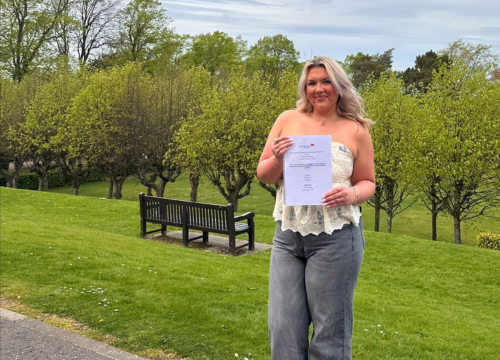
Undergraduate Student Dissertations – Meet Ewa BA (Hons) International Festival and Event Management

Is the Future of Sobriety Event-Full? A Critical Investigation of the Potential Effectiveness of Sober Events as Alcohol Consumption Reduction Initiatives for Gen Z Adults in Scotland

“As the alcohol consumption rates are declining more than ever, this dissertation explores the reasons behind so many Generation Z adults choosing sobriety or moderate drinking. Little academic research has been conducted on this topic considering the recency of this phenomenon. This work examines Gen Z adults’ views on alcohol consumption and the current legislations aimed at alcohol consumption and harm reduction in Scotland. Through in-depth qualitative research, this social group was found to be discouraged by excessive drinking habits and perceived current policies as ineffective. After exploring Gen Z adults’ experiences attending sober events, it has been proven that drinking alternatives target this social group more effectively than a limitation-focused strategy. More sober spaces and evens are highly desired and have a potential of being an encouraging initiative for alcohol consumption reduction. The findings of this study are unique, covering many undiscovered academic fields. Reviewing current policies and exploring young adults’ attitudes, they can serve as a guide for governmental bodies on how to improve the effectiveness of their campaigns. Generation Z is extremely different from previous generations and this study explores some aspects that might be crucial to understanding it better. Distrust towards the government, attitude influences, and the need to ‘save the world’ are just some of them examined by the author. Due to the recency of this academic field and the uniqueness of findings, it is believed this study can contribute to the governmental campaigns planning and an overall improvement of Gen Z adults’ quality of life.”

Read the full dissertation by Ewa Miko, BA (Hons) International Festival and Event Management

Undergraduate Student Dissertations – Meet Bethany BA (Hons) International Hospitality Management with Festivals and Events

Why not Scotland? An investigation of music festival attendance motivations and barriers amongst Scottish residents.

“Scotland possesses a proud musical heritage, yet many residents continually travel south to attend major music festivals in England. My dissertation explores the motivations behind this trend and the barriers discouraging festival attendance in Scotland. Using a quantitative survey of 90 Scottish residents, I identified that strong artist line-ups, immersive atmospheres, and social experiences are key drivers of attendance. Conversely, limited line-ups, poor weather, and lack of camping options were significant deterrents for Scottish festivals. Despite these challenges, there is clear enthusiasm regarding Scottish festivals if such improvements are made. My research offers practical recommendations for organisers such as enhancing infrastructure alongside creating deeper immersive experiences, to help Scotland compete more effectively in the UK’s vibrant festival landscape. This work aims to support the sustainable growth of Scotland’s music festival industry through a greater understanding of audience needs.”

Read the full dissertation by Bethany Tait, BA (Hons) International Hospitality Management with Festivals and Events

Shaping the future of business events: Insights from the TRC Symposium 2025

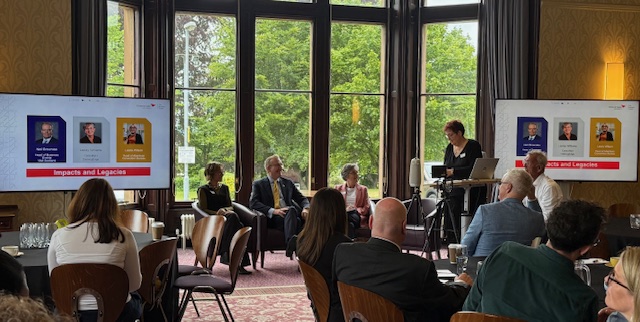
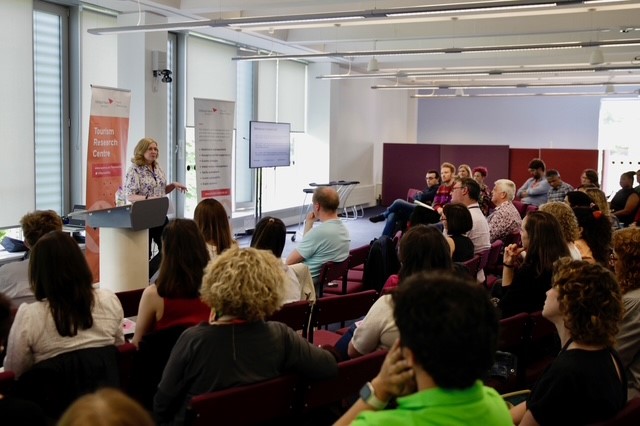
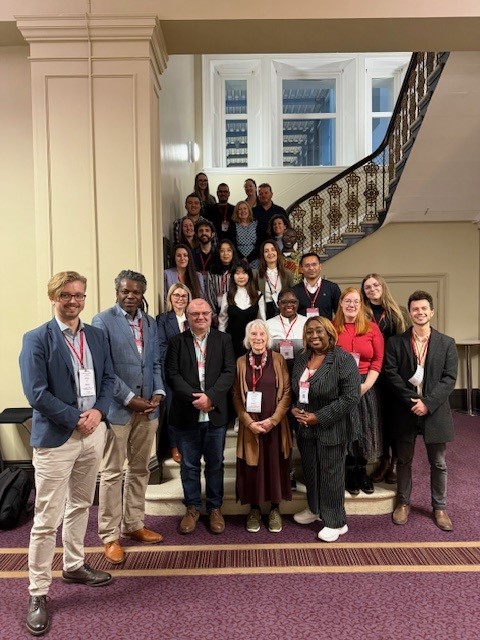
On 24 June 2025, Edinburgh Napier University’s Craiglockhart Campus hosted the Annual TRC Symposium: Innovative Practice in Business Events, a one-day gathering of academics, industry leaders, and event professionals. The symposium offered a rich platform for exploring how business events can drive economic, social, and knowledge-based impact far beyond tourism.

Rethinking metrics and legacy in business events

Professor Leo Jago (University of Surrey) challenged attendees to think beyond traditional tourism metrics. He emphasised that the true value of business events lies in their long-term legacy, from economic development to societal transformation and knowledge exchange. Jago advocated for government involvement in event planning and stressed the need for modern, engaging formats that resonate with younger generations. “Dull plenaries are no longer enough,” he noted, urging organisers to embrace workshops, interactive sessions, and networking opportunities.

Storytelling, strategy, and sector strengths

Rob Davidson, Director of MICE Knowledge, highlighted the strategic importance of aligning event bids with a country’s sectors of excellence. This approach not only attracts top-tier speakers but also enhances networking and sparks innovation. A common theme from all speakers on the day, was the power of storytelling in event promotion, as Davidson underscored – “If it bleeds, it leads” – and encouraged organisers to tap into local ambassadors and public engagement to amplify legacy and impact.

AI and the future of event design

Dr Judith Mair, Visiting Associate Professor from the University of Queensland, explored how artificial intelligence is quietly revolutionising the business events sector. She highlighted its role in enhancing sustainability through virtual site visits, streamlining event logistics with predictive analytics, and supporting event design by suggesting speakers and generating bios. AI is also being used to improve event evaluation, with tools that track ROIESG data, and real-time audience sentiment. Her talk underscored the growing importance of data-driven, tech-enabled approaches in creating smarter, more impactful events.

Collaboration as a competitive advantage

Professor Gary Hutchison (Edinburgh Napier University) and Elaine Miller (Edinburgh International Conference Centre), introduced the Exchange Initiative, a groundbreaking collaboration between Edinburgh’s universities, NHS Lothian, and the Edinburgh International Conference Centre (EICC). This initiative aims to attract international conferences to the city by leveraging collective expertise and engaging with stakeholders like VisitScotland and Chambers of Commerce. “There’s nothing quite like it elsewhere,” Hutchison remarked, highlighting its potential to position Edinburgh as a global hub for impactful events.

Advocating for impact

James Latham, founder of The Iceberg, delivered a powerful reminder: “We are change agents, not travel agents.” He called for a shift in focus from short-term metrics like ticket sales to long-term outcomes that reflect the true value of business events – innovation, collaboration, and societal progress.

Final thoughts

The TRC Symposium 2025 made it clear: business events are no longer just about tourism – they are catalysts for change. From legacy planning and sector alignment to collaborative bidding and storytelling, the future of the industry lies in its ability to create meaningful, measurable impact.

Written by Aoife O´Sullivan – Business Engagement and Communications Manager

Undergraduate Student Dissertations – Meet Claudio, BA (Hons) International Tourism Managment

In this new section, some of our brilliant UG students who have excelled at their dissertations tell us more about their research. Today, we have Claudio Pigozzo,  whose dissertation is “Challenging Traditional Tourist Typologies through the Digital Nomad Lens”, which was supervised by Dr. Alexandra Witte.

Digital nomadism is reshaping how we think about travel. My dissertation explored how digital nomads, people who combine remote work with long-term travel, fit into traditional tourist typologies.

Through in-depth interviews with 13 nomads from around the world, five different types of digital nomads emerged: Flash Nomads, Cultural Immersive Nomads, Seasonal Nomads, Settled Sojourners, and Rooted Roamers. These categories reflect different motivations, lifestyles, concepts of “home”, and levels of mobility, yet all share a reliance on digital infrastructure, cost of living awareness and adaptive coping strategies. This research highlights how digital nomads blur the lines between being a tourist and a resident, work and leisure, and permanence and transience. It also offers practical insights for destinations looking to attract and support this growing group, co-working hubs, flexible visa policies, and inclusive communities.

As digital nomadism becomes more mainstream, tourism theory needs to catch up. This is just the beginning of understanding this mobile, connected lifestyle.

Read the full dissertation by Claudio Pigozzo, BA (Hons) International Tourism Management.


Celebrating 3 Years of the Tourism Research Centre at Edinburgh Napier University

This month marks a significant milestone for the Tourism Research Centre (TRC) at Edinburgh Napier University as it celebrates its third anniversary. Since its launch in 2021, the Centre has established itself as a hub of impactful and collaborative research in the field of tourism and has not only met but exceeded many of its Key Performance Indicators (KPIs), delivering on its ambitious vision to be a leading voice in tourism research locally, nationally, and globally.

The Centre was conceived with a clear mission: to produce and disseminate high-quality, impactful research that supports sustainable, inclusive, and resilient tourism development. True to this mission, the TRC has led and contributed to numerous interdisciplinary research initiatives focused on, for example, sustainable destination development, community engagement and placemaking, visual methods research and economic impact in the tourism sector. The TRC has also played a vital role in supporting postgraduate research, mentoring early-career researchers, and providing students with opportunities to engage in applied research projects.

A key strength of the Centre has been its commitment to working collaboratively. Over the past three years, the TRC has extended and built strong partnerships with a range of external organisations including VisitScotland, the British Council, UNESCO and Edinburgh Tourism Action Group. These collaborations have enabled the Centre to co-create research that directly informs policy and practice, contributing to a more sustainable and resilient tourism industry.

The TRC has also fostered vibrant relationships with researchers from across the UK and internationally. Drawing on the expertise of Edinburgh Napier colleagues, the Centre has brought together a multi-disciplinary team of academics and research students from, for example, the School of Arts & Creative Industries and the School of Applied Sciences. We also work closely with our Visiting Academics from around the world, whose insights help to expand our global reach and academic exchange. These partnerships have enriched the Centre’s research output and extended its influence across academic and professional communities.

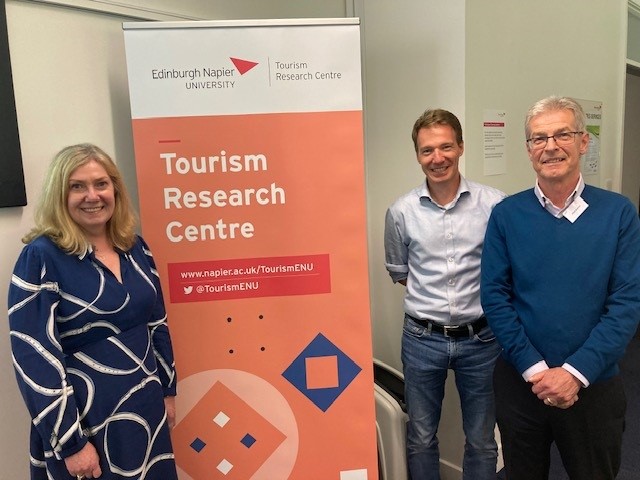
Among the Centre’s notable achievements are a series of high-impact publications, successful funding applications, commercial projects and the delivery of knowledge exchange events and workshops that have brought together academics, industry leaders, alumni, research students and policymakers. This year’s annual Symposium on Innovative Practice in Business Events will be held on 24th June. Our LinkedIn page is an active platform for engagement and dissemination, featuring a fortnightly blog written by our researchers, research students, alumni, and visiting academics — sharing knowledge, best practices, and innovative ideas with the wider tourism community. Please follow the for all our news.

Looking ahead, the TRC remains focused on its core themes of sustainable tourism destinations; cultural heritage management; wellbeing and health tourism; critical studies in tourism; and sustainable festival and event experiences. The Centre is well positioned to continue its leadership in tourism research, particularly as the industry navigates the complex challenges of climate change, evolving consumer behaviour, and technological disruption.

This milestone year is also a moment of transition, as I will retire at the end of August 2025. I was delighted to be appointed as Lead in 2022 and have thoroughly enjoyed shaping the Centre’s vision and success, working with colleagues, businesses and organisations to build a centre of excellence in tourism research. I leave the TRC in the very capable hands of my colleagues – more on this in a blog towards the end of the summer.

As we celebrate this three-year milestone, we extend our thanks to all the collaborators, supporters, and researchers who have contributed to the Centre’s success. The journey so far has laid a strong foundation for continued interdisciplinary growth and impact, and we look forward to what the future holds.

Anna leask headshot

Written by Professor Anna Leask, Tourism Research Centre Lead

Future-Proofing Travel: A Journey from Ideation to Publication

Caroline Bremner, Senior Head of Travel and Tourism at a global market research company, and ENU Alumni, has recently launched her book, ‘Future-Proofing Travel: How to Create a Resilient and Sustainable Industry.”

In March, I published my book – Future-Proofing Travel: How to Create a Resilient and Sustainable Industry. The opportunity came about after 28 years of working in travel research for a global market intelligence company. In my role, I’ve been analysing trends and impacts such as 9/11, the Global Financial Crisis and the pandemic. Travel is on the frontline of converging factors including macro-economics, geopolitics, digital transformation, changing consumer behaviours, demographics and the net zero transition. It is a vital economic pillar creating 348 million jobs and generating USD11.4 trillion in 2024, according to the World Travel and Tourism. Yet it faces significant challenges to transform and decarbonise or face an existential threat.

In December 2023, I was approached by a business and academic publisher. I had just lost my cousin to cancer, so I jumped at the chance to embark on a deep dive into the industry that I’ve been passionate about since working as a tour guide for the National Trust at Brodie Castle during the school holidays. The part time job was a way to earn money, meet people from different countries, share the stories of Scotland whilst practising my languages. Who wouldn’t love working in travel and tourism?

After my proposal was submitted and approved, I spent 5 months writing and researching the book, including conducting interviews with 30 global industry experts. Every interview revealed new perspectives and spurred me on thanks to the passion and purpose of these talented interviewees. They included global sustainable tourism leaders, changemakers, social impact entrepreneurs, digital technologists, conservationists and even an ‘accidental hotelier’.

It was a truly family affair: my son helped me with data permissions and sourcing; my daughter was a sounding board for ideas especially of Gen Alpha and my husband contributed some beautiful ink drawings, illustrating the transformation of a tree through its lifecycle. Their input and support were vital, seeing as the book took a significant amount of my time, writing after work in the evenings and all weekend.

My editor equally played a critical role in terms of the editorial approach, guiding me through each stage of the book research where I submitted chapter batches and incorporated her invaluable feedback.

By August 2024, the manuscript was wrapped up, along with everything signed off for data permissions and interview quotes. The next six months were given over to the publisher to finalise proofreading, production, marketing and publication.

The book launched internationally on 3 March 2025, with the Americas following later in the month. I was in Berlin for ITB Berlin – a major travel conference – and it was a great moment to know that the hard work was over, and a new chapter was beginning.

The past year has been a rollercoaster, balancing different work and family commitments to meet deadlines. Overall, I’m pleased with the result and met some amazing people in the process. Whether it will be on the Amazon best-seller list, we will need to wait and see!

Get your copy here: https://linktr.ee/futureproofingtravel

Discount code: KOGANPAGE25

Postgraduate student reflections from EventScotland’s annual conference

Any student in the tourism department is familiar with the work of EventScotland, the national tourism organisation for Scotland; and if that student is like me, they have relied upon EventScotland’s wealth of reports, research, and resources to enhance their assessment work and gain a deeper understanding of the tourism industry.

This is one of the many reasons I was honoured to attend Journey: The Business Events Conversation, EventScotland’s annual business events conference, held on 19 February 2025 at the John McIntyre Conference Centre in Edinburgh.

This conference is designed to bring together and support professionals from all across Scotland working in the MICE (Meetings, Incentives, Conferences, Exhibitions) sector. EventScotland recognises MICE as a crucial component of the tourism and events industry, making a measurable contribution to Scotland’s visitor economy and strengthening the country’s reputation as a premier destination for business events of all kinds.

Thanks to the efforts of a recent Napier alumnus who now works for EventScotland, Edinburgh Napier University was gifted two student admissions to this event, and another postgraduate student and I were the lucky recipients. This was a valuable opportunity for us to engage with industry professionals, thought leaders, and fellow students, as well as explore the many different career pathways that the events industry can offer.

Identity & Changing the World

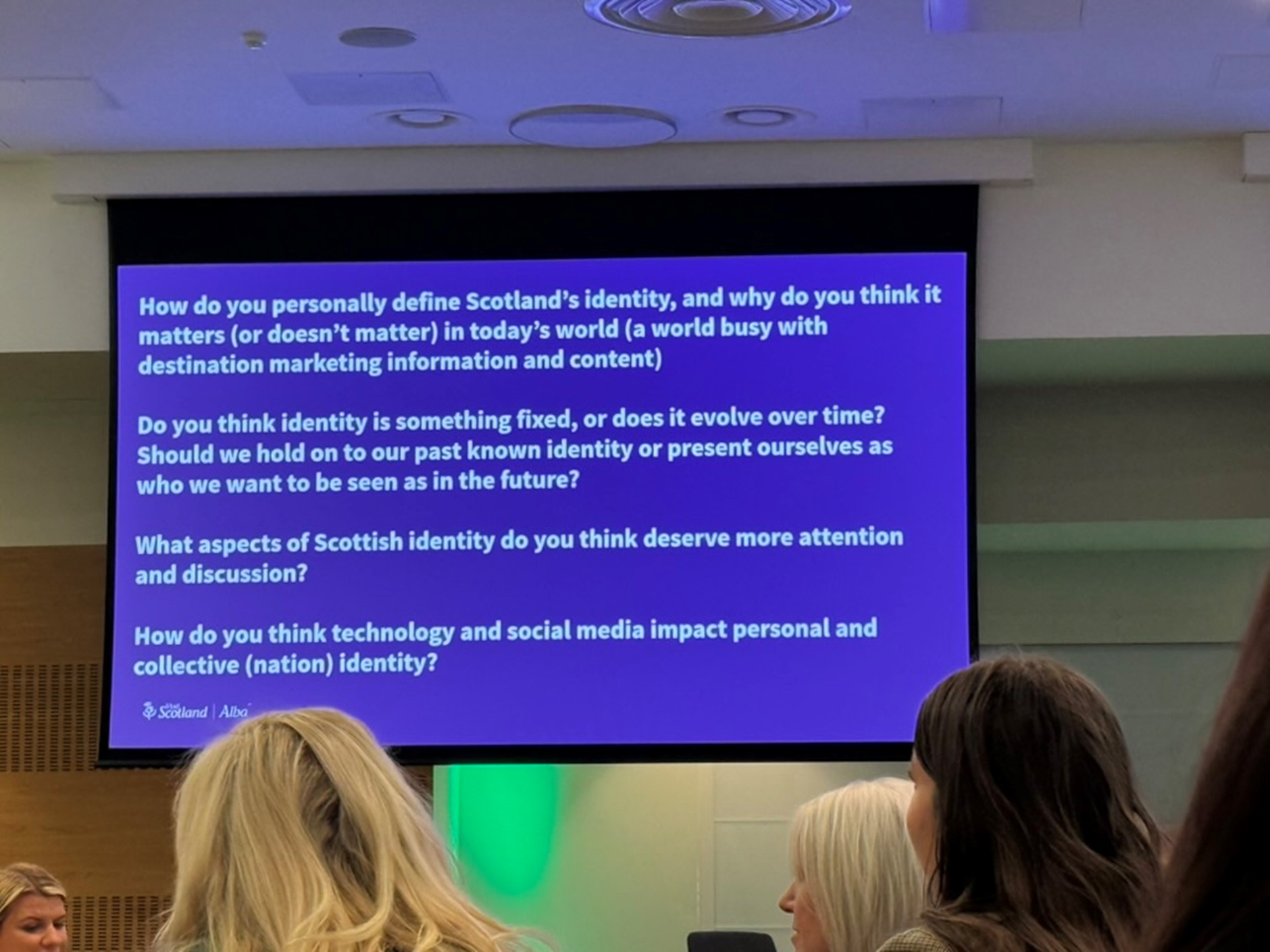
The theme of this year’s conference centred on exploring Identity, with panel discussions addressing topics such as what it means to be Scottish, how Scotland wishes to be perceived internationally, and what it means to be a responsible global citizen. As an international student, I was particularly curious about these conversations and keen to gain a better understanding of the aspirations and values of a place I hope will become my future home.

I was thoroughly impressed and moved by the genuine solidarity and support demonstrated by Scotland’s industry leaders during the Identity Keynote Panel. The consensus was clear—these events professionals saw solidarity as a defining aspect of Scottish identity, and they genuinely wanted to help each other succeed. They embraced a Scotland-first approach to promoting events, meaning that even if an event was not the right fit for their own business, they still considered it a win if another Scottish business secured it. This is just one example of how collaboration and mutual support have helped Scotland build its reputation as an impressive and welcoming business events destination.

Another crucial and impactful concept was raised by Lyndsey Rafferty, Senior Association Manager at EICC, during this panel. She highlighted the tremendous potential MICE events have for driving positive change in public well-being. She reflected that, as events professionals, we have the unique ability to bring together people and experts—such as academics, scientists, and legislators—who have the power and influence to change the world for the better.
conference slide

A Portfolio Career

Throughout the day, we gained both practical and profound insights into what a career in the events industry truly entails. One of the most memorable sessions was the morning Meet With education panel, an exclusive opportunity for students to gain valuable knowledge about the MICE industry and hear real-world experiences from top industry professionals.

Neal Brownlee, Head of Business Events at VisitScotland, reflected on the various roles and titles he has held throughout his career, noting that a portfolio career—a career composed of diverse positions across hospitality and events—is quite common in this industry. He emphasised that gaining experience in different roles can be a significant asset, providing a well-rounded understanding of the many moving parts involved in running a successful events business.

Laura Wilson, Head of the Convention Bureau at VisitAberdeenshire, echoed the challenges and opportunities of a nonlinear career path. She stressed the importance of adapting to the evolving events sector, maintaining a strategic alignment of an organisation’s mission with the types of events it pursues, and cultivating strong professional relationships that prioritise collaboration over competition.

The Big Debate

One of the major recurring themes throughout the event was the recognition that the events industry is built on relationships. It takes time to develop the trusted connections and practical, experience-based skills that contribute to a successful career. This led me to wonder—how are event leaders supporting and mentoring newcomers to the field? Are students and new professionals being welcomed and supported in developing these crucial relationships and skills?

EventScotland demonstrated its commitment to fostering a supportive industry network by meaningfully incorporating students into its programming. Beyond the Meet With education panel, one of the main features of the day was a university-style student-led debate on corporate social responsibility within the events industry.

This debate featured two students who worked closely with events professionals to investigate whether corporate social responsibility initiatives were simply a tick-box exercise. It was fascinating to hear the aspirational ideals of sustainability initiatives contrasted with the practical, often economic-based realities of business. Professionals from across the country engaged in thoughtful discussion, carefully considering the implications of the points raised by the students. This was one of the many ways in which meaningful dialogue and a culture of mentorship were woven into the event.

Looking Forward

I am incredibly grateful for the opportunity to attend Journey: The Business Events Conversation. I left feeling like I had gained a clearer understanding of potential career paths, how to be a supportive and collaborative professional, and an inspiration to commit to my own professional development.

I was especially excited to see contemporary approaches to events management—many of which I am currently learning about—being put into action. For example, a completely plant-based menu as part of an environmental sustainability initiative, an accessible and neurodiverse-friendly event space, and interactive panels designed to foster meaningful connections between attendees. EventScotland demonstrated both the professionalism and the progressive potential of our industry, and I am looking forward to engaging further with this network and contributing to the future of business events.

Written by Hannah Stenzel, postgraduate student on MSc International Festival and Event Management at Edinburgh Napier University.

Artademic: Art practice as research

‘A picture is worth a thousand words’ (origins unknown) is a much-repeated quote. Although (arguably) simplistic, there is something to this!

I am an artist. I’m also an interdisciplinary and engaged academic who strives to conduct impactful research with outcomes that make a difference. While I do work with ‘traditional’ research methods, my passion is for arts-based, creative, and participatory research. My research is concerned with cultural tourism, festivals, and placemaking, and is often framed by public engagement.

Sometimes, I’m asked how I ended up working in a Business School. It was a circuitous journey. I studied an undergraduate degree in fine art, then a postgraduate research degree in art and design (many) years ago. I then worked across the cultural and creative sector, before my PhD in tourism and festival studies here at Edinburgh Napier. My PhD investigated stakeholders’ perceptions of the image of the Edinburgh Festival Fringe, and I used visual methods and semiotics. Since then, I established the Visual Methods and Ethnography in Interdisciplinary Research Group in the university. I’m also the Public Engagement with Research Lead for The Business School.

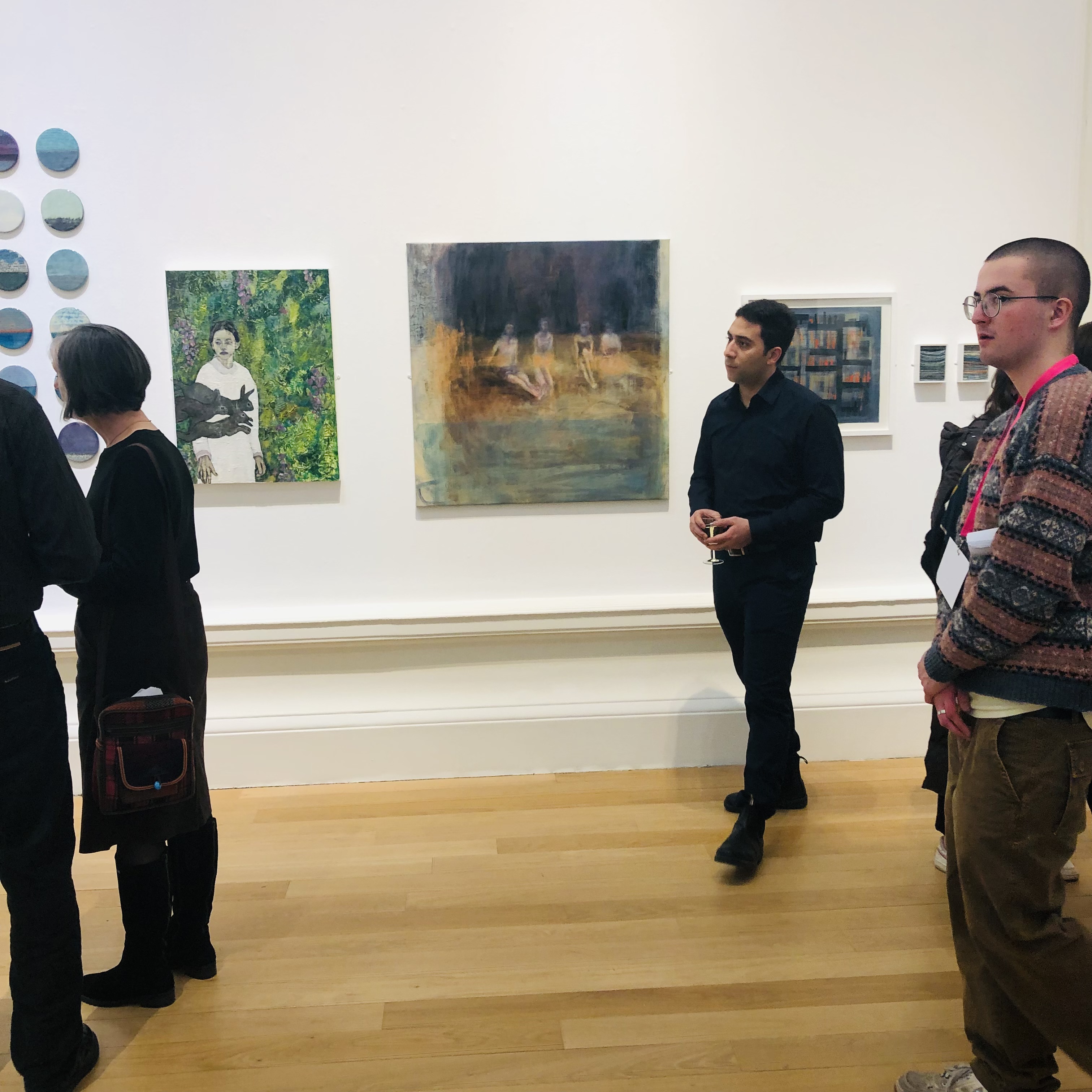
There are two strands to my art practice and how it informs my research. Firstly, I use my own art practice to complement my research, and vice versa. My personal practice is mainly painting. I research through drawing, memory, and imagination, and my work is underpinned by reading. Recent work explores the performance of tourism and leisure, alongside relationships between the tourist gaze and the visual practices and imaginaries of tourism. I’ve had my paintings selected for national and international exhibitions, including Visual Arts Scotland (VAS) and the Royal Scottish Academy (RSA). This year, I curated a group exhibition during the Edinburgh Festival Fringe. I’ve also exhibited my work in galleries and sold to private collectors.

Returning to ‘a picture is worth a thousand words’ (origins unknown), a second way that my art practice impacts upon my research is through using visual and participatory methods. This involves working with different groups of people to co-create outcomes and outputs. For example, I’ve co-designed participatory and creative ‘walkshops’, partnering with the Museum of Walking. I’ve used drawing and participatory mapping with residents of Wester Hailes in Edinburgh to gain insights into the semiotics of Edinburgh as a festival city. I’ve led a UKRI-funded interdisciplinary creative research and public engagement project working with community partners in Wester Hailes. Recently, I led a Royal Society of Edinburgh (RSE) research project working with Professor Anna Leask, alongside tourism and festival stakeholder partners. We used participatory and creative methods to investigate overtourism, community engagement, and placemaking in Edinburgh’s historic centre.

While traditional research approaches such as interviews and questionnaires are undeniably valuable, I argue that arts-based, creative, and participatory research can make a difference. They can engage and impact on people, policy, and practice. You don’t need to be an artist to use arts-based methods, so why don’t you try some approaches?

Blog written by: Dr Louise Todd, Associate Professor and Deputy Lead of the TRC

Website: https://artademic.co.uk/

Instagram @louisetodd.art

Meet the Visiting Professor – Associate Professor Judith Mair

Welcome to “Meet the Visiting Professor”, a section dedicated to introducing to you our Visiting Professors, where you will have the opportunity to get to know them and find out how they engage with Edinburgh Napier University, and specifically with the Tourism Research Centre (TRC).

Today, Associate Professor Judith Mair, The University of Queensland, Brisbane, Australia, tells us about her strong connections with ENU and TRC researchers, with whom she has been friend for a very long time! Despite being in Australia, she is of Scottish origins, and takes every opportunity she has to come back to connect with family and colleagues.

“Although I now live in Australia, my roots are in Scotland! I grew up in a small village on the West Coast, but I went to university in Edinburgh and fell in love with the city. I stayed there for a few years after graduating, working in the Tourist Information Centre on Princes Street, and then for VisitScotland. I consider Edinburgh to be the place where my involvement with the tourism industry and my tourism and events research interests really started.

After completing a PhD in Tourism at the University of Strathclyde in Glasgow (coincidentally at the same time as Dina (Constantia) Anastasiadou), my career took me to Australia, firstly to Victoria University (VU) in Melbourne, then Monash University, and now the University of Queensland in Brisbane. It was at Victoria University that I first met Dr Martin Robertson, then at VU and now at Edinburgh Napier University. We share similar research interests – primarily in sustainability and event management – and have been friends ever since.
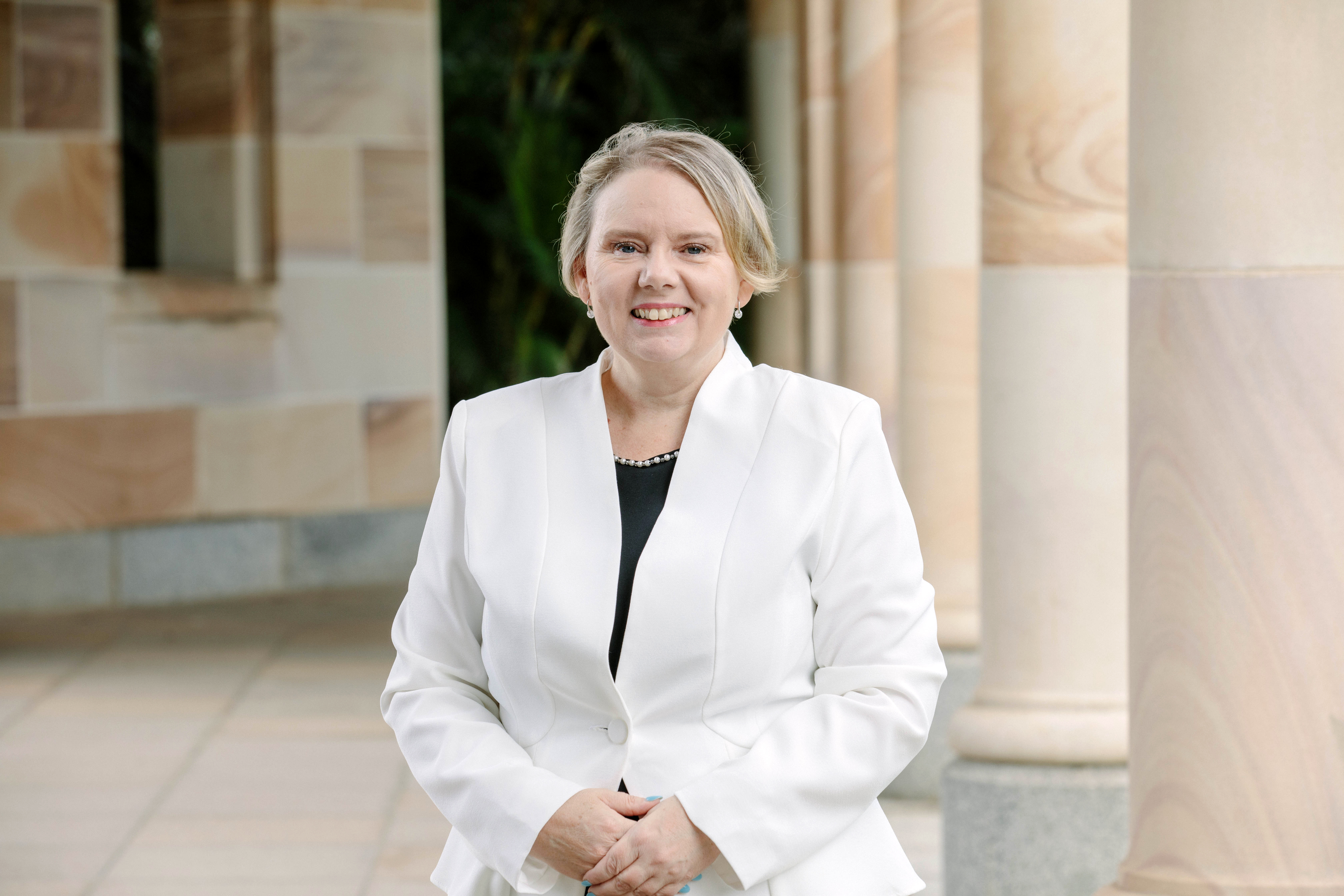
My work aims to understand and enhance the positive impacts of tourism and events on the communities and societies which host them and my expertise lies in fields including mega-event legacies, the future of events, the links between events and social connectivity, and the potential impacts of climate change on the events sector.

My holidays are often combined with work-related travel, but when I have the chance, I love to visit the wonderful beaches and coastline of Australia. My favourite destination (apart from Scotland of course!) is probably the Whitsunday Islands in Queensland – the archetypal tropical island paradise with the friendliest locals I’ve ever met. I heartily recommend it!

Although I don’t get the opportunity to visit Edinburgh or Scotland much (the journey from Australia is a pretty long one!), I jump at the chance to come home, and having a visiting role at ENU allows me to combine work and pleasure. I enjoy the opportunity to meet and network with old friends and new and share my research with as wide an audience as possible, both in academia and more broadly with industry and government. I also value the chance to act as a mentor for emerging scholars and provide them with as much support and guidance as I can. I hope to collaborate in publications and ongoing project work in the field of events studies with students and colleagues, particularly in relation to sustainability and climate change, which I feel is one of the most important areas we can study. “

Meet the TRC Alumni – Dr Angelo Sciacca

Welcome to “Meet the TRC Alumni”, a section dedicated to finding out what our TRC PhDs are doing after successfully completing their PhD. This is an opportunity to learning more about the multiple careers offered after doing a PhD with us, as well as catching up with our brilliant researchers.

Today, Dr Angelo Sciacca gives us an update of his career after graduating in 2023 and how the PhD has helped him shape his career. Congratulations are in order for Angelo as he has recently joined the TRC not only as a proud alumnus but as Visiting Senior Fellow! We look forward to seeing what this collaboration will bring in the future!

“I held diverse roles across Southeast Asia, particularly in Myanmar, and Europe. My work focused on advancing circular entrepreneurship in tourism, fostering community-based and ecotourism in coastal and island destinations, and researching smart tourism ecosystems.

I chose Edinburgh Napier University for my PhD because I had already completed my master’s degree there and was highly familiar with the university’s strong reputation for quality research and teaching in the subject.

The focus of my PhD on circular economy and island tourism aligned with my interest in how island territorial dynamics influence the tourism sector’s transition toward more sustainable, resilient, and inclusive models.

My PhD has been instrumental in supporting my career by deepening my expertise in circular economy and island tourism, which are critical areas for the sustainable future of the ecosystems the sector relies on.

I work as a Senior Research Fellow on Blue Tourism at the Institute for Sustainable Development and International Relations (IDDRI) where I coordinate the Blue Tourism Initiative, a global initiative that aims to improve the governance of coastal and marine tourism to ensure sustainability, focusing on three marine regions: the Mediterranean, Caribbean and Western Indian Ocean.

To new PhD students, I suggest to embrace challenges as part of the learning process, and stay committed to making a meaningful impact with your research.