“Attending the Host City Conference 2025 in Glasgow was a valuable learning experience”

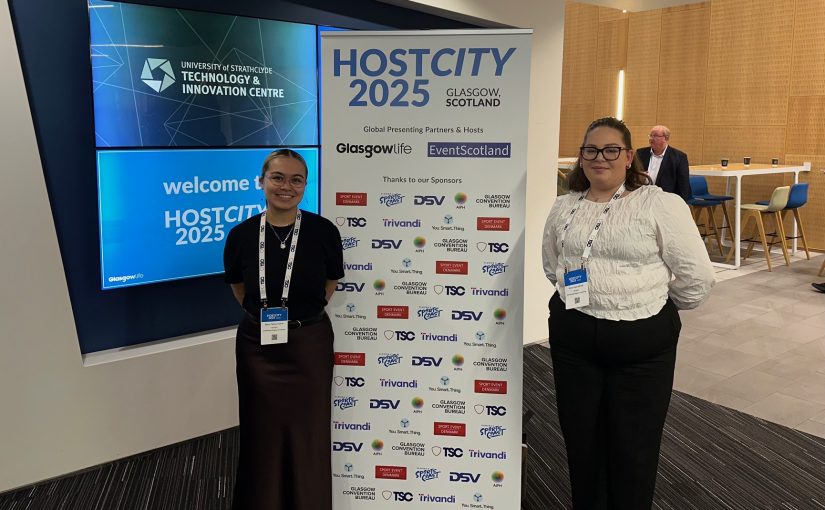
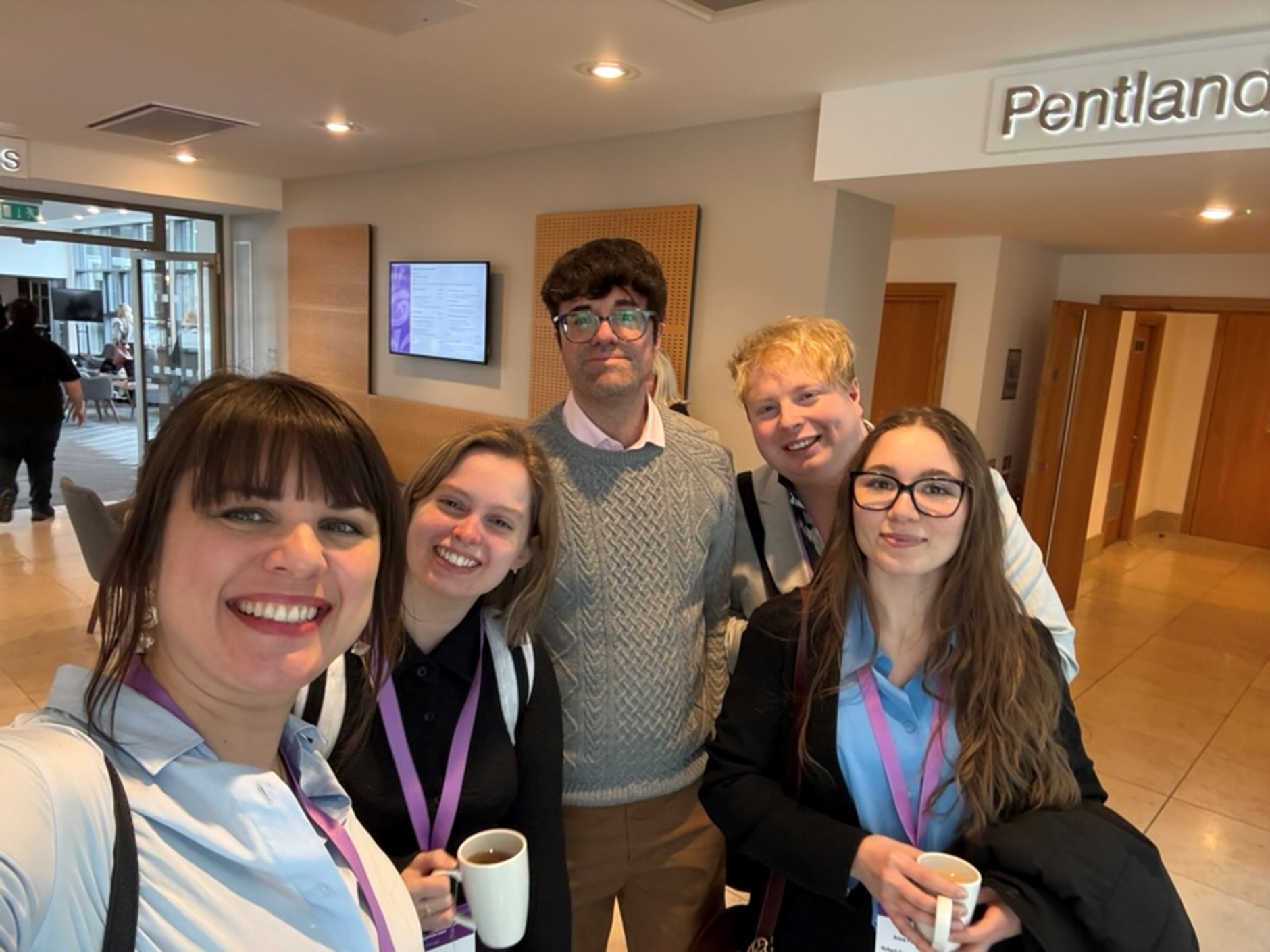
Attending the Host City Conference 2025 in Glasgow was a valuable learning experience as third-year Festival and Event students at Edinburgh Napier University. The conference provided us with the opportunity to apply what we had learned in our course to real-life examples and expand our professional network within the events sector.

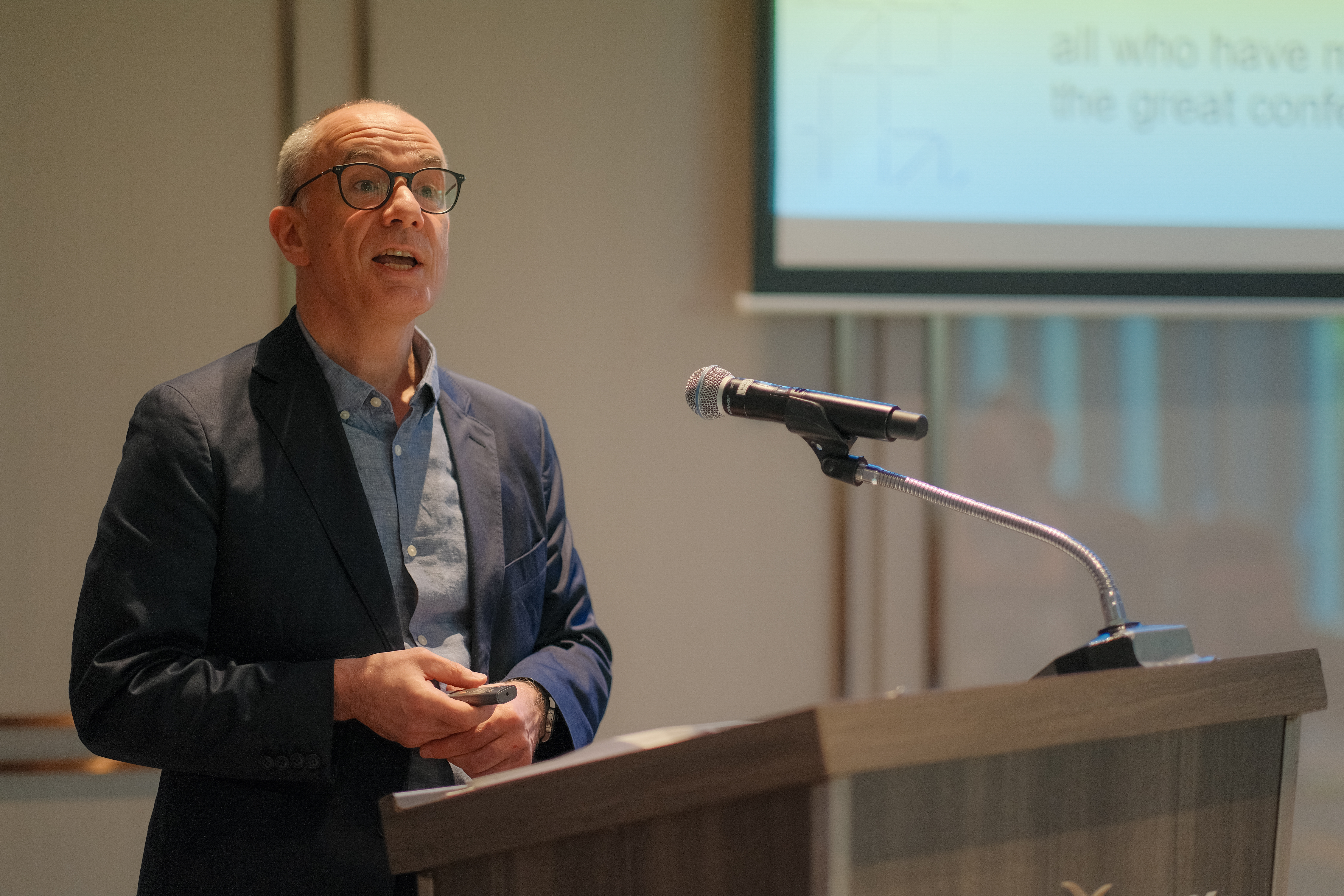
The Host City Conference brings together professionals from across the global events industry, including sporting, cultural, and major international events. Speakers represented backgrounds from host cities, event organisations and governing bodies. Through a series of panel discussions, the conference explored key themes such as event legacy, impact, and the future direction of the events industry. These discussions offered valuable insight into the complexity of event planning and delivery at a large scale.

An element and recurring topic that stood out to us was the evolving role of host cities within the event planning process. Rather than being solely venues for events, host cities are now increasingly involved in strategic planning and decision-making. A strong emphasis was placed on ensuring that host cities benefit meaningfully from events, particularly in terms of economic, social, and cultural legacy. This shift highlighted the importance of collaboration between organisers, stakeholders, and local communities.

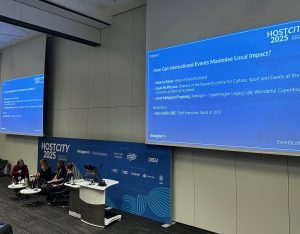
Another important theme at the conference was the increasing focus on sustainable practices and inclusive planning, which closely reflected the topics we have studied at Napier. A few examples of panel discussions include sustainable catering practices and alternative sustainable public transport routes for event goers. This helped us connect our theoretical knowledge with real-world practice. Concepts from our lectures became much clearer when we heard practical examples from industry professionals. The conference also highlighted how the events landscape continues to evolve.

conference presentation

It was inspiring to be surrounded by professionals who are passionate and involved in delivering major, well-known events. The opportunity to speak with them during coffee and lunch breaks was particularly insightful, as it provided an informed perspective into the range of career paths available within the events industry. Hearing accomplished individuals share their career journeys and experiences made it clear that building strong professional relationships is one of the most important aspects of working in this sector.

Attending the conference has been an inspiring and motivating experience for us as students. It allowed us to think about our future careers in the events industry and how we can positively contribute to event planning and execution with sustainability, inclusivity and legacy.

We would like to extend our thanks to Ben Avison and Host City 2025 for the generous opportunity and to Dr David Jarman for encouraging students to attend such insightful events by presenting and facilitating experiences such as this.

For Host City 2025 Highlights watch this video: https://youtu.be/TG0Nay2U5SY

Written by Anna Kjærulff Dal & Maya Takagi-Vlahek, BA(Hons) International Festival and Event Management, third year students

Postgraduate Student Dissertations – Meet Ryan MSc International Festival & Event Management

An Investigation into Social Capital Generated or Impacted by Transformational Festivals

My dissertation studies the relationship between Social Capital (the ties between individuals and within social networks and the trustworthiness and reciprocity that is generated amongst the group as a result) and Transformational Festivals (typically week-long festivals in harsh or challenging environments with an emphasis on co-creation and ritualisation), expanding on previous festival and events literature and deploying a sociological lens within the field of Transformational Festivals. The Research utilised 11 semi-structured interviews over 4 time-zones and thematic analysis to identify and analyse recurring themes. Key findings were a high prevalence of Social Capital building at Transformational Festivals by most respondents, and a belief that powerful connections were built more rapidly than elsewhere. However, there was the understanding that these bonds were often temporal and not likely to expand beyond the festival perimeter, whereas occasionally bonds were not built at all, particularly when attending within a group with pre-defined social dynamics. Although these festivals are typically geared towards to collective experiences, the study found higher than expected levels of individual Social Capital. Finally, interviewees tended to agree that Transformational Festival attendance leads to societal advancement, yet the source of these improvements was disputed with more respondents believing them to be the result of transformational experiences and personal growth, rather than the building of community or social ties, again alluding to the individual dimension.

Read the full dissertation from Ryan Webster, MSc International Festival & Event Management

Meet the Visiting Professor – Dr Greg Richards

Travel is part of my DNA. I started travelling at a time when Brits still looked at you strangely if you had a suntan. As tourism became a mass phenomenon, I also took full advantage, travelling around Europe and kicking off my career as a research assistant on a PhD project with Chris Devereaux in the Algarve. I went on to work in the industry with my father, who had worked in airlines and hotels, and had set up a tourism research and marketing consultancy (TRAM), which I am still running today.

I was also lucky enough to start my academic career at a time when the EU was beginning to support Erasmus exchanges. That allowed me to meet lots of researchers from different countries and backgrounds, which eventually took me to the Netherlands to work at Tilburg University. In those days, teaching was still in Dutch, so of course I had to learn the language as well. That was my gateway into the culture, and an important basis for learning other languages later on. I set up the Association for Tourism and Leisure Education and Research (ATLAS), which generated yet more international contacts. ATLAS also brought me in touch with Napier, who has been a key member of the network for almost 20 years now. Napier staff were active participants in the ATLAS Cultural Tourism Research Project, and it was cultural tourism that took me to Spain in 2003, with a Marie Curie Post-Doc on festivals in Catalunya. I worked at the Interarts Foundation in Barcelona for a few years and also moved TRAM to Spain.

Coming back to the Netherlands a few years later, I had more contact with Napier, via events research. As my work developed around ‘eventful cities’, Edinburgh became a natural focus for collaboration. From Breda University, we sent groups of students (178 in 2012!) to Edinburgh, where they were ably hosted by Napier staff. The events’ connection with Napier continued through the ATLAS Events Special Interest Group, for which Napier organised a meeting in 2020. Unfortunately, this was during Covid, so I didn’t actually get to Edinburgh! But I did supervise David Jarman’s PhD thesis on Social network analysis and festival relationships together with Jane Ali-Knight. One thing I love about being linked to Napier is catching up with other old friends. These include fellow Visiting Professor Brian King on many research projects over the years, Angela Chu, who worked with Brian and I on cultural tourism and placemaking in the Greater Bay Area of China, and Afiya Holder, who I collaborated with at the UNWTO.

Written by: Professor Greg Richards

Postgraduate Student Dissertations – Meet Christy MSc Marketing with Festival and Event Management

Beyond the contract: Edinburgh festival fringe performers and their relationships with key stakeholders

“It becomes quite difficult to capture the Edinburgh Festival Fringe in a single sentence. With a programme that includes everything from theatre, comedy, and dance to music, cabaret, and spoken word, the options are seemingly endless. As the Edinburgh Fringe Society likes to illustrate, the festival plays host to the world’s greatest platform for creative freedom.

My dissertation examines the intricate relationships between performers and key stakeholders at the Edinburgh Festival Fringe, beyond the contract. With the use of a qualitative research approach, I was able to interview an array of key festival stakeholders to critically explore how these connections influence artists’ campaigns and the overall festival experience.

The findings uncovered the strategic use of power within the festival’s social structures and highlighted a collective objective among stakeholders to enhance the creative development for visiting companies and all artists venturing to the Edinburgh Fringe. The festival should be used as an inclusive development platform as opposed to a performance space for favored or polished productions. There is immense risk involved for all contributing stakeholders across the entire ecosystem in which the most damage falls on the financial. This paper takes a valuable look into the importance of stakeholder connections for the longevity of the festival. It also provides insights for both artists and key festival stakeholders on how to leverage these vital networks that inevitably elevates the performing arts and culture escapade.”

Read the full dissertation by Christy Tukalo, MSc Marketing with Festival and Event Management

How the Edinburgh Festivals make the city a better place to live, work and play in

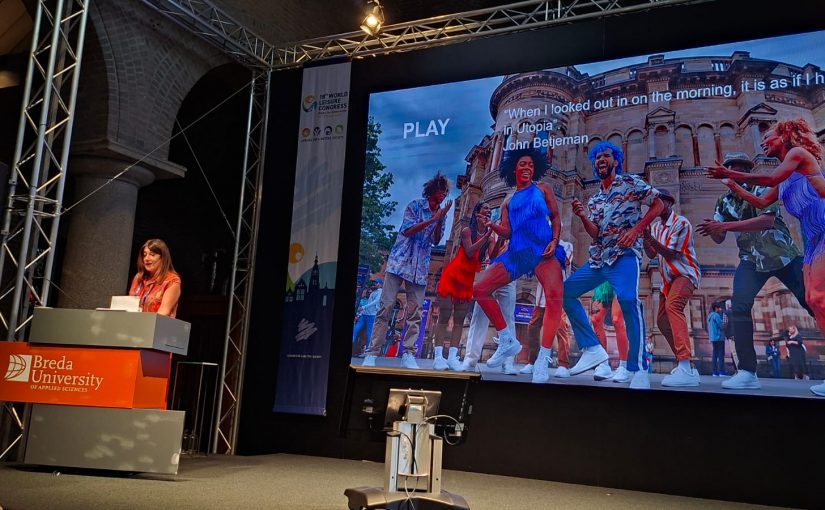
The World Leisure community gathered in Breda for the 18th World Leisure Congress: Leisure for a Better Society, held from August 25-28, 2025, bringing together over 400 participants and experts in the field from 40 countries. With a full program of inspiring sessions, vibrant poster presentations by emerging scholars, and the World Leisure Awards Ceremony, the event celebrated individuals and organizations driving leisure as a force for inclusion, human growth, and social transformation.

conference

Professor Jane Ali-Knight sat on a panel discussing ‘The role of leisure in creating livable and lovable places’; participated in a WLJ Podcast and delivered one of the conferences keynote sessions titled: Fringe benefits: how the Edinburgh Festivals make the city a better place to live, work and play in. Drawing on recent research, examining Fringe Festival Networks in Perth, Adelaide and Edinburgh, Jane has been involved in with ENU colleague David Jarman and other academic collaborators from Australia, she delivered an interactive and informative presentation highlighting how the festivals contribute to the wellbeing of the city.

There is little doubt that the festivals significantly contribute to making Edinburgh a better place to live, both culturally and economically. They bring in visitors, boost local businesses, create jobs, and enhance the city’s global reputation which in turn generates soft power. The festivals also offer residents a variety of cultural experiences and contribute to their quality of life. Festivals also have a positive social impact on local communities: building community cohesion, offering positive emotions and shared connections, promoting social interaction and cultural exchange, and contributing to a general sense of wellbeing, especially in turbulent times (Yolal et al. 2016).  The 2025 Edinburgh Fringe sold over 2.6m tickets featured 3,893 shows across 301 venues, and hosted performers from over 60 countries.

 It is a myth that Edinburgh’s residents are anti the festivals. More residents support than oppose them with large numbers actively participating in and/or attending events. The latest study by BOP Consulting (2023), which surveyed 22,000 people – shows that the Edinburgh Festivals continue to be Scotland’s world-leading cultural brands. Recent studies show that a substantial percentage of residents believe the festivals make Edinburgh a better place to live and are ‘Loved by locals’. Around 1.5m festival attendances are local residents (that is c50% of total audience) while 89% of Edinburgh residents say that the festivals increase local pride in their home city.


Beyond direct employment, festivals play a critical role creating work and supporting many thousands of jobs for wider service businesses and local traders. The festivals alone create the full-time equivalent of 5,850 jobs in Edinburgh. This sector together with arts, entertainment, recreation and other services are significant employers in the city, accounting for 44,000 jobs between them. (Edinburgh Festival City, 2022).

Finally, festivals are playful…. one month of the year the city takes on a joyous carnival atmosphere which tens of thousands of locals join in. They are escapist and bring joy and laughter to communities, and the places in which they reside. It’s a privilege having so much world class, innovative art on our doorstep.

So, as the planning cycle begins for the 2026 festivals, amid a background of public funding cuts and drops in sponsorship revenue, rising inflation and production costs, cost-of-living challenges, and shortages of skilled labour and materials, the organisers of Edinburgh’s world leading events will have to assert the contribution of its festivals make to Edinburgh making it a better place to live. Echoing a Guardian writers’ opinion…’Cultural institutions like the fringe are about more than making money and stars. In our age of disinformation, artificial intelligence and alienation, such gatherings of people, talent and ideas are more vital than ever’ (2025).

Note: The 2025 Best Poster Award was presented to Dr. Afiya Holder for her outstanding presentation on Reimagining Leisure as a Tool for Inclusivity and Social Cohesion: The Transformative Potential of African-Caribbean-Scottish Shared Cultural Heritage Tourism.

Written by Dr Jane Ali-Knight

Undergraduate Student Dissertations – Meet Ewa BA (Hons) International Festival and Event Management

Is the Future of Sobriety Event-Full? A Critical Investigation of the Potential Effectiveness of Sober Events as Alcohol Consumption Reduction Initiatives for Gen Z Adults in Scotland

“As the alcohol consumption rates are declining more than ever, this dissertation explores the reasons behind so many Generation Z adults choosing sobriety or moderate drinking. Little academic research has been conducted on this topic considering the recency of this phenomenon. This work examines Gen Z adults’ views on alcohol consumption and the current legislations aimed at alcohol consumption and harm reduction in Scotland. Through in-depth qualitative research, this social group was found to be discouraged by excessive drinking habits and perceived current policies as ineffective. After exploring Gen Z adults’ experiences attending sober events, it has been proven that drinking alternatives target this social group more effectively than a limitation-focused strategy. More sober spaces and evens are highly desired and have a potential of being an encouraging initiative for alcohol consumption reduction. The findings of this study are unique, covering many undiscovered academic fields. Reviewing current policies and exploring young adults’ attitudes, they can serve as a guide for governmental bodies on how to improve the effectiveness of their campaigns. Generation Z is extremely different from previous generations and this study explores some aspects that might be crucial to understanding it better. Distrust towards the government, attitude influences, and the need to ‘save the world’ are just some of them examined by the author. Due to the recency of this academic field and the uniqueness of findings, it is believed this study can contribute to the governmental campaigns planning and an overall improvement of Gen Z adults’ quality of life.”

Read the full dissertation by Ewa Miko, BA (Hons) International Festival and Event Management

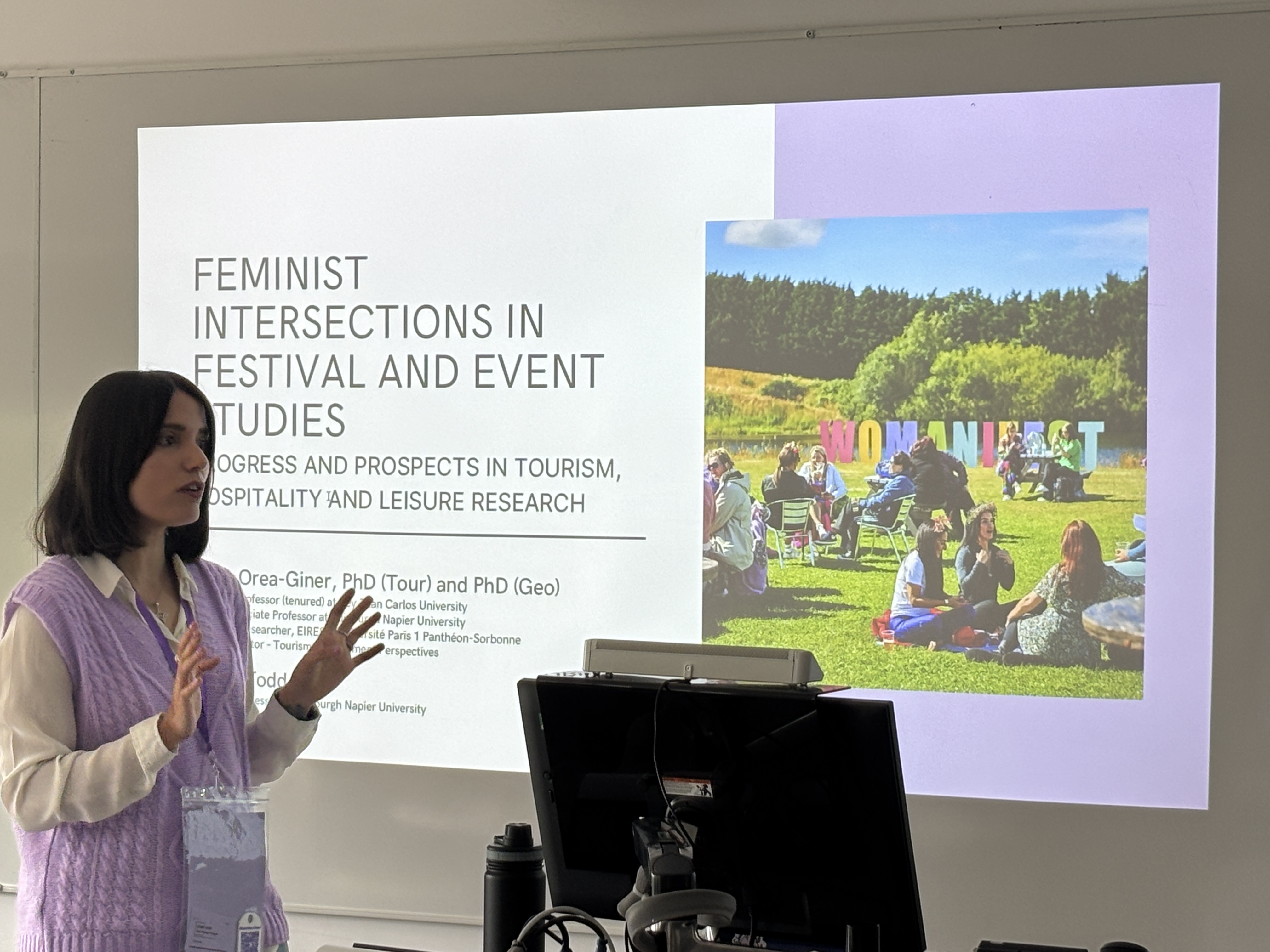
Meet the Visiting Professor – Dr Alicia Orea-Giner

In May 2022, I had the privilege of visiting Edinburgh Napier University. Over the course of a month, I immersed myself in the vibrant academic and professional community at the Tourism Research Centre (TRC), guided by Dr Louise Todd, with whom I established a strong collaborative connection.

One of the highlights of my visit was the CHME 2022 conference “The Human Touch in Hospitality”, hosted on Napier’s Craiglockhart campus from 24 to 27 May 2022. There, I engaged with leading scholars and practitioners, broadening my understanding of hospitality research and forging connections that would inform future collaborations with Louise and her team.

One unforgettable highlight was having Professor Donna Chambers, whose work I deeply admire, not only as the keynote speaker but also as an attendee in our session. At CHME 2022, I had the privilege of presenting the paper “Madrid LGTBIQ+ Pride in a Health Crisis Context” (co-authored with Gonzalo Recio-Moreno), which explored how the community navigated visibility, celebration, and resilience during the COVID-19 pandemic. Grounded in Social Exchange Theory, our study amplified the voices of activists, residents, and professionals at a moment when public expression was both urgent and vulnerable. Professor Donna Chambers’ presence was both inspiring and humbling, adding depth and significance to the entire experience. I am also grateful for the insightful feedback from Dr. Martin Robertson, whose thoughtful comments helped me critically reframe aspects of the research and encouraged a potential collaboration with the brilliant Faith Ong (paper available here).

Beyond the conference, the Tourism Research Centre kindly invited me to deliver research seminars on mental health in academia, early career challenges, and qualitative research methods.

Besides, thanks to this visit, I began a fruitful collaboration with Dr. Louise Todd on experience design, storytelling, and sustainable event management, an exchange that seeded our joint research. Building on our shared research interests and longstanding collaboration, Dr. Francesc Fusté-Forné, Dr. Louise Todd, Dr. Eerang Park, and I co-edited a Special Issue in Tourism Management Perspectives titled “Food Tourism Events for Social Sustainability.” This issue invites critical and interdisciplinary reflections on how food events operate as vehicles for social change, justice, and community well-being. By bringing together diverse methodological and geographical perspectives, the issue aims to advance theoretical and empirical understandings of how food tourism can contribute to sustainable futures, particularly in times of global uncertainty and socio-ecological transition.

Through our research collaboration (with Dr. Francesc Fusté-Forné) Food festivals, as we argue, are not simply about gastronomy, they are performative acts of place-making (paper available here). Through scenographic elements, walking practices, and digital tools, these events communicate layered histories and emotional geographies. By engaging with participants’ senses and memories, they construct an immersive experience that is both personal and collective. The “origin story” of a food festival, then, is often tied not just to regional identity or tradition, but to the narrative choices made by organizers: whose stories are told, whose tastes are elevated, and whose labour remains unseen.

Behind the scenes, we find complex negotiations: between stakeholders and residents, between authenticity and commodification, and between inclusion and silence. As we discovered in our collaborative walking research, these festivals are sites where identities are rehearsed and contested, not just consumed. This research trajectory also led us to collaborate with Dr. Mania Moysidou from Edinburgh Napier University, extending our exploration of food festivals to the Scottish context.

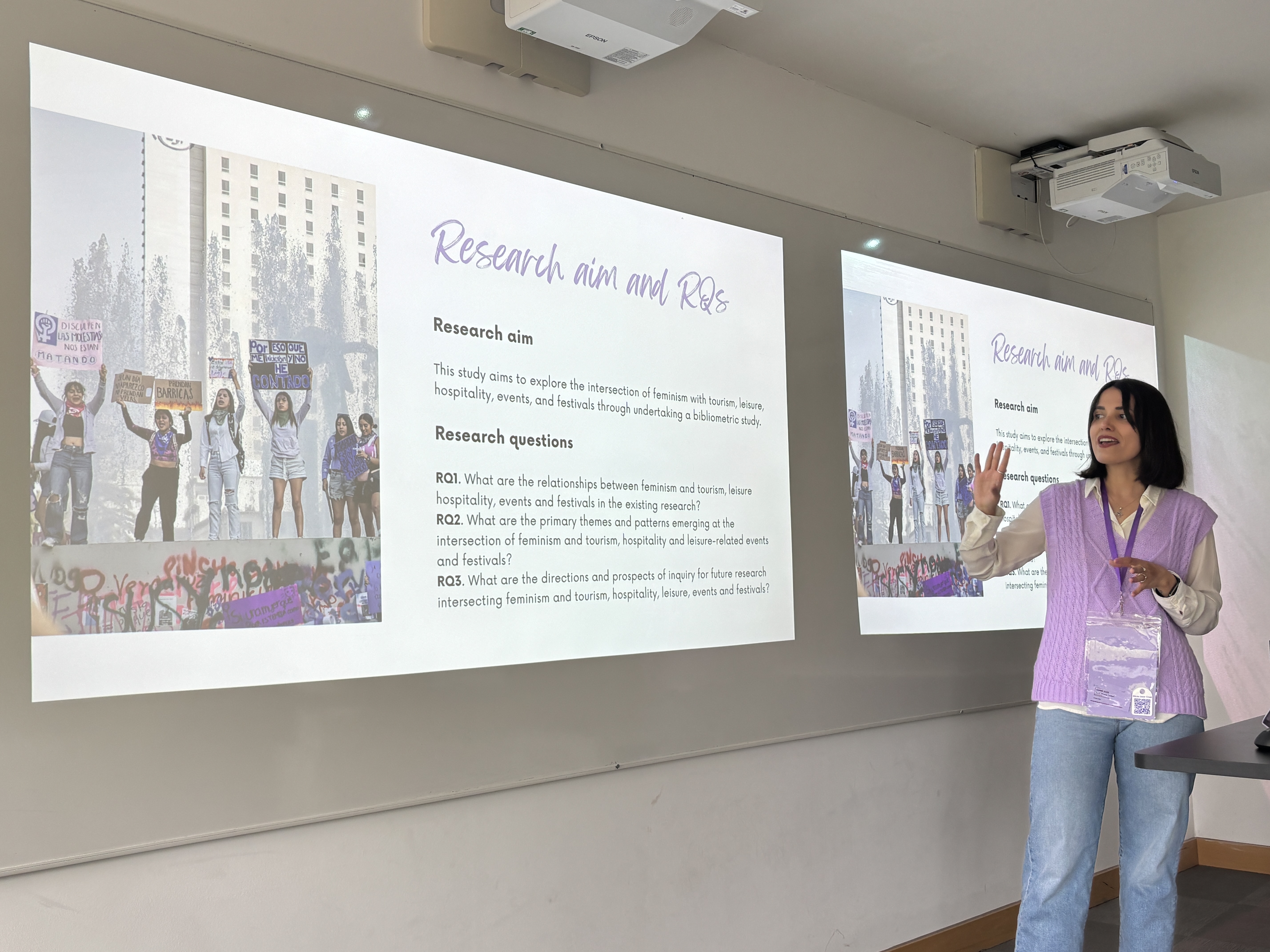
Building on this shared foundation, Dr Louise Todd and I are teaming up again to present at CHME 2025. It is a continuation of the intellectual trip that began with my first visit. It is an honour to return to Edinburgh Napier University as a Visiting Associate Professor, a position of great personal and professional significance. Edinburgh is without a doubt my favourite city in the world: it has always provided me with academic stimulation, creative inspiration and a sense of personal connection. Edinburgh Napier University welcomed me at a critical juncture in my academic career, providing not only room but also visibility, encouragement, and genuine engagement while I was still an early career researcher. That experience of being seen and heard is still at the heart of my approach to academic collaboration and mentorship.

Written by visiting Professor Alicia Orea-Giner, Associate Professor at Universidad Rey Juan Carlos.

Postgraduate student reflections from EventScotland’s annual conference

Any student in the tourism department is familiar with the work of EventScotland, the national tourism organisation for Scotland; and if that student is like me, they have relied upon EventScotland’s wealth of reports, research, and resources to enhance their assessment work and gain a deeper understanding of the tourism industry.

This is one of the many reasons I was honoured to attend Journey: The Business Events Conversation, EventScotland’s annual business events conference, held on 19 February 2025 at the John McIntyre Conference Centre in Edinburgh.

This conference is designed to bring together and support professionals from all across Scotland working in the MICE (Meetings, Incentives, Conferences, Exhibitions) sector. EventScotland recognises MICE as a crucial component of the tourism and events industry, making a measurable contribution to Scotland’s visitor economy and strengthening the country’s reputation as a premier destination for business events of all kinds.

Thanks to the efforts of a recent Napier alumnus who now works for EventScotland, Edinburgh Napier University was gifted two student admissions to this event, and another postgraduate student and I were the lucky recipients. This was a valuable opportunity for us to engage with industry professionals, thought leaders, and fellow students, as well as explore the many different career pathways that the events industry can offer.

Identity & Changing the World

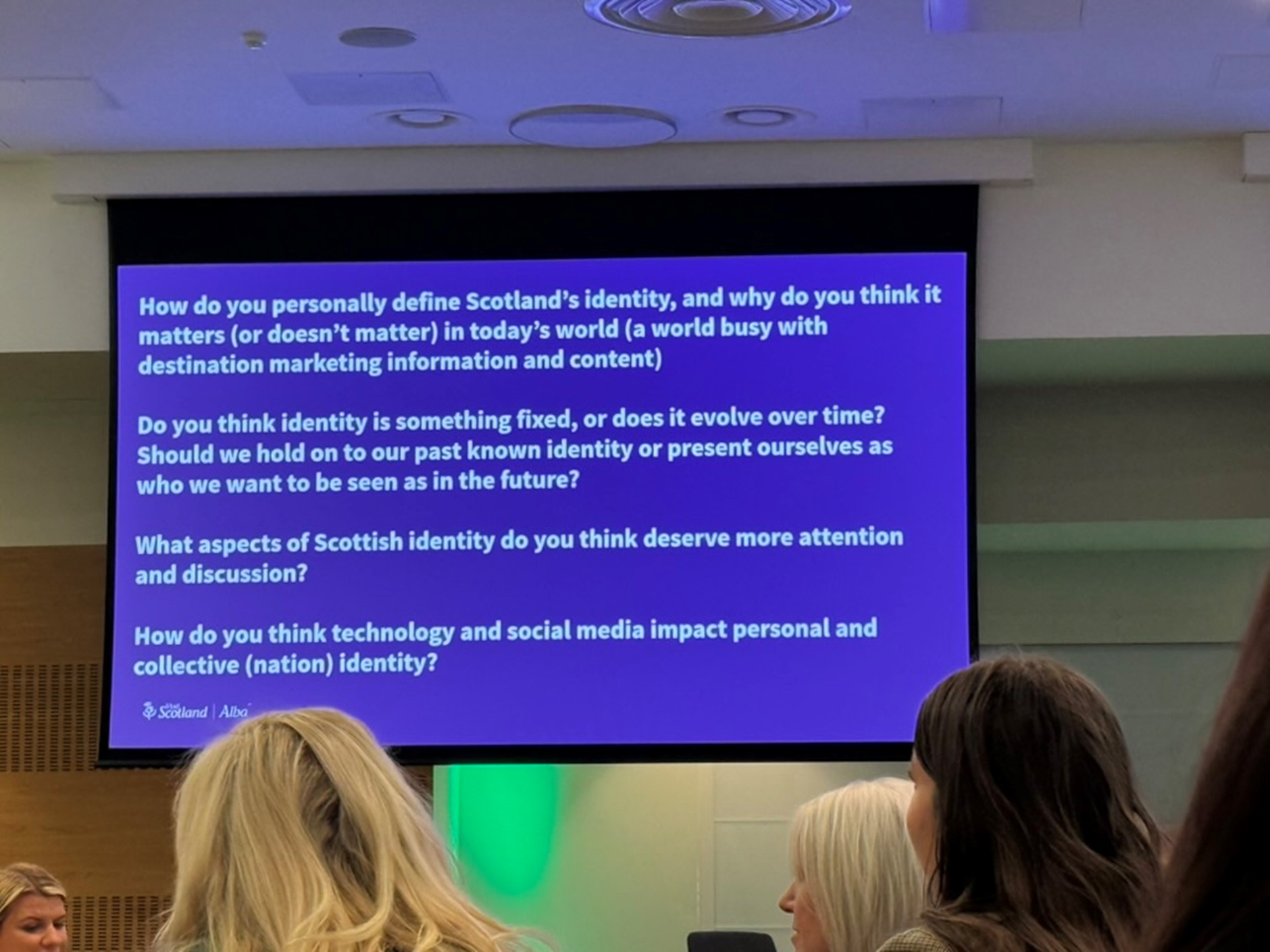
The theme of this year’s conference centred on exploring Identity, with panel discussions addressing topics such as what it means to be Scottish, how Scotland wishes to be perceived internationally, and what it means to be a responsible global citizen. As an international student, I was particularly curious about these conversations and keen to gain a better understanding of the aspirations and values of a place I hope will become my future home.

I was thoroughly impressed and moved by the genuine solidarity and support demonstrated by Scotland’s industry leaders during the Identity Keynote Panel. The consensus was clear—these events professionals saw solidarity as a defining aspect of Scottish identity, and they genuinely wanted to help each other succeed. They embraced a Scotland-first approach to promoting events, meaning that even if an event was not the right fit for their own business, they still considered it a win if another Scottish business secured it. This is just one example of how collaboration and mutual support have helped Scotland build its reputation as an impressive and welcoming business events destination.

Another crucial and impactful concept was raised by Lyndsey Rafferty, Senior Association Manager at EICC, during this panel. She highlighted the tremendous potential MICE events have for driving positive change in public well-being. She reflected that, as events professionals, we have the unique ability to bring together people and experts—such as academics, scientists, and legislators—who have the power and influence to change the world for the better.

conference slide

A Portfolio Career

Throughout the day, we gained both practical and profound insights into what a career in the events industry truly entails. One of the most memorable sessions was the morning Meet With education panel, an exclusive opportunity for students to gain valuable knowledge about the MICE industry and hear real-world experiences from top industry professionals.

Neal Brownlee, Head of Business Events at VisitScotland, reflected on the various roles and titles he has held throughout his career, noting that a portfolio career—a career composed of diverse positions across hospitality and events—is quite common in this industry. He emphasised that gaining experience in different roles can be a significant asset, providing a well-rounded understanding of the many moving parts involved in running a successful events business.

Laura Wilson, Head of the Convention Bureau at VisitAberdeenshire, echoed the challenges and opportunities of a nonlinear career path. She stressed the importance of adapting to the evolving events sector, maintaining a strategic alignment of an organisation’s mission with the types of events it pursues, and cultivating strong professional relationships that prioritise collaboration over competition.

The Big Debate

One of the major recurring themes throughout the event was the recognition that the events industry is built on relationships. It takes time to develop the trusted connections and practical, experience-based skills that contribute to a successful career. This led me to wonder—how are event leaders supporting and mentoring newcomers to the field? Are students and new professionals being welcomed and supported in developing these crucial relationships and skills?

EventScotland demonstrated its commitment to fostering a supportive industry network by meaningfully incorporating students into its programming. Beyond the Meet With education panel, one of the main features of the day was a university-style student-led debate on corporate social responsibility within the events industry.

This debate featured two students who worked closely with events professionals to investigate whether corporate social responsibility initiatives were simply a tick-box exercise. It was fascinating to hear the aspirational ideals of sustainability initiatives contrasted with the practical, often economic-based realities of business. Professionals from across the country engaged in thoughtful discussion, carefully considering the implications of the points raised by the students. This was one of the many ways in which meaningful dialogue and a culture of mentorship were woven into the event.

Looking Forward

I am incredibly grateful for the opportunity to attend Journey: The Business Events Conversation. I left feeling like I had gained a clearer understanding of potential career paths, how to be a supportive and collaborative professional, and an inspiration to commit to my own professional development.

I was especially excited to see contemporary approaches to events management—many of which I am currently learning about—being put into action. For example, a completely plant-based menu as part of an environmental sustainability initiative, an accessible and neurodiverse-friendly event space, and interactive panels designed to foster meaningful connections between attendees. EventScotland demonstrated both the professionalism and the progressive potential of our industry, and I am looking forward to engaging further with this network and contributing to the future of business events.

Written by Hannah Stenzel, postgraduate student on MSc International Festival and Event Management at Edinburgh Napier University.

Resilient and positive event futures with Associate Professor Martin Robertson

Associate Professor Martin Robertson, has recently given keynote presentations at international conferences*1 *2 (2024), as well as presented related research to his colleagues in the inaugural 2025 Tourism Research Centre research seminar*3 at Edinburgh Napier University.

In different ways, each of the above present research to determine processes of stakeholder involvement in successful ‘future visioning’ for a sustainable future. In each, the United Nations Sustainable development Goals (SDGs) are proposed as vital conduits.

Throughout my career in academia, I have always sought to provide a learning, teaching and research experience that is professionally and socially useful – and encourages positive forward action. Sustainability, resilience, regenerative capacity, social justice, and future vision methodologies are key components of this work. I think my research publications, as well as current and past consultancy collaboration, evidence this well.

Very much grounded in Edinburgh, and Scotland, I have nonetheless lived and worked in many countries. Collaborations with researchers in Australia, Denmark, England, New Zealand, Sweden, and Wales have made me very aware of the truly exciting and profoundly global nature of our subject (s). This is true for our students, our research students, our colleagues, and the places in which live and visit.

As well as publishing widely in my research area, I am also proud of the books (six) and journal special issues (eight) I have co-edited. They serve to stimulate thinking and knowledge around the world. The capacity to share knowledge in a world that has a great many challenges – socially, environmentally, and politically – inspires me. If this stops, I stop!

Here, in Edinburgh, I enjoy the benefits of our wonderful city. It never ceases to amaze. I am very lucky to be living and working in such a great environment. A great location to (en)vision a great future.

*1 Robertson, M. (2024) Keynote speaker: ‘Sustainable events and Net Zero’ 5th International Conference on Tourism and Business (ICTB). Mahidol University International College Bangkok, Thailand (August, 21-23)

*2 Robertson, M. (2024) Keynote Speaker: ‘Learning for future challenges: tourism futures and deep learning applied to teaching the UN SDGs’, 2nd Tourism Futures Convention 2024 (TFC), Heilbronn University of Applied Sciences, Heilbron, Germany (November 13th)

*3 Robertson, M. (2025) Research presentation: ‘Business Events and the Efficacy of UN SDGS for the Knowledge City’, Tourism Research Centre Seminar, Edinburgh Napier University (February 5th)

ENU and Texas A&M Study Exchange 2024

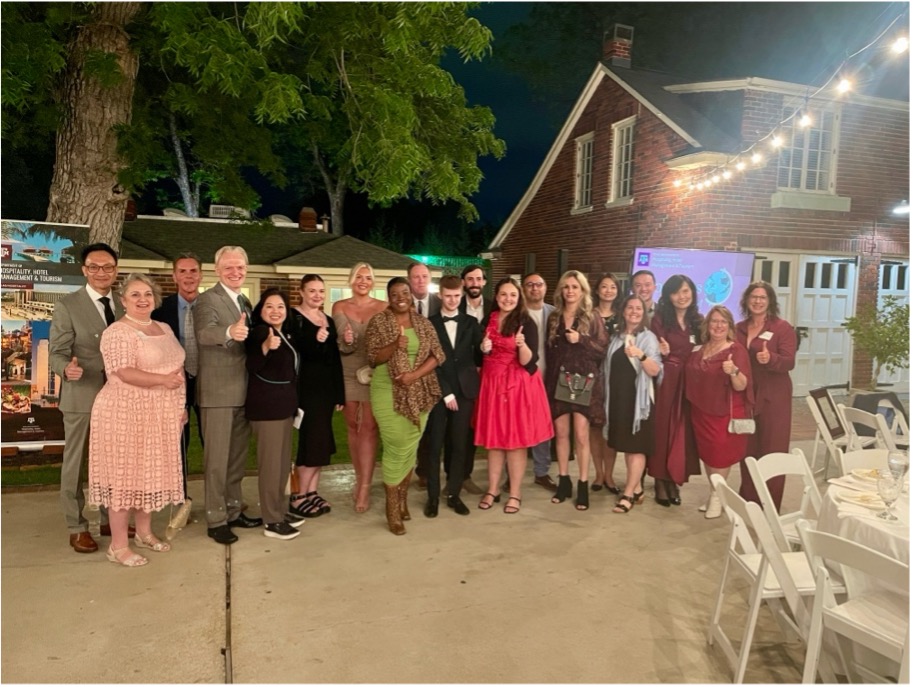
During the spring 2024 term, four of our students went to Texas A&M University on a study exchange trip. The students are on Edinburgh Napier’s Festival & Event Management, Tourism Management, and Hospitality Management programmes. They spent some time working alongside a business in Texas as part of the Live Project Module, and likewise some Texas A&M University students spent some time in August in Edinburgh.

The project team consisted of Dr Afiya Holder, Dr David Jarman, and Slawek Staniszewski, Global Mobility Officer in International Operations from ENU. Dr. Donna Lee Sullins and Prof. Brian King coordinated and led the project on behalf of Texas A&M University.

So what is it like to travel to Texas for a Live Project? Hear directly from the four ENU students who shared with us their thoughts on the experience below. Thanks to Bethany Tait (International Hospitality Management with Festivals and Events), Claudio Pigozzo (International Tourism Management), Cerys Fitzgerald (International Festival and Events Management), and Dean Jenkins (International Festival and Event management).
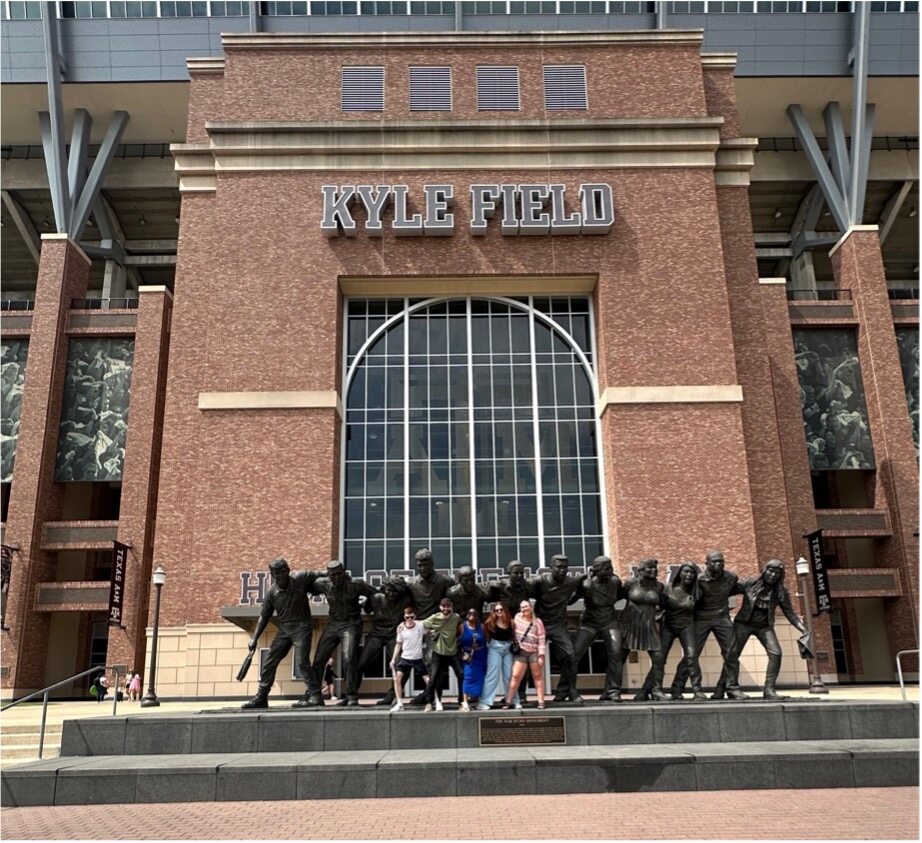
students standing together in front of building

Question: Why did you apply and how did you secure for such an amazing opportunity?

Bethany: I knew that I had to apply as it would be such an amazing experience and a great way to gain knowledge of the industry within a different country.”

Claudio: “The opportunity to work closely with an organization in Texas and Texas A&M college students came suddenly. I didn’t think twice before applying and immediately started writing my application form.”

Cerys: “I was given the opportunity to apply for the live project in partnership with Century Square in Texas [a multi-use retail and leisure facility] in Texas at the start of 3rd year. In order to be considered I had to write a short essay which explained why I would be a good fit for the trip and how it could benefit myself and my experience.”

Dean: “I was reading the IFEM bulletin which I would normally do as it always has great opportunities then I spotted that there was a project and a trip to Texas being organised as part of the live project module which I had chosen. I applied but I wasn’t expecting to be a part of the project as there were only four places available so when I got told the news that I got a place I couldn’t believe it as I had always wanted to go to the USA so doing it with university made it even better as I knew that it would be worth something and not just a holiday.”

Question: What are your thoughts on the Live Project module and how has this shaped your learning experience and professional development?

Bethany: By being given the opportunity to work with and provide recommendations for a business it enabled myself to finally put my degree to use and know that all the hard work over the past three years is paying off and that I do have the skills to work in a real-life environment. This module has enabled myself to develop my professional skills and learn a lot about the inner workings of professional environments.”

Claudio: “The Live Project module is an incredible experience for students who can finally implement what they have previously studied and use and discover their own skills. Working with a live organization puts you in a position to see things from the perspective of the business owner or manager, and experience their stress, to improve or find appropriate solutions for the business.”

Cerys: “I learned how to work well within a team, distributing the work evenly to ensure no one felt under pressure with the workload. In a professional sense I got an insight into what can differ between a business in the US compared to ones in the UK and how they can do things slightly differently.”

Dean: “I found the actual module interesting and challenging at times, but I enjoy a challenge, so I thoroughly enjoyed working on the project. This module has definitely helped my future goals as I have made international contacts in which I can use when I graduate.”

Question: In what ways has this experience inspired your future goals/plans in Tourism, Hospitality, Festival and Events or Marketing?

Bethany: “This experience has taught me that within the industry the most beneficial factor is networking with other students, universities, and businesses to gain knowledge and contacts worldwide.”

Claudio: This experience made me understand that despite your age, background, or belief, you can achieve incredible things in life. I met so many people, with different experiences and backgrounds, different passions, different paths, but the same desire to learn and make a difference.”

Cerys: My plans for after graduation has always been to travel and work internationally. Doing this live project has shown me that it is something that is indeed possible and that I would be able to do it with the experience that I have already gained through this opportunity.”

Dean: This experience has really opened my eyes to what opportunities are out there in terms of different events and universities.”

Question: What were some memorable moments related to the module but also beyond the classroom?

Bethany: “A memorable moment within the classroom would be the initial receival of the project brief, it was exciting as a group to gain information on the company and brainstorm initial ideas for the objectives we had been given. (…) The professors at Texas A&M were incredibly welcoming and also invited us along to the hospitality scholarships banquet.”

Claudio: “I think every minute of this module, the project, the meetings, the trip, was memorable. I will bring these memories forever with me. I met and worked with fantastic people with whom we shared thoughts, discussed and come up with interesting ideas. I had the opportunity to attend class at an American University and understand what life on campus really is, their culture, tradition and the spirit of belonging, something incredible…. Truly an unforgettable experience.”

Cerys: Some of my most memorable moments from this module have to learning all about Texas and Century Square but then getting to actually experience it. Although my academic experiences come from the classroom, the real life experiences and moments came from the trip itself.”

Dean: “… the banquet that Texas A&M students were hosting, I networked with so many different people from different backgrounds and professions.”

Question: What life skills do you think came to light post-trip?

Bethany: “Improved confidence, adapting to new cultures”

Claudio: Problem solving, teamwork and organizational skills.”

Cerys: “Communication and collaboration”

Dean: Teamwork, networking skills and communication”

Question: What advice would you give future students about taking the Live Project module?

Bethany: “The best advice would be to thoroughly communicate with all team members, it is really important to ensure you all have the same work ethic and maintain styles of work throughout the report and presentation. I would also say to just enjoy the experience as much as possible and remember that your supervisor and the other module lecturers are always there to support your experience and make sure it goes as smoothly as possible.”

Claudio: My advice is to take the Live Project module as a real work experience, never be afraid to express ideas and always listen to criticism and learn from it, you learn by making mistakes.”

Cerys: “Just enjoy it! The live project can become stressful at points as it is a lot to in a short period of time. My advice would be to embrace the experience to its full potential, and all will work out in the end.”

Dean: “…that the dynamic in your project team is crucial so I would recommend getting to know a little more about your teammates outside the classroom.”
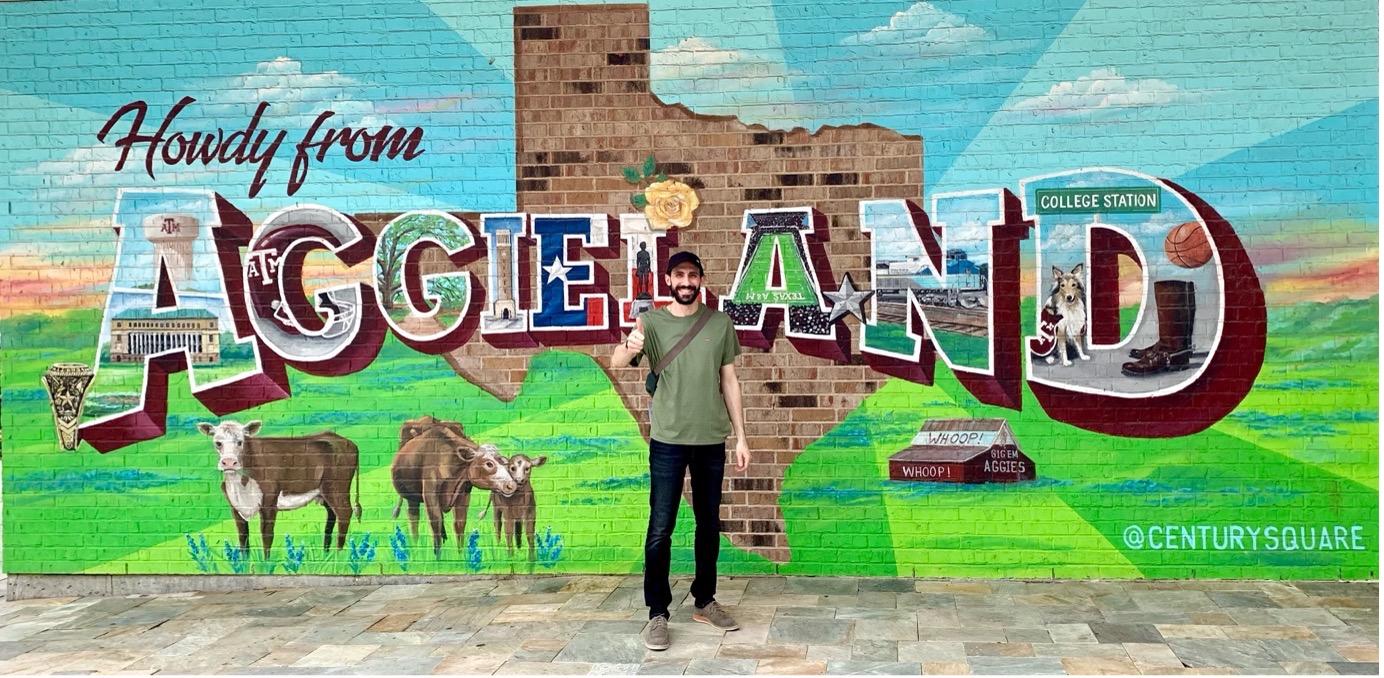
Student in front of campus backdrop