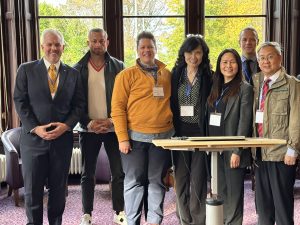
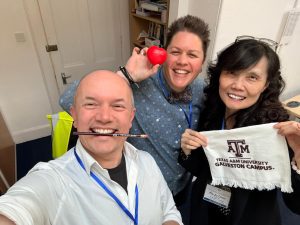
Meet the Visiting Professor – Dr Greg Richards

Travel is part of my DNA. I started travelling at a time when Brits still looked at you strangely if you had a suntan. As tourism became a mass phenomenon, I also took full advantage, travelling around Europe and kicking off my career as a research assistant on a PhD project with Chris Devereaux in the Algarve. I went on to work in the industry with my father, who had worked in airlines and hotels, and had set up a tourism research and marketing consultancy (TRAM), which I am still running today.

I was also lucky enough to start my academic career at a time when the EU was beginning to support Erasmus exchanges. That allowed me to meet lots of researchers from different countries and backgrounds, which eventually took me to the Netherlands to work at Tilburg University. In those days, teaching was still in Dutch, so of course I had to learn the language as well. That was my gateway into the culture, and an important basis for learning other languages later on. I set up the Association for Tourism and Leisure Education and Research (ATLAS), which generated yet more international contacts. ATLAS also brought me in touch with Napier, who has been a key member of the network for almost 20 years now. Napier staff were active participants in the ATLAS Cultural Tourism Research Project, and it was cultural tourism that took me to Spain in 2003, with a Marie Curie Post-Doc on festivals in Catalunya. I worked at the Interarts Foundation in Barcelona for a few years and also moved TRAM to Spain.

Coming back to the Netherlands a few years later, I had more contact with Napier, via events research. As my work developed around ‘eventful cities’, Edinburgh became a natural focus for collaboration. From Breda University, we sent groups of students (178 in 2012!) to Edinburgh, where they were ably hosted by Napier staff. The events’ connection with Napier continued through the ATLAS Events Special Interest Group, for which Napier organised a meeting in 2020. Unfortunately, this was during Covid, so I didn’t actually get to Edinburgh! But I did supervise David Jarman’s PhD thesis on Social network analysis and festival relationships together with Jane Ali-Knight. One thing I love about being linked to Napier is catching up with other old friends. These include fellow Visiting Professor Brian King on many research projects over the years, Angela Chu, who worked with Brian and I on cultural tourism and placemaking in the Greater Bay Area of China, and Afiya Holder, who I collaborated with at the UNWTO.

Written by: Professor Greg Richards

44th International Society of Travel & Tourism Educators (ISTTE) annual conference, “Tailored experiences: The future of hospitality and tourism industry and education” Recap

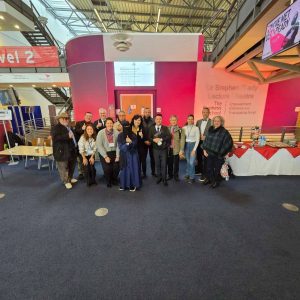
The 44th Annual Conference of the International Society of Travel and Tourism Educators (ISTTE) was held from October 22-24, 2025, at The Business School at Edinburgh Napier University. The event was in-person; there was no virtual component. This delivery modality allowed 46 registered participants worldwide to connect and share research and best practices in travel and tourism education.

The theme for the two-and-a-half-day conference was “Tailored Experiences: The Future of Hospitality and Tourism Industry and Education.” The conference featured a range of engaging sessions and events. To open the conference, attendees networked at a welcoming reception and facilitated group dinners nightly throughout Edinburgh. The following day began with welcoming remarks from the host institution’s leadership, Deputy Dean Paul Barron and ISTTE President Nicholas Thomas, followed by a keynote session by Dr. Gary Kerr (Atlantic Technological University), who provided insights into creativity and innovation in tourism and events education. Day two ended with an engaging special feature session with JTTT providing a practical guide for authors, reviewers, and academic contributors. The final day provided a unique backdrop overlooking Arthur’s Seat with engaging presentations from keynote Murat Kizildag (University of Central Florida), who discussed a financial dotplot of investing in experiences, as well as a special feature session with Timothy Flohr (University of Memphis), who provided a strategic approach to realigning industry and academia.

The program included 22 stand-up presentations covering a variety of pedagogical topics as well as five workshops designed to enhance participant knowledge across other topics relevant to our membership. All presentations were face-to-face, and this modality will continue until further notice

A unique feature of the ISTTE conference is its attendee workshops. This year, participants were able to participate in engaging workshops related to, among other things: (a) expanding access to the industry, (b) flipped and experiential classrooms, (c) team-based learning approaches, (d) designing ELITE experiences for career-ready graduates, and (e) post-graduate students and sustainability.

The conference recognized several outstanding contributions to advancing the goals of ISTTE. Kara Wolfe (Missouri State University) won the Martin Oppermann Lifetime Achievement Award, and Edmund Goh (Les Roches) won the Heidi Sung Achievement Award. Additionally, Les Roches received the Institutional Achievement Award. Two deserving students were presented with scholarships to support student educational endeavors: graduate student Nikol Lopez Llantuy from Iowa State University and undergraduate student Liraysa Ponson from Breda University of Applied Sciences.

The Journal of Teaching in Travel and Tourism (JTTT) 2024 Best Paper Award went to Drs. Feri Ferdian, (Universitas Negeri Pedang), Mohd Salehuddin Mohd Zahari, Mohd Onn Rashdi Abd Fatah, Zuraini Mat Issa, and Mohd Hafiz Hanafiah (Universiti Teknologi MARA) for their paper entitled “Investigating the Effectiveness of Conventional Hosptality Education Curriculum in Shaping Millennials’ Career Commitment: An Empirical Inquiry.” The JTTT 2024 best reviewer award went to Dr. Elizabeth Whalen (Middle Tennessee State University). The conference also featured several notable paper awards:

  • Best Paper: “Beyond the Plate: Cultivating Work-Life Balance in the Hospitality Industry” by Sasi Gangiah
  • Best Workshop Paper: “Beyond Internships: Designing ELITE Experiences for Career-Ready Graduates in Hospitality, Tourism, and Culinary Education” by Timothy Flohr and William Mullins
  • Best Working Paper: “Visualizing the Sequence of Service AI-Generated Flowcharts” by Sarah Belanger and Edmund Goh
  • Best Pecha Kucha Paper: “AI in Hospitality and Tourism: Rewriting the Customer Journey” by Annamarie Sisson, Rui Costa, Minwoo Lee, and Billy Bai

The 44th ISTTE Conference continued the return of exclusively in-person gatherings for the travel and tourism education community. A resounding success, the conference showcased innovative research and teaching practices through insightful sessions, valuable networking opportunities, and a celebration of excellence with the awards ceremony. As always, the hallmark of an ISTTE conference, the strong sense of community, fostered a ‘family and friends’ atmosphere throughout the event. Attendees left feeling energized and inspired to continue pushing the boundaries of tourism education.

I am especially grateful for the efforts of the ISTTE Board of Directors in planning this conference. Special mention goes to Dr. Annamarie Sisson (Edinburgh Napier University) and Dr. Cora Wong (Macao Polytechnic University). Dr. Sisson tirelessly executed the logistics of hosting the conference at Edinburgh Napier University, while Dr. Cora Wong was responsible for the conference paper review process.

The 45th annual ISTTE conference will take place in mid-October at Breda University of Applied Sciences. The theme for this year is yet to be determined. As always, travel, tourism, and hospitality educators, researchers, graduate students, and destination and industry practitioners are welcome to join us in Breda, Netherlands. We are open to a variety of contributions, including research papers, case studies, curriculum modules, teaching methods, and other original work about the theme. There will be four award categories: Best Paper, Best Working Paper or Poster, Best Case Study, and Best Workshop. Authors of exceptional papers will be invited to submit their work to the Journal of Teaching in Travel and Tourism. On behalf of the entire ISTTE board, I look forward to seeing you in Breda. For more details on the conference, including the Call for Papers and program information, please visit: https://istte.org/

Disclosure statement: No potential conflict of interest was reported by the author(s).

Written by: Dr. Annamarie Sisson (they/them), Lecturer

Behind Bars: Memory, Justice, and the Future of Penal Heritage Symposium

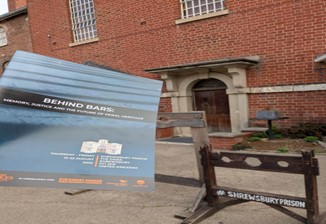
The “Behind Bars: Memory, Justice, and the Future of Penal Heritage” symposium took place on 21–22 August 2025 at Shrewsbury Prison. The event, led by Dr Brianna Wyatt (Oxford Brookes), Dr Rachael Ironside (RGU), and Professor Craig Wight (ENU) and hosted by Joel Campbell of the Cove Group drew an international audience of academics, practitioners, and museum professionals. The symposium represented a unique forum for cross-disciplinary debate on how penal heritage intersects with memory, justice, ethics, and dark tourism.

The setting itself was significant and helped to shape the discussion. Shrewsbury Prison, known as “The Dana,” first opened in 1793. It was rebuilt in the Victorian era before finally closing in 2013. Over its long history, it housed debtors, witnessed public and private executions, and served as a Category B men’s prison. It now operates as a heritage attraction, managed by the Cove Group. It serves as an events venue, where tours, education programmes, and commercial uses highlight the tensions between punishment, memory, and reuse. Presenting and debating inside a decommissioned prison served as a reminder to delegates that penal heritage is not abstract. Rather, it is embodied, emotional, and tied in with the stories that such institutions have often rendered invisible.

Keynote contributions by Dr Justin Piché (University of Ottawa) and Bev Baker (National Justice Museum) anchored the symposium. Justin Piché interrogated the ways prison narratives are constructed and consumed, while Bev Baker offered a critically-informed curatorial perspective on the balance between commemoration and commodification. Delegates repeatedly pointed to the value of such talks, and as one put it, “it was great to see some really excellent, critically-informed curatorial practice.”

symposium

The programme featured parallel panels on themes ranging from penal heritage in the experience economy to the ethics of repurposing decommissioned prisons, and from punishment exhibitions to prison narratives on screen. The mix of papers gave participants space to consider both theoretical insights and practical challenges, with one attendee noting, “the most valuable takeaway is the recognition that narratives—whose voices are included, how stories are told, and for whom, are central to every form of prison reuse.”

Delegates valued the opportunity to network and collaborate, and they welcomed the diversity of perspectives. Others emphasised the personal inspiration gained, noting that even without presenting they left inspired and with new points of contact.

Feedback highlighted the event’s influence on future practice. For museum professionals, it sharpened their awareness of the ethics of penal heritage interpretation, and the risks of reducing complex histories to tourism products. For academics, it reinforced the need to bridge disciplinary divides, connect with practitioners, and confront tensions between profit, ethics, and participation.

Looking ahead, the symposium is expected to generate an edited volume of contributions, and to provide the foundation for a collaborative funding bid, ensuring that the conversations sparked in Shrewsbury carry forward.

Delegates left with stronger networks and sharper insights, but with a collective recognition: whilst penal heritage will always be about buildings and history, it is also about memory, justice, silences, and how we choose to remember, interpret, and engage with difficult pasts.

Written by Professor Craig Wright 

Evolving Landscapes: 33 Years of Transformation in Tourism, Hospitality, and Festival Management Research during my time at Edinburgh Napier

“Over the past three decades, the fields of tourism, hospitality, and festival management have undergone significant transformation—mirroring the shifting priorities of society, global economies, and technological innovation. When I started at Napier Polytechnic in 1991, research was a relatively small part of an academic’s role. The research was often descriptive and focused on basic destination marketing, seasonal trends and economic impact. Today research is integral to our role as academics, involving engagement in quality, impactful research that is increasingly important to the university for teaching, income, recruitment and reputation.

Back in the early 1990s, tourism was an emerging subject at universities. It was often squeezed into geography or business departments, with researchers mostly working with theories borrowed from other subjects and a lack of quality journals dedicated to the field. The big change came as tourism exploded globally and became impossible to ignore economically. Universities started creating dedicated tourism courses and departments. Suddenly, there were academics whose full-time job was to understand how tourism actually works, to contribute to the positive development of tourism, and to develop robust research to inform the quality of our teaching.

This is where institutions like Edinburgh Napier University made a real difference. We set up the first Scottish undergraduate degree in Tourism Management and worked directly with the tourism industry. We showed that we could do serious research that was both intellectually rigorous and genuinely useful to people running visitor attractions, planning festivals and managing destinations. Our commitment to applied research has helped policymakers, destination management organisations and event organisers adapt to real-world problems. During the COVID-19 pandemic, for example, we helped inform recovery strategies that balanced public health with the survival of cultural festivals, tourism and hospitality businesses.

The way researchers gather information has changed dramatically during the past 33 years. In the 1990s, it was mostly based on surveys – I recall posting hundreds of paper surveys to participants in visitor attractions in New Zealand, Australia and Canada – and requesting endless interlibrary loans. Now, technology provides us with instant access to a wealth of sources (perhaps too many!) and allows us to access to thousands of online reviews instantly and predict tourism patterns with sophisticated computer models. That said, I’m not sure much beats the delight we had when hundreds of those international visitor attractions sent back their completed paper surveys!

What’s really exciting is how the field has become genuinely interdisciplinary in a way that makes the research richer and more relevant. In my recent work, I’ve seen this shift in action. I’ve worked with psychologists, economists and HR experts to investigate the complex questions that visitor attraction managers face every day. How do you keep visitors happy while protecting historic buildings? How do you balance tourism income with community needs? How do you recruit and retain a range of employees plus attract a diverse range of audiences? My research aims to gives managers practical tools that they can actually use.

The launch of the Tourism Research Centre (TRC) in 2022 built on our existing research approach and expertise, demonstrating how university research can evolve to meet real-world needs. Tourism research today doesn’t just describe what’s happening – it actively helps shape better experiences for visitors and more sustainable outcomes for attractions and destinations. As TRC Lead, I’m immensely proud of what we’ve achieved in the last 3 years, the networks we’ve developed, and the relevant, impactful work that we’ve undertaken.

After over 33 years at Edinburgh Napier, I’ve decided to retire and will hand over the reins of the TRC to Professor Louise Todd. I’m hugely confident that Louise and the team will continue to develop the TRC and contribute to an even greater understanding of tourism as both an economic driver and a social force for good. I will still be involved in my new role as Professor Emerita and look forward to seeing how the tourism, hospitality and festivals management research arena develops in the coming years.”

Written by: Professor Anna Leask

Celebrating 3 Years of the Tourism Research Centre at Edinburgh Napier University

This month marks a significant milestone for the Tourism Research Centre (TRC) at Edinburgh Napier University as it celebrates its third anniversary. Since its launch in 2021, the Centre has established itself as a hub of impactful and collaborative research in the field of tourism and has not only met but exceeded many of its Key Performance Indicators (KPIs), delivering on its ambitious vision to be a leading voice in tourism research locally, nationally, and globally.

The Centre was conceived with a clear mission: to produce and disseminate high-quality, impactful research that supports sustainable, inclusive, and resilient tourism development. True to this mission, the TRC has led and contributed to numerous interdisciplinary research initiatives focused on, for example, sustainable destination development, community engagement and placemaking, visual methods research and economic impact in the tourism sector. The TRC has also played a vital role in supporting postgraduate research, mentoring early-career researchers, and providing students with opportunities to engage in applied research projects.

A key strength of the Centre has been its commitment to working collaboratively. Over the past three years, the TRC has extended and built strong partnerships with a range of external organisations including VisitScotland, the British Council, UNESCO and Edinburgh Tourism Action Group. These collaborations have enabled the Centre to co-create research that directly informs policy and practice, contributing to a more sustainable and resilient tourism industry.

The TRC has also fostered vibrant relationships with researchers from across the UK and internationally. Drawing on the expertise of Edinburgh Napier colleagues, the Centre has brought together a multi-disciplinary team of academics and research students from, for example, the School of Arts & Creative Industries and the School of Applied Sciences. We also work closely with our Visiting Academics from around the world, whose insights help to expand our global reach and academic exchange. These partnerships have enriched the Centre’s research output and extended its influence across academic and professional communities.

Among the Centre’s notable achievements are a series of high-impact publications, successful funding applications, commercial projects and the delivery of knowledge exchange events and workshops that have brought together academics, industry leaders, alumni, research students and policymakers. This year’s annual Symposium on Innovative Practice in Business Events will be held on 24th June. Our LinkedIn page is an active platform for engagement and dissemination, featuring a fortnightly blog written by our researchers, research students, alumni, and visiting academics — sharing knowledge, best practices, and innovative ideas with the wider tourism community. Please follow the for all our news.

Looking ahead, the TRC remains focused on its core themes of sustainable tourism destinations; cultural heritage management; wellbeing and health tourism; critical studies in tourism; and sustainable festival and event experiences. The Centre is well positioned to continue its leadership in tourism research, particularly as the industry navigates the complex challenges of climate change, evolving consumer behaviour, and technological disruption.

This milestone year is also a moment of transition, as I will retire at the end of August 2025. I was delighted to be appointed as Lead in 2022 and have thoroughly enjoyed shaping the Centre’s vision and success, working with colleagues, businesses and organisations to build a centre of excellence in tourism research. I leave the TRC in the very capable hands of my colleagues – more on this in a blog towards the end of the summer.

As we celebrate this three-year milestone, we extend our thanks to all the collaborators, supporters, and researchers who have contributed to the Centre’s success. The journey so far has laid a strong foundation for continued interdisciplinary growth and impact, and we look forward to what the future holds.

Anna leask headshot

Written by Professor Anna Leask, Tourism Research Centre Lead

Meet the PhD: Hendrik Lattekamp

Welcome to “Meet the PhD”, a section dedicated to introducing to you our PhD candidates, where you will have the opportunity to get to know them and their research and find out how why they have chosen Edinburgh Napier University, and what excites them the most about their PhD journey.

Today, we have Hendrik Lattekamp, a PhD candidate who is currently in his 1st year and decided to pursue a PhD after almost 20 years of working in the aviation industry. His PhD title is “Monitoring and evaluation indicators for just transition to net zero in tourism and events” with supervisors Dr Constantia AnastasiadouDr. Alexandra Witte, Dr Afiya Holder, and Dr Sarah Bortwick Saddler. Hendrik is also an active member of the TRC PhD community, and he has been serving on the organising committee for Edinburgh Napier´s inaugural Doctoral College Student Conference in December 2024. Hendrik has been inspired by his PhD colleagues, and we hope that you will be inspired by reading his words and the enthusiasm he has for his PhD and for actively contributing to research.

If you would like to know more about Hendrik´s research or if you have any questions, you can contact Hendrik here: S.Lattekamp@napier.ac.uk

If you’re interested in undertaking a PhD with us, please email the Tourism Research Centre Lead, Prof. Anna Leask – a.leask@napier.ac.uk

__________________________________________________________________

“I have worked in aviation for almost 20 years and currently serve in a leadership role that involves guiding cabin crews and engaging with a diverse range of passengers for a major European airline. Over the years, I have witnessed how the airline industry brings families, cultures, and businesses closer together, whether through personal visits or trade connections. At the same time, I have encountered many colleagues who are just as deeply passionate about the industry as I am, even as airlines grapple with escalating environmental and social responsibilities. This dynamic—the industry’s power to unite people set against its pressing sustainability challenges—continues to captivate me.

Currently, I am in the first year of my doctoral research at Edinburgh Napier University, where I examine non-financial reporting in the airline industry. My interest in this topic began when I noticed how many airlines struggle to communicate their environmental and social goals and efforts in a way that is both transparent and cohesive. Investigating this phenomenon through the lens of non-financial reporting seemed natural, as these disclosures essentially serve as an airline’s “executive summary” for its broader impact—ranging from greenhouse gas emissions and resource management to labour practices and community engagement. Although several voluntary and mandatory frameworks offer guidelines, there is still a lack of consistency in what gets reported, which can make it difficult to compare airlines or understand their actual impact. Wanting to uncover the root causes behind this fragmented reporting, I decided to examine these disclosures more systematically, looking not only at what is reported but also why certain metrics are highlighted over others.

If we can trace how these documents are produced, particularly the cultural, regulatory, and strategic pressures that guide them, we may identify ways to help both academic researchers and the wider public better grasp an airline’s underlying motives. We might also discover strategies for improving the clarity and relevance of the disclosures themselves, especially when airlines are required to juggle multiple standards and stakeholder expectations. By exploring which reporting tools airlines choose to adopt (and why), we can shed light on whether such choices stem from genuine sustainability commitments, competitive pressures, or mere compliance. Ultimately, my goal is to develop insights that not only help airlines improve the quality of their communication but also facilitate a deeper understanding of the fundamental drivers behind aviation’s efforts to address environmental and social challenges.

One of the most rewarding aspects of my PhD so far has been becoming part of a vibrant research community. Engaging with fellow PhD researchers has been invaluable, not only in refining my work through discussions and feedback but also on a personal level. I have come to understand that undertaking a PhD is as much an intellectual challenge as it is a personal one. Being surrounded by a highly motivated peer group that supports one another has been invaluable in staying focused and driven. Whether it is sharing practical advice on navigating university procedures, exchanging ideas in academic discussions, or simply offering encouragement during challenging moments, this sense of community makes a real difference. A standout experience in this regard, has been serving on the organising committee for Edinburgh Napier’s inaugural Doctoral College Student Conference, in December 2024. As Head of Logistics, I have collaborated with fellow PhD candidates to manage registration, catering, and event coordination. Seeing the breadth of research taking place across the University has been inspiring and has reinforced how much we gain from engaging with colleagues from different disciplines. The opportunity to connect, exchange perspectives, and contribute to a shared academic space has been a highlight of my PhD journey so far.

Embarking on a PhD at a later stage in life has entailed sacrifices and a steep learning curve, but the intellectual challenge has been incredibly rewarding. Meeting other researchers, finding answers to the questions that have long fascinated me, and viewing the aviation industry from entirely new perspectives keeps me motivated. I hope my story encourages others—particularly those from non-traditional backgrounds—to consider doctoral study. If you share my research interests or would like to connect, I’d be happy to continue the conversation.”

The Scottish Tourism Alliance Autumn Conference 2023 – PhD Student Perspectives

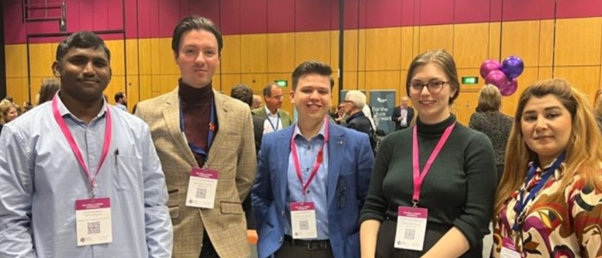
On 31st October 2023, five PhD students (Jack Pedersen, Christopher Barnes, Mahendrran Selvaduray, Homa Rahimi and Judith Spaargaren) from the Tourism & Languages Subject Group attended the Scottish Tourism Alliance Autumn Conference. This blog contains our reflections on the event.   Exploring the conference through the lens of academia from PhD student’s perspective as this blog sheds light on the vibrant discussions and insights shared at this noteworthy event. In approaching this blog, we found the focus to be the intersection of sustainable tourism and digital marketing, vital topics in our ever-evolving industry. In discussing what topics and presentations we found notable, we hope to share some of the experience with you, the reader.

Sustainable Tourism – Bridging the Gap, Mahendrran Selvaduray 

The vision for sustainable tourism was inspiring, emphasising the fusion of practices with unforgettable experiences. This session not only enlightened attendees but also highlighted the transformative power of responsible travel. Another compelling talk by Stephen Whitelaw centred on digital marketing in the tourism landscape. The speaker, an expert in the field, shared groundbreaking strategies to engage travellers authentically. In the era of social media dominance, their insights into digital storytelling and online engagement were invaluable, resonating strongly with our tech-savvy audience.

The new traveller segments discussed by Caroline Bremner of Euromonitor explain that people seeking luxury are known for wanting fancy experiences. In the social aspect, 72% of luxury seekers choose to travel with their partner, perhaps to feel more comfortable. This choice may stem from their desire to share these fancy experiences with loved ones and create special memories together. While a smaller 4% opt for solo journeys, the reason could be to enjoy a relaxing session on their own. This suggests two groups implies the presence of based on spending preferences. Some priorities personal enjoyment and independence, while others emphasis shared family experiences, reflecting diverse values and priorities.

Scotland’s Tourism Strategy, Jack Pedersen

Sustainability plays a prominent role in the national tourism strategy. Marc Crothall (MBE), the conference host, examined the Scotland Outlook 2030 strategy which looks to position Scotland as the world leader in 21st-century tourism and has at its core “responsible tourism for a sustainable future”.

Set up in November 2022, the Tourism and Hospitality Industry Leadership Group (THILG) is the leading industry body for this strategic plan. As the co-chair, Crothall reflected upon the THILG’s first year of operation. Its evidencing endeavours, including stakeholder and activity mapping and international best practice guidelines, have uncovered common themes which he proposes will impact the national strategy. Sustainability, technological advances, transport infrastructure, and Scotland’s communities and people were at the heart of much of Crothall’s presentation. The THILG now looks to develop its missions in supporting recovery, driving investment, and growing a sustainable tourism sector.

The Minister for Small Business, Innovation, and Trade, Richard Lochhead, (MSP) also co-chairs the THILG. His enthusiastic and effusive ministerial address at the conference asserted that the Scottish government is taking the industry seriously. Notably, amid recent Commons debates on the King’s Speech, this support was corroborated by Drew Henry (SNP Economy Spokesperson) who lamented the absence of measures to support the tourism and hospitality industries at a Westminster level.

During his address, Lochhead reiterated the government’s commitment to growth deals of £150 million, further to the £250 million already invested, and praised its impressive economic figures: Scottish tourism and hospitality accounts for 8% of employment and 4% of the country’s GDP. Despite the challenges of the financial climate, skills shortages, and wider geopolitical instability, he reminded us that the growth of the industry is outstripping the growth of the Scottish economy as a whole and that there is a case for optimism.

Our Proud and Passionate People: Tourism Rising Stars and Hospitality Heroes, Judith Spaaragen

 Sustainability was a word which came up often, but to me, no presentation made it a more tangible concept than Kelly Johnstone’s. It can be easy, as an academic, to overlook the actual people involved in the industries we write about.

Tourism is often spoken about in figures and faceless masses, but Kelly, COO at the Springboard Charity, placed people front and centre. The Springboard Charity provides opportunities for young and disadvantaged people to develop hospitality and tourism careers, and in her presentation she made clear exactly how important this was not just to the people the charity helps, but also the industry to which they contribute. If Scotland is to be the sustainable tourism destination of the world, then we must make sure that sustainability flows reaches the people working in it. This talk was thus a welcome look at that how that future might look.

Deciphering Communication Codes in Hospitality, Homa Rahimi  

Embarking on the intricate journey of personal and professional well-being, the recent Scottish Tourism Alliance Conference brought to light a compelling discourse spearheaded by Cathy MacDonald, centred around addressing fundamental emotional concerns. Amidst the formidable challenges posed by market competition and workforce scarcity in the dynamic tourism and hospitality sector, the recognition and fulfilment of employees’ emotional needs emerge as a strategic imperative.

Organizations finely attuned to the emotional well-being of their workforce yield substantial returns in terms of commitment, heightened productivity, and talent retention. Nurturing a culture of transparent communication, where employees authentically feel acknowledged, not only mitigates turnover but also lays the groundwork for organizational justice, serving as a potent talent attraction strategy. This approach, particularly pivotal in the aftermath of the Covid-19 era, acts as a linchpin in cultivating a resilient and contented team.

In an industry where reputation and word of mouth wield considerable influence, prioritizing employee well-being becomes a cornerstone of an effective human resource strategy. By fostering a workplace culture that places a premium on its staff, organizations not only elevate their sector reputation but also optimize return on investment, thereby fostering a positive and efficient work environment.

Edinburgh Napier University’s Aspiring Tourism Alumni, Christopher Barnes 

After previous years of online conferences, where morning networking sessions were mere button on the edge a computer screen. The smell of freshly brewed coffee from Leith’s Catering in the EICC foyer, on the morning of, The Scottish Tourism Alliance Autumn Conference, was a welcome reminder that the days of our industries face to face restrictions, are slowly becoming a thing of the past! Tourism and hospitality in Scotland, is ready, and is about to thrive! Inspiring visions of industry officials and testimonies of young rising stars were only a fragment of the exciting and news put forward in a day of collective industry buzz!!! One thing is certain, Edinburgh Napier and more importantly the Tourism and Languages Subject Group, plays a significant role in producing emerging industry talent, in both the tourism and festival and events sectors. Both inspiring and motivating, were the testimonies of Edinburgh Napier University alumni of recent years, projected on the screens for a conference suite filled of Scottish Tourism Industry Officials. The hall witnessed how Edinburgh Napier University’s Tourism Research Centre, produces highly qualified tourism management personnel and offering degrees, both at undergraduate and post-graduate level, filled with both academic and practical content relevant for an everchanging and immersive tourism industry!

Closing Thoughts:

This blog serves as a testimony to the impactful ideas exchanged and the collaborative spirit that defines our tourism industry. With each presentation, we found inspiration and motivation, underscoring the potential for positive change within our tourism community.

Once again, thank you, the TRC, for this opportunity to share our unique perspective on the TRC webpage. As PhD students, we stand at the intersection of academic inquiry and practical innovation, embodying the spirit of continuous learning and growth. Let us continue this journey together, shaping the future of tourism one insightful conference at a time. Hope we can attend more conferences in the future.
Festivals as networked communities, and a PhD journey to Tilburg University

By Dr David Jarman

In the world of festivals and communities, relationships matter. Festival managers and producers understand the overlapping links, both professional and private, amongst their colleagues. Freelancers and graduates developing their careers appreciate that opportunities may come by way of personal connections. The future success of entire festival organisations can depend on forging, maintaining and exploiting associations with collaborators, suppliers and allies.

Academic literature in the field of festival studies has sought to better understand the interpersonal dimension of these events, from different conceptual standpoints, in a range of contexts. However, in this festival environment there remains an opportunity, if not a need, to establish the place of network-based research methods and perspectives in the development of academic and industry understandings of social relationships. Networks underpin these connections and communities, from simple ties between pairs of people, to complex webs spanning hundreds of individuals, venues, performing companies, supply chains and audience members.

Earlier this summer, just before the beginning of term, I headed over to The Netherlands to complete my doctorate. The research is a response to the question: “What can social network analysis, and a network-orientated perspective, contribute to understanding the relationships within festival and creative communities?”

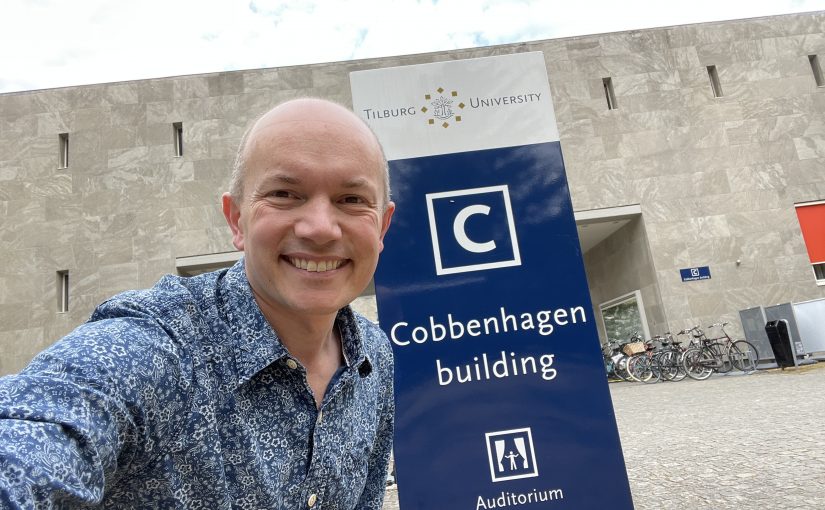
My PhD was with Tilburg University, where I had been a student for three years through the period of Covid lockdowns. The empirical work that contributed to it was built up over a number of years though, through a range of different journal articles, conference presentations and book chapters. It has been a privilege and an interesting journey over that time to complete this range of different projects, and to work with different people along the way. Taking this “by publication” route meant that I was able to focus on different projects, involving an array of primary data types, and various research methodologies. I was also able to find different homes for my work, with the support of many editors and colleagues along the way. Presenting my work at different conferences and events allowed me to tell people about my work and generate some interest in the network approach that I’ve been taking.

Throughout my work I’ve been focusing on different types of social network analysis. SNA is a growing area of academic research, partly driven by the opportunities that it presents, but also because of the interest in networks that has developed over the past 20 years. This interest is partly driven by widespread use of social media and communications technologies, but also through the shared experience of the Covid-19 pandemic and its spread across the globe. I was able to take this interest and apply it to the context of festivals and events, showing that there is a lot to be learnt and concluded from a network focused approach.

Going through the Dutch system was very interesting and rewarding, and very different from the experiences of colleagues who went through a UK system. My trip to Tilburg in late summer was primarily for a public defence of my PhD: I was given an hour on stage in which to present my work, and then to answer questions from a panel of assembled professors. It was a good experience, and my supervisors were confident that I would get through it, so I was happy to have my family with me to see it! I also produced a public publication so to speak: this took the form of multiple copies of a printed book with a shiny cover, that people who attended the event were free to take away with them. It has been an interesting journey to turn my PhD thesis into something which can quite comfortably sit on a bookshelf in a library, or in someone’s study.

The publication of the book in this form, and also as a PDF freely available from the Tilburg University repository, means that the various publications that I collected over the years are now in one place. If anyone wants to know what I’ve done over the past 10 years or so, they can head to the Tilburg University website and there it will be.

The journey to Tilburg was fantastic, and the good weather really helped. I was also very happy that one of my colleagues at Napier, Professor Jane Ali-Knight, was one of my supervisors, and therefore also at the public defence. Working with her, and my director of studies Professor Greg Richards, has been a really rewarding and valuable experience in itself. Greg and I, for example, published a special issue of the Event Management academic journal in 2021. We also collaborated on some events through the ATLAS group of academics, and we shall continue to build on this.

Final thanks from me must go to two groups of people. One is my family, my partner and young son who came out to the Netherlands with me. We enjoyed some lovely days in Amsterdam, Tilburg, and nearby Breda. The other group of people are the various administrators, support staff and Beadles who helped me at Tilburg University. They are a fantastic team, and I was really lucky to work with such great people through the six-month journey from thesis submission to public defence and book publication. The Tilburg campus is beautiful, the atmosphere is lively, and I was very well looked after by everyone I met.

In terms of my work as an academic at Edinburgh Napier, I am now in a position to tell anyone that there is a collected body of my work in that book. I’m also very happy that I can now call myself Dr. This will open up future opportunities to me in terms of research and other work, with additional freedoms to treat each project on its own merits rather than being part of a bigger endeavour. I will, of course, retain my interest in festivals, networks, and communities, and I will continue to share this with people at every opportunity that comes my way.

Introducing Lynn Minnaert, our new Head of Subject

We sat down for a chat with Professor Lynn Minnaert, who has recently joined Edinburgh Napier University as the Head of Subject for Tourism and Languages. In this post, we find out more about her background and aspirations.

Can you tell us a bit about your background?

I am originally from Belgium. I have worked in tourism education for the past 20 years, most recently as the Academic Chair at the Tisch Center of Hospitality at New York University, and before that at the University of Surrey and the University of Westminster. I have also worked on projects in range of other countries, including Kazakhstan, Finland, Sweden, Dominica and Brazil.

What is your area of research interest? 

My research interest and passion is social inclusion in tourism: I have worked on studies about social tourism for low-income groups, family tourism, event legacies and DEI in the event sector.

Why did you decide to join Edinburgh Napier University?

I was excited about joining ENU because of its strong reputation in tourism, hospitality, events and intercultural communication. The teaching team is creative and dynamic, and has strong industry networks, which benefit students in and outside of the classroom. We have subject specialists who are world-renowned in their fields, and are one of the oldest providers of tourism, hospitality and event education in the nation. Also, Edinburgh is an amazing location to learn about and research these topics!

What are your aspirations for the subject group?

My aspirations are to strengthen our position and reputation as a centre for teaching and research excellence, and as a hub for industry innovation. The objective is that by delivering student-centred, applied and rigorous programmes, as well as producing cutting-edge research, our students, alumni and staff will play leading roles in their industries and communities, as a force for good.

Thank you, Lynn, for your time taking this interview. We are delighted to have you in the team and look forward to working together.

Where are they now? ENU alumnus, Brianna Wyatt, gives an overview of her career so far

Dark tourism is an increasingly popular subject nowadays. It implies the idea of visiting tourist attractions that are associated with death and suffering.

Edinburgh Napier alumnus, Brianna Wyatt has been researching dark tourism for many years, and is now a senior lecturer at Oxford Brookes University. She gave us an overview of her career and an update on where she is now.

Originally from California, I moved to Edinburgh in 2014 to undertake the MSc programme in Heritage and Cultural Tourism Management. After graduating, I was awarded Edinburgh Napier University’s 50th Anniversary Scholarship to undertake a PhD study in tourism.

Although initially I sought to explore ‘dark’ World Heritage Sites, which landed me in an internship at UNESCO World Heritage Centre in Paris (2015), I completed my PhD in 2019 focusing on the influences of interpretation at lighter dark visitor attractions. This effort was supported by my part-time work as a guest services staff member at The Real Mary King’s Close in Edinburgh and a Duty Manager for Edinburgh Dungeons, and later London Dungeons.

Supported by my previous awards (MA Humanities-History, California State University of Dominguez Hills, 2015; MA Museum Studies, Oklahoma University, 2012), and a PGC in Business Research Methods from Edinburgh Napier University (2017), I quickly became employed after graduation (2019) with Bath Spa University, as a Senior Lecturer in tourism at their sister campus in London.

I later made a transition to Oxford Brookes University, where I am now a Senior Lecturer in tourism and events and the PG Subject Coordinator for the Hospitality, Tourism and Events programmes. I am also an active academic with a research interest in interpretation design of dark tourism experiences.

In addition, I have an interest in experience design for heritage tourism, as well as events and festivals. I have acted as a consultant for a Horrible Histories workshop, providing insight into interpretation of dark histories, and have taken up two separate External Examiner posts for tourism and events programmes at two universities in Scotland.

Most recently, I have been exploring defunct penal institutions, on a global scale, and their conversion into places of accommodation, which will be shown in forthcoming publications. I had the opportunity to showcase my research relating to edutainment interpretation within lighter dark tourism at Edinburgh Napier University’s dark tourism symposium on 5 May 2022.

Congratulations, Brianna, on all your achievements, we couldn’t be more proud!

If you too have an area of interest you would like to research whilst undertaking a PhD with us, please email Tourism Research Centre Lead, Prof. Anna Leask.