33rd Nordic Symposium on Tourism and Hospitality Research

From the 17th-19th September, I had the pleasure of attending the 33rd Nordic Symposium on Tourism and Hospitality, hosted by the Centre for Regional and Tourism Research (CRT) on the island of Bornholm, Denmark, under the theme “The transformative power and potential of tourism”.  The Nordic Society for Tourism and Hospitality Research (Northors), who organise the annual Nordic symposium, provides a platform for the development of hospitality and tourism in Nordic countries- Denmark, Sweden, Finland, Norway and Iceland, and surrounding areas in a European and global context.
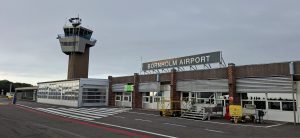
picture of airport

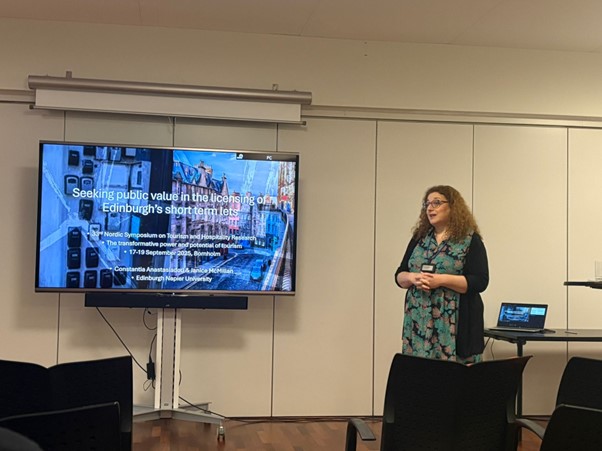
I presented findings from a public engagement activity on how making souvenirs at the destination can support visitor environmental education, with Drs. Xinguyu (Chloe) Tao and Sam Vettese from the School of Design at Edinburgh Napier University.  I presented a second paper titled seeking public value in the licensing of Edinburgh’s short term lets from my interdisciplinary work with Dr. Janice McMillan, Human Resource Management Group, at Edinburgh Napier University. Both papers were very well received and led to some very engaging conversations about what we truly value in tourism and its transformative potential for destinations, businesses, visitors and individuals. I was able to reconnect with researchers from Denmark and make new connections with participants from Finland, Norway and Scotland!
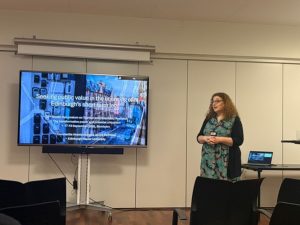
Professor giving presentation

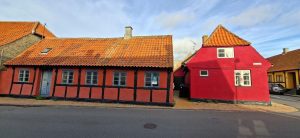
The island setting was significant for the conference – Anders Wiberg, director of destination Bornholm Forside – Destination Bornholm ApS – vi arbejder for turismen) discussed how the island has  positioned itself as a year-round destination for visitors, capitalising on nature, music and the island’s reputation as Denmark’s leading gastronomy destination.

The Green Solution House Hotel (GSH) which was the conference venue, is a global pioneer of sustainable hotel operations and design, named by The Guardian (UK) as one of the most sustainable hotels in Europe in 2021.
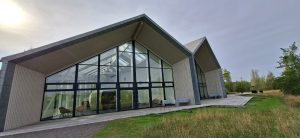
One of our evening activities involved setting on an island food tour, where we were lucky to sample locally produced drinks and participate in an interactive session with local entrepreneurs on the future of Bornholm as a food destination.

Additionally, Bornholm is a Maker’s Island. It has a vibrant arts and craft scene and is the first place in Europe and first island in the world to be designated World Craft Region, for producing unique handicrafts.

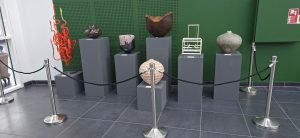
Edinburgh Napier Visiting Professor, Greg Richards, provided one of the keynote presentations entitled (Transforming Culture In the Curated Countryside) as part of the CROCUS project (www.crocus.europe.eu) around the transformation of tourism and experiences in rural areas through the transfer of gentrification processes usually associated with urban development.  Another highlight of the conference was the panel conversation “Enough with the rhetoric: How can we effectively work with tourism’s growth and challenges in the years to come?  considered how the work academics can inform broader discussions around the value of tourism and tourism policy priorities.

During the gala dinner, we enjoyed local folklore and storytelling accompanied by traditional Danish bagpipe music. The similarity to Scottish bagpipes was hard to miss and much of the island setting, pride in local food, heritage and cultural tradition, also served to remind us, how tourism can transform places and people if managed thoughtfully and with the local community at the driving seat.

Written by Professor Constantia Anastasiadou
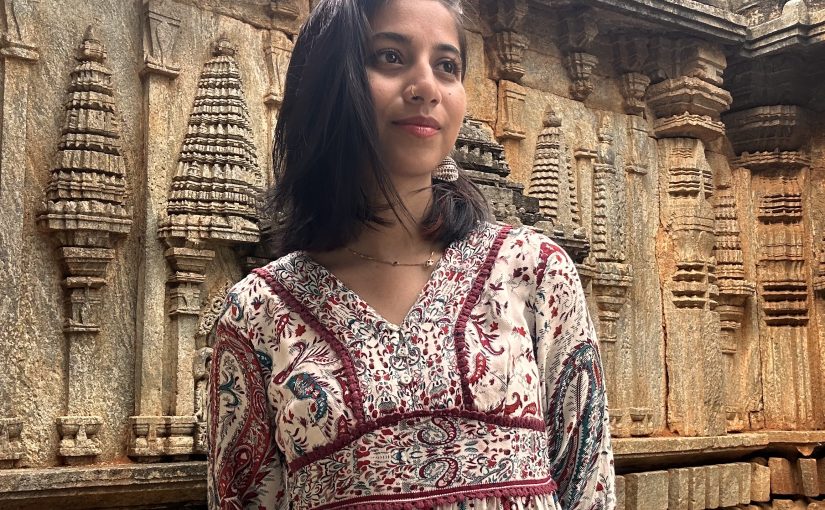
Postgraduate Student Dissertations – Meet Sanjana MSc International Heritage & Cultural Tourism Management

Bridging Nature and Culture in the Western Ghats: Rethinking Mixed Heritage Management

The Western Ghats in India, a UNESCO World Heritage Site, represent a rare case where natural and cultural values overlap. My dissertation examined how these “mixed heritage” landscapes are managed, highlighting the tensions between international conservation frameworks and local traditions of stewardship.

Through interviews with government officials, conservationists, tourism operators, journalists, and community members, I explored different perceptions of the relationship between nature and culture. The findings revealed a disconnect between top-down policies—often rooted in Western conservation thought—and the lived realities of local communities, who view nature and culture as inseparable.

This gap creates challenges in governance, sustainable tourism, and conservation practice. Yet it also opens opportunities: by integrating local voices and indigenous knowledge systems into management strategies, heritage sites like the Western Ghats can move toward more inclusive and resilient futures.
The study contributes to global debates on sustainable heritage management, while offering practical recommendations for India’s conservation and tourism sectors. By rethinking how we bridge global frameworks with local perspectives, mixed heritage sites can be safeguarded not only as ecological treasures but also as living cultural landscapes.

Read the full dissertation by Sanjana Simha Chennarayapatna Umesha, MSc International Heritage & Cultural Tourism Management

Meet the Visiting Professor – Dr Greg Richards

Travel is part of my DNA. I started travelling at a time when Brits still looked at you strangely if you had a suntan. As tourism became a mass phenomenon, I also took full advantage, travelling around Europe and kicking off my career as a research assistant on a PhD project with Chris Devereaux in the Algarve. I went on to work in the industry with my father, who had worked in airlines and hotels, and had set up a tourism research and marketing consultancy (TRAM), which I am still running today.

I was also lucky enough to start my academic career at a time when the EU was beginning to support Erasmus exchanges. That allowed me to meet lots of researchers from different countries and backgrounds, which eventually took me to the Netherlands to work at Tilburg University. In those days, teaching was still in Dutch, so of course I had to learn the language as well. That was my gateway into the culture, and an important basis for learning other languages later on. I set up the Association for Tourism and Leisure Education and Research (ATLAS), which generated yet more international contacts. ATLAS also brought me in touch with Napier, who has been a key member of the network for almost 20 years now. Napier staff were active participants in the ATLAS Cultural Tourism Research Project, and it was cultural tourism that took me to Spain in 2003, with a Marie Curie Post-Doc on festivals in Catalunya. I worked at the Interarts Foundation in Barcelona for a few years and also moved TRAM to Spain.

Coming back to the Netherlands a few years later, I had more contact with Napier, via events research. As my work developed around ‘eventful cities’, Edinburgh became a natural focus for collaboration. From Breda University, we sent groups of students (178 in 2012!) to Edinburgh, where they were ably hosted by Napier staff. The events’ connection with Napier continued through the ATLAS Events Special Interest Group, for which Napier organised a meeting in 2020. Unfortunately, this was during Covid, so I didn’t actually get to Edinburgh! But I did supervise David Jarman’s PhD thesis on Social network analysis and festival relationships together with Jane Ali-Knight. One thing I love about being linked to Napier is catching up with other old friends. These include fellow Visiting Professor Brian King on many research projects over the years, Angela Chu, who worked with Brian and I on cultural tourism and placemaking in the Greater Bay Area of China, and Afiya Holder, who I collaborated with at the UNWTO.

Written by: Professor Greg Richards