Undergraduate Student Dissertations – Meet Natasha BA (Hons) International Business Management

Culture shocks encountered by Spanish expatriates in UK Hotels: Adapting to British working culture

“My dissertation explores the culture shocks experienced by Spanish expatriates working in UK hotels, focusing on how they adapt to British workplace culture. This research is fundamental as the hospitality industry heavily relies on international staff, particularly in the hotel industry. Understanding these cultural dynamics can improve employee integration, satisfaction, and retention. The findings offer practical insights for HR teams and hotel managers to create an inclusive and supportive work environment in a multicultural setting, in addition to providing Spanish expatriates planning to work or currently working in a British hotel with information regarding the cultural differences they may experience and how best to navigate them. Through qualitative interviews, key differences between British and Spanish working culture in the hotel industry were identified, including communication barriers, differences in management styles, and contrasting attitudes towards hierarchy and formality. This research also contributes to the understanding of different methods hotels may use to support Spanish expatriates in adjusting to their new work environment.”

Read the full dissertation by Natasha Anderson, BA (Hons) International Business Management

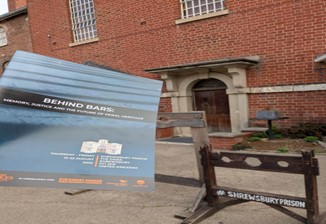
Behind Bars: Memory, Justice, and the Future of Penal Heritage Symposium

The “Behind Bars: Memory, Justice, and the Future of Penal Heritage” symposium took place on 21–22 August 2025 at Shrewsbury Prison. The event, led by Dr Brianna Wyatt (Oxford Brookes), Dr Rachael Ironside (RGU), and Professor Craig Wight (ENU) and hosted by Joel Campbell of the Cove Group drew an international audience of academics, practitioners, and museum professionals. The symposium represented a unique forum for cross-disciplinary debate on how penal heritage intersects with memory, justice, ethics, and dark tourism.

The setting itself was significant and helped to shape the discussion. Shrewsbury Prison, known as “The Dana,” first opened in 1793. It was rebuilt in the Victorian era before finally closing in 2013. Over its long history, it housed debtors, witnessed public and private executions, and served as a Category B men’s prison. It now operates as a heritage attraction, managed by the Cove Group. It serves as an events venue, where tours, education programmes, and commercial uses highlight the tensions between punishment, memory, and reuse. Presenting and debating inside a decommissioned prison served as a reminder to delegates that penal heritage is not abstract. Rather, it is embodied, emotional, and tied in with the stories that such institutions have often rendered invisible.

Keynote contributions by Dr Justin Piché (University of Ottawa) and Bev Baker (National Justice Museum) anchored the symposium. Justin Piché interrogated the ways prison narratives are constructed and consumed, while Bev Baker offered a critically-informed curatorial perspective on the balance between commemoration and commodification. Delegates repeatedly pointed to the value of such talks, and as one put it, “it was great to see some really excellent, critically-informed curatorial practice.”
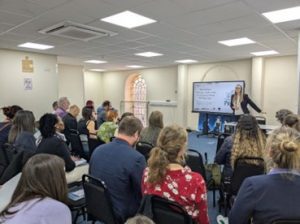
symposium

The programme featured parallel panels on themes ranging from penal heritage in the experience economy to the ethics of repurposing decommissioned prisons, and from punishment exhibitions to prison narratives on screen. The mix of papers gave participants space to consider both theoretical insights and practical challenges, with one attendee noting, “the most valuable takeaway is the recognition that narratives—whose voices are included, how stories are told, and for whom, are central to every form of prison reuse.”

Delegates valued the opportunity to network and collaborate, and they welcomed the diversity of perspectives. Others emphasised the personal inspiration gained, noting that even without presenting they left inspired and with new points of contact.

Feedback highlighted the event’s influence on future practice. For museum professionals, it sharpened their awareness of the ethics of penal heritage interpretation, and the risks of reducing complex histories to tourism products. For academics, it reinforced the need to bridge disciplinary divides, connect with practitioners, and confront tensions between profit, ethics, and participation.

Looking ahead, the symposium is expected to generate an edited volume of contributions, and to provide the foundation for a collaborative funding bid, ensuring that the conversations sparked in Shrewsbury carry forward.

Delegates left with stronger networks and sharper insights, but with a collective recognition: whilst penal heritage will always be about buildings and history, it is also about memory, justice, silences, and how we choose to remember, interpret, and engage with difficult pasts.

Written by Professor Craig Wright 
Evolving Landscapes: 33 Years of Transformation in Tourism, Hospitality, and Festival Management Research during my time at Edinburgh Napier

“Over the past three decades, the fields of tourism, hospitality, and festival management have undergone significant transformation—mirroring the shifting priorities of society, global economies, and technological innovation. When I started at Napier Polytechnic in 1991, research was a relatively small part of an academic’s role. The research was often descriptive and focused on basic destination marketing, seasonal trends and economic impact. Today research is integral to our role as academics, involving engagement in quality, impactful research that is increasingly important to the university for teaching, income, recruitment and reputation.

Back in the early 1990s, tourism was an emerging subject at universities. It was often squeezed into geography or business departments, with researchers mostly working with theories borrowed from other subjects and a lack of quality journals dedicated to the field. The big change came as tourism exploded globally and became impossible to ignore economically. Universities started creating dedicated tourism courses and departments. Suddenly, there were academics whose full-time job was to understand how tourism actually works, to contribute to the positive development of tourism, and to develop robust research to inform the quality of our teaching.

This is where institutions like Edinburgh Napier University made a real difference. We set up the first Scottish undergraduate degree in Tourism Management and worked directly with the tourism industry. We showed that we could do serious research that was both intellectually rigorous and genuinely useful to people running visitor attractions, planning festivals and managing destinations. Our commitment to applied research has helped policymakers, destination management organisations and event organisers adapt to real-world problems. During the COVID-19 pandemic, for example, we helped inform recovery strategies that balanced public health with the survival of cultural festivals, tourism and hospitality businesses.

The way researchers gather information has changed dramatically during the past 33 years. In the 1990s, it was mostly based on surveys – I recall posting hundreds of paper surveys to participants in visitor attractions in New Zealand, Australia and Canada – and requesting endless interlibrary loans. Now, technology provides us with instant access to a wealth of sources (perhaps too many!) and allows us to access to thousands of online reviews instantly and predict tourism patterns with sophisticated computer models. That said, I’m not sure much beats the delight we had when hundreds of those international visitor attractions sent back their completed paper surveys!

What’s really exciting is how the field has become genuinely interdisciplinary in a way that makes the research richer and more relevant. In my recent work, I’ve seen this shift in action. I’ve worked with psychologists, economists and HR experts to investigate the complex questions that visitor attraction managers face every day. How do you keep visitors happy while protecting historic buildings? How do you balance tourism income with community needs? How do you recruit and retain a range of employees plus attract a diverse range of audiences? My research aims to gives managers practical tools that they can actually use.

The launch of the Tourism Research Centre (TRC) in 2022 built on our existing research approach and expertise, demonstrating how university research can evolve to meet real-world needs. Tourism research today doesn’t just describe what’s happening – it actively helps shape better experiences for visitors and more sustainable outcomes for attractions and destinations. As TRC Lead, I’m immensely proud of what we’ve achieved in the last 3 years, the networks we’ve developed, and the relevant, impactful work that we’ve undertaken.

After over 33 years at Edinburgh Napier, I’ve decided to retire and will hand over the reins of the TRC to Professor Louise Todd. I’m hugely confident that Louise and the team will continue to develop the TRC and contribute to an even greater understanding of tourism as both an economic driver and a social force for good. I will still be involved in my new role as Professor Emerita and look forward to seeing how the tourism, hospitality and festivals management research arena develops in the coming years.”

Written by: Professor Anna Leask