
Category: Theatre

  • When Sound Becomes the Camera: Karim Beidoun on Audio Drama and Sonic Storytelling

    Karim Beidoun

    How do you tell a visual story when the audience cannot see anything?

    The question sits at the centre of audio drama. Characters move through spaces. Doors open and close. Crowds gather. Vehicles arrive. Relationships develop. Entire worlds emerge. Yet none of these things can be shown directly. There is no camera to establish a location, no lighting to direct attention, and no visual performance to reveal emotion. Everything must be communicated through sound.

    During an online guest lecture for Edinburgh Napier University, alumnus Karim Beidoun explored this challenge through examples drawn from a career that has spanned radio, podcasting, and large-scale audio drama production. Having worked on more than 150 episodes of drama for BBC Arabic before becoming CEO and Head of Content at Hakawati, one of the leading podcast networks in the Middle East and North Africa, Beidoun offered a detailed account of how narrative worlds can be built entirely through listening. What emerged throughout the lecture was a striking observation. Audio drama is not simply theatre without pictures. It requires its own way of thinking about storytelling.

    Many of the creative teams involved in the BBC Arabic productions initially approached drama through habits developed in film and television. Writers imagined scenes visually. Directors thought in terms of camera positions and visual composition. Actors relied upon physical performance. Yet audio drama quickly exposed the limitations of these assumptions. A listener cannot see a gesture. A facial expression disappears completely. Costumes, scenery, lighting, and visual spectacle cease to exist. Techniques that appear essential in visual media suddenly become irrelevant. New solutions have to be found.

    This challenge became particularly significant during the development of the BBC Arabic drama project. Producing more than 150 episodes created practical pressures that demanded efficient workflows and consistent creative decisions. According to Beidoun, around eighty-five percent of each episode was effectively performed live during recording. Rather than constructing every scene through extensive post-production, actors, directors, and sound teams worked together to create performances that already contained much of the final dramatic shape. The result was a process that often resembled theatre, though with an important difference. The microphone became the audience.

    This apparently simple observation transforms almost every aspect of performance. In film, an actor’s relationship with the camera determines how a scene is perceived. In audio drama, that role is occupied by the microphone. Distance matters. Position matters. Movement matters. A character speaking directly into a microphone creates a very different impression from a character speaking several metres away. Walking towards a microphone changes the perceived relationship between characters. Turning away alters emotional emphasis. Physical movement becomes part of the storytelling process. Beidoun described how actors gradually learned to think about microphones not merely as recording devices but as narrative tools. A performer might physically move around the recording space to create the illusion of travelling through an environment. Multiple actors could position themselves carefully to establish relationships within a scene. Changes in distance could suggest intimacy, conflict, uncertainty, or power. Listeners never see these movements taking place, though they experience their consequences. The result is a form of performance that remains deeply physical despite the absence of images.

    This idea extends beyond acting. One of the most interesting themes running throughout the lecture concerned the relationship between sound and space. Audio drama constantly faces a problem that visual media solves almost instantly. How does the audience know where they are? A film can establish a location through a single shot. Audio drama has no such luxury. Environments must be communicated indirectly through acoustics, ambience, movement, and carefully selected details. A refugee camp, for example, cannot simply be shown. Instead, listeners encounter fragments that encourage them to construct the space themselves. Distant voices. Wind moving through temporary structures. Children playing nearby. Footsteps crossing uneven ground. Vehicles arriving and departing. None of these sounds individually explains the location. Together, however, they create an impression of place. The listener begins assembling an environment from acoustic evidence.

    Throughout the lecture, Beidoun repeatedly returned to the importance of this imaginative participation. Audio drama succeeds partly because listeners become active collaborators in the storytelling process. Images are not delivered fully formed. They are constructed internally. A scene therefore exists simultaneously in two places: within the production itself and within the imagination of the audience. Different listeners may visualise the same environment differently, though all are guided by the same sonic information.

    This collaborative relationship helps explain why realism in audio drama can be surprisingly complicated. Beidoun discussed examples where literal accuracy did not always produce the most convincing dramatic result. A gunshot recorded exactly as it sounds in reality may fail to meet audience expectations shaped by decades of cinema and television. Real environments may contain details that distract rather than support narrative clarity. Sound designers therefore find themselves navigating a space between documentary realism and dramatic communication. The objective is not necessarily to reproduce reality exactly. The objective is to create experiences that audiences recognise and understand. Authenticity remains important, though authenticity is often perceptual rather than literal. A sound may require adjustment, enhancement, or simplification in order to communicate effectively within a narrative context. Audio drama constantly balances realism against intelligibility.

    Questions of storytelling also influenced Beidoun’s discussion of directing. Directors working in visual media often focus heavily on what appears within the frame. Audio drama requires a different form of attention. Rather than asking what the audience sees, directors must ask what the audience hears and, perhaps more importantly, what they imagine. Beidoun described situations in which directors were encouraged to close their eyes and listen rather than relying upon visual assumptions. Decisions that appeared obvious on paper often changed once they were evaluated as purely auditory experiences.

    This shift in perspective gradually leads towards a different understanding of sound design itself. Throughout the lecture, Beidoun repeatedly suggested that audio drama sound designers occupy a role remarkably similar to cinematographers. Cinematographers guide attention through framing, movement, focus, and composition. Audio drama practitioners achieve comparable objectives through sound. Ambiences establish environments. Movement reveals relationships. Perspective shapes understanding. Distance communicates emotional meaning. Although the tools differ, the underlying objective remains surprisingly similar. Both disciplines guide audiences through narrative worlds.

    One consequence of this approach is that audio drama demands particularly careful listening. Small details often carry significant narrative weight. A door opening in the background may reveal the presence of a new character. Changes in room acoustics may indicate movement between locations. A subtle environmental sound may establish context more effectively than direct exposition. Listeners become sensitive to information that might pass unnoticed in visual media. Sound is no longer supporting the story. Sound becomes the primary vehicle through which the story exists.

    Seen in this light, many of the practical challenges discussed throughout the lecture begin to look different. Microphone technique is not simply a recording concern. Blocking actors around a studio is not merely a logistical necessity. Ambiences do more than create atmosphere. Decisions about movement, distance, performance, and acoustics all contribute to a single objective: helping listeners construct a coherent mental image of a world they cannot see.

    This helps explain why Beidoun repeatedly described audio drama as requiring a different way of thinking. Writers learn to write for ears rather than eyes. Directors learn to listen rather than watch. Actors learn to perform for microphones rather than cameras. Sound designers become responsible for many of the functions that visual media normally assign to cinematography, production design, and editing. The challenge is not reproducing techniques borrowed from film or television. The challenge is understanding what audio can do on its own terms.

    Looking back across the lecture, what emerges most clearly is that audio drama succeeds when listeners become active participants in the storytelling process. Environments are suggested rather than shown. Characters are heard rather than seen. Spaces emerge from collections of sonic details rather than visual images. The audience completes the process, assembling those fragments into people, places, and events.

    Audio drama does not show listeners a world.

    It gives them the materials to imagine one.
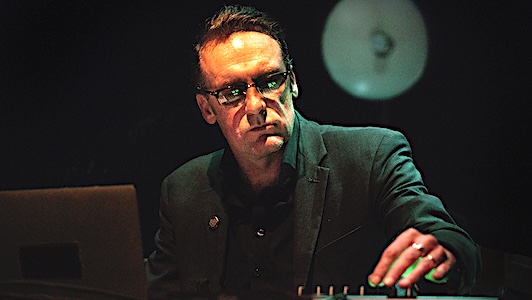
  • How Does Sound Change Meaning? Michael Begg on Context, Sound Art, and Listening

    Michael Begg

    A dog growling. A tram brake. A crowd. A gust of wind. None of these sounds are particularly remarkable on their own. Yet remove them from their original contexts, place them into new relationships, and they can become something entirely different. A crowd can become threatening. Machinery can sound ritualistic. Environmental recordings can acquire symbolic meanings. Familiar sounds can begin behaving in unfamiliar ways.

    Michael Begg’s guest lecture repeatedly returned to this possibility. Although the talk touched upon theatre, recording, installation, soundscape, listening, and sound art, a deeper question seemed to connect them all: how does sound change meaning when it is removed from one context and placed into another?

    As an Edinburgh Napier alumnus whose work spans sound design, sound art, theatre, installation, recording, and performance, Begg described a practice that resists easy categorisation. Throughout the lecture, sounds rarely remained fixed within the roles normally assigned to them. Recordings became artistic material. Environmental sounds became narrative devices. Ambiences acquired symbolic significance. Boundaries between documentation and invention, reality and fiction, atmosphere and storytelling repeatedly began to blur. Rather than treating these ambiguities as problems requiring resolution, Begg appeared to embrace them as opportunities for discovery.

    Conventional discussions of sound design often emphasise clarity. Sound helps audiences understand where they are, what they are looking at, and how events relate to one another. It can establish location, direct attention, reinforce emotion, and support narrative. Much of Begg’s work points towards a different possibility. Sound can also be used to create uncertainty. Rather than helping audiences settle into a stable interpretation of the world, it can encourage them to question relationships between sounds, places, memories, and meanings. Listening becomes less a process of receiving information and more a process of exploration.

    Underlying this approach is a simple observation. Sounds rarely possess fixed meanings of their own. A sound acquires significance through context. A growling dog heard in a park on a sunny afternoon communicates something different from the same growl heard through a wall in the middle of the night. A crowd may suggest celebration, protest, danger, belonging, anonymity, or threat depending upon where it is heard and what surrounds it. Even seemingly ordinary sounds become surprisingly unstable once they are removed from their expected environments. Meaning emerges not solely from individual sounds but from the relationships established between them.

    Beneath many of the lecture’s examples sat a recurring fascination with recording itself. Capturing a sound does more than preserve it. It removes it from the moment that produced it and makes it available for entirely new purposes. Once a sound has been recorded, it can be relocated, layered, manipulated, combined with other sounds, and assigned functions that its original source could never have anticipated. A recording ceases to be merely evidence that something happened. It becomes creative material in its own right.

    That perspective helps explain Begg’s interest in the early history of recording technologies. His discussion of Édouard-Léon Scott de Martinville’s phonautograph was not simply a historical diversion. What appeared to fascinate him was the possibility that recording did not always imply playback. Sound could be captured without being heard again. Listening, memory, recording, and time were once connected in very different ways. Reflecting on those early technologies encourages a broader appreciation of how profoundly recording has reshaped human relationships with sound.

    For most of human history, sounds were inseparable from the moments that produced them. A voice existed only while somebody was speaking. A performance existed only while it was being performed. Once the event ended, the sound disappeared. Recording altered that relationship fundamentally. Sounds could survive their sources. Moments could return. Listeners could revisit events that no longer existed. This transformation changed more than preservation. It also altered memory itself. Human memory rarely reproduces experiences exactly. Memories fade, merge, distort, and become entangled with later experiences. A familiar place remembered from childhood often feels different when revisited years later. Recording introduced a different relationship with the past. A voice could remain unchanged long after the speaker had aged. A place could continue sounding as it once did despite having been physically transformed. A recording therefore occupies an unusual position between presence and absence. The original event has disappeared, yet traces of it remain available for repeated listening.

    Seen in this way, recordings are never simply sounds. They are fragments of moments that no longer exist. Once detached from their original contexts, however, those fragments become remarkably flexible. A recording may function as documentation, artistic material, environmental texture, historical evidence, memory, or narrative device. Meaning depends not only upon what the sound is but upon how it is encountered. The same recording may communicate entirely different things when placed into different environments and relationships.

    Place introduces another layer of complexity. Every environment possesses its own sonic identity. A railway station, a church, a forest, a city street, a factory floor, and a theatre foyer each encourage different expectations about what listeners are likely to hear. Sound designers often work by reinforcing those expectations, helping audiences orient themselves within a world. Much of Begg’s work appears interested in exploring what happens when those expectations become unstable.

    Sounds frequently carry traces of the places from which they originated. A recording made within a large reverberant space retains evidence of that architecture. Urban recordings contain clues about movement, infrastructure, and activity. Environmental recordings reveal information about weather, geography, and ecology. Once such sounds are relocated into unfamiliar contexts, listening becomes an encounter between multiple places simultaneously: the place where the sound was recorded, the place where it is being presented, and the imagined place being constructed within the listener’s mind.

    Environmental sound occupies a particularly important position within this framework. Rather than treating such material as a backdrop to more significant events, Begg frequently treats it as artistic material. A distant vehicle, birdsong, footsteps, fragments of conversation, wind, or the resonance of a particular space can all become meaningful elements within a listening experience. These sounds do not simply establish realism. They influence how every other sound is perceived. Context becomes expressive. Relationships become as important as individual sonic events. Sound design shifts from creating isolated sounds to shaping the conditions through which sounds acquire meaning.

    Black Sky White provided a particularly fertile environment for exploring these ideas. Long before working with the Moscow-based theatre company, Begg encountered their production Bertrand’s Toys during the Edinburgh Festival Fringe. The experience left a lasting impression. Years later, after eventually establishing contact with artistic director Dmitry Artyupin, he found himself contributing to productions that demanded precisely the kind of boundary-crossing approach that characterises his broader practice. Creative directions often arrived as poetic images rather than technical specifications. Symbolic ideas frequently took precedence over practical descriptions. Sound design therefore became a process of interpretation and exploration rather than implementation alone.

    The production Omega served as the lecture’s central case study. Describing the work in purely narrative terms proves difficult. Circus imagery, tarot symbolism, mythology, ritual, biblical references, apocalypse, and transformation all intersect within a highly stylised theatrical environment. Yet the production itself is perhaps less interesting than the questions it raises about listening.

    Central to Begg’s discussion was the idea of “total theatre”. In this approach, the performance does not begin when the lights go down and end when the audience leaves their seats. The audience’s experience starts much earlier. Sounds encountered while entering the venue become part of the work. Audio in bars and foyers contributes to atmosphere. Environmental details shape expectations before the formal performance begins. Sound therefore extends beyond the stage, helping construct an entire experiential world rather than merely supporting individual scenes.

    Consequences for sound design follow naturally from this perspective. If audiences begin constructing interpretations before the formal performance starts, then every sonic detail becomes potentially meaningful. The boundary between performance and environment begins to dissolve. A sound encountered before entering the auditorium may later acquire significance within the performance itself. Atmospheres established early continue shaping perception long afterwards. Such an approach feels particularly appropriate for a production such as Omega. Tarot imagery, mythological references, ritual structures, and apocalyptic themes thrive on uncertainty. Clear explanations often diminish their power. Sound therefore becomes a means of sustaining ambiguity rather than resolving it. Audiences are encouraged to inhabit a world that feels coherent without becoming entirely predictable. The experience resembles exploration more than observation.

    Another revealing aspect of the lecture was Begg’s description of collecting sounds without necessarily knowing how they would eventually be used. Several examples involved recordings, objects, or sonic experiments that remained dormant for months or even years before finding a purpose. A recording session therefore becomes something more than asset creation. It becomes a process of building a library of possibilities.

    This attitude feels closely connected to the broader themes running throughout the lecture. If sounds can change meaning when placed into new contexts, then a recording’s future significance can never be fully predicted at the moment it is captured. A sound designer may record a piece of machinery, an unusual object, a resonant space, or an environmental detail for one reason only to discover later that it functions far more effectively in an entirely different role. The recording becomes a resource for future reinterpretation.

    Viewed in this light, sound libraries begin to resemble archives of unrealised possibilities. Every recording carries multiple potential meanings. The creative challenge lies not simply in finding sounds but in discovering unexpected relationships between them.

    Sound collage offered perhaps the clearest demonstration of this approach. Dogs growling, rattling chains, distant crowds, machinery, storms, radio fragments, poetry, animal calls, and tram brakes all appeared within evolving sonic environments designed to produce uncertainty. None of these sounds are inherently unusual. Their significance lies in the relationships established between them. A tram brake normally belongs to a particular place and context. A crowd recording carries assumptions about social activity. Animal sounds imply specific environments. Once removed from their expected settings and combined in unfamiliar ways, these sounds begin behaving differently. Listeners search for explanations. They attempt to organise the material into a coherent world.

    The effectiveness of these collages does not arise from any individual sound. A chain heard in isolation remains a chain. A tram brake remains a tram brake. What matters is the moment when such sounds begin interacting with one another. A mechanical sound may acquire ritualistic associations when placed alongside spoken poetry. An environmental recording may begin to feel mythological when surrounded by unfamiliar textures. A crowd may initially suggest celebration before gradually becoming threatening. Meanings shift continually as new sounds enter the environment and alter relationships between existing elements. The audience is therefore not simply decoding information but repeatedly revising its understanding of the world being presented. Every new sound has the potential to reorganise the listener’s interpretation of everything that came before it.

    Listening itself consequently becomes a creative act. Hearing is often treated as a process of receiving information, yet Begg’s work suggests something more complicated. Listeners continuously construct explanations for what they hear. A crowd implies a location. A chain implies an object. A tram brake implies a city. Audiences unconsciously assemble these fragments into coherent worlds. Sound design can therefore work by providing information, though it can also work by destabilising information. Once familiar sounds appear in unfamiliar relationships, the listener’s confidence begins to erode. The world remains intelligible, though only partially. Listening becomes an active process of negotiation and discovery.

    Ambiguity remained one of the lecture’s recurring themes. Are particular sounds part of the fictional world? Are they symbolic? Are they memories? Are they environmental details? Are they artistic interventions? Such questions often remain unresolved. Rather than reducing ambiguity, the sound design actively cultivates it. The distinction between diegetic and non-diegetic sound therefore becomes especially important. Theatre, film, and television often depend upon relatively stable relationships between sounds that belong to the fictional world and sounds added for dramatic effect. Begg’s work repeatedly challenges that stability. Environmental recordings acquire symbolic meanings. Atmospheric textures begin behaving like narrative devices. Sounds migrate between functions. Familiar categories begin to collapse.

    Seen from this perspective, the connection to sound art becomes much clearer. Much sound art is concerned with context, perception, listening, and the reassignment of meaning. A sound heard in one environment may communicate something entirely different when relocated elsewhere. Meaning emerges not solely from the sound itself but from the conditions under which it is encountered. Begg’s work appears to operate according to similar principles. The sounds themselves matter, though their relationships matter just as much.

    What emerged most clearly from the lecture was a particular way of thinking about listening. Sound becomes less a collection of discrete objects and more a network of relationships. Recording, soundscape, installation, theatre, environmental sound, narrative, and abstraction all contribute to the same broader project. The objective is not simply to create sounds but to shape how audiences experience the worlds those sounds inhabit.

    A central insight running through the entire lecture is that the meaning of a sound is never fixed. Sounds acquire significance through relationships, environments, expectations, memories, and the other sounds that surround them. Remove a sound from one context and place it into another, and its meaning may change completely. A recording therefore carries more than acoustic information. It carries traces of places, moments, and experiences that continue shaping interpretation long after the original event has disappeared.

    Sound design, in this context, becomes more than the creation of individual sonic events. It becomes the construction of conditions through which listeners make sense of the world. Places overlap. Memories become entangled with present experiences. Familiar sounds acquire unfamiliar meanings. Audiences find themselves navigating environments that feel recognisable yet strangely uncertain.

    For Michael Begg, the most interesting creative opportunities emerge precisely within that uncertainty. Sound ceases to function as a background element supporting events occurring elsewhere. Instead, it becomes a medium through which relationships are negotiated, meanings continually shift, and worlds gradually take shape through the act of listening itself.

  • Unveiling the World of Theatre Sound Design with Liz Atkinson

    Liz Atkinson, a seasoned theatre sound designer and composer, delivered an engaging online guest lecture that delved into the artistry, techniques, and collaborative process of crafting immersive soundscapes for live performances.

    Liz Atkinson

    Discovering the Art and Craft of Theatre Sound Design

    Sound design in theatre is an intricate blend of artistry and technical expertise, and Liz Atkinson, a professional sound designer and composer, offers a compelling insight into this fascinating field. With over 15 years of experience and a Master’s degree in sound design, Liz’s journey reflects both passion and innovation, making her an inspiring figure for aspiring designers.

    From Stage to Sound

    Unlike many sound designers who begin their careers as sound engineers or musicians, Liz’s path was rooted in her love for theatre. Captivated by the storytelling magic of live performances during high school, she pursued undergraduate studies in theatre, eventually finding her niche in sound design. Her work demonstrates how sound can be as pivotal to storytelling as the script, set, or lighting, seamlessly weaving atmosphere, emotion, and narrative.

    The Role of a Sound Designer

    Liz describes her role as akin to a set designer—while they decide the physical layout and appearance of a stage, she shapes the auditory experience. Her medium isn’t physical walls or furniture but soundscapes and musical scores. From creating realistic city atmospheres to composing original music, her work elevates the theatre experience, transforming what’s on the script into a multisensory journey for the audience.

    Challenges and Collaborations

    Theatre sound design is inherently collaborative. Liz works closely with directors, actors, and other designers to achieve a cohesive artistic vision. Despite the challenges—such as navigating creative differences or limited resources—she views this collaboration as one of the most rewarding aspects of her profession.

    Breaking Stereotypes and Setting Standards

    Liz acknowledges the strides made in recognising sound design as an integral part of theatre production. While it’s now common to have a sound designer on the team, challenges remain, particularly regarding equal pay and opportunities for women in this male-dominated field. Liz is optimistic about the future, advocating for respect, equality, and the inclusion of sound designers in early creative discussions.

    The Joy of Live Theatre

    For Liz, the essence of theatre lies in its liveness. She strives to avoid over-amplifying performances, which can detract from the raw, immediate connection between actors and the audience. By blending recorded sound effects, atmospheric noise, and music, she crafts auditory landscapes that enrich the story without overwhelming the viewer.

    Advice for Aspiring Designers

    Liz emphasises the importance of reputation and networking. Most of her career opportunities have arisen from connections rather than formal applications. She encourages young designers to immerse themselves in their local theatre scene, engage with fellow creatives, and continuously hone their craft.

    A Final Note

    Liz’s work underscores the transformative power of sound in storytelling. Her ability to balance technical precision with creative flair ensures that each production resonates deeply with its audience. As she continues to push boundaries, Liz’s contributions to theatre sound design serve as a testament to the vital role sound plays in the arts. Whether you’re a theatre enthusiast, an aspiring sound designer, or simply curious about the magic behind the curtain, Liz Atkinson’s insights offer a rich perspective on the art of storytelling through sound.