Category: Radio

  • What Can Sound Communicate That Words Cannot? Jim Metzner on Memory, Listening, and Going Places That Words Cannot Go

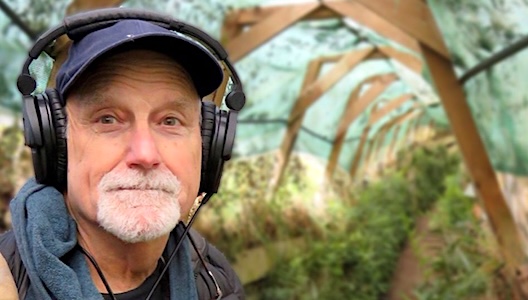
    Jim Metzner

    Jim Metzner began the lecture with a mystery.

    A sound was played. Students suggested possible explanations. Some heard machinery. Others heard something else entirely. For a few minutes the recording remained unresolved. Much of Metzner’s work inhabits that moment before a sound settles into a clear explanation. Before it becomes a bird, a vehicle, a voice, or a machine, it exists as an experience. During his online guest lecture for Edinburgh Napier University, discussions of field recording, travel, documentary production, family history, and memory repeatedly returned to this idea. How can sound communicate aspects of experience that are difficult to convey in any other way?

    Listening, in Metzner’s view, is not simply a way of gathering information. It is a way of encountering people, places, and experiences. Much of his work begins from a deceptively difficult question. How can a sound recording help somebody experience something they have never encountered for themselves?

    That challenge appeared repeatedly as students discussed their own recordings. Several described recording parks, public events, city streets, and everyday environments. Similar observations emerged from each example. Carrying a recorder changes the way people move through the world. Sounds that normally fade into the background suddenly become noticeable. Distant traffic acquires texture. Birds occupy distinct locations within a soundscape. Conversations, machinery, weather, and footsteps separate themselves into layers. The microphone becomes a reason to pay attention. One student described attempting to record ambience in a local park while aircraft repeatedly passed overhead. The interruptions were frustrating. Each time the environment seemed to settle, another aircraft arrived. Metzner responded with a story from his own work. While recording in the Great Swamp near a major airport, he encountered a similar situation. Waiting for silence would have meant waiting forever. Rather than treating the aircraft as a problem, he began treating it as part of the environment itself.

    Metzner’s answer reflected a recurring theme throughout the session. Recording is not always about removing the world. Sometimes it involves allowing the world to remain present. Sounds that initially appear intrusive may become important parts of the story. The aircraft was not simply interfering with the student’s recording. It was also shaping the student’s experience of being in that place. Standing in a park, looking upwards, waiting for the noise to pass, became part of the memory. In that sense, the aeroplane belonged to the story as much as the birds or the wind.

    The conversation then moved towards a problem that confronts many documentarians. The person who makes a recording remembers far more than the recording itself contains. They remember the weather, the location, the circumstances, and their own reactions. Future listeners possess none of this knowledge. How, then, can an experience be shared with somebody who was never there? A recording alone rarely provides a complete answer. Context becomes necessary. Yet explanation creates its own difficulties. Too little information leaves listeners uncertain about what they are hearing. Too much information can overwhelm the recording itself. Over the course of his career, Metzner has carried microphones through deserts, cities, forests, festivals, religious ceremonies, and countless other environments. Yet the purpose of these recordings has never been simply to build an archive of unusual sounds. Instead, they function as forms of communication. During the discussion, he compared recordings to postcards. A postcard never contains everything about a place. It presents only a fragment. Yet that fragment can still communicate something meaningful. Sound recordings operate in a similar way. They do not reproduce entire experiences. They provide partial access to them. Listeners complete the picture through imagination, memory, and interpretation.

    Listeners themselves become part of the process. No recording contains everything. Microphones record sound pressure variations. They do not record temperature, light, smell, movement, or the countless other details that contribute to an experience. Yet listeners rarely encounter recordings as collections of isolated sounds. They actively construct meaning from what they hear. A few seconds of ambience may be enough to suggest an entire environment. A familiar voice may evoke a person more vividly than a photograph. A distant church bell, footsteps in a corridor, or voices heard from another room can suggest a much larger world than the recording itself contains. Documentary production frequently relies upon this relationship between recording and imagination. Rather than attempting to communicate everything, the producer provides enough material for listeners to begin constructing their own understanding of a place, event, or experience. Recordings do not simply transmit information from one person to another. They create opportunities for participation. Listening becomes an active process through which people assemble impressions, associations, and memories from fragments of sound.

    Rain on a conservatory roof. Crickets during summer evenings. A vacuum cleaner moving through a family home. Songs sung by parents. Early computer games. Calls to prayer heard while travelling. When Metzner asked students to think about sounds they remembered from childhood, the answers arrived quickly. Few of the sounds were unusual. Their importance had little to do with acoustics. What mattered was everything attached to them. The examples revealed how deeply sound can become woven into personal history. Many of the memories were linked to recurring experiences rather than singular events. The sound of rain returning night after night. A family member singing repeatedly over many years. Household sounds that seemed insignificant at the time. Their importance emerged gradually through repetition. Long after specific conversations or individual days had been forgotten, the sounds remained. Several contributions also highlighted how difficult it can be to predict which sounds will become meaningful. People rarely decide in advance that a particular sound will become a lifelong memory. More often, significance emerges retrospectively. A sound that once seemed entirely ordinary acquires importance through later experience. Hearing a familiar sound years later can reactivate memories, emotions, and associations that extend far beyond the recording itself. What returns is rarely just the sound. People remember places, relationships, circumstances, and feelings connected to it. A recording therefore preserves more than an acoustic event. It can preserve pathways back towards experiences that might otherwise feel increasingly distant. A sound that appears entirely ordinary to one listener may carry decades of meaning for another. Hearing is rarely confined to the present moment. Certain sounds seem capable of collapsing time. A familiar voice, a piece of music, or an environmental sound can reconnect listeners with people, places, and relationships that might otherwise feel distant.

    While still in high school, Metzner began recording conversations with his grandfather. There was no documentary project in mind. He was not gathering material for publication. He simply wanted to preserve conversations with somebody he loved. Years later, those recordings became something entirely different. After his grandfather had died, the tapes acquired a significance that would have been impossible to recognise when they were first made. What had once seemed routine became irreplaceable. The story resonated with many listeners precisely because it involved no grand plan. Had Metzner waited until the recordings appeared important, it would already have been too late. Their value emerged from the simple decision to record ordinary conversations while the opportunity existed. From that experience came one of the clearest pieces of advice offered during the lecture. Record parents. Record grandparents. Record the people whose voices matter. Many recordings appear ordinary when they are made. Their value often becomes visible only later. The suggestion was not motivated by nostalgia alone. Voices contain forms of information that are difficult to preserve in any other way. Speech patterns, accents, pacing, humour, hesitation, and personality all become embedded within a recording. Written transcripts can preserve words. Recordings preserve presence. As Metzner reflected on these recordings, the discussion broadened into a larger point about time. Much of everyday life feels too ordinary to document. Conversations happen. People tell stories. Family members describe events that seem familiar and unremarkable. Yet these moments often become increasingly valuable as years pass. Recording provides a way of preserving details that might otherwise disappear unnoticed. Metzner’s reflections on these recordings returned repeatedly to the differences between memory and recording. Human memory is selective. Certain details remain while others disappear. Recordings preserve details indiscriminately. Accents. Hesitations. Laughter. Breathing. The rhythm of a voice. Background sounds that seemed unimportant at the time. Small details that might otherwise have been forgotten can later become deeply meaningful. A recording preserves more than information. It preserves traces of presence.

    Metzner has never been entirely comfortable with the phrase “capturing sounds”. The word suggests possession. It implies that a sound has somehow been seized and stored away. Throughout the discussion he returned to a different idea. Sounds are given rather than captured. Once a recording has been made, the challenge becomes helping somebody else experience what made that sound meaningful in the first place. Context matters. Stories matter. Yet explanation has limits. Documentary production often involves helping listeners approach an experience and then stepping aside so that the sounds can speak for themselves. A successful recording does not simply tell listeners what to think. It creates conditions in which they can form their own relationship with what they hear. The idea sits comfortably alongside much of his work. Recordings are not trophies collected from the world. They are invitations to listen more closely to it.

    Expensive microphones appeared surprisingly rarely in the lecture. Recording technology was never dismissed, though it was rarely placed at the centre of the discussion. Microphones matter. Recording techniques matter. Editing tools matter. Yet none of them can substitute for curiosity. A person who pays close attention to the world will often discover interesting sounds regardless of equipment. Conversely, expensive equipment cannot compensate for a lack of attention. Many of the examples discussed during the session pointed towards the same conclusion. Meaningful recordings often emerge from moments that other people would simply pass by. A sound heard while travelling. A conversation with a grandparent. Rain on a roof. An aircraft passing overhead. None of these experiences appear remarkable at first glance. Their significance emerges through listening.

    Near the end of the session, the lecture’s title, Going Places That Words Cannot Go, felt increasingly apt. Certain experiences resist straightforward description. The sound of rain on a roof. A grandparent’s voice. A crowded street in a distant city. A celebration, a conversation, or a moment of quiet. Words can describe such things. Sound can sometimes bring listeners closer to experiencing them. For Metzner, that possibility lies at the heart of listening. Sound does not simply tell us about the world. Under the right circumstances, it can preserve traces of people, places, and experiences long after the original moment has passed. More importantly, it can allow those experiences to be shared with somebody else. A recording offers only a fragment. A voice. A place. A conversation. A few seconds of sound preserved from a particular moment in time. Yet those fragments can remain meaningful for decades. They can reconnect people with memories, places, and relationships that might otherwise fade. Listening, as Metzner reminded students throughout the session, is not simply a way of gathering information about the world. It is one way of remaining connected to it.
  • When Sound Becomes the Camera: Karim Beidoun on Audio Drama and Sonic Storytelling

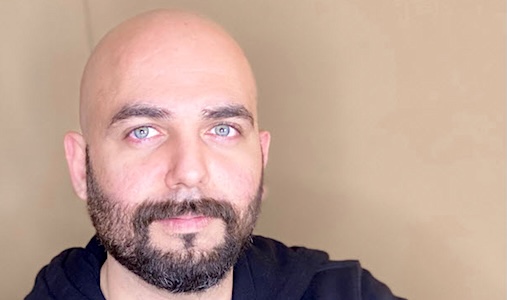
    Karim Beidoun

    How do you tell a visual story when the audience cannot see anything?

    The question sits at the centre of audio drama. Characters move through spaces. Doors open and close. Crowds gather. Vehicles arrive. Relationships develop. Entire worlds emerge. Yet none of these things can be shown directly. There is no camera to establish a location, no lighting to direct attention, and no visual performance to reveal emotion. Everything must be communicated through sound.

    During an online guest lecture for Edinburgh Napier University, alumnus Karim Beidoun explored this challenge through examples drawn from a career that has spanned radio, podcasting, and large-scale audio drama production. Having worked on more than 150 episodes of drama for BBC Arabic before becoming CEO and Head of Content at Hakawati, one of the leading podcast networks in the Middle East and North Africa, Beidoun offered a detailed account of how narrative worlds can be built entirely through listening. What emerged throughout the lecture was a striking observation. Audio drama is not simply theatre without pictures. It requires its own way of thinking about storytelling.

    Many of the creative teams involved in the BBC Arabic productions initially approached drama through habits developed in film and television. Writers imagined scenes visually. Directors thought in terms of camera positions and visual composition. Actors relied upon physical performance. Yet audio drama quickly exposed the limitations of these assumptions. A listener cannot see a gesture. A facial expression disappears completely. Costumes, scenery, lighting, and visual spectacle cease to exist. Techniques that appear essential in visual media suddenly become irrelevant. New solutions have to be found.

    This challenge became particularly significant during the development of the BBC Arabic drama project. Producing more than 150 episodes created practical pressures that demanded efficient workflows and consistent creative decisions. According to Beidoun, around eighty-five percent of each episode was effectively performed live during recording. Rather than constructing every scene through extensive post-production, actors, directors, and sound teams worked together to create performances that already contained much of the final dramatic shape. The result was a process that often resembled theatre, though with an important difference. The microphone became the audience.

    This apparently simple observation transforms almost every aspect of performance. In film, an actor’s relationship with the camera determines how a scene is perceived. In audio drama, that role is occupied by the microphone. Distance matters. Position matters. Movement matters. A character speaking directly into a microphone creates a very different impression from a character speaking several metres away. Walking towards a microphone changes the perceived relationship between characters. Turning away alters emotional emphasis. Physical movement becomes part of the storytelling process. Beidoun described how actors gradually learned to think about microphones not merely as recording devices but as narrative tools. A performer might physically move around the recording space to create the illusion of travelling through an environment. Multiple actors could position themselves carefully to establish relationships within a scene. Changes in distance could suggest intimacy, conflict, uncertainty, or power. Listeners never see these movements taking place, though they experience their consequences. The result is a form of performance that remains deeply physical despite the absence of images.

    This idea extends beyond acting. One of the most interesting themes running throughout the lecture concerned the relationship between sound and space. Audio drama constantly faces a problem that visual media solves almost instantly. How does the audience know where they are? A film can establish a location through a single shot. Audio drama has no such luxury. Environments must be communicated indirectly through acoustics, ambience, movement, and carefully selected details. A refugee camp, for example, cannot simply be shown. Instead, listeners encounter fragments that encourage them to construct the space themselves. Distant voices. Wind moving through temporary structures. Children playing nearby. Footsteps crossing uneven ground. Vehicles arriving and departing. None of these sounds individually explains the location. Together, however, they create an impression of place. The listener begins assembling an environment from acoustic evidence.

    Throughout the lecture, Beidoun repeatedly returned to the importance of this imaginative participation. Audio drama succeeds partly because listeners become active collaborators in the storytelling process. Images are not delivered fully formed. They are constructed internally. A scene therefore exists simultaneously in two places: within the production itself and within the imagination of the audience. Different listeners may visualise the same environment differently, though all are guided by the same sonic information.

    This collaborative relationship helps explain why realism in audio drama can be surprisingly complicated. Beidoun discussed examples where literal accuracy did not always produce the most convincing dramatic result. A gunshot recorded exactly as it sounds in reality may fail to meet audience expectations shaped by decades of cinema and television. Real environments may contain details that distract rather than support narrative clarity. Sound designers therefore find themselves navigating a space between documentary realism and dramatic communication. The objective is not necessarily to reproduce reality exactly. The objective is to create experiences that audiences recognise and understand. Authenticity remains important, though authenticity is often perceptual rather than literal. A sound may require adjustment, enhancement, or simplification in order to communicate effectively within a narrative context. Audio drama constantly balances realism against intelligibility.

    Questions of storytelling also influenced Beidoun’s discussion of directing. Directors working in visual media often focus heavily on what appears within the frame. Audio drama requires a different form of attention. Rather than asking what the audience sees, directors must ask what the audience hears and, perhaps more importantly, what they imagine. Beidoun described situations in which directors were encouraged to close their eyes and listen rather than relying upon visual assumptions. Decisions that appeared obvious on paper often changed once they were evaluated as purely auditory experiences.

    This shift in perspective gradually leads towards a different understanding of sound design itself. Throughout the lecture, Beidoun repeatedly suggested that audio drama sound designers occupy a role remarkably similar to cinematographers. Cinematographers guide attention through framing, movement, focus, and composition. Audio drama practitioners achieve comparable objectives through sound. Ambiences establish environments. Movement reveals relationships. Perspective shapes understanding. Distance communicates emotional meaning. Although the tools differ, the underlying objective remains surprisingly similar. Both disciplines guide audiences through narrative worlds.

    One consequence of this approach is that audio drama demands particularly careful listening. Small details often carry significant narrative weight. A door opening in the background may reveal the presence of a new character. Changes in room acoustics may indicate movement between locations. A subtle environmental sound may establish context more effectively than direct exposition. Listeners become sensitive to information that might pass unnoticed in visual media. Sound is no longer supporting the story. Sound becomes the primary vehicle through which the story exists.

    Seen in this light, many of the practical challenges discussed throughout the lecture begin to look different. Microphone technique is not simply a recording concern. Blocking actors around a studio is not merely a logistical necessity. Ambiences do more than create atmosphere. Decisions about movement, distance, performance, and acoustics all contribute to a single objective: helping listeners construct a coherent mental image of a world they cannot see.

    This helps explain why Beidoun repeatedly described audio drama as requiring a different way of thinking. Writers learn to write for ears rather than eyes. Directors learn to listen rather than watch. Actors learn to perform for microphones rather than cameras. Sound designers become responsible for many of the functions that visual media normally assign to cinematography, production design, and editing. The challenge is not reproducing techniques borrowed from film or television. The challenge is understanding what audio can do on its own terms.

    Looking back across the lecture, what emerges most clearly is that audio drama succeeds when listeners become active participants in the storytelling process. Environments are suggested rather than shown. Characters are heard rather than seen. Spaces emerge from collections of sonic details rather than visual images. The audience completes the process, assembling those fragments into people, places, and events.

    Audio drama does not show listeners a world.

    It gives them the materials to imagine one.

  • Selling the Airwaves: Bruce Williams on Crafting Radio Ads That Stick

    Bruce Williams delivered an insightful online guest lecture, offering a detailed look into his extensive career in audio production and radio commercials. With decades of experience spanning from the early days of analogue to the modern digital landscape, his insights provided valuable knowledge about the evolution of the industry and the techniques essential for producing high-quality radio commercials.

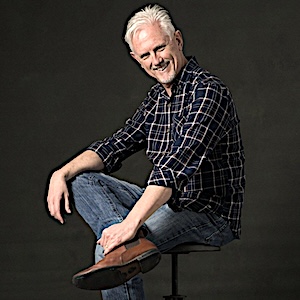
    Bruce Williams

    How to Make Effective Radio Commercials

    A key focus of the lecture was Williams’ expertise in producing radio commercials. He discussed the process of scripting, recording, and editing, emphasising the importance of timing, voice modulation, and background music. He shared practical techniques for creating compelling advertisements that effectively convey a message in a limited time frame.

    Understanding the Listening Audience

    Williams highlighted the importance of considering the audience when crafting a commercial. A well-produced ad must resonate with its listeners by using appropriate tone, language, and pacing. He stressed:

    • Tailoring the Tone and Language: A commercial aimed at a younger audience might use a casual, energetic tone, whereas one for a professional service may require a more formal and authoritative delivery.
    • Considering Listening Context: Listeners in a car, at home, or in a busy environment may have different levels of attention. Ensuring clarity and avoiding excessive complexity helps retain engagement.
    • Matching Music and Sound Effects to Audience Expectations: Different genres and styles of background music can evoke specific emotions that resonate with certain audience groups.
    • Focusing on Call to Action: A clear, compelling directive ensures the listener knows what step to take next, whether visiting a website, making a call, or attending an event.

    Managing Workload and Production Time

    Williams discussed the fast-paced nature of commercial radio production and the efficiency required to meet tight deadlines. He noted that he often had to produce multiple adverts per day, sometimes as many as ten or more, depending on demand.

    • Simple adverts – Those with a single voiceover and minimal sound effects could be completed in 30 minutes to an hour.
    • Complex adverts – Those requiring multiple voice actors, intricate sound design, and music synchronisation could take several hours to perfect.
    • Meeting tight deadlines – In a high-paced radio environment, some commercials had to be turned around within the same day, requiring streamlined scripting, efficient recording, and quick but precise editing.

    The Role of Timing in Commercials

    Timing plays a major role in making radio commercials effective. Williams emphasised that pacing, pauses, and synchronisation with background elements can greatly enhance engagement and clarity.

    • Matching Voiceover Speed to Content: The pace of speech should align with the commercial’s objective. High-energy promotions may require a quicker delivery, while more informative or emotional ads benefit from a slower, deliberate approach. A rushed voiceover can overwhelm listeners, while a sluggish delivery may lose their interest.
    • Pausing for Impact: Strategic pauses allow listeners to absorb key points and create emphasis where necessary. Well-placed breaks in dialogue can add dramatic effect and ensure important details are not lost in rapid narration.
    • Synchronising Music and Sound Effects: Background elements should be carefully timed with the voiceover. Music transitions and sound effects must be placed to complement rather than compete with the spoken message, ensuring a seamless and engaging experience.
    • Adhering to Time Constraints: Given that commercials must fit within precise durations, efficient scripting and editing are essential. Removing filler words, tightening sentences, and ensuring smooth transitions help maintain clarity while meeting broadcast length requirements.

    Selecting the Right Voice and Delivery Style

    The voiceover in a commercial plays a major role in setting the tone and evoking the desired emotional response. Williams highlighted how different vocal styles can influence the effectiveness of a commercial. A warm and friendly voice might be ideal for a family-oriented brand, while a dramatic and authoritative voice might suit public service announcements.

    Beyond voice selection, he emphasised proper pacing, intonation, and emphasis on key words. The delivery should feel natural, avoiding monotony or exaggerated enthusiasm. Williams recommended recording multiple versions and selecting the most engaging and well-paced delivery.

    Balancing Music, Sound Effects, and Voice

    Another important aspect of commercial production is the careful blending of music and sound effects without overwhelming the voiceover. Williams described how proper use of background music can enhance the commercial’s impact while maintaining clarity in the spoken message.

    • Music Selection: Choosing the right track reinforces the commercial’s tone. Upbeat music works well for energetic and promotional spots, while softer instrumentals can support emotional or reflective messaging. The tempo should complement the pace of the voiceover rather than competing with it. It is also important to avoid music with heavy vocals that could interfere with speech clarity. Williams suggested testing multiple tracks with the voiceover to ensure a seamless blend before finalising the selection.
    • Sound Effects: Used sparingly, sound effects should reinforce key points and create an engaging experience without being distracting. For example, a car commercial might use the sound of an engine revving at the start to establish context, while a food advertisement could feature subtle sizzling sounds to evoke sensory engagement. Overuse of sound effects can clutter the mix and reduce effectiveness, so strategic placement is necessary.
    • Volume Control: The voiceover should always remain the focal point, with background elements balanced appropriately. Music and sound effects should support, rather than compete with, the spoken message. Williams recommended a slight dip in music volume when important dialogue is delivered and a gradual rise during transitions to maintain a smooth flow.

    Technical Considerations and Audio Processing

    High production quality ensures the commercial sounds polished and professional. Williams covered some key technical aspects, including:

    • Equalisation (EQ): Adjusting frequencies is essential for ensuring clarity and preventing muddiness. For example, reducing low-end frequencies (below 100 Hz) can prevent excessive bass buildup, while slightly boosting the mid-range (2-4 kHz) can enhance speech intelligibility. Additionally, removing any unnecessary high frequencies (above 12 kHz) can eliminate unwanted hiss or harshness in the recording.
    • Compression: Maintaining consistent volume levels keeps a commercial clear and professional. Compression evens out the loud and soft parts of the recording, preventing excessive peaks that could distort the sound. A moderate compression ratio (such as 3:1 or 4:1) with a threshold set to capture only the loudest peaks ensures a balanced sound without making the voiceover sound unnatural or overly processed.
    • Noise Reduction: Eliminating background noise is vital to maintaining a clean recording. Williams recommended using noise reduction tools to remove hums, hisses, and low-level room noise while being cautious not to over-process the audio, which could create an unnatural, robotic tone. Recording in a controlled environment, such as a soundproof booth, is the best way to minimise background noise from the outset.

    Williams’ insights provided a comprehensive guide to crafting compelling radio commercials. His experiences and advice offered valuable techniques for anyone looking to enhance their skills in audio production and advertising.


  • A Journey Through the Art of Radio Drama: Tony Palermo

    Radio drama may seem like a bygone art in today’s world of high-definition visuals and digital effects. Yet, as Tony Palermo—renowned sound effects artist, radio dramatist, director, and composer—illustrates, this timeless medium still captivates audiences by harnessing the power of sound and imagination. In a his lecture, Tony shared his experiences and philosophies that have shaped his career, offering a deep dive into the world of storytelling through sound. His journey, marked by innovation and artistry, is as compelling as the sounds he crafts.

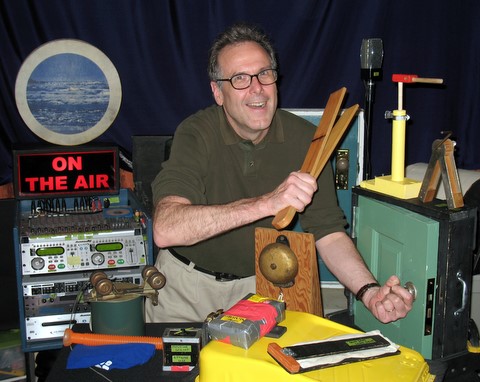
    Tony Palermo with radio sound effects props

    The Essence of Sound in Storytelling

    Tony began by reminding us that storytelling through sound is as old as humanity itself. From prehistoric times, humans have used sound to share experiences, mimic nature, and convey emotions. This primal connection to sound makes radio drama an inherently intimate and imaginative medium. He emphasised that sound is a powerful tool to convey clarity in storytelling. A single sound cue can suggest an entire scene, but the key lies in striking a balance—providing just enough to guide the listener’s imagination without overwhelming them. As Tony aptly put it, “We sketch the scene; we don’t paint it.”

    From Pirate Radio to Hollywood

    Tony’s career began in the world of pirate radio and AM music deejaying. His early experiments with sound led to writing radio ads for iconic music acts like U2 and Michael Jackson. Over the last two decades, he has specialised in radio drama, blending manual sound effects with live performances to create immersive experiences. His mentors—who worked with legends like Orson Welles and Jack Benny—inspired him to master the art of manual sound effects. Tony’s work often involves creating sounds in real-time alongside actors, using inventive techniques and handcrafted devices.

    The Craft of Sound Effects

    Tony shared several anecdotes that showcased his ingenuity:

    • Snake Crawling Backwards Up a Bell Cord: When faced with an impossible script direction, Tony advocated for adding clarifying dialogue to help the audience interpret the sound. This collaboration between sound artist and writer exemplifies the importance of teamwork in creating effective audio storytelling.
    • Mechanical Soundscapes: Whether simulating a plane crash with a vibrating pen on a cardboard box or recreating jungle ambience with bird calls and crash boxes, Tony’s dedication to mechanical sound effects brings authenticity to his productions.

    Listening as an Art

    A standout element of the lecture was Tony’s focus on the art of listening. He encouraged aspiring sound artists to tune into not just natural sounds but also human vocalisations. The nuances of breath, tone, and non-verbal expressions can add depth and emotion to characters and scenes.

    The Theatre of the Mind

    One of the most fascinating aspects of radio drama is its ability to transport listeners to places beyond the reach of visuals. Tony’s work with live radio productions, such as those with L.A. Theatre Works, underscores the magic of combining sound with live performances to captivate audiences. From the doors and floors that frame dramatic entrances to the subtleties of a character’s interaction with a doorknob, Tony demonstrated how small details can enrich storytelling. These elements become subconscious cues that guide the listener’s imagination, making the experience both personal and vivid.

    For Aspiring Sound Artists

    Tony’s advice to aspiring sound artists is both practical and inspiring:

    1. Start Small: Use household items to practise creating sound effects. A creaky door or a pair of shoes can be a gateway to storytelling.
    2. Learn to Listen: Develop an ear for detail by observing how sound interacts with the environment and human emotion.
    3. Embrace Simplicity: As Tony highlighted, the best sound effects are those that serve the story without stealing focus.
    4. Collaborate and Innovate: Work closely with writers and directors to ensure clarity and creativity in your contributions.

    Conclusion

    Tony Palermo’s lecture was a masterclass in the art and science of radio drama. His passion for sound as a storytelling medium reminds us of its unique ability to spark imagination and evoke emotion. Whether you’re a seasoned sound artist or a curious listener, Tony’s insights offer a renewed appreciation for the craft of audio storytelling. As Tony himself said, “We hitch the ear to the imagination.” In an age dominated by visuals, his words serve as a powerful reminder of the timeless magic of sound.