Category: Production sound mixing

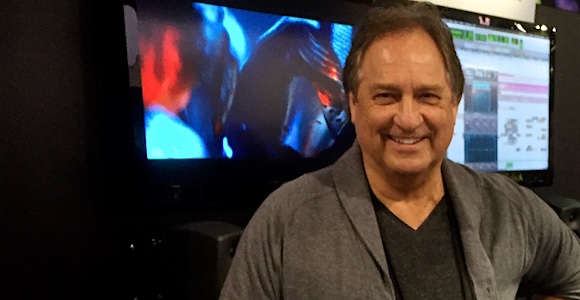
  • What Did They Say? Gary Bourgeois on Dialogue, Attention, and the Art of Film Mixing

    Gary Bourgeois

    What happens when an audience misses a line of dialogue?

    At first glance, the consequences seem relatively minor. A viewer leans towards a friend. Someone quietly asks for clarification. A sentence is repeated. Yet during his online guest lecture for Edinburgh Napier University, veteran re-recording mixer Gary Bourgeois suggested that this moment reveals something important about the relationship between sound and storytelling. The audience has stopped following the narrative and started thinking about the soundtrack. For Bourgeois, whose career spans more than five decades across film, television, music, and streaming media, preventing that moment has remained one of the central responsibilities of a mixer.

    This might appear surprising. Popular discussions of film sound often focus on spectacle. We talk about explosive action sequences, immersive surround sound systems, powerful musical scores, and increasingly sophisticated technologies. Yet Bourgeois repeatedly returned to a much simpler idea. Sound exists to support communication. Every creative and technical decision ultimately serves the story. If audiences cannot understand what matters at the moment it matters, even the most technically impressive soundtrack has failed in its primary task.

    Throughout the lecture, Bourgeois described film mixing as a process of guiding attention. A finished soundtrack may contain dialogue, Foley, ambience, music, effects, backgrounds, transitions, and countless other elements. These sounds do not all demand equal attention simultaneously. Their relationships are constantly shifting. During a conversation, dialogue may occupy the foreground while music retreats slightly into the background. During a dramatic reveal, music may briefly become the dominant element. An action sequence may allow effects to take centre stage before returning attention to character and narrative. Mixing therefore involves much more than balancing levels. It involves shaping the audience’s experience of a story.

    This perspective helps explain why Bourgeois places such importance on dialogue. Writers spend months or years developing scripts. Actors devote enormous effort to performance. Directors construct scenes around the communication of information, emotion, and character. If a crucial line becomes unintelligible, the audience loses access to part of that work. More importantly, they momentarily leave the fictional world. Instead of thinking about the characters, they begin thinking about the soundtrack. The illusion is interrupted.

    One of the most interesting aspects of the lecture concerned the relationship between film mixing and human perception. During the discussion, we explored the idea that many mixing decisions effectively replicate forms of selective attention that listeners perform naturally. In everyday life, people can focus on a particular voice within a crowded room, follow a conversation in a noisy taxi, or attend to one sound source while ignoring dozens of others. The auditory system constantly prioritises information. Bourgeois agreed that much of professional mixing involves recreating these perceptual priorities for audiences. The mixer helps listeners focus on what matters without drawing attention to the process itself.

    Seen in this light, many familiar audio tools acquire a different significance. Equalisation is not simply a way of adjusting frequencies. Compression is not merely a method of controlling dynamics. Reverb is not only about creating a sense of space. These processes become valuable insofar as they help establish relationships between sounds. A dialogue track may require subtle equalisation to distinguish it from surrounding ambience. A sound effect may need certain frequencies reduced so that speech remains intelligible. A reverberant environment may need careful shaping to preserve clarity. The technical operations matter, though their ultimate purpose remains perceptual. Ultimately, they help prevent the audience from asking the question that opened the lecture. What did they say?

    Several examples from Bourgeois’ career illustrated this philosophy particularly well. Large-scale productions such as Transformers are often associated with spectacle, scale, and sonic intensity. Audiences remember giant robots, enormous impacts, and dense layers of sound. Yet Bourgeois described how even the most elaborate action sequences depend upon careful control of attention. One memorable example involved introducing a single frame of silence immediately before an explosion. The audience never consciously notices this interruption. Nevertheless, the brief absence of sound creates a perceptual contrast that makes the subsequent impact feel considerably larger. The effect depends not on additional volume but on the way listeners perceive change.

    Examples such as this reveal a recurring principle running throughout the lecture. Effective sound design often depends less upon adding material than upon managing relationships between existing elements. A soundtrack filled continuously with dramatic gestures eventually loses its ability to surprise. Contrast becomes difficult. Emphasis becomes impossible. Restraint therefore plays an important role within the mixer’s craft. Sometimes the most effective decision is deciding what not to hear.

    This concern with attention also shapes Bourgeois’ attitude towards immersive audio formats such as Dolby Atmos. The technology provides extraordinary creative possibilities. Sounds can move through three-dimensional space with remarkable precision. Environments can become more detailed and immersive than ever before. Yet Bourgeois consistently framed these capabilities in relation to storytelling rather than technology. An Atmos mix succeeds when it helps audiences engage more deeply with a scene. It fails when the technology becomes the focus of attention itself. More speakers do not automatically produce better storytelling. The same principles still apply. Audiences need to understand what matters and why it matters.

    A particularly revealing section of the lecture explored Bourgeois’ lifelong curiosity about listening. Long before spatial audio became a major industry topic, he was conducting informal experiments with binaural recording, environmental acoustics, and perceptual phenomena. Rather than treating recording purely as a professional necessity, he approached it as an opportunity to investigate how sound behaves.

    One story involved recording a stream in rural Canada. Expecting to capture clear differences between close, medium, and distant perspectives, he recorded the same source from multiple locations. When he returned to the studio, however, the recordings sounded remarkably similar. What initially appeared disappointing became an important lesson. Distance is often communicated less by direct sound than by reflections, environmental interactions, and contextual cues. The stream itself had changed very little. The surrounding environment had provided most of the information listeners normally use to judge distance. Stories such as this reveal another dimension of Bourgeois’ approach. Technical expertise emerges not only from formal training but also from observation. Throughout the lecture, he repeatedly emphasised the importance of listening carefully to the world. Many of the insights that shaped his professional practice originated in moments of curiosity rather than commercial necessity. A recording experiment, an unusual acoustic environment, or an unexpected perceptual effect could become the foundation for future creative decisions.

    His reflections on Canada extended this theme further. Bourgeois noted that a surprisingly large number of Hollywood film mixers originate from Canada. While partly humorous, the observation led into a broader discussion about listening environments. Growing up in quieter surroundings encouraged attention to subtle acoustic details, spatial relationships, and environmental sounds. Whether or not this fully explains the phenomenon, the anecdote reinforced a larger point. Listening is not a passive activity. It is a skill developed through experience, practice, and sustained attention.

    The conversation eventually turned towards emerging technologies, particularly artificial intelligence. Here again, Bourgeois adopted a perspective shaped by decades of professional experience. Throughout his career he has witnessed repeated technological transformations. Analogue workflows gave way to digital systems. New recording formats emerged. Distribution platforms changed. Entire production processes evolved. Each transition created uncertainty alongside opportunity.

    Rather than treating AI as fundamentally different from earlier technological developments, Bourgeois viewed it as another stage within a continuing process of change. New tools will inevitably alter professional practice. Some tasks may become easier. Others may disappear entirely. Yet the underlying challenge remains remarkably consistent. Practitioners must learn how new technologies work, understand their limitations, and identify meaningful ways of applying them. Avoiding change rarely proves productive. Understanding it usually does.

    Looking back across the lecture, what emerges most clearly is a conception of mixing rooted in attention. Compressors, equalisers, reverbs, Atmos systems, loudness standards, recording technologies, and AI tools all matter. Yet they matter only insofar as they help audiences remain connected to a story. Bourgeois repeatedly returned to the same fundamental question. Can the audience understand what matters at the moment it matters?

    Many discussions of sound focus primarily on technology. Gary Bourgeois offered a useful reminder that technology is ultimately a means rather than an end. The purpose of a soundtrack is not to demonstrate technical sophistication. Its purpose is to support communication, emotion, and narrative understanding. The most successful mixes often pass unnoticed precisely because they allow audiences to remain fully absorbed in the world unfolding before them.

    Perhaps that is why the simple question that opened the lecture remains so revealing. What happens when an audience misses a line of dialogue? For Bourgeois, the answer extends far beyond a few misunderstood words. It represents a brief fracture in the relationship between story and listener. Much of the mixer’s craft is devoted to preventing that fracture from occurring. Every adjustment, every balance decision, every technical process ultimately serves the same goal: helping audiences hear not merely the sounds of a film, but the story those sounds are trying to tell.
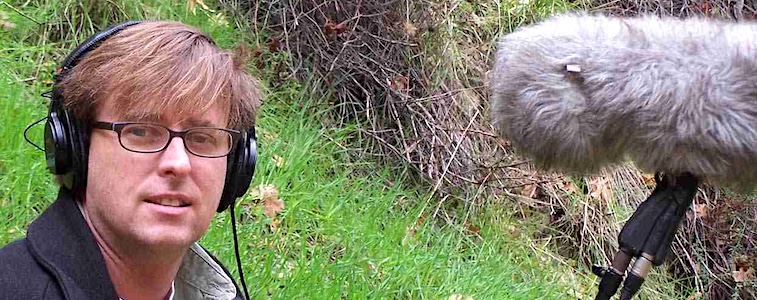
  • How Do You Create a Sound That Does Not Exist? Charles Maynes on Problem-Solving, Experimentation, and Film Sound Design

    Charles Maynes

    What does a tornado sound like?

    At first glance, the answer appears simple. Tornadoes exist in the real world. Surely the task is simply to record one. Yet as supervising sound editor and sound designer Charles Maynes explained during his guest lecture for Edinburgh Napier University, film sound rarely works that way. A real tornado may produce a particular collection of sounds, though a cinematic tornado must also communicate scale, danger, movement, drama, and narrative significance. Audiences do not simply need to hear it. They need to believe in it.

    Across a career spanning films including Twister, U-571, Spider-Man, Constantine, Flags of Our Fathers, Letters from Iwo Jima, After Earth, and Total Recall, Maynes has repeatedly confronted variations of the same challenge. Many of the most important sounds in cinema either cannot be recorded directly, no longer exist, or have never existed at all. Sound design therefore becomes an exercise in invention. The sound designer is not merely documenting reality. The sound designer is building believable realities from fragments of observation, experimentation, technology, and imagination.

    What emerged most clearly from the lecture was the extent to which sound design resembles problem-solving. Every project arrives with its own collection of constraints. A tornado needs to feel enormous. A submarine needs to feel claustrophobic. A superhero requires a sonic identity unlike anything in everyday life. An alien creature must feel both unfamiliar and emotionally expressive. None of these challenges possesses an obvious solution. Instead, the work begins with questions.

    Twister provided one of the lecture’s most revealing examples. The production arrived at a moment when visual effects technology was evolving rapidly, creating situations in which sound teams often found themselves designing for imagery that did not yet exist. Early visual effects sequences were frequently little more than rough placeholders. Yet audiences would eventually expect the tornadoes to feel immense, terrifying, and believable. Sound therefore had to help establish qualities that the unfinished visuals could not yet communicate.

    Meeting this challenge required considerably more than recording wind. Field recording sessions captured useful source material, though the team quickly discovered that realism alone was insufficient. Various devices were constructed to generate unusual airflow sounds. Large materials were stretched across frames mounted to moving vehicles. Traditional wind machines inspired by classic Hollywood techniques were revisited. Recordings were distorted, layered, filtered, and manipulated. The objective was not documentary accuracy. The objective was creating an experience capable of convincing audiences that they were witnessing forces of extraordinary scale.

    One particularly interesting aspect of Maynes’ discussion concerned distortion. Students are often taught to avoid it. Distortion is typically framed as a technical problem, something introduced by poor recording practice or overloaded equipment. Maynes described how sound designers frequently use distortion deliberately. When applied carefully, it can create the impression that a sound exceeds the limits of the playback system itself. Explosions become larger. Engines become more aggressive. Tornadoes become more violent. Distortion therefore functions not simply as an acoustic phenomenon but as a perceptual tool.

    This concern with perception rather than literal accuracy appeared repeatedly throughout the lecture. Again and again, Maynes returned to situations in which audience expectations mattered more than objective realism. A real submarine may sound relatively quiet. A realistic recording of a futuristic vehicle may not exist. A supernatural creature offers no authentic reference point whatsoever. In each case, sound design becomes less about reproducing reality and more about creating experiences that feel believable within a particular cinematic world.

    His discussion of U-571 illustrated this particularly well. Submarines present a curious challenge. The audience needs to understand pressure, confinement, machinery, vulnerability, and danger. Simply recording mechanical systems would not necessarily communicate these ideas effectively. Instead, designers searched for sounds capable of conveying psychological experience. One memorable example involved the Waterphone, an unusual instrument whose unstable resonances proved remarkably effective when combined with more conventional recordings. The resulting sounds were not literally part of a submarine environment, yet they contributed powerfully to the emotional reality of the space.

    A similar philosophy guided work on Spider-Man. The web shooters presented a problem that sounds almost absurd when stated directly. What does it sound like when organic webbing launches from a superhero’s wrist, travels rapidly through the air, and attaches itself to a distant object? No real-world recording could provide an answer. The design process therefore began by breaking the action into components. The sound needed propulsion, movement, texture, speed, and impact. Recordings of water, stretched materials, vegetation, animal vocalisations, and numerous other sources were manipulated extensively before being combined into a coherent whole. By the time audiences encountered the finished film, the sound felt completely natural. Yet its construction depended upon materials that had little obvious connection to spiders.

    Throughout the lecture, Maynes repeatedly emphasised the value of field recording. Recording is not merely a method of collecting sounds. It is a way of discovering them. Unexpected opportunities arise constantly. A recording gathered for one project may become essential years later in an entirely different context. Environmental sounds, machinery, wildlife, crowds, and accidents all contribute to an expanding library of possibilities.

    One particularly memorable story involved recording outdoors when an unexpected gathering of crows appeared. Their wing sounds were captured largely out of curiosity. Years later, those recordings helped shape supernatural creatures in Constantine. The connection was impossible to predict at the time. Yet examples such as this appeared repeatedly throughout the lecture. Sounds gathered for one reason often acquire entirely different purposes later. Creative practice depends upon recognising possibilities that may not become useful until years afterwards.

    Perhaps the most striking aspect of Maynes’ career is the way these experiences accumulate. Techniques developed during one project often resurface elsewhere. A solution discovered while designing underwater sounds may later contribute to science fiction. An approach developed for machinery may prove useful for creatures. A distortion technique explored for a tornado may influence a futuristic vehicle. Sound designers gradually build libraries of methods, habits, and ways of thinking alongside their libraries of recordings.

    This process becomes particularly important when working on projects involving entirely fictional technologies or environments. Films such as After Earth and Total Recall required audiences to accept worlds that had never existed. Every sound contributed to that act of persuasion. Vehicles, interfaces, weapons, machinery, and environments all required sonic identities capable of supporting the visual design. Sound therefore becomes part of world-building itself. The audience may never consciously analyse these details, though they contribute significantly to whether a fictional world feels convincing.

    Collaboration occupied an equally important place throughout the lecture. Modern film sound emerges from the combined efforts of editors, designers, Foley artists, mixers, composers, directors, and numerous other specialists. Some of the films discussed involved enormous teams working across extended production schedules. Success depended not only upon technical skill but also upon communication. Sound design remains a creative discipline, though it is also a collaborative one.

    Different directors engage with sound in different ways. Some respond primarily to emotional impact. Others focus on specific details. Some use music as the primary storytelling tool. Others give sound effects greater prominence. Sound designers therefore spend much of their careers adapting not only to technical challenges but also to different creative personalities. Building a soundtrack involves understanding people as well as understanding sound.

    Looking back across the lecture, what emerges most clearly is a conception of sound design rooted in curiosity. Technology matters. Recording equipment matters. Software matters. Yet none of these things generates solutions independently. Every project introduces new questions. Every creative challenge requires experimentation. Every soundtrack becomes an exercise in balancing realism, perception, narrative, and imagination.

    For students entering the field, this may be the lecture’s most valuable lesson. Sound design is often imagined as a search for the perfect sound. Charles Maynes’ career suggests something rather different. More often, the task is finding a convincing solution to a problem that nobody has solved before. Tornadoes, submarines, superheroes, alien worlds, supernatural creatures, and futuristic technologies may appear unrelated, though each ultimately presents the same creative challenge. The audience must be persuaded to believe in something beyond everyday experience.

    Throughout the lecture, Maynes repeatedly demonstrated that such persuasion rarely emerges from a single recording, a particular piece of software, or a clever technical trick. It emerges from observation, experimentation, collaboration, and an ongoing willingness to explore unexpected possibilities. A recording captured years earlier may suddenly solve a new problem. An accidental discovery may become the defining feature of a sequence. A sound that initially appears unusable may eventually find its place within an entirely different project. The work progresses through a continual process of asking questions, testing ideas, and remaining open to surprise.

    Perhaps this is why sound design remains such a distinctive creative discipline. Unlike many areas of production, it frequently begins where direct representation becomes impossible. No one can record the sound of Spider-Man’s web shooters. No one can capture the sound of a fictional technology that has never existed. No one can simply point a microphone at an imagined world. Instead, sound designers build these experiences from fragments of reality, shaping them into something audiences can recognise, understand, and believe. The challenge is not merely creating sounds. The challenge is creating possibilities for imagination.

    For Charles Maynes, that challenge appears not as a limitation but as the reason the work remains endlessly fascinating.

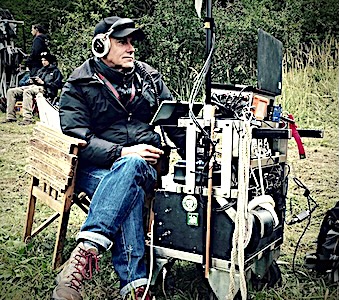
  • Sound Advice: John Rodda’s Insights into Production Mixing

    John Rodda’s online guest lecture offered an engaging and in-depth exploration of the world of production sound mixing, drawing from his extensive experience across film and television. With a career spanning 35 years and work in over 40 countries, John has established himself as a leading figure in the industry, contributing to productions ranging from documentaries and dramas to major feature films. His lecture provided a rare glimpse into the craft, techniques, and challenges of capturing high-quality audio on set.

    John Rodda

    A Journey Through Sound

    John began by sharing his journey into sound mixing, highlighting how his background in theatre and electronics laid the foundation for his work in film and television. His early experiences included building computers in the late 1970s and working on corporate films and news coverage before transitioning into drama and feature films. He detailed how he navigated the industry at a time when union regulations created significant barriers for newcomers, requiring perseverance and adaptability to succeed.

    Key Roles in Production Sound

    John emphasised the collaborative nature of sound production, highlighting the distinct but interdependent roles within the department:

    • Production Sound Mixer: Oversees all aspects of sound recording on set, ensuring high-quality dialogue capture. They operate the primary recording equipment, balance microphone levels, and collaborate with the director to maintain the intended audio aesthetic. Additionally, they liaise with post-production teams by providing properly labelled sound files and detailed reports.
    • Boom Operator: Responsible for positioning the boom microphone to capture dialogue while staying out of the frame. They must anticipate actor movements, adjust positioning accordingly, and minimise unwanted noise. Boom operators often work in challenging conditions, ensuring optimal sound capture in dynamic filming environments.
    • Sound Assistant: Supports both the mixer and boom operator by setting up equipment, managing cables, placing wireless microphones on actors, and troubleshooting technical issues. They also help maintain sound logs and ensure the smooth operation of the sound department throughout filming.

    Each of these roles contributes to delivering clear, high-quality audio, ultimately enhancing the storytelling experience.

    Adapting to Industry Changes

    John reflected on the evolution of sound recording technology, from mono Nagra tape recorders to sophisticated multi-track digital systems. He discussed how advancements such as wireless microphones and timecode synchronisation have improved sound recording flexibility while accommodating modern filmmaking techniques, including multi-camera setups and wide-and-tight shot combinations. Current industry hardware has significantly improved efficiency and reliability, with modern digital recorders offering multi-track recording, high-resolution audio, integrated timecode systems, and advanced metadata management, enabling seamless file transfers to post-production. Wireless microphone systems now feature extended range, improved RF stability, and digital encryption, enhancing dialogue capture even in challenging environments. Additionally, timecode synchronisation tools ensure frame-accurate alignment between cameras and audio recorders, streamlining workflows and making location sound recording more adaptable for complex setups.

    Challenges and Solutions in Sound Mixing

    John provided practical examples of overcoming sound challenges on set. While working on Downton Abbey, he had to radio mic every actor to meet the director’s preference for unrestricted camera movement. The historical costumes posed additional difficulties in concealing microphones without compromising sound quality. To mitigate these issues, he collaborated with the wardrobe team and developed discreet mic placements that preserved clarity while remaining hidden.

    Another notable example involved a dinner scene, where the clinking of silverware risked overpowering dialogue. John strategically positioned boom microphones and used lavalier mics hidden within costumes to isolate voices while maintaining natural ambiance.

    Similarly, while working on Shackleton, extreme cold conditions threatened equipment functionality. He employed insulated batteries and performed regular system checks to ensure uninterrupted recording.

    For Airport, John devised a wireless timecode system that allowed independent sound recording, enabling him to position himself optimally while the camera moved freely in a busy airport setting.

    Memorable Projects and Industry Recognition

    John shared stories from notable projects, including The Fifth Estate, Longitude, and Shackleton. Longitude, a historical drama, posed unique challenges in capturing the sound of intricate mechanical clockwork, which was integral to the story. In The Fifth Estate, which dealt with the WikiLeaks controversy, he had to navigate fast-paced newsroom settings and international locations, ensuring clear dialogue in constantly shifting environments. His ability to adapt to different genres and production styles has earned him industry recognition, including a BAFTA for Airport and a nomination for Paddington Green. John also spoke about his time on 24: Live Another Day, where he balanced complex action sequences with high-pressure recording environments, demonstrating how experience and quick thinking are essential for a sound mixer.

    Advice for Aspiring Sound Professionals

    John advised aspiring professionals to develop technical skills, gain hands-on experience, and build strong working relationships within the industry. He stressed that attention to detail is key, as minor sound issues can become major post-production problems. He recommended learning about different recording techniques, experimenting with mic placement, and understanding the physics of sound to become a well-rounded professional.

    He also highlighted the importance of being adaptable and proactive. On sets where unexpected technical issues arise, being able to think on one’s feet and offer quick solutions is invaluable. He recalled an instance on 24 when a hidden microphone placement failed during a take, requiring an immediate, seamless backup solution to avoid disrupting the shoot.

    Additionally, he encouraged those entering the field to shadow experienced professionals, seek mentorship opportunities, and remain up to date with industry advancements. Sound recording techniques and equipment continue to evolve, and staying informed about the latest innovations ensures ongoing career growth.

    Conclusion

    John Rodda’s lecture provided invaluable insights into the world of production sound mixing. His extensive experience and practical knowledge underscored the critical role of sound in storytelling. As technology continues to evolve, his insights serve as a testament to the enduring importance of high-quality sound in film and television. For those looking to enter the field, his expertise offered both inspiration and guidance, reinforcing the idea that persistence, adaptability, and a strong technical foundation are crucial to success.