The world of video games is filled with sounds that transport players to new dimensions, from the roar of mythical creatures to the hum of futuristic technology. Behind these sounds are dedicated professionals like Brad Meyer, Audio Director at Sucker Punch Productions, who delivered an engaging guest lecture on fantasy sound design.
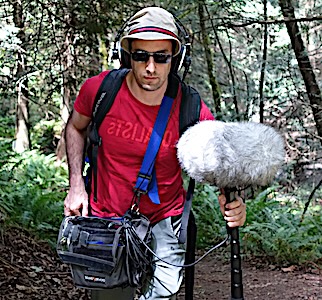
With extensive experience in the industry, Meyer has worked on a variety of games, including Jurassic Park, Spider-Man: Web of Shadows, and Infamous: Second Son. Throughout his talk, he offered invaluable insights into the creative process of designing sounds for fantastical worlds, emphasising grounding fantasy in reality to create more relatable and engaging audio experiences.
Bringing the Fantastic to Life Through Sound
Fantasy in games is often associated with dragons, magic, and mythical landscapes. However, as Meyer pointed out, fantasy sound design extends beyond these stereotypes, encompassing anything that is imagined and does not exist in the real world. Even games with realistic settings use elements of fantasy, whether in the form of futuristic interfaces, enhanced environments, or supernatural abilities.
Meyer stressed the importance of using real-world sounds as the foundation for fantastical audio effects. By incorporating recognisable sonic elements, such as animal calls, mechanical noises, or environmental recordings, designers create sounds that feel authentic while still supporting the game’s imaginative elements.
For instance, in Jurassic Park 3: The DNA Factor, Meyer and his team used a mix of bird calls, walrus vocalisations, and cat growls to construct dinosaur sounds that felt realistic despite the fact that no one knows what dinosaurs actually sounded like. Similarly, in Spider-Man: Web of Shadows, he layered compressed air bursts and rope creaks to create the sensation of Spidey’s web-slinging.
The Process of Crafting Unique Sounds
Throughout the lecture, Meyer shared several examples of how he and his team develop sounds through experimentation, layering, and creative thinking.
- Using Unconventional Materials – While designing the sound of Frogger’s tongue, Meyer found inspiration in party whistles, using their retracting motion to simulate the flick of a frog’s tongue. By varying the speed and intensity of the whistle, different versions of the sound were created to match in-game actions.
- Inventing New Recording Techniques – To create the sound of moving concrete debris in Infamous: Second Son, Meyer built a tumbling machine by filling a padded rubbish bin with rocks and rolling it around. The method allowed for recording a continuous shifting effect, which was later manipulated to fit different gameplay sequences.
- Manipulating Sound Through Processing – In Infamous, neon powers were designed using fluorescent tube recordings, which were then modified with spectral filters to create a futuristic energy effect. By applying different reverb and pitch-shifting techniques, the sound was given a more otherworldly quality.
- Blending Organic and Synthetic Sounds – The sound of a dragon’s wings in a fantasy game may be created by layering recordings of bird wing flaps, slowed-down flag waving, and subtle jet engine noise to provide depth and power. Time-stretching and low-pass filters can be applied to emphasise the size of the creature.
- Recording and Modifying Everyday Objects – To mimic the sound of a robotic exosuit, designers may record hydraulic lifts, servo motors, and mechanical gears, then process them using granular synthesis and distortion effects to enhance their sci-fi aesthetic.
- Creating Footsteps for Different Surfaces – Footsteps on gravel may be created by recording boots on loose stones, while icy terrain can be simulated by crushing cornstarch or frozen lettuce to create crisp crunching sounds. Layering multiple recordings at different distances can provide more depth and realism.
- Using Water for Unusual Effects – To produce eerie, otherworldly sounds, designers can use hydrophones to record underwater gurgling, later modifying the pitch and layering additional elements. This technique has been used for deep-sea creatures, alien environments, and magical spells.
- Layering Human and Animal Sounds – To create monstrous growls or supernatural voices, sound designers often blend human vocalisations with recordings of animals such as tigers, wolves, and pigs. Adjusting the pitch and applying formant shifting can transform these elements into something unrecognisable yet believable.
- Using Foley Techniques for Impact Sounds – Sword clashes may be recorded using real metal objects, but layering them with additional materials such as celery snaps or baseball bat impacts adds weight and crunch. Similarly, explosions often incorporate recordings of firecrackers, fireworks, and even slowed-down balloon pops to create the necessary sonic texture.
The Importance of Collaboration and Experimentation
Meyer highlighted that sound design is a process of constant learning and experimentation. He encouraged students and professionals alike to embrace failure, as each unsuccessful attempt teaches valuable lessons that contribute to better sound design in the future.
Additionally, he emphasised the importance of community in the sound design industry. Engaging with other professionals, sharing techniques, and attending meetups can lead to fresh ideas and innovation. In Seattle, where Meyer is based, game audio professionals regularly gather to discuss their work, reinforcing the value of collaboration.
Guidance for Aspiring Sound Designers
- Ground fantasy sound design in reality – Using real-world recordings makes fantastical sounds more relatable and engaging.
- Experiment with unconventional sources – Anything from household objects to wildlife recordings can become the basis for unique sound effects.
- Keep an organised sound library – Effective cataloguing of sounds ensures efficiency in future projects.
- Do not be afraid to fail – Trial and error is part of the creative process.
- Engage with the sound design community – Collaboration and networking can lead to new opportunities and insights.
Meyer’s talk provided a fascinating look into the art and science of crafting compelling audio for games. Whether designing the roar of a dragon or the hum of a futuristic machine, the secret lies in finding inspiration in the real world and shaping it into something new.
For those interested in pursuing sound design, his advice is clear: stay curious, experiment fearlessly, and never stop learning.