
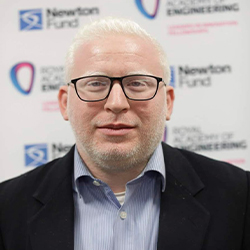
Dr Sameh O. Abdellatif is an accomplished semiconductor devices expert, with a diverse academic background and extensive experience in research and industry projects. Holding a B.Sc. degree in Electronics and Communication from Ain Shams University, Cairo, Egypt (2009), he continued his academic journey with an M.Sc. degree in Semiconductor Nanostructures (2012) and a Ph.D. funded by DAAD, focusing on nano-photonic structures for enhancing thin-film solar cell efficiency. Recognized for his expertise, Sameh was appointed as an associate professor by the Egyptian Supreme Council in November 2022 and currently holds the position of associate professor in the Electrical Engineering department at the British University in Egypt (BUE). He actively contributes to research and serves as a co-founder at Electronics FabLab.
In addition to his academic achievements, Sameh is a seasoned AI technical mentor for two start-ups, where he applies his knowledge and experience to drive innovation and growth. His research interests encompass the modeling and simulation of organic/inorganic semiconductor nanostructures, fabrication of semiconductor devices, and low-power electronic circuit design. With a remarkable publication record of over 139 scientific papers and proceedings, as well as involvement in more than 15 scientific grants, Sameh O. Abdellatif continues to make significant contributions to the field of AI, electronics, and sustainable energy technologies.
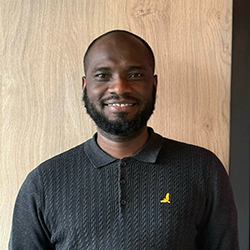
Rasheed Shobande is a Solar Design Engineer with international experience in solar photovoltaic system design and installation across the United Kingdom and Nigeria. He holds an MSc in Renewable Energy from Edinburgh Napier University and currently works in the UK designing residential solar PV systems that support the transition to low-carbon and sustainable energy solutions.
Prior to his role in the UK, Rasheed gained hands-on experience in Nigeria’s renewable energy sector, where he was involved in the construction and installation of solar PV systems for residential and small-scale commercial projects. This combined experience in both system design and field installation gives him a practical perspective on delivering efficient and reliable solar energy solutions.
His professional interests focus on advancing solar energy adoption and integrating practical deployment experience with innovative system design to improve access to clean and reliable energy in both developed and emerging markets.
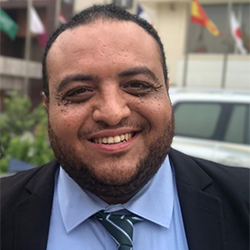
Dr. Mostafa Hasaneen holds a PhD in Electrical Engineering, specialising in Electrical Power Systems, with a focus on the Techno-Economic Assessment of Large-Scale Renewables Integration in Transmission Networks. He is also a Senior Sustainable Energy Expert with over 15 years of significant contributions to the development and implementation of sustainable energy strategies and action plans at the Regional Centre for Renewable Energy and Energy Efficiency (RCREEE), fostering resilience across North African and Middle Eastern nations.
His responsibilities encompass project management, providing critical technical support, identifying new market opportunities, analysing enabling conditions, driving research and development of pilot projects, and cultivating partnerships with international stakeholders in the renewable energy (RE) and energy efficiency (EE) sectors.
His expertise extends to power system analysis, particularly in assessing grid capacity limitations for renewable energy integration and defining comprehensive solutions that include flexible generation, demand-side management, energy storage, and sector-coupling technologies.
He is also a recognised expert within the United Nations Framework Convention on Climate Change (UNFCCC) Roster of Experts and a certified reviewer. He conducts thorough reviews of annual GHG inventory submissions and supplementary information under the Kyoto Protocol for Annex I Parties. Additionally, he evaluates national communications and biennial reports from Annex I Parties and provides technical analysis within the ICA process for Biennial Update Reports (BURs) submitted by non-Annex I.

Dr. Kamyab Givaki is a Technical Director and HVDC leader at WSP, with end‑to‑end experience guiding the strategy and delivery of major energy infrastructure programmes across both regulated and commercial environments. He is recognised for setting delivery strategy and governance, leading multi‑disciplinary teams, and advising senior stakeholders on technology direction, technical risk, commercial readiness, and practical execution pathways for complex interconnector and offshore transmission developments.
He has built senior industry experience working with transmission system operators and private offshore wind/interconnector developers and is frequently engaged in client‑facing leadership spanning procurement strategy, due diligence, and assurance for high‑value projects. His work also includes supporting WSP’s international delivery teams and regional programmes, bringing a pragmatic, outcomes‑focused approach that aligns technical decision‑making with programme delivery, stakeholder expectations, and long‑term system needs. He holds a PhD in Electrical Engineering, underpinning an evidence‑based, systems‑thinking approach to leadership and decision‑making.
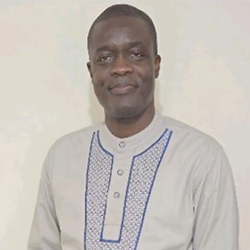
Gideon Babalola Awolola is a renewable energy and mechanical engineer with expertise in project engineering, quality control, and site management within the energy sector. He currently serves as a Site and Quality Control Engineer at Sunel Group, a global EPC company delivering renewable energy projects across the UK and Europe. He holds MSc degrees in Renewable Energy and Project Management and is a recipient of the 2023 CarbonStore Prize Award.
Speaker Topic: Ground-Mounted Solar PV Construction Project Quality Control, Key Challenges, and Lessons Learned: A Case Study of the 23 MWp Lawns House Solar Project, Lytham, Lancashire, England.