On Monday, the 25th of November 2025, CEDAR welcomed two PhD researchers who shared their exciting work on how our built environment shapes social connections and creativity. The session also hosted visitors from 56three Architects, who joined the discussions and explored CEDAR’s VR lab facilities.
Tackling Loneliness Through Urban Design
Pouria Boujari presented research on a growing challenge: older adults are increasingly isolated in UK communities, and urban design might be part of the solution.
Why This Matters
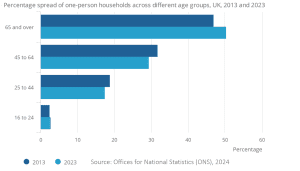
The numbers are sobering. By 2026, 2 million people aged 50+ in England will often feel lonely. Currently, 8.4 million people live alone in the UK—that’s 30% of all households—and half of them are over 65.
The Big Question
Can the way we design our neighbourhoods bring generations together? Pouria’s research explores how different urban forms—from housing types and street layouts to parks and transport—either encourage or prevent younger and older people from connecting.
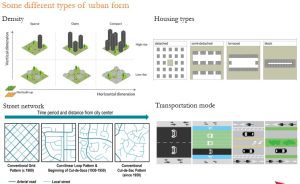
Surprisingly, most research on this topic has been done in the US and Asia, leaving the UK largely unexplored. And while studies have examined individual elements such as parks or housing, no one has examined how the overall urban form affects intergenerational interactions—or how these interactions might improve mental health.
What’s Next
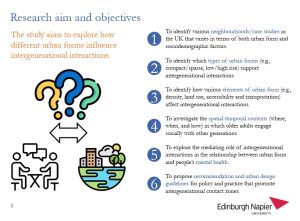
Pouria will compare different UK neighbourhoods to identify which urban design features help people of all ages connect. The goal? Design guidelines that create spaces where generations naturally meet and interact.
When Sketches Become Experiences
Iyad Sawaftah asked a fascinating question: “What happens when our sketches become an experience, not a drawing?”
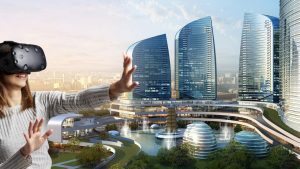
His research explores how Virtual Reality is transforming architecture—not just as a tool to show clients future buildings, but as a way to understand how spaces affect our creativity and thinking.
From Passive to Active
Iyad’s first three experiments had participants experiencing virtual environments, but they were just observers. His innovative fourth experiment flips the script: participants will actively customise their virtual lab environment.
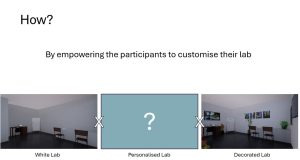
By comparing how people perform in a bare white lab versus one they’ve personalised themselves, Iyad can measure how environmental control affects creativity and cognitive flexibility.
The Urban Future
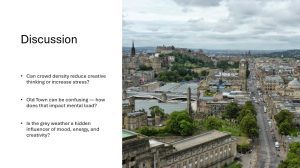
The research doesn’t stop at individual rooms. Iyad envisions studying creativity at the urban scale, asking questions like:
- Does crowd density reduce creative thinking?
- How does navigating confusing streets (like Edinburgh’s Old Town) impact mental load?
- Does grey weather influence our mood and creativity more than we realise?
Lab Tour and Industry Engagement
Following the presentations, the session welcomed visitors from 56three Architects, who explored CEDAR’s VR lab facilities and contributed valuable insights to the discussions.
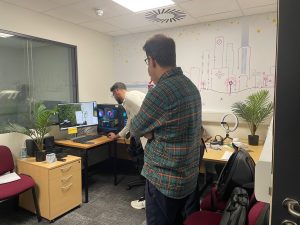
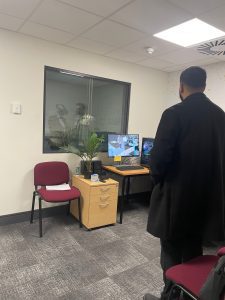
The architects found the technologies particularly exciting for their potential applications in practice. Being able to offer clients immersive experiences of design concepts before construction could transform how architectural ideas are communicated and refined.
This kind of industry engagement highlights CEDAR’s commitment to bridging academic research and real-world practice, ensuring that innovations in virtual reality and spatial design reach those who can implement them in built projects.
The Bigger Picture
Both presentations highlighted a central theme: our surroundings profoundly shape human experience. Pouria’s work shows how thoughtful urban design can combat isolation and build community across generations. Iyad’s research reveals how virtual environments can help us understand—and ultimately design—spaces that enhance creativity and wellbeing.
This is what CEDAR does best: bringing together architecture, psychology, and technology to solve real-world challenges in how we design and experience our built environment.
The next CEDAR meeting will continue to showcase innovative interdisciplinary research. For more information about CEDAR activities or to arrange a lab tour, contact Marina Wimmer (m.wimmer@napier.ac.uk)