How do you design a virtual instrument?
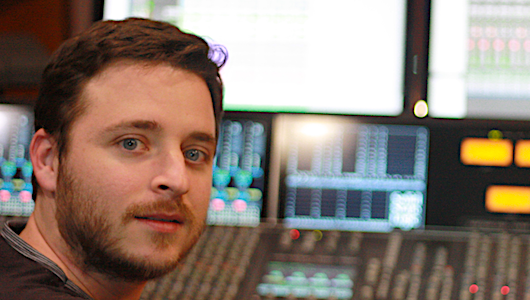
Every virtual instrument begins long before the first note is recorded. Musicians often experience sample libraries as polished products that load instantly inside a digital audio workstation, responding naturally to every performance. Hidden behind that apparent simplicity lies an extraordinary amount of planning, recording, editing and technical development. During an online guest lecture for Edinburgh Napier University, Sound Design alumnus Alejandro Cabrera drew upon his professional experience developing sample libraries at 8Dio to reveal how professional virtual instruments are created. Although he used Kontakt to illustrate many of the techniques, his wider message extended well beyond any individual software platform. Successful sound design depends as much upon preparation, organisation and critical listening as it does upon recording itself.
Cabrera began by challenging a common misconception. Building a virtual instrument is not simply a matter of recording every note and loading the resulting files into a sampler. Instead, it is a carefully structured process comprising pre-production, recording, editing and software development, with each stage influencing everything that follows. Recording sessions may occupy only a small proportion of the overall project, yet their success depends almost entirely upon the decisions made beforehand. Choosing the instrument, selecting an appropriate recording space, determining microphone configurations, deciding which articulations should be captured and calculating the number of samples required all take place before the recording engineer presses record. By the time the first note is performed, many of the most significant creative decisions have already been made.
Planning emerged as one of the defining themes of Cabrera’s presentation. Recording studios are expensive environments in which every unnecessary decision consumes valuable time. Arriving without a detailed recording plan risks producing inconsistent material, overlooking essential articulations or capturing far more audio than the finished instrument will ever require. To avoid these problems, Cabrera demonstrated the production sheets used to calculate precisely how many samples each instrument will need. The combination of notes, microphone positions, dynamic layers, articulations and recorded variations quickly expands into thousands of individual files. Even a comparatively modest instrument can generate an unexpectedly large collection of audio once every variation has been considered. Careful preparation therefore becomes far more than administrative organisation. It provides the framework upon which the entire virtual instrument will later be constructed.
This emphasis upon preparation reflects a broader principle that extends well beyond sample library development. Whether recording Foley, ambience, dialogue or musical instruments, professional sound designers rarely begin by placing microphones in front of a source and hoping for the best. They begin by asking what the finished project needs to achieve. Every technical decision should support that objective. Microphone placement depends upon the character of the instrument, the intended listening experience and the amount of flexibility required during production. Recording an intimate acoustic instrument demands different decisions from sampling a full drum kit with multiple microphone positions, while noisy environments require different strategies from carefully controlled studio spaces. Cabrera encouraged students to think of recording not as an isolated technical exercise, but as one stage within a much larger design process in which every decision influences those that follow.
One particularly revealing discussion centred upon how rapidly complexity increases once realism becomes the goal. Professional sample libraries rarely rely upon a single recording of each note. Different playing dynamics, alternative articulations, multiple microphone positions and repeated performances all contribute towards creating an instrument that responds naturally to the performer. Cabrera introduced concepts such as velocity layers and round robins, not simply as software features, but as perceptual design decisions. Human listeners detect repeated sounds remarkably quickly. Replaying exactly the same recording whenever a note is triggered produces an artificial, mechanical quality that immediately reveals the illusion. Recording carefully controlled variations allows the instrument to remain convincing even during repeated passages, illustrating that realism often depends less upon producing more sound than upon introducing meaningful variation. The objective is not to simulate every possible performance. It is to create enough believable variation that musicians stop thinking about the technology and simply play.
By this point, a recurring theme had become unmistakable. Building a convincing virtual instrument is not primarily a software problem. It is a sound design problem. The quality of the finished library depends upon understanding the instrument, anticipating how musicians will perform with it and making thoughtful decisions long before the first recording session begins. Technology undoubtedly provides the tools, though preparation, organisation and critical listening determine how successfully those tools can ultimately be used.
Once the recordings have been completed, the project enters what is often the longest and least visible stage of development. Thousands of individual recordings must be reviewed, edited and organised before they can become a playable instrument. Cabrera emphasised that this work extends far beyond removing unwanted noise or trimming the beginnings and endings of files. Every sample must behave consistently alongside every other sample, allowing the finished instrument to respond naturally regardless of how it is played. Editing therefore becomes a continuation of the design process rather than a separate technical activity. Decisions made at this stage shape the responsiveness of the instrument every bit as much as the recordings themselves.
Organisation proved equally important. A professional sample library may contain many thousands of individual audio files representing different notes, articulations, dynamic levels, microphone positions and performance variations. Without a rigorous naming convention and carefully structured file management, even relatively modest projects quickly become difficult to maintain. Cabrera demonstrated how systematic organisation supports every subsequent stage of development. Samples can be located immediately, revisions become easier to implement and future updates remain manageable long after the original recording sessions have finished. Good organisation rarely attracts attention, yet it underpins almost every successful production workflow.
The discussion then turned to Kontakt, the software platform used to assemble these recordings into fully playable virtual instruments. Rather than presenting Kontakt as a collection of technical features, Cabrera used it to demonstrate a broader principle. Software should serve the behaviour of the instrument rather than dictate it. Every mapping decision, performance control and scripting choice exists to make the instrument respond in ways that feel intuitive to the musician. The objective is not simply to trigger recordings accurately, but to create the impression that a real instrument is responding naturally to performance. Technology becomes valuable only when it disappears behind the experience of playing.
This philosophy also shaped Cabrera’s discussion of scripting. Many musicians never see the programming that sits beneath the graphical interface, yet these invisible systems determine how the instrument behaves. Scripts decide which recordings should be triggered, how different articulations are selected, how repeated notes vary over time and how controls respond to the performer. Much of the intelligence within a modern virtual instrument therefore lies not in the recordings themselves, but in the logic that governs their behaviour. Sound design, software engineering and user experience become closely interconnected, each contributing towards the illusion that the performer is interacting with a coherent musical instrument rather than a collection of audio files.
Throughout the discussion, Cabrera consistently resisted the temptation to equate realism with complexity. Recording more samples, adding more controls or increasing the number of available options does not automatically produce a better instrument. Every additional recording increases editing time, complicates organisation and places greater demands upon storage, processing power and the musician using the library. The more important question concerns value rather than volume. Which additional recordings genuinely improve the playing experience, and which merely increase complexity without offering meaningful benefit? Successful virtual instruments emerge through thoughtful selection rather than unlimited accumulation.
These decisions reflect a much broader principle within sound design. Whether recording dialogue, creating Foley, designing interactive game audio or developing sample libraries, practitioners continually shape the listener’s experience by deciding which details deserve attention and which can remain implicit. Technology undoubtedly expands the range of available possibilities, though it rarely removes the need for editorial judgement. Every successful project depends upon identifying the information that listeners or performers genuinely need, then presenting it clearly without unnecessary complication. The objective is not technical excess, but meaningful communication.
The discussion also highlighted the collaborative nature of professional practice. Developing a virtual instrument combines disciplines that are often treated separately within education and industry. Recording engineers, musicians, software developers, editors, interface designers and producers each contribute different forms of expertise, yet the finished instrument succeeds only when those contributions work together coherently. Cabrera’s examples demonstrated that professional sound design rarely develops in isolation. The most effective solutions emerge when technical and creative perspectives continually inform one another throughout the production process rather than being treated as independent stages.
Taken together, these discussions revealed that virtual instruments represent far more than collections of recorded sounds. They are carefully designed systems that combine acoustics, performance, recording, editing and software into a single expressive tool. Every decision, from the earliest planning documents to the final user interface, contributes towards the illusion that a performer is interacting with a living instrument rather than triggering digital recordings. For sound designers, perhaps that is the most enduring lesson. The success of a design is rarely determined by the sophistication of its technology alone. It depends upon how completely the technology disappears, allowing creativity, expression and musical performance to take centre stage.