Category: Psychoacoustics

  • Why Has Pitch Remained So Difficult to Explain? Prof. William Yost on Hearing Science’s Enduring Mystery

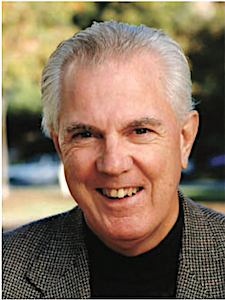
    Professor William Yost

    Few aspects of hearing feel more straightforward than pitch. Sounds seem high or low, rising or falling, stable or changing. We recognise familiar voices, detect changes in intonation, distinguish one alarm from another, and effortlessly judge whether one sound is higher than the next. Most of the time, pitch appears so natural that it barely attracts attention. It feels less like an interpretation and more like a property of the world itself. Prof. William Yost’s guest lecture revolved around a deceptively simple question: if pitch feels so obvious, why has it proved so difficult to explain?

    The question has occupied researchers for more than two thousand years. During that time, scientific understanding of hearing has advanced dramatically. Researchers can measure acoustic signals with extraordinary precision, investigate the mechanics of the inner ear in remarkable detail, record neural activity throughout the auditory pathway, and construct increasingly sophisticated computational models of perception. Yet despite all of this progress, pitch remains one of the most debated topics in hearing science. What makes this especially intriguing is that the difficulty does not arise from a shortage of ideas. The history of pitch perception is filled with elegant theories. Again and again, researchers have proposed explanations that appeared capable of accounting for the available evidence. Again and again, new observations have emerged that complicated the picture. The resulting history is not one of scientific failure. It is a story of a percept that repeatedly proves more complicated than researchers initially expect.

    Discussion of pitch often begins with Pythagoras. Observations of vibrating strings suggested that simple mathematical relationships corresponded to differences in perceived pitch, encouraging the belief that pitch might ultimately be explained through measurable physical properties. Centuries later, researchers such as Hermann von Helmholtz developed increasingly sophisticated accounts linking acoustics, physiology, and perception. Progress seemed to move steadily towards a complete explanation. Yet the history presented by Prof. Yost repeatedly demonstrated that confidence in any single account rarely lasted for long. New experiments continued revealing sounds that behaved in unexpected ways, exposing limitations in explanations that had previously appeared convincing.

    Among the most influential examples is the phenomenon now known as the missing fundamental. Listeners can perceive a pitch corresponding to a frequency that is physically absent from the sound itself. Telecommunication systems have long benefited from related principles. Even when low frequencies are poorly transmitted, listeners can often continue perceiving aspects of the missing pitch through the remaining harmonics. At first encounter, the phenomenon sounds almost impossible. How can listeners hear a pitch that is not present within the signal? Its importance extends far beyond its novelty. The missing fundamental revealed that pitch could not be explained simply by identifying which frequencies were physically present. The auditory system appeared capable of generating a stable perceptual experience even when information that seemed essential was absent. A phenomenon that initially appeared to be a curious exception gradually became evidence that researchers might be asking the wrong questions. Observations of this kind repeatedly changed the direction of pitch research. Their significance lay not merely in producing unusual percepts but in exposing hidden assumptions about how hearing operates.

    Researchers naturally searched for the critical variable that would finally explain pitch. Sometimes that variable appeared to be frequency. Sometimes it appeared to be temporal periodicity. Sometimes it appeared to be harmonic structure. Each candidate captured something important about hearing. Each eventually encountered observations that it struggled to explain. Scientific explanations often become more satisfying as they become simpler, and much of the history of pitch research can be understood as a search for a unifying principle capable of accounting for a wide range of perceptual experiences. Every successful theory illuminated part of the phenomenon while leaving other aspects unresolved. Rather than steadily converging towards a single universally accepted explanation, the field gradually accumulated evidence that several different forms of information contribute to what listeners experience as pitch.

    Contemporary hearing science reflects this growing recognition. Spectral information contributes to perception. Temporal patterns contribute as well. Envelope cues can also play a role under certain conditions. Each source of information appears capable of supporting aspects of pitch perception, though each also possesses limitations. The challenge therefore becomes less about identifying a single cue and more about understanding how different forms of information interact to produce a percept that listeners experience as unified and stable. That challenge becomes even greater once the nature of sound itself is considered. Sound unfolds rather than existing all at once. A listener cannot determine the intonation of a spoken sentence from a single instant of sound. The rising contour that transforms a statement into a question only becomes apparent once enough of the signal has unfolded. Similar constraints apply more broadly throughout hearing. A pressure wave travels through the environment, reaches the ear, interacts with the auditory system, becomes encoded into neural activity, and undergoes further processing before contributing to conscious experience. Many of the acoustic cues associated with pitch require information to accumulate before they become meaningful. The auditory system therefore cannot rely upon an instantaneous snapshot of the world. Instead, it must integrate information distributed across time while maintaining perceptual stability.

    Listening never occurs under perfectly controlled conditions. Every listener brings a unique physiology, a unique listening history, and a unique set of experiences to the task of perception. Consider how differently a trained musician, a young child, and an older listener with age-related hearing loss may encounter the same sound. Languages emphasise different pitch patterns. Hearing changes across the lifespan. Exposure to speech and environmental sounds varies considerably. Acoustic environments introduce further variability through reverberation, masking, reflections, distance, and background activity. Signals reaching the ear are therefore rarely identical from one situation to the next. Yet despite this variation, listeners often arrive at strikingly similar perceptual judgements. Understanding how such stability emerges remains part of the broader challenge confronting pitch research.

    Relative pitch offers another perspective on why the problem remains difficult. Most people can readily determine whether one sound is higher or lower than another, recognise familiar patterns across changing circumstances, and detect subtle shifts in vocal expression. A familiar voice remains recognisable whether the speaker is tired, excited, whispering, or shouting. A simple melody can remain recognisable when sung by different people starting on different notes. The acoustic details change, though listeners continue perceiving stable relationships. Absolute pitch, by contrast, appears comparatively uncommon. Hearing therefore seems especially effective at identifying patterns and relationships rather than fixed reference points. Such relational perception proves enormously useful in a world where sounds vary continuously according to source, context, and environment, though it complicates attempts to explain pitch through simple correspondences between physical signals and perceptual experience.

    Contemporary research continues uncovering percepts that challenge established assumptions. Prof. Yost’s discussion of Iterated Ripple Noise provided a particularly striking example. Such stimuli can generate robust pitch percepts despite possessing characteristics that many traditional theories would not predict. Listeners report clear pitches even when the sounds themselves bear little resemblance to the simple tones often associated with textbook demonstrations. Their importance lies in showing that the history of pitch research is not merely a story of earlier misunderstandings corrected by later discoveries. New observations continue emerging. New stimuli continue revealing unexpected aspects of perception. More than two thousand years after researchers first began asking how pitch works, the auditory system still has surprises to offer.

    Scientific uncertainty occupied an unusually prominent place throughout the lecture. Many guest lectures focus on a particular discovery, method, or contribution. Prof. Yost approached the subject differently. Rather than presenting pitch as a problem approaching resolution, he presented it as a continuing scientific conversation extending across centuries. Researchers separated by generations appeared not as competitors replacing one another but as participants in a shared effort to understand a percept that repeatedly exceeds expectations. There was a striking absence of triumphalism in this account. Successive theories were not presented as failures to be discarded, nor as final answers waiting to be celebrated. Instead, they became stages in an ongoing attempt to understand one of the most familiar yet elusive aspects of hearing. New methods produce new insights while simultaneously revealing new complications. Better measurements reduce some uncertainties while exposing others. The enduring value of pitch research therefore lies not only in the answers it has generated but also in the questions it continues to produce.

    Seen from this perspective, pitch becomes something larger than a specialised topic within psychoacoustics. Researchers can measure sounds with extraordinary accuracy. They can investigate increasingly detailed aspects of auditory physiology and neural processing. Connecting those physical processes to lived perceptual experience remains challenging. More than two thousand years of investigation have not diminished the significance of the problem. If anything, they have expanded it. New methods reveal additional layers of hearing, while new explanations illuminate important aspects of auditory processing without resolving every question.

    What emerged most clearly from Prof. Yost’s lecture was that the enduring importance of pitch lies not merely in discovering which theory ultimately proves correct. Its value lies in what the search has revealed about hearing itself. The history of pitch perception is often described as a succession of competing theories, though the lecture presented something richer than that. It revealed generations of researchers grappling with the same fundamental puzzle, each contributing part of a much larger conversation. The closer researchers look at pitch, the less it resembles a single problem waiting to be solved and the more it resembles a window into the sophistication of auditory perception. Few scientific questions have persisted for so long. Fewer still continue generating new experiments, new explanations, and new debates. That persistence suggests that researchers are not simply refining an existing answer. They are continuing to uncover new dimensions of the question itself.

  • Beyond the Frequency Response: Dr Nick Zacharov on Why Sound Quality Refuses to Stay Simple

    Sound quality appears to be something that should be relatively easy to define. Modern audio engineering has become remarkably precise, allowing engineers to measure frequency response, distortion, sound pressure level, impulse response, and countless other properties with extraordinary accuracy. Pages of graphs and measurements can describe how an audio system behaves in minute detail. Looking at these increasingly sophisticated tools, it becomes tempting to assume that the problem has largely been solved. Better systems should produce better measurements, while increasingly detailed measurements should gradually lead towards better listening experiences.

    Yet most people who spend time with sound eventually encounter an uncomfortable contradiction. A new pair of headphones may arrive with impressive specifications and glowing reviews, promising exceptional clarity and technical accuracy. Everything appears correct on paper, yet after listening for a while something feels slightly wrong. Another pair with less impressive measurements somehow sounds more engaging, or perhaps two products that appear remarkably similar perform very differently in practice. Even more confusingly, people listening to exactly the same material can disagree entirely about what they hear. Experiences like these raise an interesting question. If sound can already be measured with extraordinary precision, why do we still need people to listen?

    This question formed the starting point of an online guest lecture delivered by Dr Nick Zacharov, whose work has spent more than three decades exploring sound quality and sensory evaluation across industries including telecommunications, professional audio, and product development. As co-founder of AudioSense Lab, his work focuses on understanding how people experience sound rather than simply measuring the physical properties of signals. Across the lecture, one idea gradually became increasingly clear: sound quality is not hidden solely within the signal itself. It also emerges through the relationship between sound and the people hearing it.

    Part of the challenge begins with assumptions about hearing itself. Measurement systems generally behave in predictable ways. Microphones can be calibrated, repeated measurements can produce highly consistent results, and instruments respond reliably under controlled conditions. Human hearing behaves rather differently. Rather than functioning as a neutral recording device, the auditory system continuously interprets incoming information before we consciously become aware of it.

    Zacharov described hearing as an extraordinarily sophisticated process operating across enormous ranges of frequencies and intensities. Sounds arriving from different directions interact with the shape of the head and ears before even reaching the inner ear, while loudness, timing, and spatial position all influence the information ultimately reaching the brain. Listening therefore involves more than passively receiving information from the outside world. The auditory system actively reconstructs what we hear, continually shaping experience rather than simply recording it. Measuring sound pressure level may therefore be relatively straightforward, though measuring how people actually experience sound quickly becomes much more complicated.

    This issue becomes clearer when considering the language people commonly use to describe audio experiences. Terms such as brightness, warmth, spaciousness, clarity, depth, and fullness often feel straightforward and intuitive, and most listeners immediately recognise what these ideas mean. Yet many of these qualities do not correspond directly to simple physical measurements. Loudness provides a useful example. Loudness is not merely a sound pressure value but a perceptual experience allowing listeners to organise sounds along a continuum extending from quiet to loud. Anyone who has increased the volume of a quiet dialogue scene in a film only to be startled moments later by a sudden explosion or a swelling piece of music has experienced this distinction directly.

    Similar relationships exist for many of the characteristics listeners use when evaluating sound systems. Spaciousness involves more than physical distance between sound sources, warmth cannot simply be reduced to a particular frequency range, and clarity often emerges through interactions between multiple factors rather than a single measurable value. Describing sound therefore becomes surprisingly complicated. People often use similar words while imagining different things. One listener’s idea of warmth may not correspond exactly to another person’s understanding of the same term. Researchers and designers therefore face the challenge of developing shared vocabularies that allow experiences to be discussed more consistently.

    This need for a common language has led researchers towards the development of perceptual descriptors and sensory lexicons. Rather than relying on vague impressions such as “good” or “bad”, listeners are encouraged to think in terms of more specific qualities that can be identified repeatedly. The aim is not simply to produce more words for describing sound. Instead, the goal is to create reliable ways of connecting subjective experiences with measurable characteristics. The question therefore shifts again. Rather than asking whether sound itself can be measured, attention moves towards understanding whether measurements adequately describe the experiences listeners actually care about.

    One of the most interesting ideas discussed during the lecture emerged through a distinction between preference and perception. Initially these concepts seem almost interchangeable. If somebody prefers one sound over another, it appears reasonable to assume that the answer provides everything necessary. Preference feels direct and uncomplicated. Yet preference quickly becomes more unstable than it initially appears. People notice different details, bring different expectations into listening environments, and respond differently depending on context. Prior experiences shape listening behaviour, while cultural backgrounds and individual habits influence interpretation. Preferences can also change over time, meaning two listeners hearing exactly the same material can arrive at entirely different conclusions.

    To explain this distinction, Zacharov introduced an example involving cheese. Imagine placing several cheeses in front of a group of people and simply asking which one they prefer. Most people would answer almost immediately. The process feels natural and instinctive. Yet the situation changes once different questions begin appearing. Which cheese feels creamier? Which one seems more acidic? Which has a stronger texture? Attention gradually moves away from simple preference and towards analysis. People begin thinking differently about the experience itself.

    Listening behaves in much the same way. Zacharov noted that if people are simply asked what they prefer, they often respond immediately and instinctively. Once listeners are instead asked to evaluate characteristics such as distortion, bass, or other specific attributes, something changes in the listening process itself.

    “If I ask people what they prefer, they will instantly tell you. If I ask them to evaluate distortion and bass and all of these different characteristics, they start thinking consciously about things.”

    What initially appears to be a relatively small distinction gradually becomes much more interesting. Once people become consciously aware of what they are listening for, their relationship with sound itself begins changing. They are no longer responding naturally in the same way they might during everyday listening. Instead, they begin examining specific characteristics and separating experiences into individual components. Listening effectively becomes analytical rather than instinctive.

    This distinction sits at the centre of sensory evaluation. Rather than asking people simply whether they like something, sensory evaluation attempts to understand how people perceive particular characteristics and why those characteristics influence experience. The goal is not merely to identify winners and losers but to understand the qualities shaping listening itself.

    Zacharov described how this often involves training listeners to recognise and describe perceptual attributes systematically. This process does not necessarily involve teaching people what they should hear. Instead, it focuses on developing consistency. Listeners learn to identify particular forms of distortion, tonal differences, changes in spatial presentation, or other relevant characteristics. Over time, they develop a shared vocabulary allowing listening experiences to be discussed with greater precision.

    Training becomes particularly important since untrained listeners often respond differently from experienced listeners. Someone listening casually may immediately focus on broad impressions such as whether a sound feels enjoyable or unpleasant, while trained listeners may identify subtle changes in bass response, timbral colouration, spatial width, or artefacts introduced by processing systems. Neither response is inherently better than the other, though they provide different forms of information. One reflects instinctive experience while the other provides analytical detail.

    These methods become particularly valuable within product development. Preference testing can identify whether people generally favour one system over another, though such tests often reveal relatively little about why decisions occur. A product may consistently outperform competitors while leaving important questions unanswered. What exactly are listeners responding to? Greater spaciousness? Reduced distortion? Increased clarity? Better balance?

    Sensory evaluation attempts to bridge this gap by identifying the characteristics influencing perception, allowing researchers and designers to understand not simply whether products succeed but why they succeed. These approaches have applications across a wide range of industries. Telecommunications systems aim to optimise speech quality and intelligibility. Headphone manufacturers seek desirable listening experiences across different musical styles. Automotive companies increasingly design not only engines and interiors but also the sonic experience of travelling within vehicles. Consumer technologies ranging from smart speakers to voice assistants similarly depend on understanding how people perceive sound rather than simply reproducing signals accurately.

    Towards the end of the lecture, another issue gradually emerged concerning the relationship between controlled testing environments and everyday listening experiences. Listening tests often take place under carefully designed conditions intended to isolate variables and remove distractions. Such environments are extremely useful for identifying subtle differences and maintaining consistency, yet real listening situations rarely behave in the same way.

    People do not spend their lives sitting silently in isolated rooms rapidly switching between competing systems. Sound exists alongside movement, conversations, expectations, distractions, and activities unfolding simultaneously. Headphones are used on trains and buses, music accompanies exercise and travel, and films are experienced within social environments rather than laboratories. A technically ideal system under laboratory conditions may therefore not necessarily produce the same experience within everyday contexts.

    This raises questions surrounding ecological validity, a concept concerned with how closely experimental conditions resemble real-world experiences. Zacharov reflected on this as an increasingly important direction for future work, suggesting that listening research has gradually begun moving towards broader and more realistic forms of evaluation.

    “I think there is a trend in going more holistic nowadays and going more ecological.”

    Running throughout the lecture was a wider point. Sound quality is not simply a technical problem waiting to be solved through increasingly detailed measurements. Measurements remain essential and enormously valuable, though they only describe part of the listening experience. Signals, technologies, environments, expectations, and listeners continuously interact with one another. Understanding sound therefore may involve more than measuring systems accurately. It may also require understanding the people hearing them.

  • Listening Between Worlds: Dr Ximena Alarcón on Deep Listening and Sonic Migrations

    Dr Ximena Alarcón

    Migration is often described through borders, journeys, and distances travelled. People leave cities, cross countries, settle elsewhere, and gradually build new lives. Less often do we ask what migration sounds like. Yet movement between places changes more than physical location. Familiar sounds disappear from everyday life while new ones slowly become woven into routine experience. Voices remain in memory long after people and places have gone, and certain sounds can unexpectedly return us somewhere we thought we had left behind.

    During an online guest lecture, Dr Ximena Alarcón explored these less visible experiences through sound, asking whether listening might reveal dimensions of migration that geography alone struggles to capture. Drawing on her own experiences of moving from Colombia to Europe, alongside years of artistic and research practice, she explored how listening can become a way of understanding relationships between people, places, and memory.

    Dr Alarcón is a sound artist, researcher, and Deep Listening practitioner whose work combines collaborative performance, sound art, memory, and digital technologies. Across these projects and reflections, one idea repeatedly surfaced: listening is not simply an act of hearing sounds that already exist around us. It can also become a way of tracing experiences, understanding relationships, and making sense of where we belong.

    Many of these ideas first developed through an apparently ordinary experience. After growing up in Bogotá and later encountering underground transport systems in European cities, Alarcón became increasingly interested in the environments created by these systems. Most people barely notice them. Announcements repeat endlessly, trains arrive and disappear, and routine eventually turns entire spaces into background activity. Daily commuting often becomes something we stop consciously hearing. Yet beneath that familiarity, people continue forming subtle relationships with the spaces around them, carrying emotions, frustrations, routines, and memories through these environments day after day. Alarcón became interested in what kinds of traces these repeated experiences might leave behind.

    This question developed into Sounding Underground, a project exploring underground systems in London, Mexico City, and Paris. Participants recorded journeys, selected sounds they considered meaningful, and reflected on the experiences attached to them. Rather than documenting transport systems themselves, the project explored relationships formed through listening.

    “What memories have people when they listen during routine journeys?”

    Responses revealed something surprising. Participants recognised common rhythms and textures across different cities while also identifying details that felt distinctive to each place. One participant described experiencing the three underground systems as though they formed a single connected network rather than separate environments. Sounds that would usually disappear into the background of everyday life suddenly felt more intimate. Mechanical noises, station announcements, and passing voices acquired emotional significance, becoming linked with memory and familiarity in ways that might otherwise remain unnoticed.

    Questions that initially centred on transport systems gradually grew more personal. Listening repeatedly to memories of movement raised another question that redirected Alarcón’s work entirely: “I would like to listen to my own migration.” Attention moved away from cities themselves and towards the experiences carried through them. The question was no longer simply how environments sound, but how memories, identities, and relationships continue shaping listening long after movement has taken place. This transition led Alarcón towards Deep Listening, a practice developed by Pauline Oliveros that encourages expanded awareness of sound, body, memory, and environment.

    Deep Listening extends beyond identifying sounds within a space. Listening becomes connected with silence, bodily awareness, dreams, movement, and relationships with others. Alarcón described keeping dream diaries as part of this process, recording fragments of dreams before they disappeared into waking life. Listening was no longer directed only towards external environments. It became a way of tracing relationships between memories and experiences that might otherwise pass unnoticed. Migration consequently began to appear as something more complex than movement between locations. Memories from different places continue existing alongside present experiences, while voices from the past remain present within current surroundings. Different versions of ourselves emerge over time rather than simply replacing one another.

    Language became an important part of this exploration. During the lecture, Alarcón reflected on the experience of moving between English and Spanish, describing how speaking different languages can sometimes feel like moving between different versions of oneself.

    “When you speak more than one language, you start to create a different personality when you switch between languages.”

    Many people who speak more than one language immediately recognise this feeling. Words change, though something else changes as well. Rhythm changes, gesture changes, and emotional expression often shifts in subtle ways. Certain ideas suddenly become easier to express while others seem to disappear entirely. Alarcón described this through the idea of the “nomadic voice”, suggesting that migrants often inhabit spaces that are neither entirely one place nor another. Instead, memories, identities, and experiences overlap and remain in motion, creating what she described as in-between spaces.

    Questions about memory and identity eventually expanded beyond individual experience. If listening could reveal something about personal migration, could it also create meaningful connections between people separated by geography? This question shaped projects such as Letters and Bridges and Migratory Dreams, where participants in different countries exchanged letters, shared dreams, recorded sounds, and developed collaborative sonic performances across distance. Unexpectedly, participants often described feeling close to people they had never physically met.

    One of the most memorable moments emerged during Migratory Dreams. Participants in Bogotá perceived London as sonically dense and heavily urban. During performances they instinctively introduced sounds of nature, almost as if attempting to return something they felt migrants living in London had lost. Across continents, participants were not simply exchanging sounds or creating performances. Listening had become a way of caring for distant people through shared experience.

    Although these projects emerged through experiences of migration, the ideas discussed throughout the lecture extend far beyond migration itself. Sound design often focuses on realism, immersion, and technical precision, yet Alarcón’s work suggested broader possibilities. Sound can preserve memory, support identity, and create relationships between people separated by distance.

    Migration, in this sense, may involve more than moving between places. Physical journeys eventually end, yet the quieter journeys shaped by memory, identity, and listening often continue long afterwards. Alarcón’s lecture suggested that people do not simply travel across spaces. They also continue travelling through experiences, relationships, and sounds that remain with them long after they arrive.

  • Understanding Binaural Hearing: Insights from Professor Jens Blauert’s Guest Lecture

    Binaural hearing is fundamental to how we perceive sound in space, influencing everything from daily interactions to the way we experience music, film, and interactive media. In a compelling online guest lecture, Professor Jens Blauert, a leading researcher in psychoacoustics and spatial hearing, provided an in-depth exploration of the principles behind binaural perception. His extensive research has shaped the fields of spatial audio, binaural recording, and 3D sound reproduction. Best known for his influential book Spatial Hearing: The Psychophysics of Human Sound Localization, his insights are particularly valuable for sound designers working in film, virtual reality, game audio, and immersive media.

    Professor Jens Blauert

    The Relationship Between Physics and Perception

    One of the key distinctions Professor Blauert made in his lecture was the difference between the physical properties of sound and auditory perception. Sound, as a physical event, consists of mechanical waves traveling through a medium, whereas auditory perception arises when the brain processes these waves, constructing an auditory event. This distinction is essential for sound designers because reproducing the physical properties of a sound does not guarantee that it will be perceived as intended. The auditory system is not a passive receiver but an active interpreter, reconstructing sound based on cues such as timing, intensity, and spectral content.

    How Humans Localise Sound

    A major focus of the lecture was the way humans determine the position of a sound source. Interaural time differences occur when a sound reaches one ear before the other. The brain interprets this difference as an indication of direction, which is particularly useful for localising low-frequency sounds below 1.5 kHz. At higher frequencies, interaural level differences become more significant, as the head acts as a barrier, creating differences in loudness between the ears. Another critical factor in sound localisation is spectral filtering by the outer ear. The pinnae modify the frequency spectrum of incoming sounds depending on the direction from which they arrive, helping the brain determine elevation and distinguish between front and back sound sources.

    For sound designers, understanding these cues is essential when working with spatial audio and binaural rendering. In virtual reality and gaming, the careful manipulation of interaural time differences and interaural level differences ensures that sound sources are perceived as truly occupying a three-dimensional space.

    The Role of Other Sensory Inputs

    Spatial hearing is not an isolated process but is influenced by other sensory inputs, particularly vision and proprioception. Professor Blauert discussed the ventriloquism effect, where conflicting auditory and visual information results in the brain prioritising vision. This is why, in a film, dialogue appears to come from the mouth of an on-screen character, even if the sound is emitted from off-screen speakers.

    Head movements also play an essential role in localisation, as the brain refines auditory perception based on changes in sound cues over time. In virtual reality, integrating real-time head tracking with binaural audio processing enhances immersion, ensuring that spatial cues remain accurate as the listener moves.

    Reverberation, Reflections, and Spatial Awareness

    Reverberation and sound reflections also shape spatial perception. In natural environments, sounds bounce off surfaces before reaching the ears, adding information about distance and space. Early reflections, which arrive within the first few milliseconds, provide cues about room size and material properties. Late reverberation contributes to the sense of spaciousness and immersion.

    For sound designers, controlling reflections is crucial for shaping an environment’s acoustics. Artificial reverberation can make a space feel larger, more intimate, or more diffuse, but excessive reverberation can blur spatial cues, reducing intelligibility.

    The Cocktail Party Effect and Binaural Signal Detection

    The lecture also explored how the auditory system processes multiple overlapping sound sources. One of the most fascinating aspects of binaural hearing is the ability to focus on a particular sound source while filtering out others, a phenomenon known as the cocktail party effect. When multiple sounds arrive at the ears, the brain can separate them based on spatial location and timbre.

    People with hearing impairments, especially those with asymmetrical hearing loss, struggle in noisy environments because they lose this spatial filtering ability. For sound designers, this principle is fundamental to mixing dialogue, music, and effects. Ensuring that critical sound elements remain perceptually distinct is essential for clarity and intelligibility.

    Professor Blauert also explained that binaural perception is not only responsible for spatial hearing but also plays a role in reverberation suppression and timbre correction. When listening with both ears, the auditory system can reduce the perceived reverberation of a space, making sounds clearer. It can also compensate for frequency distortions caused by reflections. A simple experiment demonstrates this effect: if a listener closes one ear while in a reverberant environment, the space sounds more echoic, and the timbre of sounds changes. When both ears are used, the brain naturally suppresses excess reverberation and restores a more natural balance.

    For sound designers, this means that spatial mixing must account for how the brain processes sound, ensuring that artificially introduced reverberation does not interfere with localisation or speech intelligibility.

    Applications for Sound Design and Spatial Audio

    The principles covered in this lecture have direct applications in binaural audio, 3D sound design, and immersive media. Headphone-based binaural recordings create highly realistic spatial experiences, making them ideal for virtual reality, augmented reality, and gaming. In film and theatre, spatial mixing techniques enhance realism and guide audience attention. In architectural acoustics, an understanding of how reflections shape perception is crucial for optimising venues for speech clarity and music performance.

    The research presented by Professor Blauert also informs the development of hearing aids and assistive listening technologies, improving speech intelligibility for individuals with hearing impairments.

    Final Thoughts

    Professor Blauert’s lecture reinforced the importance of understanding how humans perceive sound rather than focusing solely on its physical properties. For sound designers, the key takeaway is that perception determines how spatial audio is experienced. A strong grasp of binaural hearing principles enables the creation of immersive, natural, and convincing soundscapes, ensuring that audio enhances storytelling, gameplay, and user experience.

    As the demand for interactive and immersive media grows, these concepts remain essential tools for crafting engaging auditory environments.

  • Understanding Aural Architecture: A Guest Lecture with Dr Barry Blesser and Dr Linda-Ruth Salter

    The experience of space is often thought of as a visual phenomenon, but our understanding of where we are is deeply tied to sound. In a thought-provoking guest lecture, Drs Barry Blesser and Linda-Ruth Salter explored the concept of aural architecture, discussing how sound shapes our perception of space and influences human interaction. Their insights challenge conventional thinking about hearing and space, bridging disciplines from acoustics and cognitive science to architecture, social anthropology, and Sound Design.

    D rBarry Blesser

    About the Speakers

    Dr Barry Blesser is a pioneering researcher in audio technology and spatial acoustics, best known for his contributions to digital reverberation and sound processing. As one of the key figures in early digital audio, he played a central role in the development of the first commercial digital reverb unit in the 1970s. His expertise spans psychoacoustics, signal processing, and the experiential aspects of sound perception. His book Spaces Speak, Are You Listening? (co-authored with Dr Linda-Ruth Salter) explores the relationship between sound and space, shaping discussions on aural architecture.

    Dr Linda-Ruth Salter is an interdisciplinary scholar whose work explores the intersection of space, culture, and human perception. With a background in philosophy, social science, and design, she has contributed to research on how architecture and auditory experiences influence human cognition. Her collaboration with Dr Blesser in Spaces Speak, Are You Listening? examines how sound and built environments shape social interactions and emotional responses.

    The Concept of Aural Architecture

    Aural architecture refers to the way sound interacts with a space and how we, as listeners, interpret and experience that interaction. Drs Blesser and Salter highlighted a crucial distinction: hearing space is not the same as hearing sound. While we might assume that knowing where we are is intuitive, the lecture invited us to consider a deeper question: how do we truly know where we are?

    Using historical and experimental examples, the speakers demonstrated that sensory input—especially sound—plays a vital role in spatial awareness. One striking example involved sensory deprivation experiments from the 1950s, where participants placed in silent, isolated environments began to hallucinate within minutes. This underscores how critical sound is for maintaining a coherent sense of place.

    For Sound Designers, this concept is fundamental when creating immersive experiences in film, games, and virtual reality (VR). In horror sound design, for instance, silence can be just as powerful as sound. By gradually removing background noise and narrowing the listener’s sense of space, Sound Designers can create an unsettling effect that plays with the brain’s need for spatial awareness.

    The Role of Sound in Spatial Perception

    Different senses contribute in unique ways to our understanding of space, but hearing is particularly powerful. Unlike vision, which depends on illumination and line of sight, sound travels around obstacles, fills enclosed areas, and provides constant feedback about an environment. This ability to hear space allows us to determine room size, surface materials, and even the presence of unseen objects.

    Drs Blesser and Salter illustrated this with a compelling thought experiment: if you were placed in a completely dark room but could still hear, you would likely be able to infer the shape and size of the space just by listening to how sound behaves. This principle is at the core of aural architecture, influencing everything from concert hall design to everyday experiences in urban and domestic settings.

    In Sound Design, this understanding is crucial when designing game audio environments. Many modern game engines use real-time spatialisation techniques such as occlusion filtering, where sounds are dynamically muffled or altered when obstructed by walls or objects. This not only makes the soundscape more realistic but also enhances gameplay by providing the player with important auditory cues.

    Another example is reverberation in post-production for film and television. When mixing dialogue recorded on a sound stage, Sound Designers often add convolution reverb to match the acoustics of the scene’s visual setting. Without this adjustment, the dialogue may feel disconnected from the environment, breaking immersion.

    The Impact of Culture and Cognition

    The lecture also explored cultural and cognitive aspects of auditory perception. Different cultures interpret sound in diverse ways, and our brains continuously rewire themselves based on how we use our auditory system. For example, musicians who have trained their ears for years can detect subtle variations in acoustics that others might not even notice. Similarly, some blind individuals develop an advanced ability to hear space through echolocation, using sound reflections to navigate their surroundings.

    The speakers pointed out that aural architecture is as much a cultural phenomenon as it is a scientific one. In some societies, specific sounds become deeply symbolic. The resonance of a cathedral, for instance, has historically been associated with religious experience, while the chime of a village bell once defined local identity in 19th-century France.

    For Sound Designers working in interactive media or theatre, understanding cultural soundscapes can enhance authenticity and immersion. When designing audio for a historical drama, for instance, awareness of period-accurate materials, such as wooden floors, stone walls, or open landscapes, allows designers to recreate accurate acoustic reflections, enhancing immersion.

    The Changing Nature of Soundscapes

    With advancements in technology, our relationship with sound and space is evolving. Modern electronic devices create virtual auditory environments that can transport our minds elsewhere, detaching us from our physical surroundings. The ubiquity of headphones, for example, allows individuals to curate personal soundscapes, but it also leads to functional deafness—a state where people can no longer hear the sounds that define their immediate environment.

    For Sound Designers, this has significant implications in VR, AR, and immersive media. One example is the use of dynamic object-based audio, such as Dolby Atmos or Ambisonics, which allows sounds to be placed in 3D space and adapt to listener movement. This ensures that spatial relationships between sound sources remain consistent, even as the user moves through a virtual or augmented environment.

    Another example is binaural audio mixing, often used in ASMR, virtual museum guides, and 3D audio storytelling. By recording with a dummy head microphone, Sound Designers can capture the way sound naturally interacts with human ears, providing a hyper-realistic listening experience that can transport users into another environment.

    The Responsibility of Aural Architects

    Drs Blesser and Salter concluded with a call for greater awareness in design, urging architects, engineers, and urban planners to consider aural architecture in their work. They introduced the concept of aural empathy—the ability to design with an awareness of how sound affects human experience.

    A key takeaway from the lecture was that sound is not just a by-product of space; it is an integral part of how we experience it. Thoughtfully designed spaces take into account how soundscapes influence mood, communication, and social interaction.

    For Sound Designers, this means thinking beyond just what a sound effect should be and instead considering how it should be experienced within a space. Sonic accessibility is another important aspect—for instance, ensuring that spatialised audio cues in video games or public environments assist users with different hearing abilities.

    Final Thoughts

    This lecture provided a fascinating lens through which to examine space, demonstrating that aural architecture is not merely a technical concern but a fundamental aspect of human perception. By incorporating auditory awareness into design, we can create richer, more engaging environments that truly reflect how people experience the world.

    For those working in Sound Design, these ideas reinforce the importance of treating space as an active element in an auditory experience. Whether designing immersive film soundtracks, crafting realistic game environments, or developing innovative AR applications, an understanding of aural architecture can elevate the quality of sound experiences.

    The next time you step into a space, take a moment to listen to it. What can the sound tell you about where you are? The answer may be more complex than you think.