Category: Field recording

  • How Do You Design the Sound of a Blockbuster Game? Michael Caisley on Creativity, Recording, and Crafting the Sound of Call of Duty

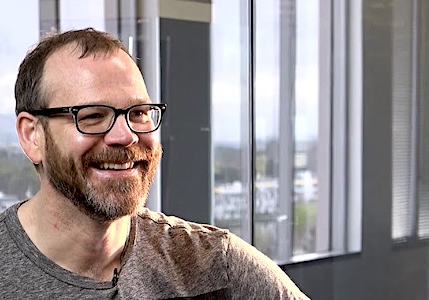
    Michael Caisley

    How do you design the sound of a blockbuster game?

    Modern video games are built from extraordinarily complex systems. Artificial intelligence, physics, animation, graphics and networking all operate simultaneously to create worlds that respond continuously to the player’s decisions. Sound design must function within that same complexity. Unlike film, where every frame is predetermined, game audio unfolds differently every time someone plays. Thousands of individual sounds interact dynamically, responding to changing environments, player behaviour and gameplay events without losing clarity or dramatic impact. During his online guest lecture for Edinburgh Napier University, Michael Caisley drew upon his experience as Senior Sound Designer on Call of Duty: Advanced Warfare to explore how one of the industry’s largest productions approached this challenge. Throughout the session, one principle emerged repeatedly. Great game audio is designed as a complete system rather than a collection of individual sound effects.

    This philosophy shaped every stage of the project’s development. Rather than asking how individual weapons, footsteps or explosions should sound, the audio team began with a broader question. How should the player experience the world? Every recording, editing decision and implementation technique ultimately served that objective. Sound design therefore became an exercise in shaping perception rather than simply producing assets. Individual recordings remained important, though their true value emerged only through the relationships they formed with every other element of the soundtrack. The player never experiences sounds in isolation. They experience an acoustic world.

    Caisley explained that this perspective influenced one of the team’s earliest decisions. Although Call of Duty already possessed an established sonic identity developed across multiple successful titles, the audio team resisted the temptation simply to inherit those conventions. Instead, they treated Advanced Warfare as an opportunity to rethink the game’s entire sound philosophy from first principles. Existing assets, familiar production techniques and long-standing implementation methods were all reconsidered. Their ambition was not to reject the past, but to ensure that every creative decision continued to serve the experience they wanted players to have. Innovation therefore emerged through careful questioning rather than change for its own sake.

    That philosophy also transformed the relationship between sound design and implementation. In many production pipelines, sound designers create assets that are later integrated into the game by other specialists. Caisley described a markedly different approach. Sound designers remained responsible for implementation inside the game itself, allowing them to shape how recordings behaved once they became part of the interactive experience. The timing of a sound, the circumstances under which it played, the way it interacted with other events and its contribution to the overall mix all became part of the design process. Creating an excellent recording represented only the beginning. The player’s experience ultimately depended upon how successfully that recording functioned within the wider system. Implementation was therefore not separate from sound design. It was an essential part of it.

    The same systems-oriented thinking naturally extended to recording. Rather than relying primarily upon commercial sound libraries, the team invested heavily in producing original recordings specifically for the game. Specialist libraries remained valuable resources, particularly carefully curated collections produced by experienced field recordists, though Caisley consistently argued that original recording provides opportunities to discover sounds that nobody else possesses. More importantly, recording becomes a creative process rather than simply a method of gathering raw material. Unexpected textures, unusual perspectives and subtle acoustic details often emerge only when designers capture sounds for themselves. Distinctive game audio begins long before editing or implementation. It begins with listening carefully to the world.

    One particularly revealing example involved footsteps. Traditional Foley often records isolated footsteps on carefully prepared surfaces inside controlled studio environments. Caisley questioned whether this approach remained appropriate for a first-person game in which movement is experienced continuously through the player rather than observed from an external viewpoint. Instead, the team carried lightweight portable recorders into forests, hillsides and outdoor locations, capturing complete performances that naturally progressed from walking to running and sprinting. Rather than constructing movement artificially from disconnected recordings, they captured the changing rhythm, effort and momentum that emerge naturally when people move through real environments. The resulting recordings felt noticeably more convincing, illustrating that authenticity sometimes depends less upon technical precision than upon preserving the natural behaviour of the performer.

    The recording equipment itself reflected the same practical philosophy. Caisley encouraged students not to become preoccupied with expensive technology at the expense of creative opportunity. Much of the team’s field recording relied upon compact portable recorders that could be deployed quickly whenever an interesting sound presented itself. Mounted directly onto lightweight boom poles, these systems reduced handling noise while allowing recording sessions to remain flexible and spontaneous. The lesson extended far beyond the specific equipment being used. Interesting sounds rarely arrive when it is convenient to record them. Designers therefore benefit from tools that allow them to respond immediately rather than waiting for ideal conditions or elaborate recording setups. Creativity, he suggested, often rewards preparedness more than perfection.

    The same willingness to question established practice shaped the recording of weapons. Rather than organising one large recording session intended to capture every firearm in a single location, the team divided the work across numerous smaller sessions. This approach simplified logistics, though its greatest benefit proved creative rather than organisational. Each session could be reviewed afterwards, allowing the team to identify opportunities for improvement before returning to record additional material. Different environments also introduced naturally varying acoustic characteristics, providing a richer collection of perspectives than a single location could have offered. Recording therefore became an iterative process in which every session informed the next. The objective was not simply to accumulate material, but to refine the sonic identity of the game through continual experimentation.

    Perhaps the most important lesson from this stage of the lecture concerned the relationship between individual sounds and the finished player experience. Caisley observed that players rarely remember isolated recordings. They remember moments. The impact of those moments depends upon countless design decisions working together, from recording and editing through implementation, mixing and gameplay design. The audio team’s objective was therefore never to create the loudest explosion or the most detailed weapon recording. It was to build a soundtrack in which every element supported the player’s understanding of the world. Call of Duty: Advanced Warfare consequently adopted a more dynamic approach to mixing, allowing important sounds to occupy the foreground while leaving space for the rest of the soundtrack to breathe. Restraint became every bit as valuable as spectacle. The most memorable moments did not emerge from individual sound effects alone. They emerged from a coherent acoustic world in which every element strengthened the player’s belief that the environment around them was responsive, believable and alive.

    Having established the technical foundations of the project, Caisley turned towards the creative decisions that ultimately give a game its identity. Recording and implementation provide the raw materials, though they do not determine how a player experiences a moment. That depends upon judgement. Throughout the remainder of the session, he returned repeatedly to an idea that sounds deceptively simple but lies at the heart of professional sound design. Every sound reflects a design decision. The role of the sound designer is not merely to create convincing audio, but to decide what deserves to be heard, when it should be heard and, just as importantly, what should remain absent.

    This philosophy shaped the way Caisley approached almost every design problem. Instead of searching immediately for the perfect recording, he preferred to build what he described as palettes of possibilities. Families of related sounds sharing particular textures, movements and tonal characteristics were assembled through recording, processing and experimentation. Organic recordings of motors, impacts, machinery and environmental sounds were manipulated repeatedly, gradually forming a collection of materials from which the final design could emerge. Creativity therefore developed through exploration instead of beginning with a predetermined solution. Designers rarely know exactly what they are searching for at the start of a project. They discover it by experimenting until unexpected relationships begin to reveal themselves.

    His workflow reflected the same exploratory mindset. Projects often began in apparent disorder, with sounds accumulating rapidly as multiple ideas were investigated simultaneously. Immediate organisation was deliberately given lower priority than experimentation. Once a broad range of possibilities had been created, the process shifted towards careful refinement. Caisley compared this approach to sculpting. A sculptor begins with a block of material and gradually removes everything that does not belong until the final form becomes visible. Sound design, he suggested, often develops in exactly the same way. Instead of continually asking what should be added, designers should also ask what can be removed.

    This idea challenges one of the most common assumptions made by new sound designers. Richer sound does not necessarily result from adding more layers. As recordings accumulate, frequency masking increases, textures become crowded and important details begin to disappear. Caisley described repeatedly muting, removing and simplifying elements until only those making a genuine contribution remained. Equalisation, dynamics processing, timing adjustments and careful layering all supported this process, though none represented the objective in itself. Their purpose was to improve clarity, strengthen communication and ensure that every remaining sound justified its place within the mix. Professional sound design therefore depends less upon the quantity of material than upon the quality of the decisions shaping it.

    A particularly memorable example came from a sequence in which the player escapes across a glass roof before an ally destroys the structure beneath pursuing enemies. The obvious solution might appear to involve recording increasingly dramatic glass impacts before combining them into one spectacular crash. Caisley approached the problem very differently. The event was divided into a sequence of distinct dramatic stages. Initial bullet impacts, subtle structural weakening, growing instability and the final collapse each received their own carefully judged sonic treatment. Texture, pacing and silence changed gradually as the scene unfolded, allowing players to follow the progression of the collapse as a connected series of events rather than experiencing a single overwhelming burst of noise. The sequence derived its dramatic impact from the way the sound evolved over time, allowing the narrative of the scene to unfold naturally through listening as well as through the visuals.

    The same attention to dramatic pacing shaped Caisley’s approach to synchronisation. Students often assume that every visible action should be matched precisely by an accompanying sound. Professional practice, he suggested, is considerably more nuanced. Delaying one sound slightly, allowing another to emerge first or simplifying an otherwise crowded moment can produce a stronger dramatic effect than strict synchronisation alone. Rhythm, pacing, expectation and contrast all become compositional tools that guide the player’s attention. Instead of following every visual event mechanically, sound design helps determine what players notice, what they anticipate and how they interpret the unfolding action. Games therefore rely upon many of the same principles of dramatic storytelling found in music and cinema, while remaining responsive to player interaction.

    Equally revealing was Caisley’s discussion of realism. Throughout the lecture, he challenged the assumption that authentic sound must originate from authentic sources. Recording larger explosions does not necessarily produce better explosions, nor does striking more metal automatically create more convincing mechanical impacts. Professional sound designers routinely combine recordings whose original sources bear little resemblance to the finished result. Environmental ambiences, machinery, organic textures and countless unexpected recordings may all contribute qualities that literal recording alone cannot provide. What ultimately matters is not the origin of the sound, but whether it supports the player’s perception of the world. Believability depends upon the finished experience rather than literal accuracy.

    Technical processing formed part of this broader creative process rather than existing as an end in itself. Equalisation, compression, distortion and other processing tools undoubtedly shape the final soundtrack, though Caisley resisted presenting them as universal recipes. Every adjustment served a specific purpose within the wider composition. Heavy compression might transform an otherwise unremarkable recording into the perfect supporting layer. Subtle timing adjustments could reveal details previously hidden within the mix. Equalisation often preserved recordings that might otherwise have been discarded. Considered individually, many processed sounds appeared incomplete or even unattractive. Their value emerged only through their relationship with every other element. As throughout the lecture, the emphasis remained firmly upon systems rather than isolated sounds.

    Towards the end of the session, Caisley reflected upon the qualities that distinguish successful sound designers from merely competent technicians. Technical expertise undoubtedly matters, though he argued that curiosity, collaboration and the willingness to accept constructive criticism exert a far greater influence over long-term professional development. Working alongside experienced colleagues continually challenges assumptions and exposes designers to alternative ways of thinking. Equally valuable is the habit of listening analytically to other people’s work. Rather than deciding whether an entire game succeeds or fails, Caisley encouraged students to identify individual moments that demonstrate particularly thoughtful creative decisions. Examining one successful interaction in depth often teaches far more than making broad judgements about an entire soundtrack. Developing as a sound designer therefore depends as much upon careful listening as upon creating new sounds.

    Taken together, Caisley’s presentation revealed that blockbuster game audio is built as much through judgement as through technology. Recording, editing, implementation and mixing undoubtedly provide the necessary tools, though those tools acquire meaning only through the decisions that shape them. Every sound exists in relation to every other sound, every moment contributes to a larger dramatic experience and every creative choice influences how players understand the world around them. Sound design is not the art of creating more sound, but of making better decisions. Technology provides the tools. Careful listening, thoughtful judgement and an understanding of human perception transform those tools into interactive experiences that players instinctively accept as real.

  • What Happens When We Listen to a Place? Barry Truax on Soundscapes, Soundmarks, and Acoustic Ecology

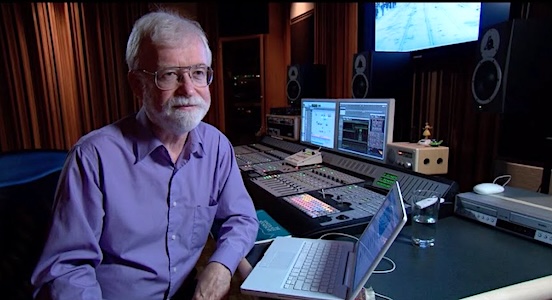
    Professor Barry Truax

    What happens when we listen to a place?

    At first glance, the question appears surprisingly simple. Places are full of sounds. Traffic passes. Birds call. Church bells ring. Doors close. Voices drift across streets and public squares. Yet during his online guest lecture for Edinburgh Napier University, composer, researcher, and acoustic ecologist Professor Barry Truax suggested that listening to a place involves far more than cataloguing the sounds it contains. Throughout a wide-ranging discussion of soundscapes, field recording, acoustic communities, oral history, environmental awareness, and soundscape composition, he repeatedly returned to a central idea. Sound is never simply physical. It is social, cultural, historical, and environmental. To listen carefully to a place is therefore to learn something about the people who inhabit it, the history that shaped it, and the relationships that continue to define it.

    Truax’s own involvement with these questions stretches back more than fifty years. Arriving at Simon Fraser University in 1973, he joined the World Soundscape Project, a pioneering research group founded by the Canadian composer R. Murray Schafer. The project emerged during a period of growing environmental awareness. Yet whereas many environmental discussions focused on landscapes, pollution, or conservation, Schafer and his colleagues became interested in the acoustic dimension of everyday life. Their concern was not simply with noise. They wanted to understand the sonic environments people inhabited and the ways those environments influenced perception, culture, memory, and community.

    The term soundscape became central to this work. Although the word had appeared occasionally before Schafer popularised it, the World Soundscape Project gave it a more systematic meaning. A soundscape was not merely a collection of sounds. Nor was it simply an acoustic environment that could be measured scientifically. What mattered equally was how those sounds were perceived and understood by people living within that environment. The same physical sound might be experienced very differently depending upon context, culture, history, or personal association. Listening therefore became a study not only of acoustics, but also of human experience.

    Vancouver provided the project’s first major laboratory. During the 1970s, members of the World Soundscape Project recorded extensively throughout the city, documenting harbour sounds, trains, ferries, bells, industrial activity, public spaces, and everyday life. At one level, the work resembled a large-scale field recording project. At another, it represented an attempt to understand how a city expressed itself acoustically. Recording became a form of investigation. What sounds defined Vancouver? Which sounds carried social meaning? Which sounds connected residents to their history? Which sounds were disappearing?

    Several examples discussed during the lecture illustrated how these questions often led in unexpected directions. Vancouver’s harbour horns, train whistles, church bells, and the distinctive Canada Horn all emerged as sounds that many residents recognised immediately. Such sounds were not important solely because they were loud or distinctive. They mattered because they connected people to place. Schafer introduced the term soundmark to describe sounds possessing particular cultural significance within a community. The concept deliberately echoed the idea of a landmark. Just as certain buildings, monuments, or geographical features help define a place visually, particular sounds may help define it acoustically.

    The Canada Horn provided an especially interesting example. Installed as part of Canada’s centennial celebrations in 1967, it performs the opening notes of the national anthem each day. Functionally, it operates like a signal. Symbolically, however, it occupies a rather different role. Many Vancouver residents know the sound immediately. It has become woven into everyday life. Listening to it therefore involves more than recognising a horn. It involves recognising a piece of collective identity.

    What fascinated Truax was how such sounds often reveal broader histories. Discussions of harbour horns quickly lead towards transportation networks, migration, industry, and national development. Church bells raise questions about religion, settlement, and changing urban environments. Listening carefully to a city often reveals that sounds function as traces of social and cultural processes that remain largely invisible.

    Many of the examples discussed during the lecture also demonstrated how soundscapes change over time. One recurring theme of the World Soundscape Project involved documenting sounds that were disappearing, being replaced, or acquiring new meanings. Steam whistles gave way to electronic signals. Traditional foghorns were replaced by automated systems. Bell sounds that once travelled across large parts of a city became increasingly difficult to hear amid expanding urban development. Such changes are rarely documented in conventional histories. Buildings receive preservation orders. Photographs enter archives. Yet sounds often disappear without attracting similar attention.

    For Truax, this raises important questions about acoustic heritage. If communities value historic buildings, should they also value historically significant sounds? If a particular sound helps define a place, what happens when it vanishes? These questions do not always produce straightforward answers. Soundscapes are constantly changing. New sounds emerge while others disappear. Yet the discussion highlights an important shift in perspective. Once listening becomes a form of cultural enquiry, everyday sounds acquire a significance that might otherwise be overlooked.

    The lecture repeatedly demonstrated how listening can reveal aspects of history that remain inaccessible through other methods. One approach developed by the World Soundscape Project involved collecting what they called earwitness accounts. Residents described sounds they remembered from earlier periods of their lives. These accounts were not always precise. Memory rarely functions with the accuracy of a recording device. Yet they offered valuable insights into how people experienced changing environments. Through such recollections, researchers gained access not only to lost sounds but also to the meanings attached to them.

    One particularly memorable example came from the Scottish village of Dollar, one of several European communities studied by the project during the 1970s. There the researchers worked closely with David Graham, a former town clerk whose extraordinary memory allowed him to reconstruct entire soundscapes from decades earlier. Standing at locations throughout the village, Graham described railway sounds, station activities, signalling systems, machinery, voices, and routines that had long since disappeared. Listening to him was almost like hearing an acoustic map of the past being reconstructed in real time.

    The significance of these accounts extended beyond nostalgia. Graham was not simply recalling sounds. He was recalling relationships, activities, routines, and forms of social organisation. The sounds mattered partly because they connected people to particular ways of life. Once again, listening became a route towards understanding communities rather than merely documenting acoustics.

    Soundwalks developed as another way of exploring these relationships. Truax described soundwalks as listening walks in which participants move through an environment while paying deliberate attention to its acoustic characteristics. Although deceptively simple, the method encourages a profound shift in awareness. Many sounds that normally fade into the background become newly noticeable. Distances become easier to judge. Acoustic boundaries emerge. Patterns of activity reveal themselves. Places begin to sound different once listening becomes intentional.

    Closely related were memory walks, in which participants revisited locations associated with earlier experiences. Returning people to familiar places often stimulated recollections that might otherwise remain inaccessible. A particular street corner, railway station, church, or public square could trigger detailed memories of sounds, activities, and social interactions. Context helped unlock memory. The environment itself became part of the research method.

    What makes these approaches particularly interesting is that they position listening as an active practice rather than a passive process. Hearing happens continuously. Listening requires attention. Throughout the lecture, Truax repeatedly encouraged students to recognise how much of everyday life passes by acoustically unnoticed. Soundwalks, memory walks, and soundscape research all attempt to interrupt that habit and create opportunities for reflection.

    The final part of the lecture turned towards soundscape composition, a form of creative practice closely associated with Truax’s work. Traditional musical composition often treats sounds as materials that can be organised independently of their original contexts. Soundscape composition adopts a rather different position. Environmental context remains central. The sounds retain connections to places, communities, and experiences from which they originate.

    Truax described a continuum of approaches. At one end are relatively direct recordings that document environments with minimal intervention. At the other are heavily transformed compositions in which sounds are processed, stretched, layered, and reconfigured. What distinguishes soundscape composition is not the degree of manipulation but the continuing relationship between the work and its source context. Listeners are encouraged to recognise environmental references and reflect upon their meanings.

    Soundscape composition also reflects a way of thinking about recorded sound that has influenced many areas of contemporary sound design. Environmental recordings are not treated simply as raw material waiting to be transformed beyond recognition. Their origins continue to matter. A harbour horn, a railway station, or a forest path carries associations that listeners may recognise even after considerable processing. Sound designers regularly make similar decisions when balancing realism with interpretation. Recordings can be edited, layered, stretched, or filtered, yet they often retain traces of the places and experiences from which they came. Truax’s work encourages designers to consider not only how a sound functions within a composition, but also what relationships it continues to carry with the world beyond the loudspeaker.

    This emphasis on context creates an interesting contrast with many traditions of Western art music. Rather than treating context as background information, soundscape composition places it at the centre of the creative process. Environmental, social, historical, and psychological associations become part of the material with which the composer works. A harbour horn is never simply a sound. It carries histories of transportation, labour, geography, and identity. A church bell carries different associations. A train whistle carries others. The composer works not only with acoustic properties but also with layers of meaning.

    Truax illustrated this approach through examples drawn from Vancouver. Familiar sounds appeared first in recognisable forms before gradually being transformed through processes such as time stretching. The effect was not simply aesthetic. Transformation encouraged different forms of listening. Sounds that normally function as signals became objects of reflection. Their internal textures emerged. Musical qualities became apparent. At the same time, their connections to place remained intact.

    Underlying the entire lecture was a broader concern with acoustic ecology. Listening, in this context, is not merely a technical skill or an artistic technique. It is a way of understanding relationships between people and environments. Paying attention to sound reveals aspects of culture, history, memory, community, and ecology that often remain hidden. It encourages reflection upon what societies choose to preserve, what they allow to disappear, and how environments continue to shape experience.

    More than fifty years after the World Soundscape Project began, many of the questions raised by Truax and his colleagues remain unresolved. Cities continue to change. Technologies alter how people communicate, travel, and work. Familiar sounds disappear while new ones emerge. Yet sound rarely occupies the same position within public discussions of heritage and preservation as buildings, monuments, or landscapes.

    Throughout the lecture, Truax returned repeatedly to sounds that had vanished, sounds that survived, and sounds that communities continued to recognise as part of their identity. Harbour horns, church bells, railway sounds, industrial signals, and everyday activities all carried meanings that extended beyond their immediate functions. They connected people to places, histories, and shared experiences. Once lost, many could not easily be recovered.

    Soundscape research therefore asks a question that is both simple and surprisingly difficult. What should be remembered acoustically? Photographs preserve appearances. Written records preserve events. Recordings, memories, soundwalks, and earwitness accounts preserve something different. They preserve traces of how places were experienced by the people who lived within them.

    For Truax, listening is valuable partly for this reason. It draws attention towards aspects of culture and environment that often pass unnoticed. A soundscape is not merely what a place sounds like. It is one way of understanding how a place has been lived, remembered, and shared.

  • What Can Sound Communicate That Words Cannot? Jim Metzner on Memory, Listening, and Going Places That Words Cannot Go

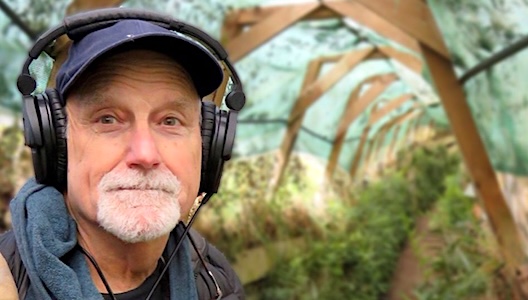
    Jim Metzner

    Jim Metzner began the lecture with a mystery.

    A sound was played. Students suggested possible explanations. Some heard machinery. Others heard something else entirely. For a few minutes the recording remained unresolved. Much of Metzner’s work inhabits that moment before a sound settles into a clear explanation. Before it becomes a bird, a vehicle, a voice, or a machine, it exists as an experience. During his online guest lecture for Edinburgh Napier University, discussions of field recording, travel, documentary production, family history, and memory repeatedly returned to this idea. How can sound communicate aspects of experience that are difficult to convey in any other way?

    Listening, in Metzner’s view, is not simply a way of gathering information. It is a way of encountering people, places, and experiences. Much of his work begins from a deceptively difficult question. How can a sound recording help somebody experience something they have never encountered for themselves?

    That challenge appeared repeatedly as students discussed their own recordings. Several described recording parks, public events, city streets, and everyday environments. Similar observations emerged from each example. Carrying a recorder changes the way people move through the world. Sounds that normally fade into the background suddenly become noticeable. Distant traffic acquires texture. Birds occupy distinct locations within a soundscape. Conversations, machinery, weather, and footsteps separate themselves into layers. The microphone becomes a reason to pay attention. One student described attempting to record ambience in a local park while aircraft repeatedly passed overhead. The interruptions were frustrating. Each time the environment seemed to settle, another aircraft arrived. Metzner responded with a story from his own work. While recording in the Great Swamp near a major airport, he encountered a similar situation. Waiting for silence would have meant waiting forever. Rather than treating the aircraft as a problem, he began treating it as part of the environment itself.

    Metzner’s answer reflected a recurring theme throughout the session. Recording is not always about removing the world. Sometimes it involves allowing the world to remain present. Sounds that initially appear intrusive may become important parts of the story. The aircraft was not simply interfering with the student’s recording. It was also shaping the student’s experience of being in that place. Standing in a park, looking upwards, waiting for the noise to pass, became part of the memory. In that sense, the aeroplane belonged to the story as much as the birds or the wind.

    The conversation then moved towards a problem that confronts many documentarians. The person who makes a recording remembers far more than the recording itself contains. They remember the weather, the location, the circumstances, and their own reactions. Future listeners possess none of this knowledge. How, then, can an experience be shared with somebody who was never there? A recording alone rarely provides a complete answer. Context becomes necessary. Yet explanation creates its own difficulties. Too little information leaves listeners uncertain about what they are hearing. Too much information can overwhelm the recording itself. Over the course of his career, Metzner has carried microphones through deserts, cities, forests, festivals, religious ceremonies, and countless other environments. Yet the purpose of these recordings has never been simply to build an archive of unusual sounds. Instead, they function as forms of communication. During the discussion, he compared recordings to postcards. A postcard never contains everything about a place. It presents only a fragment. Yet that fragment can still communicate something meaningful. Sound recordings operate in a similar way. They do not reproduce entire experiences. They provide partial access to them. Listeners complete the picture through imagination, memory, and interpretation.

    Listeners themselves become part of the process. No recording contains everything. Microphones record sound pressure variations. They do not record temperature, light, smell, movement, or the countless other details that contribute to an experience. Yet listeners rarely encounter recordings as collections of isolated sounds. They actively construct meaning from what they hear. A few seconds of ambience may be enough to suggest an entire environment. A familiar voice may evoke a person more vividly than a photograph. A distant church bell, footsteps in a corridor, or voices heard from another room can suggest a much larger world than the recording itself contains. Documentary production frequently relies upon this relationship between recording and imagination. Rather than attempting to communicate everything, the producer provides enough material for listeners to begin constructing their own understanding of a place, event, or experience. Recordings do not simply transmit information from one person to another. They create opportunities for participation. Listening becomes an active process through which people assemble impressions, associations, and memories from fragments of sound.

    Rain on a conservatory roof. Crickets during summer evenings. A vacuum cleaner moving through a family home. Songs sung by parents. Early computer games. Calls to prayer heard while travelling. When Metzner asked students to think about sounds they remembered from childhood, the answers arrived quickly. Few of the sounds were unusual. Their importance had little to do with acoustics. What mattered was everything attached to them. The examples revealed how deeply sound can become woven into personal history. Many of the memories were linked to recurring experiences rather than singular events. The sound of rain returning night after night. A family member singing repeatedly over many years. Household sounds that seemed insignificant at the time. Their importance emerged gradually through repetition. Long after specific conversations or individual days had been forgotten, the sounds remained. Several contributions also highlighted how difficult it can be to predict which sounds will become meaningful. People rarely decide in advance that a particular sound will become a lifelong memory. More often, significance emerges retrospectively. A sound that once seemed entirely ordinary acquires importance through later experience. Hearing a familiar sound years later can reactivate memories, emotions, and associations that extend far beyond the recording itself. What returns is rarely just the sound. People remember places, relationships, circumstances, and feelings connected to it. A recording therefore preserves more than an acoustic event. It can preserve pathways back towards experiences that might otherwise feel increasingly distant. A sound that appears entirely ordinary to one listener may carry decades of meaning for another. Hearing is rarely confined to the present moment. Certain sounds seem capable of collapsing time. A familiar voice, a piece of music, or an environmental sound can reconnect listeners with people, places, and relationships that might otherwise feel distant.

    While still in high school, Metzner began recording conversations with his grandfather. There was no documentary project in mind. He was not gathering material for publication. He simply wanted to preserve conversations with somebody he loved. Years later, those recordings became something entirely different. After his grandfather had died, the tapes acquired a significance that would have been impossible to recognise when they were first made. What had once seemed routine became irreplaceable. The story resonated with many listeners precisely because it involved no grand plan. Had Metzner waited until the recordings appeared important, it would already have been too late. Their value emerged from the simple decision to record ordinary conversations while the opportunity existed. From that experience came one of the clearest pieces of advice offered during the lecture. Record parents. Record grandparents. Record the people whose voices matter. Many recordings appear ordinary when they are made. Their value often becomes visible only later. The suggestion was not motivated by nostalgia alone. Voices contain forms of information that are difficult to preserve in any other way. Speech patterns, accents, pacing, humour, hesitation, and personality all become embedded within a recording. Written transcripts can preserve words. Recordings preserve presence. As Metzner reflected on these recordings, the discussion broadened into a larger point about time. Much of everyday life feels too ordinary to document. Conversations happen. People tell stories. Family members describe events that seem familiar and unremarkable. Yet these moments often become increasingly valuable as years pass. Recording provides a way of preserving details that might otherwise disappear unnoticed. Metzner’s reflections on these recordings returned repeatedly to the differences between memory and recording. Human memory is selective. Certain details remain while others disappear. Recordings preserve details indiscriminately. Accents. Hesitations. Laughter. Breathing. The rhythm of a voice. Background sounds that seemed unimportant at the time. Small details that might otherwise have been forgotten can later become deeply meaningful. A recording preserves more than information. It preserves traces of presence.

    Metzner has never been entirely comfortable with the phrase “capturing sounds”. The word suggests possession. It implies that a sound has somehow been seized and stored away. Throughout the discussion he returned to a different idea. Sounds are given rather than captured. Once a recording has been made, the challenge becomes helping somebody else experience what made that sound meaningful in the first place. Context matters. Stories matter. Yet explanation has limits. Documentary production often involves helping listeners approach an experience and then stepping aside so that the sounds can speak for themselves. A successful recording does not simply tell listeners what to think. It creates conditions in which they can form their own relationship with what they hear. The idea sits comfortably alongside much of his work. Recordings are not trophies collected from the world. They are invitations to listen more closely to it.

    Expensive microphones appeared surprisingly rarely in the lecture. Recording technology was never dismissed, though it was rarely placed at the centre of the discussion. Microphones matter. Recording techniques matter. Editing tools matter. Yet none of them can substitute for curiosity. A person who pays close attention to the world will often discover interesting sounds regardless of equipment. Conversely, expensive equipment cannot compensate for a lack of attention. Many of the examples discussed during the session pointed towards the same conclusion. Meaningful recordings often emerge from moments that other people would simply pass by. A sound heard while travelling. A conversation with a grandparent. Rain on a roof. An aircraft passing overhead. None of these experiences appear remarkable at first glance. Their significance emerges through listening.

    Near the end of the session, the lecture’s title, Going Places That Words Cannot Go, felt increasingly apt. Certain experiences resist straightforward description. The sound of rain on a roof. A grandparent’s voice. A crowded street in a distant city. A celebration, a conversation, or a moment of quiet. Words can describe such things. Sound can sometimes bring listeners closer to experiencing them. For Metzner, that possibility lies at the heart of listening. Sound does not simply tell us about the world. Under the right circumstances, it can preserve traces of people, places, and experiences long after the original moment has passed. More importantly, it can allow those experiences to be shared with somebody else. A recording offers only a fragment. A voice. A place. A conversation. A few seconds of sound preserved from a particular moment in time. Yet those fragments can remain meaningful for decades. They can reconnect people with memories, places, and relationships that might otherwise fade. Listening, as Metzner reminded students throughout the session, is not simply a way of gathering information about the world. It is one way of remaining connected to it.

  • Why Record Everything? Ric Viers on Sound Effects Libraries, Creative Possibility, and Listening for Opportunity

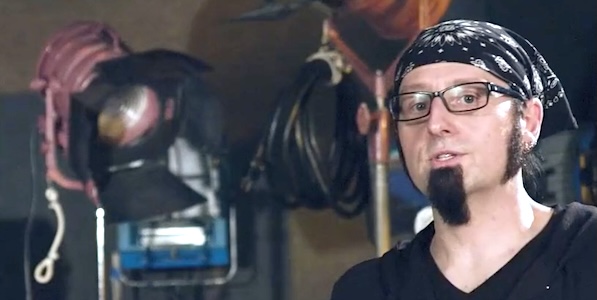
    Ric Viers

    Why record everything?

    Many sound designers spend years learning how to remove unwanted sounds from recordings. They search for quieter locations, better microphones, cleaner signal paths, and more controlled recording environments. During his online guest lecture for Edinburgh Napier University, sound designer, recordist, publisher, and author Ric Viers approached the problem from a rather different direction. Again and again, he encouraged students to record more, not less. More locations. More variations. More experiments. More sounds that might initially appear useless.

    The advice runs against much conventional recording practice. Storage fills quickly. Editing becomes more demanding. Organisation becomes more complicated. Yet Viers argued that one of the greatest mistakes a sound designer can make is deciding too early what will or will not be useful. Throughout the lecture, he repeatedly returned to a simple idea: many of the most valuable sounds reveal their potential only later.

    The immediate context for the discussion was the creation of commercial sound effects libraries. Viers guided students through the process he uses when developing libraries for Blastwave FX, beginning with the choice of a topic, category, or theme. Some libraries focus on a specific class of sounds, such as footsteps. Others are organised around broader concepts, such as a zombie apocalypse, requiring everything from impacts and gunfire to environmental ambiences, destruction effects, creatures, weather, machinery, and countless other elements. Yet selecting a theme was only the beginning.

    Considerably more time, he suggested, is often spent researching than recording. Before microphones are unpacked, he studies films, television programmes, games, applications, and existing libraries to understand what has already been recorded, what is missing, and where opportunities may exist. Commercial sound libraries do not emerge from recording sessions alone. They emerge from identifying gaps. A successful library must offer something that people cannot already obtain elsewhere. Recording therefore begins with investigation. What sounds are difficult to find? Which sounds have become overused? Which categories remain poorly represented? Questions such as these help determine where effort should be directed.

    Planning extends far beyond selecting a subject. Viers described the creation of extensive scavenger lists containing every conceivable sound that might belong in a library. The exercise draws heavily upon what he called blue-sky thinking, an approach in which ideas are generated before they are evaluated. Impractical suggestions are welcomed. Expensive suggestions are welcomed. Unlikely suggestions are welcomed. The purpose is not to determine whether an idea is immediately achievable. The purpose is to widen the range of possibilities. Viers argued that ideas often develop through association. A suggestion that cannot be pursued directly may still help identify a different route towards the same goal.

    A recurring theme in the lecture was the cultivation of listening as a habit. Ideas for sounds are often collected long before any recording session begins. A strange resonance in a pipe. The texture of metal scraping against metal. An unusual mechanical vibration. A sound designer’s work, in his view, begins long before the recorder is switched on. Listening becomes a form of continuous observation. Ideas are captured in notebooks, mobile apps, or voice memos. Some notes describe specific sounds. Others record textures, qualities, or possibilities.

    One example illustrated this way of thinking particularly clearly. While dealing with a blocked drain, Viers became fascinated by the sound produced as liquid moved through the pipework. Most people would simply hear a drain. Viers heard something else. The sound possessed qualities that might later become useful in an entirely different context. He immediately made a note to revisit the sound in the future. What interested him was not the object itself. It was the texture. The eventual application remained unknown. The possibility was enough.

    This distinction between objects and textures appeared repeatedly throughout the lecture. Sound designers are often asked where particular sounds come from. Audiences frequently imagine a straightforward relationship between source and result. A door sound comes from a door. An engine sound comes from an engine. Viers described a different way of thinking. A useful recording is not necessarily valuable for what it is. It may be valuable for characteristics that become apparent only after editing, processing, layering, or transformation. Recording therefore involves collecting materials whose eventual use remains unknown rather than merely documenting objects.

    Many lectures on sound design focus heavily on equipment. Microphones, recorders, plug-ins, and software frequently dominate discussions. Viers spent surprisingly little time discussing technology in isolation. When he addressed recording practice, attention remained focused on listening. Before recording in any location, he advocated standing still and listening carefully to the environment. Air conditioning systems, insect activity, traffic patterns, aircraft, electrical noise, and countless other factors become relevant once attention shifts from simply hearing a location to actively analysing it.

    This process of scouting locations received considerable attention. Viers argued that many people move through environments without noticing their acoustic details. Recording requires a different form of awareness. Insects become important. Distant roads become important. Wind direction becomes important. Time of day becomes important. A location that appears perfect at one moment may become unusable an hour later. Successful field recording often depends less upon equipment than upon patience, observation, and preparation.

    This concern with awareness also explains his insistence on monitoring continuously through headphones. Microphones do not hear the world in quite the same way people do. Wearing headphones while moving through an environment reveals details that might otherwise remain unnoticed. Interesting sounds are often discovered rather than sought. What appears unremarkable at first may become compelling when heard through a microphone. Recording therefore becomes an ongoing process of discovery rather than simply the execution of a predetermined plan.

    A similar principle shaped his approach to recording itself. Whenever possible, he records multiple takes. Fast versions. Slow versions. Loud versions. Quiet versions. Different perspectives. Different performances. On one level, this provides insurance against technical problems. On another, it reflects a deeper belief about sound design. Sounds rarely remain confined to their original purpose. A recording made for one project may later become useful in another. A variation that seems unnecessary today may become exactly what a future project requires.

    Experience had also taught him how easily apparently successful recording sessions can fail. During one project involving emergency vehicles, extensive access was arranged at a fire station. Recordings were captured, equipment functioned correctly, and everything appeared successful. Only later did the team discover that powerful sirens had physically affected the recording medium itself. Material that seemed secure had effectively been lost. The story was not presented as a technological curiosity. It explained why professional recordists often develop habits that appear excessive to newcomers. Additional takes, backups, and redundancy emerge from experience rather than paranoia.

    A bee entered the Foley studio while Viers was working on an unrelated project. The original plan was simply to remove it and continue working. An intern suggested recording it instead. That decision eventually led to an entire library of insect sounds, combining recordings of flies, bees, crickets, and other insects with carefully performed Foley designed to represent insect movement. The significance of the story lies less in the insect itself than in the response. The opportunity was not planned. It appeared unexpectedly. Remaining open to such moments allowed a chance event to become the basis of a completely new collection.

    Questions of organisation formed another important part of the lecture. Recording more sounds creates a practical problem. How can those sounds be found again months or years later? Viers discussed the importance of cataloguing, naming conventions, metadata, and library management. Collecting large quantities of material is only useful if that material remains accessible. A sound hidden inside thousands of poorly organised files may effectively disappear. The ability to locate recordings quickly becomes part of the creative process itself.

    The same concern with organisation appeared in his discussion of large-scale sound design projects. One example involved the construction of a tornado sequence containing roughly 180 individual tracks. Projects of this scale quickly expose weaknesses in workflow. Tiny editing errors become difficult to locate. Artefacts become buried within hundreds of layers. Seemingly minor organisational decisions accumulate into major practical consequences. Preparation therefore serves creative goals. Time spent organising material makes experimentation easier later.

    Recording occupied only part of the process. Viers repeatedly returned to what happens afterwards. Sounds are collected, edited, organised, and transformed. Recordings function as materials that can be combined, layered, stretched, pitched, and manipulated into entirely new forms.

    One example involved the creation of a failing fluorescent light. Unable to find exactly the sound he wanted, Viers began experimenting with alternative sources. The eventual solution came from an unexpectedly small fragment of fruit being crushed. Through editing and transformation, the recording acquired the qualities required for the scene. The finished sound bore little resemblance to its source. Yet this was precisely the point. The identity of the source mattered less than the acoustic properties it contained.

    The same logic appeared in Viers’ discussion of so-called bad recordings. Students often expect professional sound design to involve strict distinctions between useful and useless material. Viers challenged that assumption directly. During the discussion, he argued that there is rarely such a thing as a completely bad sound. Recordings that fail in one context may become valuable in another. Noise, distortion, clipping, and other imperfections can sometimes serve as raw material for later experimentation.

    One example involved a recording that initially appeared unusable. Hidden within the material was the sound of a cat. Rather than discarding the recording, Viers began manipulating fragments of it through processing, layering, and transformation. Elements that seemed worthless in their original form became the basis of drones, textures, and entirely different production sounds. The value of the recording emerged through later use rather than immediate judgement.

    Discussion of careers and commercial practice returned to the same issue. Students often assume that success depends upon following established models. Viers argued almost the opposite. He encouraged students to develop their own interests, methods, and creative identities. Distinctive approaches create opportunities. If everyone records the same sounds in the same way, there is little reason for anyone to choose one library over another.

    Recording, editing, organisation, publishing, and marketing occupied much of the lecture.

    Running through all of them was the same underlying concern: how to recognise useful material before its eventual value becomes obvious. Throughout the discussion, Viers repeatedly challenged the assumption that the usefulness of a sound can be determined immediately. A recording that appears unremarkable today may become the foundation of a future project. A failed recording may later prove valuable once new tools become available. A sound collected for one purpose may eventually find a completely different use.

    Many people encounter the world as a collection of familiar objects and events. Viers encouraged students to listen differently. A drain becomes a source of textures. A mechanical vibration becomes source material for a creature or machine. A crushed piece of fruit becomes a fluorescent light. An unexpected insect in a Foley studio becomes the starting point for an entirely new library. A sound’s future use is often difficult to predict when it is first recorded.

    Sound effects libraries occupy an unusual position within creative practice. They are archives of past recordings, though they are also collections of future possibilities. Every recording preserves an opportunity whose eventual use remains unknown. Viers’ argument was not simply that sound designers should record more sounds. It was that they should remain open to possibilities that have not yet revealed themselves. A recorder captures a sound at a particular moment. What that sound eventually becomes often remains an open question.

  • How Do Mobile Games Sound Bigger Than They Are? George Vlad on Game Audio, Field Recording, and Creative Constraints

    George Vlad

    How do mobile games sound bigger than they are?

    Many people associate game audio with large development studios, lengthy production schedules, and vast teams of specialists. The image is often one of blockbuster productions involving hundreds of developers working over several years. During his online guest lecture for Edinburgh Napier University, sound designer, field recordist, and Edinburgh Napier alumnus George Vlad offered a rather different perspective. Drawing on a career that has included audio for hundreds of mobile games, Vlad described a world in which sound designers are frequently asked to achieve ambitious creative goals under severe practical constraints. Development schedules may last only weeks. Budgets are often limited. Storage space can be measured in megabytes rather than gigabytes. Yet players still expect games to feel rich, engaging, and alive.

    Across the lecture, Vlad repeatedly demonstrated that successful audio design is rarely about having unlimited resources. More often, it is about learning how to achieve more with less.

    Vlad’s own route into the industry reflects this philosophy. Long before he entered formal education, he was fascinated by sound itself. Childhood memories centred on listening to objects resonate, experimenting with makeshift instruments, and becoming absorbed by the sonic characteristics of everyday materials. At the same time, video games became an equally important influence. These parallel interests eventually converged after several years spent working across Europe, saving money to build a small studio and gradually developing the skills needed to pursue audio professionally.

    The path was far from conventional. Without immediate access to formal training, Vlad relied heavily upon experimentation, books, online communities, and practical experience. Early work editing podcasts and audiobooks gradually led to opportunities in games, particularly during the rapid growth of smartphone applications in the early 2010s. Later, after moving to Edinburgh in 2013, he enrolled on Edinburgh Napier University’s Sound Design programme, where formal study helped fill many of the gaps he had identified in his own knowledge. Rather than describing graduation as the end of a learning process, however, Vlad suggested that education had mainly revealed how much more there remained to learn.

    Looking back, many of these experiences involved similar challenges. Whether teaching himself new skills, building a freelance business, or learning how to work within the realities of mobile development, progress depended less upon ideal circumstances than upon adaptability. This theme would recur throughout the lecture.

    The realities of mobile game development provide a particularly clear illustration of this challenge. Unlike major console or PC titles that may take years to complete, many mobile games operate on remarkably compressed schedules. A developer might contact a sound designer only days before release, requiring dozens of sound effects and music assets within a very short period. Under these circumstances, efficiency becomes essential.

    What emerged from Vlad’s description was a picture of sound design that differs considerably from popular perceptions of creative work. Inspiration certainly plays a role, though much of the process involves practical decision-making. Developers provide lists of required sounds, visual references, gameplay footage, or playable builds. From these materials, the sound designer develops an understanding of how the game should feel. This emphasis on feeling proved particularly important. Before focusing on individual sounds, Vlad explained that he first tries to understand the intended player experience. Should the game feel exciting, relaxing, humorous, energetic, or mysterious? These broader emotional goals help shape countless later decisions.

    This approach reflects an important aspect of game audio more generally. Sounds do not exist independently. Their purpose is to support gameplay, reinforce feedback, communicate information, and contribute to the overall experience. A technically impressive sound that conflicts with the desired mood may ultimately be less effective than a simpler alternative.

    Over the course of his career, Vlad has contributed audio to hundreds of games. Working at this scale demands a different way of thinking about sound design. Rather than approaching every project as a completely unique undertaking, practitioners develop workflows, libraries, recording practices, and decision-making strategies that allow them to work efficiently without sacrificing quality. Consistency, organisation, and adaptability become just as important as creativity.

    The lecture provided numerous examples of how these principles operate in practice. Casual mobile games aimed at younger audiences often require sounds that are immediately understandable and emotionally positive. Designers frequently request what they describe as “cartoony” sounds, a term that may initially appear vague but which often carries fairly specific expectations. Sounds should be simple, clear, playful, and easily interpreted. Complex or highly realistic effects may actually prove less effective if they distract from the intended experience.

    Such decisions become particularly important when working on long-term projects. Vlad described his involvement with Adventure Smash, a mobile title developed by PeopleFun, the studio founded by several of the developers behind Age of Empires. What began as a relatively modest project gradually expanded into a much larger undertaking involving thousands of individual sound assets.

    One of the most interesting aspects of this discussion concerned iteration. Many sounds were revised repeatedly as the game evolved. New characters appeared. Design priorities changed. Playtesting revealed unexpected problems. Audio that seemed appropriate at one stage later required substantial modification. Rather than treating this as a failure, Vlad presented iteration as a normal and essential part of development.

    Playtesting proved especially valuable. Watching players encounter a game for the first time often revealed issues that were invisible to the development team. After listening to the same sounds hundreds or even thousands of times, designers naturally become accustomed to them. New players bring fresh perspectives. Their reactions can highlight confusing feedback, excessive repetition, or sounds that no longer fit the overall direction of the game.

    Listening to these examples, it became clear that game audio involves much more than creating sounds. It requires understanding how those sounds function within a larger interactive system. The effectiveness of an audio asset depends not only upon its quality but also upon when it appears, how frequently it occurs, and how players interpret it.

    Technical constraints provide one of the clearest examples of this mindset. Mobile games often operate within strict memory limitations. Vlad described projects containing thousands of audio assets while occupying only a few dozen megabytes of storage. Achieving this requires more than compression. Designers must think carefully about how sounds are structured, reused, combined, and implemented. Rather than viewing constraints as obstacles, the lecture suggested that they often become catalysts for creativity. Limited resources encourage solutions that are more elegant, efficient, and flexible than those developed under less restrictive conditions.

    Alongside game audio, Vlad discussed another major aspect of his professional practice: field recording. Over the years he has become increasingly involved in recording natural environments, wildlife, ambiences, and unusual sound sources. Although these activities initially developed alongside his game work, they have gradually become an important creative outlet in their own right.

    Field recording might appear separate from game development, though the lecture revealed numerous connections between the two. Recording environments, wildlife, machinery, weather, and unusual sound sources continually expands the palette available for future projects. A recording captured for no particular purpose may later become the foundation of a game sound effect, a commercial sound library, or an entirely different creative project. Field recording therefore functions not only as a creative activity in its own right but also as a long-term investment in future possibilities. This relationship between recording and design reflects the broader philosophy running throughout Vlad’s work. Resources are rarely available precisely when they are needed. Building libraries, developing skills, and collecting recordings creates opportunities that may not become useful until years later. Much of professional audio involves preparing for problems that have not yet appeared.

    What was particularly striking was the way field recording complements game audio. Time spent outdoors often provides opportunities for reflection that are difficult to find within a studio environment. Vlad described discovering solutions to creative problems while sitting quietly in a car monitoring microphones placed hundreds of metres away. Distance from the immediate pressures of production sometimes creates the mental space necessary for new ideas to emerge. The discussion of recording techniques revealed another dimension of creativity. Recording is often presented as a technical process involving microphones, recorders, and acoustic environments. Vlad acknowledged the importance of these factors while emphasising that microphone placement, recording strategies, and listening perspectives can fundamentally alter the resulting material. Small changes in approach frequently produce dramatically different outcomes.

    Perhaps the most interesting aspect of the lecture was the way it challenged simplistic distinctions between technical and creative work. Audio professionals are sometimes portrayed as belonging to one category or the other. Vlad’s experiences suggest that the reality is considerably more complicated. Technical decisions influence creative outcomes. Creative ambitions depend upon technical understanding. Success often emerges through the interaction between both.

    Questions about freelancing reinforced this point. Building a sustainable career requires skills extending far beyond audio production. Client communication, project management, marketing, financial planning, networking, and professional development all become part of daily practice. Creative expertise alone is rarely sufficient.

    Freelancing introduced another form of constraint. Unlike permanent employment, freelance work rarely provides complete stability or predictability. Projects arrive unexpectedly. Workloads fluctuate. Technologies change. Client requirements evolve. Vlad spoke candidly about periods of uncertainty throughout his career, though these experiences reinforced the same lesson visible elsewhere in the lecture. Long-term success depends less upon avoiding change than upon learning how to respond to it effectively.

    Looking back across the lecture, what emerges most clearly is a picture of audio work defined by adaptability. Technologies change. Projects evolve. Clients revise their requirements. Storage limits impose restrictions. Budgets create compromises. Development schedules compress. Yet creative ambitions remain.

    Throughout his career, George Vlad has repeatedly encountered situations in which the available resources were smaller than the desired outcome. Mobile games needed to feel larger than their budgets suggested. Limited memory had to support rich sonic worlds. Tight schedules still demanded professional results. Field recordings gathered in remote locations eventually found new purposes years later. Again and again, progress emerged through resourcefulness rather than abundance.

    For students considering careers in game audio, this may be the lecture’s most valuable lesson. Technical knowledge matters. Creative ability matters. Yet neither guarantees success on its own. Professional practice involves solving problems, working within constraints, adapting to change, and finding opportunities where others might see limitations.

    George Vlad’s career demonstrates that there is no single route into professional audio. His journey has included self-directed learning, formal education, freelance practice, field recording, game development, experimentation, and continual adaptation. Across all these experiences, one principle remained remarkably consistent. Creative work is rarely about having unlimited resources. More often, it is about recognising possibilities that remain invisible until constraints force new ways of thinking.

  • Getting Closer: Watson Wu on Field Recording, Curiosity, and the Search for Authentic Sound

    Watson Wu

    What makes a great field recording?

    Many aspiring sound designers assume the answer begins with equipment. Better microphones, more expensive recorders, larger collections of accessories, or the latest recording technologies all seem like obvious places to start. Watson Wu has spent decades recording race cars, helicopters, weapons, sports crowds, military vehicles, steam trains, wilderness ambiences, and countless other sound sources for games, film, and television. Yet throughout his guest lecture at Edinburgh Napier University, he repeatedly returned to a very different conclusion. Great recordings rarely emerge from equipment alone. More often, they emerge from access, preparation, curiosity, and a willingness to get closer to the source than most people are prepared to go.

    Wu’s own journey into field recording began almost accidentally. Having studied music and worked extensively with recording equipment, he was asked by a client whether he could also provide sound effects for a project. The results proved successful enough to encourage him to continue. Looking back, what is striking is how quickly his attention shifted away from commercially available sound libraries and towards the sounds themselves. Existing libraries could certainly provide useful material, though they rarely offered complete creative control. If a designer records a skateboard personally, they can decide exactly where the microphone should be placed, which aspects of the sound should be emphasised, and which should be excluded. Rather than accepting someone else’s interpretation of an event, they can create their own. Recording therefore becomes more than acquisition. It becomes a way of understanding sound.

    That desire for direct engagement appears throughout Wu’s career. Again and again, he described situations in which recording personally provided opportunities that would have been impossible through library material alone. A Ferrari owner can be asked to accelerate, brake, idle, or corner in specific ways. A helicopter pilot can perform particular manoeuvres. A stadium crowd can be approached from multiple positions and perspectives. Rather than documenting a sound, the recordist begins exploring it. Questions emerge. What does the source sound like from the front? What changes when the microphone moves closer? Which details become audible when recording from inside rather than outside? The process becomes investigative. Recording is no longer merely collecting sounds. It becomes a way of learning how sounds behave.

    Perhaps surprisingly, this emphasis on source recording has also shaped Wu’s attitude towards technology. Early in his career, he assumed that only the most expensive microphones could produce professional results. Like many newcomers, he viewed prestigious manufacturers as essential components of successful recording practice. Experience gradually challenged this assumption. Expensive microphones certainly have their place, though many recording situations depend far more upon positioning, environment, and technique than upon cost alone. A moderately priced microphone placed correctly will often outperform a far more expensive microphone placed badly. Recording a gunshot, a racing vehicle, or a helicopter frequently requires practical decisions about durability, placement, weather resistance, and safety. In some situations, the most valuable microphone is not the most expensive one. It is the one that survives the session.

    This pragmatic attitude runs throughout Wu’s work. Rather than searching for a single perfect microphone, he has assembled a collection of tools suited to different purposes. Shotgun microphones provide focus and directionality. Ambisonic microphones capture complete acoustic environments. Lavalier microphones can be hidden inside vehicles and machinery. Dynamic microphones tolerate extreme sound pressure levels. Each offers a different perspective on the same event. Rather than asking which microphone is best, Wu encourages a different question: what exactly are you trying to hear?

    That question becomes particularly important when considering the different forms that field recording can take. Throughout the lecture, Wu repeatedly distinguished between focused recordings, environmental recordings, and combinations of both. A shotgun microphone pointed at a specific source allows unwanted sounds to be rejected. An ambisonic microphone captures the entire acoustic environment surrounding it. Many of the most useful recordings involve collecting both simultaneously. A racing vehicle, for example, may be recorded with a fixed stereo setup capturing the overall pass-by while another microphone actively follows the vehicle as it moves. Together, these perspectives provide far greater creative flexibility than either recording alone. The objective is not simply to obtain a sound. The objective is to gather options.

    This philosophy of collecting more than is immediately required appeared repeatedly throughout the lecture. If a client requests four recordings, Wu aims to deliver eight. If access is granted to a vehicle, he looks for every useful perspective that can be captured while the opportunity exists. The reasoning is practical. Recording opportunities are fragile. Weather changes. Locations become unavailable. Machines break down. Owners move away. Access disappears. A steam train hired for a day may never be available again. A military vehicle may only be accessible under tightly controlled conditions. A helicopter flight involves substantial planning, expense, and coordination. Throughout the lecture, Wu repeatedly encouraged students to think beyond the immediate request. Record the obvious sound, certainly, though record the unexpected sound as well. Capture the startup, the shutdown, the rattles, the controls, the mechanical details, and the surrounding environment. Future projects often benefit from recordings that initially appeared irrelevant. One of the advantages of personal recording is that it allows designers to build libraries that grow richer with every session.

    Several stories from the lecture illustrated this mindset particularly well. One involved the recording of a Huey helicopter, the distinctive aircraft familiar from countless war films and television programmes. For Wu, this represented a long-held ambition. Capturing the sound successfully required far more than simply arriving with a recorder. Multiple lavalier microphones were mounted inside the aircraft. Additional protection was added to cope with extreme airflow. Recorders were secured carefully to the airframe. Ground-based ambisonic and mid-side recording systems captured external perspectives. Wind protection had to be considered constantly. Safety procedures had to be followed. Every aspect of the session involved planning, experimentation, and adaptation. Yet what emerges most strongly from the story is not the equipment but the preparation. The quality of the recording depended upon decisions made long before the helicopter ever left the ground.

    A similarly revealing example involved the recording of a historic steam train. Rather than arriving, capturing a handful of pass-bys, and leaving, Wu approached the session as a rare opportunity to document an entire acoustic ecosystem. Exterior perspectives were recorded alongside onboard perspectives. Mechanical details were captured alongside broader environmental sounds. The objective was not simply to obtain a steam train recording. The objective was to understand how the train sounded from as many perspectives as possible. Such sessions reveal an important distinction between collecting sounds and collecting experiences. A library may contain a steam train. Spending a day with a steam train reveals how the machine breathes, rattles, resonates, and interacts with the world around it. Those observations often prove just as valuable as the recordings themselves.

    One of the more thought-provoking moments in the lecture concerned realism. Beginners often assume that accurate recording should be the ultimate goal. Professional practice is frequently more complicated. A racing car recorded exactly as it sounds may not feel sufficiently exciting inside a game. A weapon may require enhancement. An engine may need additional weight and aggression. Distortion, saturation, and other forms of processing are often introduced deliberately. Wu’s point was not that realism is unimportant. Rather, realism and believability are not always the same thing. The audience’s memory of an event may differ considerably from the event itself. Sound designers frequently work within that gap, creating experiences that feel authentic even when they depart from strict documentary accuracy. The objective is often emotional truth rather than literal accuracy.

    This willingness to adapt appears throughout Wu’s approach to problem-solving. Some of the lecture’s most memorable stories involved situations that failed to unfold as planned. During one recording session involving historic artillery, environmental conditions introduced an unexpected complication. Peacocks repeatedly vocalised at exactly the wrong moment, intruding into recordings that had required considerable effort to arrange. The story generated laughter, though it also illustrated an important reality of field recording. The world rarely cooperates completely. Animals, weather, traffic, aircraft, and countless other factors have a habit of appearing precisely when silence is required. Successful field recordists learn to work with uncertainty rather than imagining it can be eliminated entirely.

    What is perhaps most striking across all these examples is the extent to which recording depends upon people. Throughout the lecture, Wu repeatedly emphasised the importance of trust, professionalism, and respect. Vehicle owners are not simply providing sound sources. They are sharing something valuable. Pilots are not merely operating machinery. They are helping create recordings. Mechanics, assistants, safety personnel, and operators all contribute to the final outcome. Access depends upon relationships. Relationships depend upon how people are treated.

    This human dimension emerged repeatedly throughout the lecture. When discussing vehicle recording sessions, Wu described asking owners to tell him if a vehicle needs a break. During military recording sessions, he relies on guidance from experienced personnel regarding safe practice. Mechanics advise on microphone placement around engines and exhaust systems. Aircraft operators explain how equipment can be secured safely. Again and again, the quality of the recording depends upon collaboration rather than individual expertise alone.

    Such observations help explain why Wu devoted considerable attention to assistants and colleagues. Technical ability matters enormously, though professional success often depends just as much upon reliability, patience, and kindness. One assistant was praised for consistently anticipating what needed to be done before being asked. Equipment was packed away efficiently. Problems were solved calmly. Tasks were completed without drama. Such qualities may appear unrelated to sound design, though Wu clearly regards them as fundamental. People prefer working with those who make difficult jobs easier. Careers are often built as much through trust as through talent.

    Learning itself occupies a similarly important position within his philosophy. Throughout the lecture, Wu repeatedly described himself as a lifelong learner. New recording technologies are welcomed. New microphones are tested. New techniques are explored. Even after decades of professional work, he continues searching for improved approaches. The emergence of 32-bit float recording technology provided one example. Although enthusiastic about its possibilities, he discussed both its advantages and its limitations. Increased dynamic range solves certain problems, though it does not eliminate the need for careful microphone placement, thoughtful listening, or critical judgement. Technology changes. Core recording principles remain remarkably consistent.

    Listening, in fact, may be the most important skill of all. Wu frequently described removing one side of his headphones while recording in order to compare the microphone feed with the surrounding environment. The goal is not merely to record sounds. The goal is to understand what the microphones are actually capturing relative to lived experience. A recording may appear technically impressive while still failing to communicate what made the original event interesting. Conversely, unusual microphone positions or unconventional techniques sometimes reveal aspects of a sound that would otherwise remain hidden.

    This curiosity about sound extends well beyond the vehicles and weapons for which Wu is perhaps best known. Some of the lecture’s most engaging stories involved wilderness ambiences, rain, wind, and environmental soundscapes. While working on the television series The Underground Railroad, he travelled deep into remote areas of Florida in search of locations free from contemporary noise pollution. During a separate project in Iceland, he spent long periods experimenting with wind recordings around the Arctic Henge, exploring how subtle changes in microphone orientation transformed the resulting sound. Such examples reveal a practitioner who remains fascinated by listening itself. The technology matters. The environments matter. Yet underlying everything is a persistent curiosity about how the world sounds.

    Looking back across the lecture, what emerges most clearly is a conception of field recording rooted in curiosity. Microphones matter. Recorders matter. Ambisonics, 32-bit float recording, microphone placement, and technical expertise all matter. Yet none of these things create opportunities by themselves. Opportunities emerge through relationships, preparation, persistence, and a willingness to go where interesting sounds can be found. A helicopter recording begins with access to a helicopter. A vehicle recording begins with the trust of its owner. A remote ambience recording begins with a journey into an environment where that ambience still exists.

    Perhaps this is why Wu’s stories remain so memorable. They are never really stories about equipment. They are stories about people, places, and experiences. A helicopter with microphones attached to its frame. A steam train hired for an entire day. A military vehicle crossing rough terrain. A crowd erupting during a decisive sporting moment. Wind moving through an Icelandic landscape. Each recording represents a moment that had to be sought out deliberately.

    For aspiring sound designers, that may be the most valuable lesson of all. The next remarkable sound is unlikely to appear by accident inside a studio. It is probably waiting somewhere beyond the microphone case, attached to a person, a place, or an experience that has not yet been encountered.

    The challenge is getting close enough to hear it.