What would happen if the sounds of today simply disappeared?
A parent records a child’s first words on a phone. A local musician uploads a rehearsal to the internet. A community volunteer interviews an elderly neighbour about memories of a disappearing industry. Each recording feels permanent. It is easy to believe that digital files will always remain available, ready to be replayed whenever someone wishes to revisit the past.
Reality is considerably more fragile. Countless recordings remain stored on media that are steadily deteriorating. Magnetic tape loses its integrity. Playback machines become obsolete. Spare parts disappear, while the engineers capable of maintaining ageing equipment gradually retire. Even digital recordings face unexpected risks as software changes, storage formats evolve and once-familiar technologies quietly vanish. The challenge is no longer simply recording sound. It is ensuring that future generations will still be able to hear it.
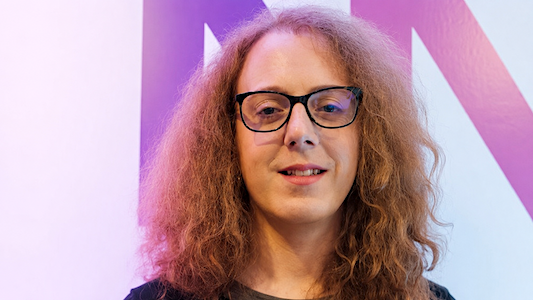
That challenge formed the starting point of Thea Cochrane’s online guest lecture for Edinburgh Napier University. As Preservation Audio Engineer for the British Library’s Unlocking Our Sound Heritage project, Cochrane works at the intersection of audio engineering, conservation and cultural heritage. Her work extends well beyond transferring old recordings into digital formats. It involves safeguarding the knowledge, equipment and technical expertise needed to recover sounds that might otherwise disappear permanently.
Many people instinctively associate archives with famous speeches, celebrated musicians or historically significant broadcasts. Those recordings undoubtedly matter, yet Cochrane argued that an archive becomes far richer when it includes the ordinary alongside the extraordinary. Everyday sounds often reveal as much about a particular period as major historical events. The background noise of city streets, the changing character of traffic, the sound of pedestrian crossings or the voices heard in ordinary conversation all capture details of daily life that written records rarely preserve. Tomorrow’s historians may value today’s unnoticed sounds far more than today’s listeners imagine.
Viewed from that perspective, sound archives become something much more significant than collections of recordings. They safeguard evidence of how societies lived, communicated and experienced the world. A field recording may document a landscape that has since changed completely. An oral history captures not only the words that were spoken, but also accent, rhythm, emotion and atmosphere. Even recordings created for entirely practical reasons often become valuable historical documents once enough time has passed. Protecting sound is therefore an act of safeguarding cultural memory.
This way of thinking also changes the role of the preservation engineer. Audio restoration is often imagined as cleaning noise from old recordings or repairing damaged tapes. Those skills remain essential, yet Cochrane demonstrated that preservation begins much earlier. Before any restoration takes place, engineers must understand the recording medium, identify the correct playback equipment, assess its condition and recover the most faithful representation of the original signal without introducing unnecessary alteration. The objective is not to improve the past. It is to ensure that it remains audible.
By the time Cochrane began describing the British Library’s collections and the scale of the Unlocking Our Sound Heritage project, the discussion had already shifted onto much broader ground. It was no longer simply about old tapes or obsolete recording formats. It had become an exploration of cultural memory itself. Once a recording becomes impossible to play, an irreplaceable connection with the past begins to disappear. A voice falls silent, a place becomes harder to imagine and a moment in history slips beyond our reach.
If preserving sound is really about safeguarding cultural memory, another question naturally follows. What exactly is being preserved? At first glance, the answer seems obvious. Archives contain recordings, so preservation appears to be little more than transferring those recordings into modern digital formats before the original media deteriorate. Thea Cochrane’s lecture quickly demonstrated that the reality is considerably more demanding. Successful preservation depends as much upon understanding historic recording technologies as it does upon understanding sound itself.
Early in the lecture, Cochrane introduced the environment in which this work takes place. Far from resembling the silent vaults that many people associate with archives, the British Library’s transfer studios are filled with equipment spanning well over a century of recording history. Edison phonographs, disc players, open-reel tape machines, cassette decks, digital recorders and highly specialised playback equipment all remain essential parts of everyday work. Many of these machines are no longer manufactured, replacement parts have become increasingly difficult to obtain and expertise in maintaining them is steadily disappearing. Yet without them, countless recordings would remain permanently inaccessible.
Cochrane’s own career reflected that unusual combination of engineering and historical knowledge. After studying music technology at Leeds Beckett University, she completed an internship at Peter Gabriel’s Real World Studios during a period of significant technological change. One of her responsibilities involved transferring older multitrack recordings into Pro Tools so they could be remixed and reused within contemporary production workflows. Initially the task resembled an ordinary studio transfer. In practice, it demanded an understanding of obsolete recording formats, ageing media and playback systems that few modern engineers encounter during conventional music production.
That experience also illustrates an important distinction between audio production and audio preservation. Recording engineers normally work with equipment designed to capture new material as accurately and creatively as possible. Preservation engineers often work in the opposite direction. Their responsibility is to recover material created decades earlier, using technologies that may no longer function reliably and documentation that is frequently incomplete. Every transfer therefore becomes an act of careful investigation.
Every recording demands a series of informed judgements. Playback speed, equalisation, stylus selection and tape configuration all influence what future listeners will eventually hear. Some tapes require careful treatment before they can be played safely. Others demand machines that have not been manufactured for decades. A damaged disc may permit only a single opportunity for transfer before further playback risks permanent loss. Decisions that might seem routine within a recording studio therefore become matters of conservation, where every intervention must balance recovery against preservation.
Viewed from this perspective, preservation becomes much more than a technical exercise. Engineers are not simply operating historic equipment or transferring audio between formats. They are interpreting the physical evidence left behind by earlier recording technologies, making carefully judged decisions that will determine how future generations encounter those sounds. Preserving audio therefore depends not only upon saving recordings, but also upon preserving the knowledge needed to hear them correctly.
Another challenge extends well beyond individual recordings. Recovering one tape or disc is valuable, yet the British Library’s collections contain hundreds of thousands of recordings spanning an extraordinary range of formats. The challenge therefore extends far beyond recovering individual recordings. It becomes a race to preserve both sound and the knowledge required to recover it before either disappears.
Understanding why recordings matter is only part of the story. Recovering them safely is an engineering discipline in its own right. Digitising a recording is often imagined as placing a tape into a machine, pressing play and saving the result as a digital file. Thea Cochrane showed that every successful transfer begins long before a single sound is captured. Before engineers can preserve a recording, they must first decide whether it is safe to play at all.
Every item arriving in the transfer studio undergoes careful examination. Tape formulation, physical condition and even smell can reveal important clues about its stability. A strong vinegar odour may indicate chemical deterioration, while mould, damaged splices or poor storage conditions suggest that further conservation work is required before playback can begin. Discs present their own challenges. Groove dimensions vary between formats, requiring engineers to select the correct stylus with great care. A stylus that is too small may fail to recover the recorded signal accurately. One that is too large risks permanently damaging the recording itself. Successful preservation begins with careful observation rather than sophisticated technology.
Many of the techniques Cochrane described would sound unfamiliar even to experienced recording engineers. Tapes may be gently cleaned, repaired or carefully respliced before playback. Some require controlled heating to reverse the effects of sticky-shed syndrome, a form of chemical degradation that causes the magnetic coating to adhere to itself. Others spend many hours passing slowly through a custom-built machine affectionately known as the “grandfather clock”, where warm air and extremely low transport speeds help stabilise fragile media. Mouldy tapes demand specially adapted vacuum systems that remove harmful particles while protecting both the recording and the engineer operating the equipment. None of these procedures improves the recording. Their purpose is simply to create one safe opportunity to recover the information stored within it.
That philosophy extends into the digitisation process itself. Modern audio restoration software can remove hiss, clicks and other unwanted artefacts with remarkable effectiveness. Many engineers would instinctively reach for such tools during a transfer. Cochrane explained why the British Library deliberately avoids doing so. Noise reduction algorithms continue to improve every year. Applying today’s processing permanently would prevent future archivists from taking advantage of better techniques that have not yet been developed. Rather than creating the cleanest possible recording, the priority is creating the most faithful possible representation of the original. Future researchers remain free to process copies, while the archival master preserves the source exactly as it existed at the moment of transfer.
Capturing that master recording also demands surprising flexibility. Professionally produced tapes often follow predictable technical standards, making playback comparatively straightforward. Domestic recordings rarely offer such consistency. Recording speeds may change midway through a cassette. Stereo recordings can unexpectedly give way to mono material recorded using a different track configuration or tape speed. Recovering every part of the recording accurately may therefore require several separate playthroughs, each optimised for a different section of the tape. Accuracy takes precedence over efficiency, even when recovering a single recording demands several separate transfers.
Preservation does not end once the audio has been captured. Every transfer is accompanied by detailed technical metadata documenting the equipment used, signal path, playback settings, conservation treatments and any interventions made during the process. If a fault is later discovered in a particular tape machine or interface, engineers can identify every recording affected and repeat those transfers if necessary. Future engineers inherit not only the recordings themselves, but also a complete record of how those recordings were recovered and why particular decisions were made.
Preservation is something far richer than digitisation. Every successful transfer combines engineering, conservation, documentation and professional judgement. Yet even these painstaking procedures address only part of the challenge. Once recordings have been recovered, another question immediately arises. Which sounds deserve to be preserved first when millions remain at risk?
Engineering alone cannot solve every problem facing a national sound archive. Even with specialist equipment, carefully developed workflows and highly trained engineers, the simple reality is that far more recordings exist than can ever be digitised simultaneously. Preservation therefore depends as much upon informed judgement as it does upon technical expertise. Every decision about what to rescue first reflects an assessment of both cultural value and immediate risk.
Thea Cochrane explained that the Unlocking Our Sound Heritage project addressed this challenge by concentrating first on recordings that were genuinely vulnerable. Formats such as MiniDisc and recordable CDs were given particular attention, not due to their historical importance, but due to the growing difficulty of finding reliable playback equipment and the increasing likelihood of media failure. Priority was also given to unique recordings that existed in only a single copy. Commercially released material could often be found elsewhere. A one-off oral history, a local radio recording or an unpublished field recording might disappear forever if that single carrier failed. Preserving everything immediately was impossible. Preserving the most vulnerable material first offered the greatest opportunity to prevent irreversible loss.
Those priorities also reveal an important philosophy underpinning the British Library’s collections. Historical significance is not measured solely by fame. The recordings most likely to disappear are not always those that receive the greatest public attention. Many capture ordinary lives, local communities and everyday experiences that rarely find their way into official histories. Their value lies precisely in preserving the sounds that future generations might otherwise never hear.
Listening to those recordings offers something that written documents alone cannot provide. A voice conveys emotion, humour, hesitation and personality in ways that written documents rarely can. Environmental recordings preserve places that have since changed. Oral histories retain not only what people remembered, but how they chose to tell their stories. Sound therefore becomes more than historical evidence. It becomes a direct connection with lives and experiences that would otherwise be accessible only through interpretation.
Progress does not depend upon a single technological breakthrough that will solve the problem of ageing media or obsolete playback formats. Instead, it comes through thousands of careful decisions made by engineers, conservators, cataloguers and curators, each contributing a small part to a much larger endeavour. Every tape inspected, every recording documented and every successful transfer extends the life of sounds that might otherwise have fallen silent.
Sound recordings preserve far more than speech or music. They preserve accents, environments, technologies, performances and everyday experiences that would otherwise exist only in memory. Once lost, many of those sounds can never be recreated. Preservation is therefore not simply about protecting the past. It is about ensuring that the future can still hear it.