Every audience knows what a dinosaur sounds like. Dragons roar, aliens snarl and giant monsters shake cinemas with impossibly deep voices. Yet none of these creatures has ever existed. Every sound associated with them has been created from scratch, yet audiences instinctively accept them as real. Creating that illusion is one of the most fascinating challenges in sound design.
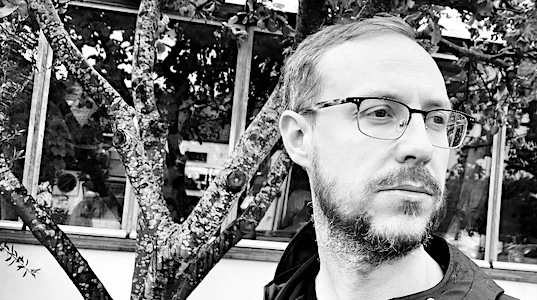
This was the starting point for Matthew Collings’ guest lecture on creature vocalisation and real-time sound design. As an audio programmer at Crotos, the company behind Dehumanizer, Collings explored how advances in digital signal processing are changing the way creature voices are created. The lecture, however, was about much more than a single piece of software. It invited the audience to consider a broader question: how can technology extend creative expression without diminishing the artistic judgement that remains central to sound design?
Creating convincing creature voices has traditionally been one of the most demanding areas of audio production. Designers layer recordings of animals, manipulate pitch, combine multiple processing techniques and painstakingly synchronise every vocalisation with an animated character. The results can be extraordinary, but they depend upon considerable time, technical expertise and countless creative decisions made after the original recording has taken place.
To illustrate this established approach, Collings showed a video in which legendary sound designer Ben Burtt described the creation of Chewbacca’s voice for Star Wars. Rather than relying on a single animal recording, Burtt assembled the character’s voice from bears and numerous other animals, selecting each recording because it conveyed a particular emotional quality. Some sounds suggested affection, others frustration, aggression or excitement. Through careful editing and synchronisation, these individual elements became the distinctive voice of a character that had never existed. The example serves as a reminder that audiences respond to emotion and personality as much as acoustic realism.
Collings argued that this creative principle remains unchanged, even as production workflows evolve. Traditionally, creature voices were assembled through careful editing once recording had finished. Increasingly, however, designers can manipulate voices in real time, hearing the transformed result immediately as they work. Instead of constructing every roar, growl or vocal gesture afterwards, they can shape those sounds during the act of performance itself. Digital signal processing therefore becomes more than a post-production tool. It becomes an expressive instrument, allowing sound design to move beyond editing and towards live creative interaction.
That shift has implications far beyond creature effects. It changes the relationship between performer, sound designer and technology, bringing them together within a single creative process. The remainder of the lecture explored how real-time processing makes this possible, why it offers advantages over traditional workflows, and what this evolution might mean for the future of sound design in film, games and immersive media.
If real-time processing changes the way creature voices are produced, what actually makes this approach different from traditional sound design? At first glance, the technology itself seems familiar. Pitch shifting, convolution, granular processing and modulation have all been part of the sound designer’s toolkit for many years. As Collings demonstrated, the real innovation is not the individual processes but the way they can be combined and controlled during a live performance. Instead of waiting until recording has finished, designers can hear the transformed voice immediately and respond to it in the moment.
This represents a significant departure from established workflows. Traditionally, creature vocalisations have been built through accumulation. Designers layer recordings of animals, manipulate pitch, combine multiple processing techniques and synchronise every sound with an animated performance. The results can be extraordinarily rich and expressive, but they are achieved through careful editing and refinement after the original recording has taken place. Every decision is made retrospectively.
Collings demonstrated an alternative way of working. Rather than treating the recorded voice as material to be reconstructed later, the performer hears the transformed character immediately while responding to the animation. Every breath, hesitation and change in vocal expression influences the processed sound as it happens. Recording, listening and refinement become part of a continuous creative cycle rather than a sequence of separate production stages.
Watching this process unfold was particularly revealing. It felt less like observing a conventional editing session and more like watching a musician perform with an unfamiliar instrument. The software undoubtedly transformed the incoming voice, but the character emerged through timing, expression and continual adjustment. Technology extended the performer rather than replacing them.
The individual processing techniques shown during the lecture each contributed something different to the final result. Pitch shifting altered the apparent scale and physical presence of a creature. Granular processing introduced texture and unpredictability, while convolution blended characteristics borrowed from recordings of the natural world. None of these techniques was presented as a complete solution. Instead, convincing creature voices emerged through the interaction of multiple subtle transformations, all shaped by a responsive vocal performance and careful listening.
This also explains why recordings from the natural world remain so important. Animal vocalisations contain acoustic qualities that listeners instinctively recognise, even when heavily transformed. Rather than imitating individual species directly, designers borrow elements from familiar sounds and reshape them into voices that feel plausible despite belonging to imaginary creatures. The result is neither entirely natural nor entirely artificial. It occupies a convincing space somewhere between the two.
Perhaps the most striking aspect of the demonstration was how quickly the technology faded into the background. Audiences do not hear convolution, granular synthesis or pitch shifting. They hear a creature reacting to its environment. For the practitioner, the individual processing modules matter far less than the expressive possibilities they create. The objective is not to showcase sophisticated digital signal processing, but to shape a voice that feels authentic within the fictional world it inhabits.
By reframing digital signal processing as a creative instrument rather than simply a collection of effects, Collings presented real-time sound design as more than a technical improvement. It represents a different way of thinking about the craft itself, where listening, experimentation and creative judgement become increasingly intertwined with the act of performance.
The implications of this approach extend well beyond creature vocalisation. Although Collings’ demonstrations centred on monsters and dinosaurs, the underlying principles apply wherever sound must respond dynamically to performance. Film, games and immersive media increasingly require audio that can evolve alongside the action rather than being fixed during post-production. As production workflows become more interactive, sound design is beginning to shift from constructing sounds after the event towards shaping them as creative decisions unfold.
This evolution also changes the relationship between performer and sound designer. Traditionally, these roles have been separated. An actor delivers a vocal performance, while the sound designer interprets and transforms it later through editing and processing. In Collings’ demonstrations, however, those boundaries became less distinct. The transformed voice could be heard immediately, allowing every vocal gesture to influence the next. Performer, practitioner and software formed part of a continuous dialogue in which listening, adjustment and expression happened simultaneously.
Watching this process unfold felt surprisingly different from observing a conventional recording session. Rather than painstakingly constructing every vocalisation afterwards, Collings responded to the animation as it played, continually refining the sound in real time. The software functioned as an expressive instrument, yet the musicality came from the person using it. Timing, pacing and emotional intent remained far more influential than any individual processing technique.
Perhaps the most revealing aspect of the lecture was its emphasis on listening. Numerous processing techniques were demonstrated, but none was presented as a formula for creating convincing creature voices. Instead, expressive results emerged through continual refinement, balancing multiple transformations until the voice felt appropriate for the character and the scene. The demonstrations reinforced a familiar truth within sound design: technical knowledge provides possibilities, but careful listening determines which possibilities are worth pursuing.
This way of working also encourages a more exploratory creative process. Because ideas can be evaluated immediately, designers are free to experiment with subtle variations in delivery, processing and timing without committing to lengthy post-production workflows. Some ideas will inevitably be discarded, but others may reveal unexpected qualities that would have been difficult to discover through a more linear editing process. Real-time processing therefore supports experimentation not by making creative decisions easier, but by making them easier to explore.
Looking beyond creature vocalisation, Collings’ demonstrations suggest a broader evolution in the practice of sound design. As digital signal processing becomes increasingly responsive, practitioners are no longer confined to refining performances after recording has ended. They can participate in the creative act itself, shaping sound as it develops while drawing upon the same critical listening, imagination and editorial judgement that have always defined exceptional work. The tools may be changing, but the craft remains firmly rooted in human perception and creative decision-making.
Although Dehumanizer provided the focus for the demonstrations, the lecture ultimately explored a much broader evolution in sound design practice. Throughout the session, Collings showed that the most effective technology is rarely the most conspicuous. Whether refining a creature’s vocalisation, combining different processing techniques or responding to an animated sequence in real time, the objective remained the same: to create voices that audiences accepted instinctively as part of a believable world.
One consequence of this approach is that experimentation becomes far more immediate. Presets provide useful starting points, while more advanced controls allow practitioners to shape every aspect of the resulting sound. Instead of investing time constructing complex processing chains before hearing the outcome, designers can move quickly between ideas, evaluating and refining them as they work. The software therefore accelerates exploration without diminishing the value of experience or technical understanding.
The lecture also reinforced an enduring lesson about creature vocalisation itself. Convincing voices rarely emerge from a single recording or a single processing technique. They develop through the careful interaction of vocal performance, recordings from the natural world, digital signal processing and critical listening. Each contributes something different, but none is sufficient on its own. The illusion succeeds because these elements are brought together in support of character, emotion and storytelling.
Taken together, Collings’ demonstrations point towards a broader change in the discipline. As real-time processing becomes increasingly sophisticated, the traditional boundaries between recording, editing and performance begin to blur. Sound designers are no longer limited to refining material after a recording session has ended. Increasingly, they are able to shape expressive performances as they unfold, responding directly to performers, animation and narrative in the moment.
This does not redefine the purpose of sound design, but it does reshape the role of the practitioner. The craft continues to depend upon careful listening, imagination and aesthetic judgement. What is changing is the point at which those skills are applied. Rather than waiting until production has finished, they become part of the performance itself.
That is perhaps the lecture’s most enduring contribution. Rather than presenting another collection of digital effects, Collings demonstrated how real-time processing is reshaping the practice of sound design while leaving its creative foundations unchanged. If the opening question was how imaginary creatures can sound so believable, the answer lay not in software alone, but in giving sound designers increasingly expressive ways to listen, respond and shape performances as they unfold.